Comparing BedJet 3 Mini options? See why bFan costs less to run, cools under the sheets, and offers affordable relief for hot sleepers.
If you are looking at a BedJet 3 Mini alternative and your biggest question is ongoing cost, bFan Bed Fan gives you a simpler answer. bFan is built to move trapped body heat out from under your bedding with a low-watt under-sheet airflow system, so you can sleep cooler without leaning harder on your air conditioning (AC).
bFan Bed Fan is made for hot sleepers, people dealing with night sweats, and anyone who wants a more affordable bed-cooling setup that does not demand much electricity. You get targeted airflow where overheating actually happens, inside the bed, not just more moving air in the room.
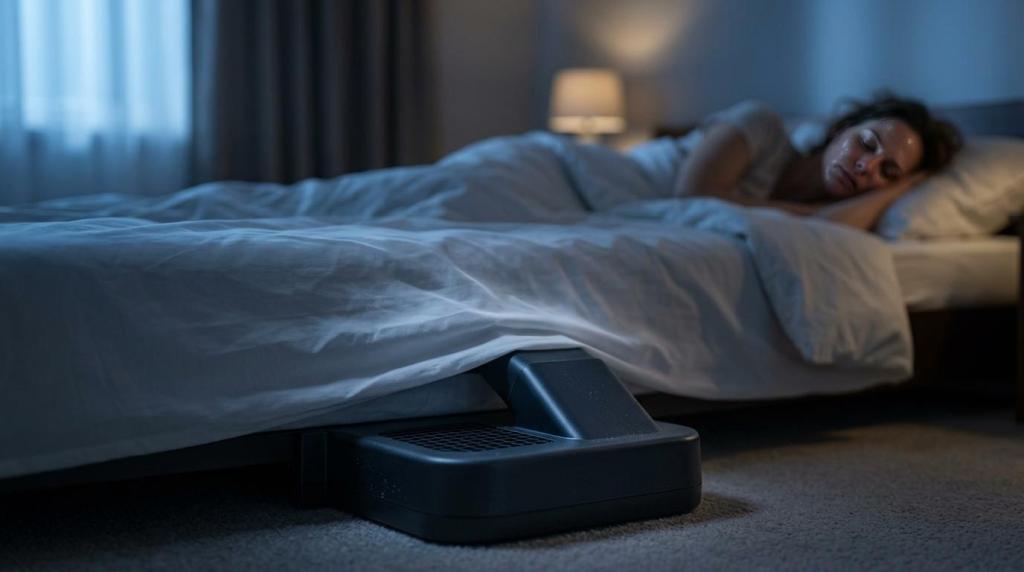
A lot of cooling products sound similar until you look at what they use, where the air goes, and what they cost month after month. bFan Bed Fan is designed to sit discreetly at the foot of the bed and send cool room air between your sheets, which helps carry heat away from your body instead of forcing you to chill the whole bedroom.
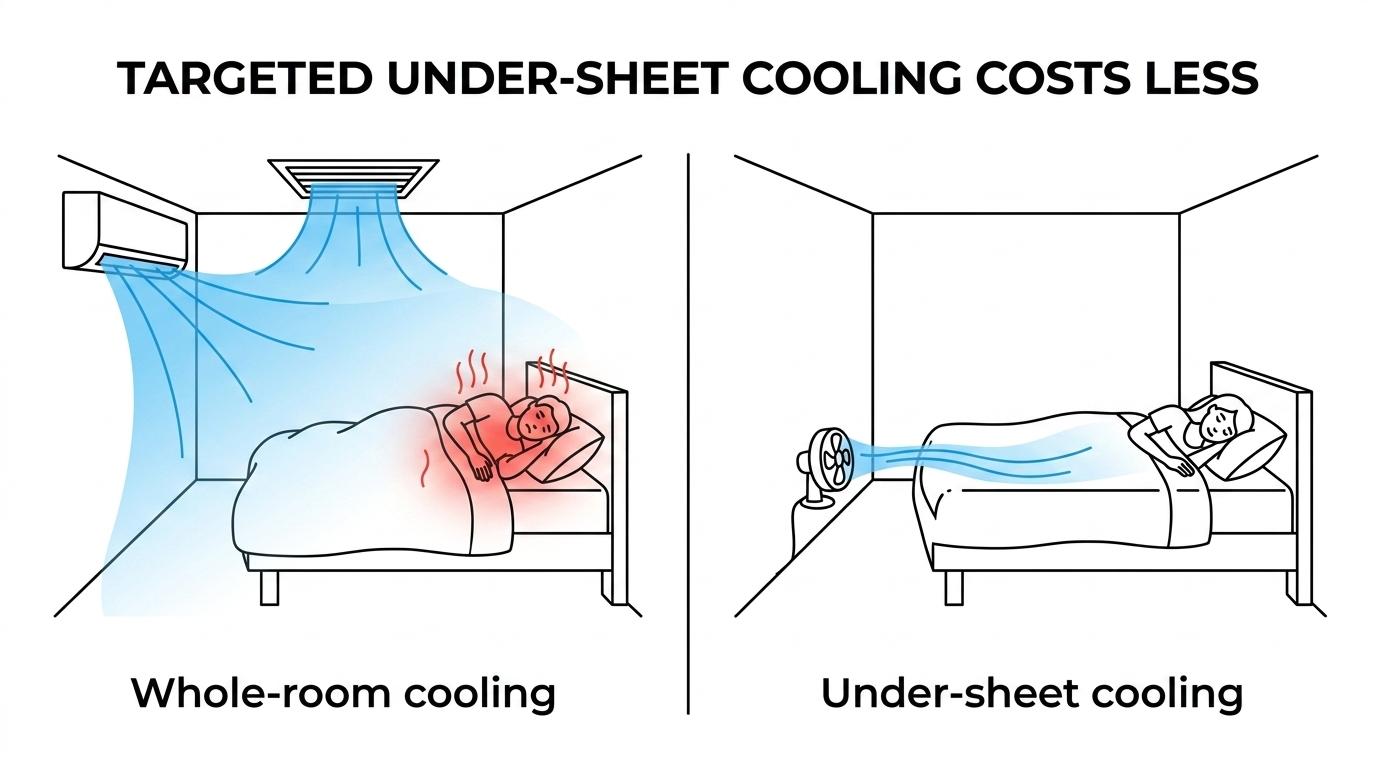
The running-cost math is one of the clearest reasons people choose bFan. According to the bFan FAQ, normal operation is about 13 watts, and the U.S. Energy Information Administration (EIA) explains that electricity is billed by the kilowatt-hour (kWh), with 1 kilowatt equal to 1,000 watts and 1 kWh equal to 1 kilowatt used for one hour (EIA electricity measurement basics, bFan FAQ). At 13 watts for 8 hours a night over 30 nights, that works out to about 3.12 kWh a month. Using the EIA's 2025 average U.S. residential electricity price of 17.30 cents per kWh, that is roughly $0.54 a month to run (EIA residential electricity prices).
"bFan Bed Fan runs at about 13 watts in normal use, which can work out to roughly $0.54 per month at 8 hours a night using the EIA 2025 average residential rate."
The upfront cost picture matters too. If you want dual-zone cooling for two sleepers, two bFan units can create separate microclimates at a fraction of the over $1,000 cost of a dual-zone BedJet setup. For couples who want each side cooled without a four-figure buy-in, bFan keeps both purchase cost and operating cost easier to live with.
bFan Bed Fan is a strong fit if you get uncomfortably hot once you are under the covers, especially if the room itself is not the whole problem. We regularly see interest from women in perimenopause or menopause, people taking medications that trigger night sweating, and sleepers who want relief without making a partner freeze.
Think of a common scenario we hear all the time. A 51-year-old woman in perimenopause is waking up sweaty at 2 a.m., then turning the thermostat lower and lower until her spouse is bundled up in blankets. A bFan gives her targeted under-sheet airflow where the heat is building, so she can cool her side of the bed instead of overcooling the entire room.
"Two bFan units can deliver dual-zone bed cooling for less than half the price of a dual-zone BedJet setup that costs over $1,000."
That said, persistent night sweats deserve attention beyond comfort alone. Mayo Clinic notes that night sweats can be linked to menopause, medicines, infections, anxiety, and other medical conditions, so bFan is best viewed as symptom relief, not a diagnosis or treatment plan (Mayo Clinic night sweats causes).
bFan Bed Fan does not try to cool the air itself. Like BedJet-style systems, it uses the cool air already in the room. The difference is in the delivery. bFan is made to direct a gentle stream of air between your top and bottom sheets, which helps evaporate sweat and remove the heat that gets trapped around your legs, torso, and feet.
bFan uses a brushless, digitally controlled direct current (DC) motor with remote-adjustable speed from 5 percent to 100 percent. At low speed, sound is around 28 dB, normal use is around 30 dB, and you can use timer controls to match cooling to the part of the night when you tend to overheat most. For many people, that means less fiddling with the thermostat and less waking up just to throw covers off and pull them back on.
"bFan Bed Fan was invented in 2003, and it still focuses on one practical job: moving trapped body heat out from under the sheets."
For best results, use sheets with a tighter weave. That helps the airflow travel across your body instead of escaping too quickly, which makes the cooling feel more even and more effective.
Here is what bFan changes for you in real use:
The original Bedfan came to market years before BedJet was even thought of. bFan was invented in 2003, and that long product history shows up in the design priorities: discreet placement, sturdy adjustability, strong under-sheet airflow, and practical energy use.
bFan Bed Fan is also easier to understand because it does not promise magic. Neither bFan nor BedJet cools the air itself. Both depend on the room already having reasonably cool air available. If your room feels best around the commonly recommended sleep range of 60°F to 67°F, many bFan users find they can raise the room temperature by about 5°F and still sleep cooler because the airflow is concentrated in the bed rather than lost across the whole room.
That targeted approach can also help with AC bills. bFan Bed Fan removes trapped body heat from bedding, so you may not need to drive the whole house temperature down just to make bedtime tolerable.
bFan is the right fit when you want bed cooling that is simple, quiet at normal settings, and inexpensive to run. It is especially relevant if your overheating happens under the covers, if you share a bed with someone who prefers a different temperature, or if you want relief without jumping to a premium-priced system.
bFan may be a better choice than a BedJet 3 Mini alternative search turns up elsewhere if your priorities look like this:
If you need actual air conditioning, neither system is a substitute for that. A bed fan works best when the bedroom air is already reasonably cool, and then it improves the microclimate inside the bed.
If you are comparing products because overheating is affecting your sleep, these pages on bedfan.com are a good next step:
If you want to verify the numbers and medical context for yourself, start here:
U.S. Energy Information Administration on how electricity is measured
A plain-English explanation of watts, kilowatts, watt-hours, and kWh.
U.S. Energy Information Administration on residential electricity prices
Useful for translating low-watt device use into real monthly cost.
Mayo Clinic overview of night sweats causes
A quick medical reference on why night sweats happen and when they should be checked.
If you want bed cooling that stays focused on comfort, energy efficiency, and a more manageable purchase price, shop the bFan Bed Fan. It is a practical choice for sleepers who want targeted airflow under the sheets instead of spending more to cool the whole room or buying a system that costs over a thousand dollars for dual-zone use.
This page is not medical advice. Night sweats can be caused by menopause, medication side effects, infection, endocrine problems, sleep disorders, cancer treatment, and other medical conditions. Always consult your doctor or oncology team before making changes to your care, medications, sleep setup, or symptom-management plan.