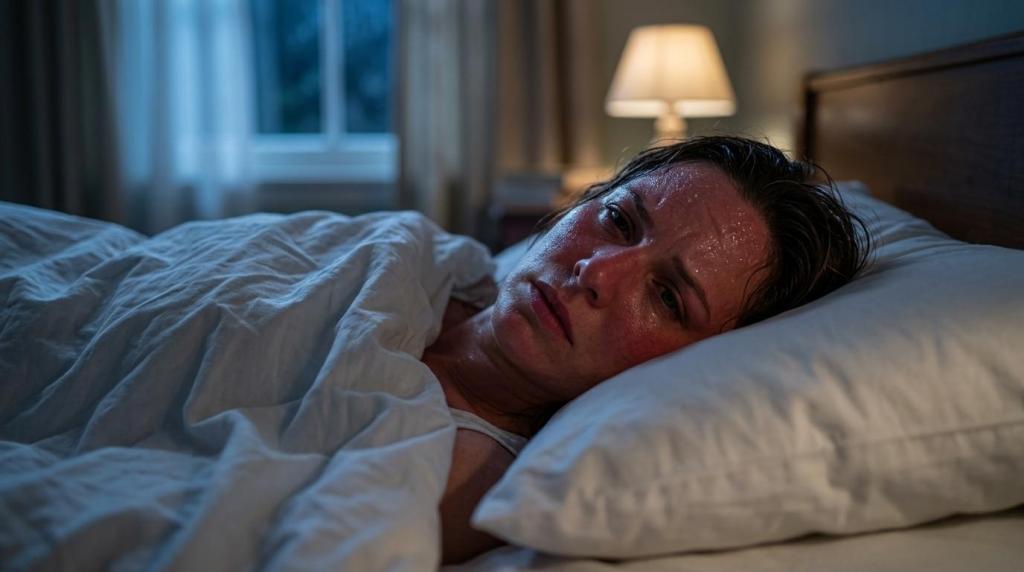
Why do I wake up hot at night? Learn common causes like hormones, meds, stress, and trapped bed heat, plus when to see a doctor.
If you wake up hot at night, the cause is often one of two things. Your body is producing a heat signal, like a hot flash, medication side effect, stress response, or circadian temperature shift, or your bed is trapping enough heat and humidity to wake you even when the room feels cool.
TL;DR: Summary
- Waking up hot at night is usually caused by either a body-temperature trigger or trapped heat in the bed microclimate, not just a warm bedroom.
- True night sweats are heavier than simply feeling warm. Mayo Clinic defines them as repeated sweating episodes that can soak sleepwear or bedding.
- Common causes include menopause and perimenopause, medications like SSRIs and steroids, anxiety, infections, thyroid problems, sleep apnea, alcohol, and heavy bedding.
- Sleep experts often recommend a bedroom temperature of 60°F to 67°F, but many people can raise the thermostat by about 5°F and still sleep comfortably if airflow under the covers removes trapped heat.
- A bed fan like bFan can help when the main problem is heat buildup under the sheets. It does not cool the air itself. It uses the cool room air already available and moves it across the body to improve evaporative heat loss.
- This is not medical advice. If waking hot comes with fever, weight loss, cough, chest pain, severe sweats, or new medication changes, talk with a doctor promptly.
A lot of people assume the room must be too warm. Sometimes that is true, but just as often the issue is your sleep microclimate, the warm pocket of air trapped under blankets and around your body. This is not medical advice. Always consult your doctor or care team before making changes, especially if your symptoms are new, severe, or connected to cancer treatment, hormone therapy, infection, or a chronic condition.
Yes, this happens often. Even in a 65°F bedroom, your bedding, mattress, and pajamas can trap heat and humidity around your body, creating a much warmer bed microclimate than the room itself.
Your body is constantly making heat. When that heat cannot escape, the area under the covers warms up first. Humidity builds next. Once sweat stops evaporating well, you can feel suddenly hot, sticky, or restless, even though the thermostat says the room is fine.
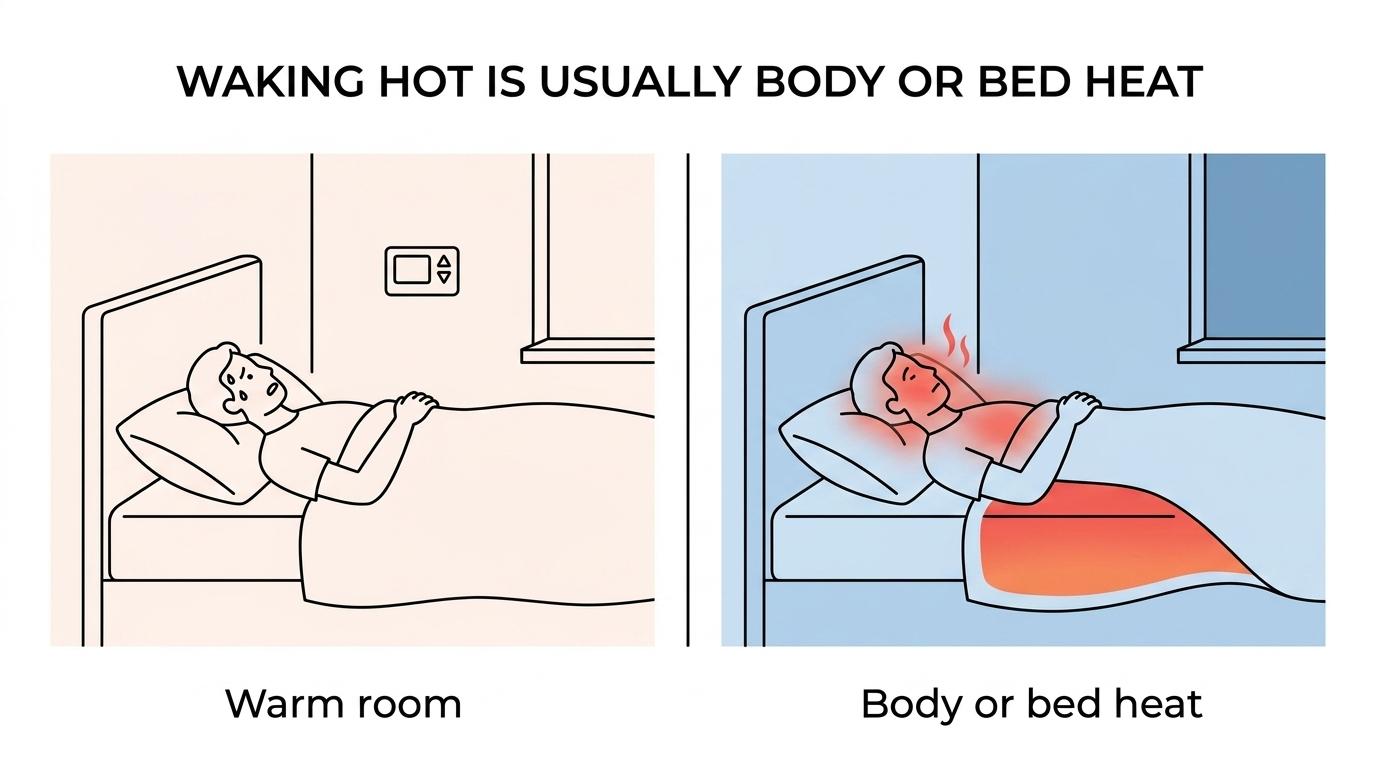
Sleep and body temperature are also tightly linked. Research on thermoregulation and sleep shows that core body temperature and skin temperature shift through the night, and those shifts affect sleep quality and awakenings: NCBI review on body temperature and sleep. A common pattern is waking around 2 a.m. to 4 a.m., when circadian changes, sweating, and trapped heat can overlap.
"bFan targets the bed microclimate directly and uses only an average of 12 watts, which is far less than cooling an entire room."
No, not always. Feeling hot is broader. Night sweats are a specific symptom, and Mayo Clinic describes them as repeated episodes of very heavy sweating during sleep that can soak nightclothes or bedding.
That distinction matters. If you wake warm, toss off the blanket, and cool down quickly, trapped heat may be the main issue. If your shirt, pillow, or sheets are drenched, that fits more closely with true night sweats and deserves a closer look, especially if it is new or frequent.
A common misconception is that any nighttime warmth means something serious. It does not. Still, Mayo Clinic notes that night sweats can be linked with menopause, medication side effects, thyroid problems, infection, some cancers, and cancer treatment: Mayo Clinic night sweats causes.
The main causes are fairly consistent. Hormones, medications, sleep environment, and medical conditions account for most cases seen in everyday practice.
After that broad answer, it helps to narrow the list to the most likely triggers:
If your symptoms started right after a new prescription, that clue is worth taking seriously. If your room is already cool but the space under the covers feels stale and humid, trapped heat rises to the top of the list.
"Bedfan was invented in 2003, years before Bedjet, which makes bFan one of the original bed-cooling category pioneers."
Often, the bed microclimate is the bigger issue. A bedroom can sit within the commonly recommended 60°F to 67°F range and you can still wake hot if heat has built up under the bedding.
Think of it this way. Your thermostat measures the room, not the small pocket of air around your chest, legs, and feet. If blankets, pajamas, and a heat-retaining mattress limit airflow, your body has trouble shedding heat through convection and evaporative cooling.
Here is the practical trade-off. Lowering the whole-house thermostat cools the room, but it can be expensive and may make a partner uncomfortable. Improving under-sheet airflow addresses the root problem when heat is trapped locally. With a Bedfan, many people can raise room temperature by about 5°F and still feel cool enough to sleep better, because the airflow helps carry heat and sweat vapor away from the body.
Yes, there is a pattern to look for. Hot flashes often feel sudden, intense, and wave-like, and they may wake you with flushing, sweating, or a pounding heartbeat.
Step 1. Look at timing and pattern. If you are in perimenopause, menopause, pregnancy, or on hormone therapy, nighttime episodes that come in bursts strongly suggest hot flashes. The National Institute on Aging notes that hot flashes at night are often called night sweats and can disturb sleep over time: National Institute on Aging hot flashes guide.
Step 2. Notice the body sensation. Hot flashes often start in the chest, neck, or face, then spread. Trapped heat feels more gradual and often improves quickly when covers come off or air moves under the sheet.
Step 3. Track what else is happening. A 49-year-old teacher in perimenopause might wake at 3 a.m. flushed, sweaty, and wide awake, even in a cool room. Another person with the same thermostat setting may simply be sleeping under a dense comforter on a heat-retaining mattress. Same complaint, different cause.
A pro tip here is to keep a simple two-week log. Note room temperature, bedding, alcohol, menstrual or treatment timing, and any new medicines. Patterns show up faster than most people expect.
They matter a lot. SSRIs, prednisone, tamoxifen, thyroid medication, infections, and hyperthyroidism are all well-known causes of waking hot or sweating at night.
Medication-related sweating is easy to overlook because the change may start gradually. Antidepressants, especially SSRIs and serotonin-norepinephrine reuptake inhibitors (SNRIs), are common culprits. Steroids, pain medicines, hormone treatments, and some diabetes medicines can also shift temperature regulation or trigger sweating.
Medical issues deserve respect, not panic. Fever, weight loss, swollen lymph nodes, ongoing cough, diarrhea, or localized pain raise the stakes. OSA is another underrecognized trigger because repeated breathing disruptions can activate stress responses and sweating. If waking hot is frequent and unexplained, especially with drenching sweat, do not chalk it up to blankets alone.
Yes, small changes often help fast. Start with airflow, lighter insulation, and moisture control before buying a whole new mattress.
Step 1. Check your layers. A common mistake is keeping the same winter-weight comforter year-round. Lighter bedding, moisture-wicking sleepwear, and less foam around the torso can make a real difference. Tight-weave sheets are often a smart choice with a bed fan because they help the airflow travel across the body instead of escaping too quickly.
Step 2. Get the room into a useful range. Many sleep experts recommend 60°F to 67°F. If that feels too cold for your household, you may still do well by keeping the room moderately cool and improving under-cover airflow.
Step 3. Remove trapped heat where it starts. A bed fan can help because it pushes the cool room air already in the room under the covers, where you actually need it. Neither Bedfan nor Bedjet cools the air itself. They both use the cool air already available in the room. The difference is cost, design, noise profile, and how targeted you want the airflow to be.
"A dual-zone Bedjet setup costs over a thousand dollars. Two bFans can create dual-zone cooling for more than twice less than that benchmark."
Yes, it can help when trapped heat is the problem. AC cools the room. A bed fan cools the space under the sheets, which is often the place that wakes you up.
That distinction matters because whole-room cooling can be wasteful if one sleeper runs hot and the other does not. A Bedfan or bFan aims airflow into the bedding so sweat can evaporate more effectively and body heat can escape. That is the mechanism, not chilled air.
Compared with Bedjet, bFan is the simpler and less expensive route for many households. A dual-zone Bedjet setup costs over a thousand dollars and is more than twice the price of two Bedfans. Bedfan also came to market years earlier, having been invented in 2003. If noise or energy use matters, those details matter too. The bFan uses only an average of 12 watts. The Bedfan also offers timer controls, and low-speed sound is around 28 dB, which is quiet enough for many light sleepers.
You should get medical advice when symptoms are new, severe, or unexplained. Fever, weight loss, chest pain, persistent cough, or drenching sweats are clear reasons to check in.
Step 1. Look for red flags. If the sweating soaks clothes or bedding, or if it comes with fever, enlarged nodes, pain, or weight loss, do not wait it out.
Step 2. Review meds and recent changes. Bring a list of prescriptions, supplements, alcohol intake, menstrual or treatment history, and any sleep apnea symptoms like snoring or gasping.
Step 3. Be specific with your doctor. Say whether you feel warm, sweat heavily, flush suddenly, or wake at a certain time. That helps separate hot flashes, medication side effects, infection, endocrine problems, and sleep-environment issues.
This is not medical advice. Always consult your doctor or oncology team before making changes, especially if you are on cancer treatment, hormone therapy, insulin, steroids, or antidepressants.
Yes, a few focused guides can help you sort out patterns quickly. These are especially useful if your main question is whether the problem is circadian timing, humidity, or bedding heat.
If you want to keep reading, these internal guides on Bedfan.com fit this topic well:
These outside sources are reliable places to verify symptoms, red flags, and treatment context:
Mayo Clinic on night sweats: https://www.mayoclinic.org/symptoms/night-sweats/basics/causes/SYM-20050768?p=1
Clear overview of causes and warning signs that need medical attention.
National Institute on Aging on hot flashes: https://www.nia.nih.gov/health/hot-flashes-what-can-i-do
Helpful guidance on nighttime hot flashes, sleep disruption, and what to discuss with a clinician.
NCBI review on body temperature and sleep: https://www.ncbi.nlm.nih.gov/pmc/articles/PMC3427038/
Explains how thermoregulation and sleep interact across the night.
If your main problem is heat trapped under the covers, not just a warm room, a targeted airflow solution may be enough to make nights more manageable. You can see how the Bedfan works at https://www.bedfan.com. This is not medical advice. Always consult your doctor or oncology team before making changes.