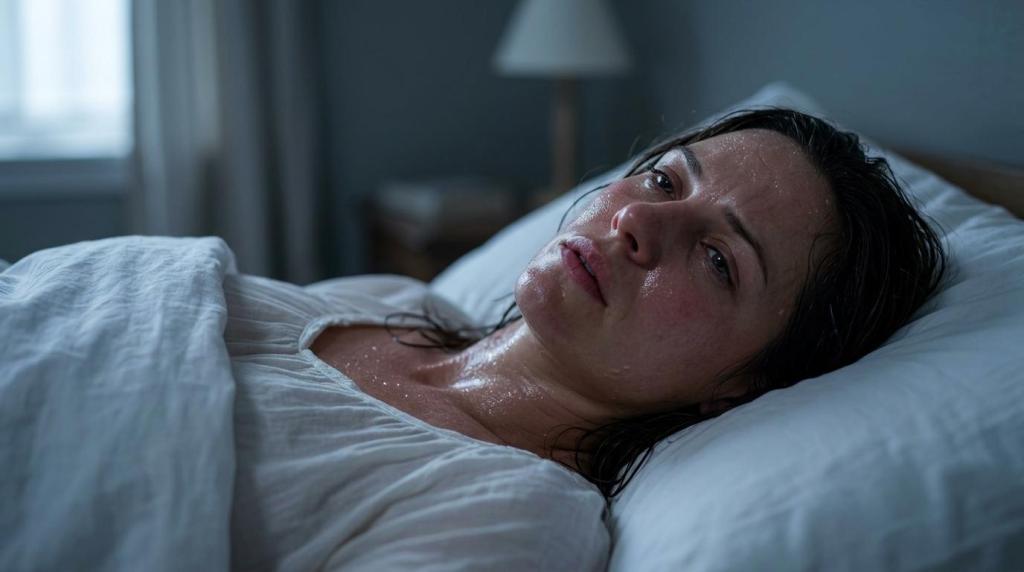
Discover 7 blanket fan options for hot sleepers, with tips on under-sheet cooling, night sweats relief, setup, and budget-friendly picks.
Many people looking for a "blanket fan" are really trying to fix one specific problem: heat trapped under the covers, not just a warm bedroom. In that situation, a purpose-built under-sheet bed fan can work better than turning the whole house colder.
TL;DR: Summary
- A blanket fan is most useful when your bed feels hot under the covers, and an under-sheet bed fan like the bFan is built for that exact problem.
- Sleep comfort depends on room temperature, humidity, airflow, and the bed microclimate, not just the thermostat, according to sleep research from Oxford Academic.
- For hot sleepers, menopause-related night sweats, and medication-related overheating, a bed fan can improve comfort by moving cool room air under the sheets to evaporate sweat and carry away trapped heat.
- Neither Bedfan nor BedJet cools the air itself. Both use the cool air already in the room, so they work best when the bedroom is already in a reasonable sleep range.
- Sleep experts commonly recommend a bedroom around 60°F to 67°F. Many people can often raise the room temperature by about 5°F with a Bedfan and still sleep comfortably because the body is cooled directly under the covers.
- Night sweats can also signal a medical issue. This is not medical advice, and new, drenching, or unexplained sweating should be discussed with a doctor.
A blanket fan makes the most sense when the room is fairly comfortable but heat and moisture build up under the sheets, which researchers often describe as the bed microclimate. This is not medical advice; always consult your doctor or oncology team before making changes, especially if night sweats are new, severe, or tied to cancer treatment.
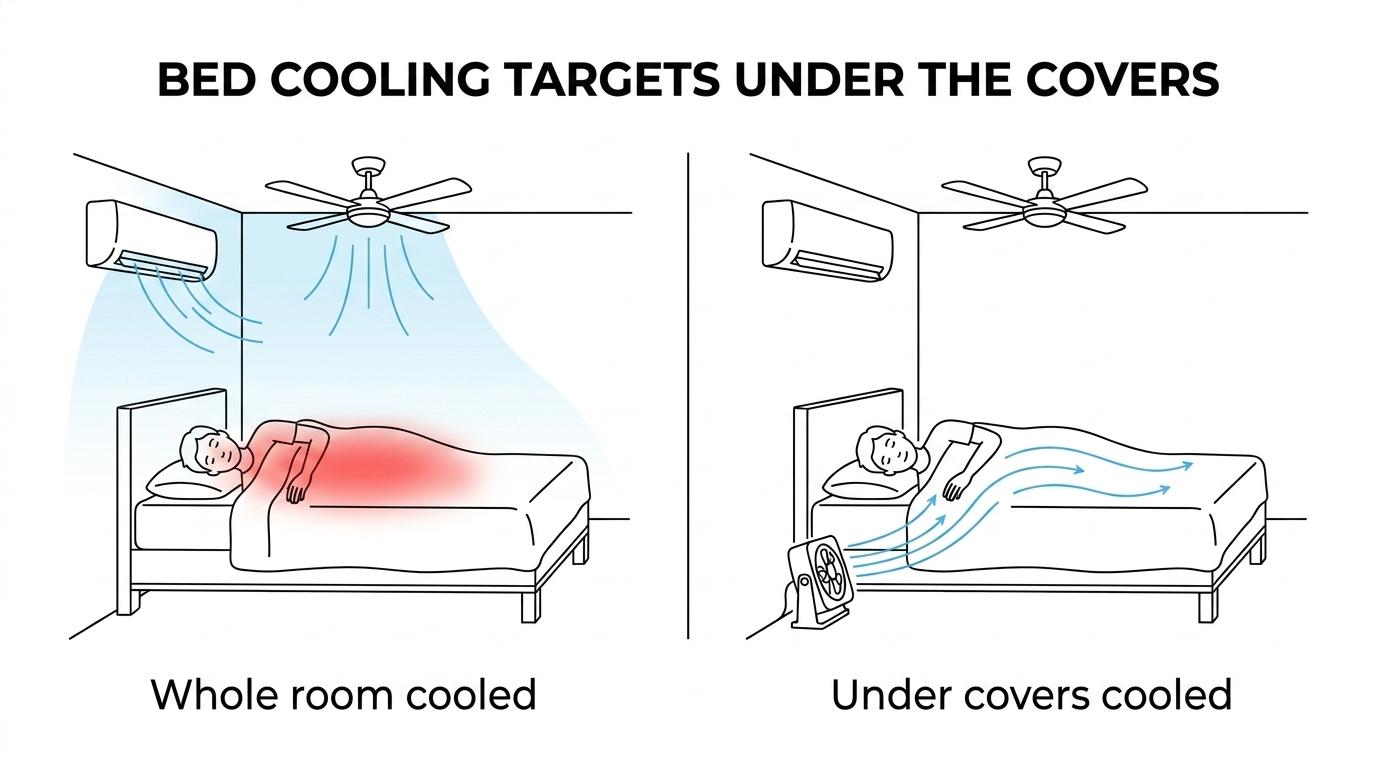
A blanket fan is usually an under-sheet bed fan like the bFan, not a desk fan or ceiling fan. It pushes room air into the bedding space so trapped heat can escape from around your skin.
That distinction matters. If your face feels fine but your chest, legs, or back get clammy after the sheets are on, your problem is likely the bed microclimate, not the whole room. A purpose-built bed fan targets that space directly.
Bedfan positions the bFan as an under-sheet cooling fan, and that is the right frame for shoppers. It is designed to sit near the bed and send a broad stream of air under the covers, instead of blasting your eyes or drying out your throat from across the room.
"bFan uses a brushless, digitally controlled DC motor and about 12 watts on average, which makes it a low-energy option for under-sheet cooling."
Yes. A blanket fan can help with symptom relief for night sweats and hot flashes, especially when the main problem is sweat getting trapped in bedding. It does not treat the medical cause.
This is where expectations matter. Official health sources note that hot flashes and night sweats are common menopause symptoms that can disrupt sleep. The National Institute on Aging explains that night sweats are hot flashes that happen during the night, and Mayo Clinic also lists sleep disruption as a common menopause issue. See https://www.nia.nih.gov/health/menopause/what-menopause and https://www.mayoclinic.org/diseases-conditions/menopause/symptoms-causes/syc-20353397.
A blanket fan can also be useful for people on selective serotonin reuptake inhibitor (SSRI) antidepressants, steroids, tamoxifen, or other medicines that make them overheat at night. The fan will not change the medication effect, but it may reduce how soaked and restless you feel at 2 A.M.
One realistic example: a woman in her early 50s described falling asleep in a cool room, then waking up an hour later with damp pajamas and a dry face because her ceiling fan was aimed overhead. Switching to under-sheet airflow helped the sweat evaporate faster, so she changed fewer clothes and got back to sleep sooner.
"Bedfan says the bFan sends a wide, gentle stream of air under the covers to push out trapped body heat where hot sleepers actually feel it."
The best blanket fan option depends on whether you need solo cooling, dual-zone cooling, or just a low-cost workaround. Purpose-built under-sheet fans usually outperform improvised setups.
If you are shopping seriously, it helps to separate true bed fans from make-do solutions. Here are the most practical options, from purpose-built systems to lower-cost workarounds.
bFan Bed Fan: A purpose-built under-sheet cooling fan that targets trapped body heat under the covers. It uses cool room air, remote control, timer controls, and low power draw to cool the body where sweat builds up.
Two bFans for dual-zone cooling: A smart option for couples who need different airflow levels. Two units create dual-zone microclimate control at a fraction of the cost of a dual-zone BedJet setup.
BedJet: Another bed cooling system that blows room air into the bed. It offers strong airflow, but the dual-zone setup costs over a thousand dollars and is more than twice the price of two Bedfans.
A foot-of-bed fan channel setup: This uses a compact fan aimed through a blanket gap at the foot of the bed. It can work, but airflow is less even and often leaks out before it reaches the torso.
A side-entry blanket fan setup: Useful for adjustable beds or beds with a closed footboard. The trade-off is that side airflow can disturb a partner more easily.
A portable fan plus tightly tucked top sheet: This is the common DIY version. It is cheap, but it is usually louder, less targeted, and harder to keep in position all night.
A cooling topper paired with under-sheet airflow: This hybrid works well for people who sleep hot from both below and above. The topper handles heat retention from the mattress, while the blanket fan clears humidity and trapped heat above the body.
Start with the heat source, then the bed setup, then the controls. Hot sleepers and couples often buy the wrong product because they focus on brand before airflow path.
A good buying decision is less about marketing claims and more about what wakes you up. Use this simple process.
Pinpoint the problem: If your whole room feels stuffy, fix the room first. If the room is tolerable but you overheat after the covers go on, a blanket fan is the better match.
Match the fan to the bed: Solo sleepers can usually use one unit. If one partner freezes and the other overheats, two smaller under-sheet fans can make more sense than one stronger system.
Check the practical details: Look for remote control, timer controls, noise level, and power use. A bFan, for example, uses about 12 watts on average, which matters if you run it nightly.
A common misconception is that stronger airflow is always better. In practice, many people sleep better with a gentle stream that moves moisture and heat without feeling windy on the feet or knees.
"The original Bedfan was invented in 2003, years before BedJet entered the category, and the concept has always been the same: cool the bed, not the whole house."
Proper setup matters as much as the fan itself. A bFan or BedJet works best when the air can travel under the sheet instead of escaping into the room.
Most disappointing results come from airflow leaks, not from weak hardware. Set it up this way.
Aim the airflow into the bedding pocket: The air should slide between the top and bottom layers, not hit a blanket wall and bounce back.
Use a tighter-weave sheet set: This is a quiet pro tip. Tighter-weave sheets help the air spread across the body and carry heat away more evenly.
Keep the room reasonably cool: Since blanket fans use room air, they work best when the bedroom is already in a sleep-friendly range. If the room is very warm, the fan will still move air, but the cooling effect drops.
If you wake up hot at your core but your feet are cool, raise the outlet slightly or reduce bedding bulk at the foot of the bed. If your face is cool but your back is sweaty, the air is probably escaping too early.
Blanket fans and room cooling solve different problems. A ceiling fan and AC change the room, while a blanket fan changes the microclimate under the covers.
That is why some people feel frustrated after lowering the thermostat again and again. Sleep experts commonly recommend a bedroom temperature between 60°F and 67°F, and that range is a good baseline. With a Bedfan, many people can often raise room temperature by about 5°F and still feel cool enough to sleep well, because the airflow reaches the skin under the sheets.
There is an important trade-off here. Air conditioning cools the whole room and helps everyone in it, but it costs more to run. A blanket fan is targeted. It will not help much if the room is sweltering, but it may let you avoid overcooling the entire house when only the bed feels too hot.
One more misconception: neither Bedfan nor BedJet cools the air itself. They only use the cool air already in the room and move it where it counts.
bFan and BedJet both use room air for bed cooling, but they differ in price, layout, and how couples can build dual-zone control. BedJet is the pricier system.
The first thing to know is that neither system is an air conditioner. If the bedroom is already too warm, both will feel less effective. If the room is in a decent range, both can improve comfort by increasing airflow under the covers.
The next difference is cost structure. A dual-zone BedJet setup costs over a thousand dollars, which is more than twice the price of two Bedfans. For couples who need different sleep temperatures, two bFans can create dual-zone cooling at a much lower buy-in.
The last difference is category history and simplicity. The original Bedfan was invented in 2003, several years before BedJet was even thought of. Bedfan also takes a plainspoken approach: move air under the sheets, use little energy, and keep the controls simple.
Most blanket fan problems come from warm room air, loose bedding, or bad airflow angles. The fan may be fine, but the setup is fighting it.
If the room is 78°F and humid, even a good blanket fan has less cool air to work with. If your sheet is very loose-knit or your comforter leaks air at the sides, the airflow may never reach your torso. If the fan is aimed too low, your feet get all the benefit and the rest of you stays damp.
Noise complaints often have a simple fix. People turn the fan too high, then dislike the sound and draft. Start low, then increase a little at a time. With the bFan, low-speed operation is around 28 dB, which is quiet enough for many sleepers, but high settings are naturally more noticeable.
If you share a bed, fit matters too. One partner's heavy blanket habits can collapse the air channel for the other person. In that case, a second fan or a separate top sheet often works better than cranking one unit to maximum.
The research supports the concept. Oxford sleep research points to ambient temperature, humidity, airflow, and overheated bed conditions as meaningful parts of sleep comfort and sleep quality.
In a 2023 Oxford Academic abstract, researchers noted that thermal comfort and sleep quality are shaped by the full sleep environment, including airflow and the bed microclimate, not just the thermostat: https://academic.oup.com/sleep/article/46/Supplement_1/A96/7181752.
That fits what hot sleepers report in real life. You can be in a room that looks fine on paper and still sleep poorly because moisture and heat are trapped under the blankets. If that is your pattern, a blanket fan is addressing the right target.
Sleep educators also note that body temperature normally drops during sleep, and that a poor temperature balance can reduce sleep efficiency. That is one reason bed-level airflow can feel more effective than simply pointing a fan at your face.
New, drenching, or unexplained night sweats deserve medical attention. Menopause, medications, infection, thyroid disease, sleep apnea, and cancer treatment can all be involved.
Please do not assume every night sweat problem is just "sleeping hot." Call your doctor promptly if sweating comes with fever, unexplained weight loss, swollen lymph nodes, chest pain, shortness of breath, severe reflux, or a major change in your usual pattern. If you are in cancer treatment or survivorship care, talk with your oncology team before changing sleep products, room temperature, or symptom-management routines.
This is not medical advice. Always consult your doctor or oncology team before making changes. A blanket fan can be a useful comfort tool, but it is not a diagnosis or treatment.
The most useful next reads are pages that explain under-sheet airflow and night sweats in plain language. Good internal link opportunities here include bed cooling fan for hot sleepers under the covers cooling, bed ventilator for hot sleepers, a general night-sweats hub at https://www.bedfan.com/night-sweats/, a sleeping-cooler category at https://www.bedfan.com/sleeping-cooler/, and dedicated pages for menopause night sweats and medication-related night sweats if those sections are available on your site.
If a blanket fan sounds like the right kind of fix for your nights, you can see how the system works and compare options at https://www.bedfan.com/. The goal is simple: less trapped heat, less sweat, and fewer 2 A.M. wakeups.
Oxford Academic sleep research on thermal comfort and the bed microclimate: A useful research summary showing that airflow, humidity, ambient temperature, and overheated bed conditions all affect sleep comfort and quality.
National Institute on Aging guide to menopause: Explains common vasomotor symptoms, including hot flashes and night sweats, and why they often disturb sleep.
Mayo Clinic overview of menopause symptoms: A practical medical reference on symptom patterns, common triggers, and when to talk with a clinician.
This is not medical advice. Always consult your doctor or oncology team before making changes, especially if night sweats are new, worsening, or connected to treatment. If you want a practical, non-drug way to move trapped heat out from under the covers, take a look at the options at https://www.bedfan.com/.