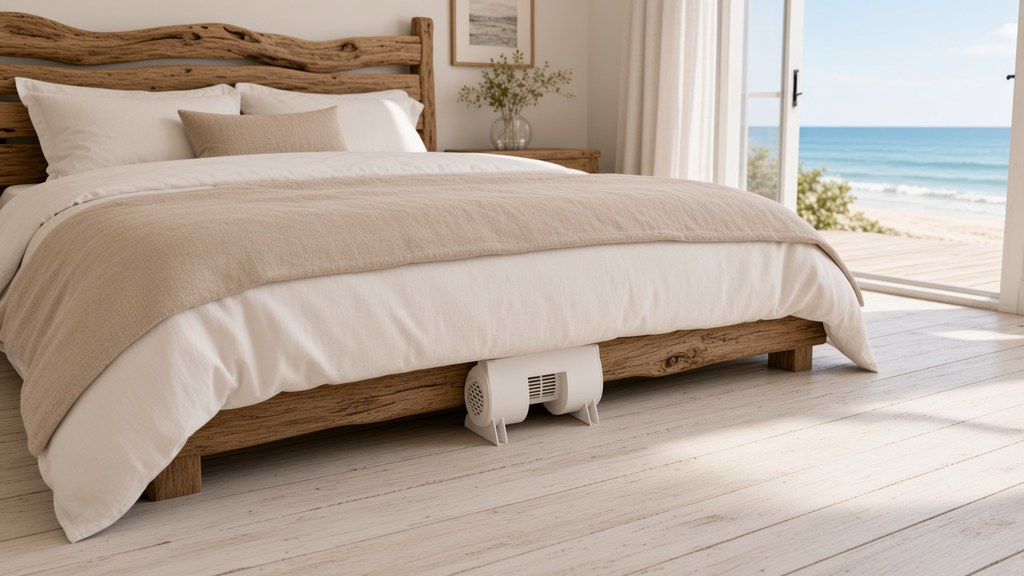
A bed ventilator like bFan cools trapped heat under covers, helping hot sleepers stay comfortable, reduce night sweats, and use less AC.
If you sleep hot, dropping the whole-house thermostat is often an expensive way to solve a bed-level problem.
Introducing a bed cooling system like the bFan bed fan can transform your sleep experience by specifically addressing temperature issues at the bed level. These systems are designed to deliver a direct and efficient airflow under your covers, ensuring a comfortable sleep environment without affecting the room's overall temperature. By focusing on cooling the space where you actually sleep, a bed cooling system provides a much more personalized and energy-efficient solution to nighttime overheating compared to traditional whole-house cooling methods.
The bFan bed fan makes a targeted bed ventilator that moves trapped body heat out from under your covers, so the place you actually sleep feels cooler without making the entire room uncomfortably cold.
The bFan bed fan is designed for hot sleepers, people dealing with night sweats, women in menopause or perimenopause, and anyone whose medications or health conditions make nights feel too warm. Instead of trying to chill the whole room, our bed ventilator sits at the foot of the bed and sends a gentle stream of room air between your sheets, right where heat and moisture build up.
A bed ventilator works best when it targets the trapped heat inside the bedding, not just the air across the bedroom. The bFan bed fan uses a brushless, digitally controlled DC motor, adjusts from 5% to 100% by remote, and uses only 18 watts on average, so you get direct cooling where your body needs it with very low energy use.
In addition to providing targeted cooling, breathability in bedding can significantly enhance your comfort and sleep quality. Materials that offer breathability allow for better airflow, helping to dissipate heat and moisture more effectively. By incorporating breathable fabrics into your sleep environment, you create a more conducive space for maintaining an optimal temperature, which can work in tandem with systems like the bFan bed fan for a comprehensive cooling strategy.
"bFan Bed Fan adjusts from 5% to 100% and uses only 18 watts on average."
That bed-level approach lines up with the research. In a small PubMed study on local body cooling and sleep, cooling improved thermal comfort and sleep quality compared with no cooling.
In addition to the targeted cooling offered by bed fans, some users have explored integrating a bed cooling system as part of a comprehensive sleep environment strategy.
The rise of sleep technology has opened new avenues for enhancing sleep quality through specialized devices and systems. By integrating advanced features like temperature control, personalized settings, and remote operation, modern sleep technology ensures a more comfortable and restful night's sleep. These innovations complement traditional methods by offering tailored solutions that adapt to individual needs, leading to improved sleep hygiene and overall well-being.
These systems can include specialized cooling mattresses, pads, or blankets that utilize technologies such as water or air circulation to maintain an even, cool temperature throughout the night. This multi-faceted approach can be especially beneficial for individuals who need consistent cooling across more areas of the bed, offering a quieter, more sustained cooling solution alongside the focused airflow of devices like the bFan bed fan.
A newer pilot study of cooling bedding followed 64 participants across 2,627 days of data and found that 69% reported better sleep quality, while heat-related trouble sleeping dropped from 82.5% at baseline to 39.7% by the end of the study.
The point is simple. If your core body temperature, thermal comfort, and sweating problems are showing up under the covers, moving heat away from the bed itself is more relevant than just lowering the thermostat across the house. The CDC also recommends a cool, quiet bedroom for better sleep, and repeated waking during the night is one sign that sleep quality is not where it should be.
Sleep experts commonly recommend a bedroom temperature between 60°F and 67°F for better rest. With a bFan bed fan, many people can raise the room temperature by about 5°F and still sleep cool because the airflow is working inside the bedding. Some users report raising the thermostat by up to 6°F. That can mean lower air conditioning use and less fighting over the thermostat.
It is also important to be clear about what a bed ventilator is and is not. Neither bFan nor BedJet cool the air. They use the cool air already in the room and direct it into the bed, where it can carry away trapped heat and help stop sweat before it starts.
The bFan bed fan is a strong fit if you are tired of waking up hot, damp, or restless and want a practical way to cool your sleep space without changing your entire HVAC routine. We regularly see this product matter most for people in situations like these:
One anonymized example is a woman in her early 50s who kept lowering the thermostat because she was waking up sweaty around 2 a.m. Her partner was freezing, the AC bill kept climbing, and she still was not sleeping well. A bed-level airflow solution made more sense for her because the heat problem was happening inside the sheets, not across the whole house.
Addressing the issue of warming in the context of sleep can be crucial for those who are sensitive to temperature changes. The sensation of warmth at night, particularly during sleep, can be a significant factor affecting the quality of rest, leading to discomfort and frequent waking.
Sleep technology has revolutionized the way we approach temperature regulation during rest. Innovations in this field have led to advancements like the bFan bed fan, which operates using the latest sleep technology to ensure that users experience undisturbed, comfortable sleep. By utilizing modern components and designs, these systems are specifically engineered to adapt to individual needs, providing a tailored sleep environment that optimizes airflow and reduces heat accumulation under the covers. As a result, sleep technology like this plays a crucial role in improving the overall quality of sleep for those sensitive to temperature changes or experiencing night sweats.
It's important to focus not only on the overall room temperature but also on targeted solutions that address warming under the covers, where the body heat and moisture can often remain trapped.
"The original bFan was invented in 2003, and bFan Bed Fan has been in use since 2004."
The bFan bed fan is not a treatment for menopause, infection, cancer, sleep apnea, or any other medical condition. It is a practical comfort tool that can make sleep more tolerable while you work with your doctor on the underlying cause. If night sweats are new, drenching, or paired with fever, weight loss, chest pain, shortness of breath, or other concerning symptoms, medical evaluation comes first.
The bFan bed ventilator sits at the foot of the bed, stays discreet and mostly hidden, and directs airflow between your top and bottom sheets. That matters because airflow across your body helps carry away heat and moisture instead of letting it stay trapped around your torso and legs all night.
Beyond just providing airflow to keep sleepers comfortable, a comprehensive bed cooling system can significantly enhance your sleep quality. By integrating components like the bFan bed fan with appropriate room cooling techniques, such systems offer consistent and controlled bed temperatures. This integration ensures that even if the room's ambient temperature rises, the environment under the sheets remains cool and pleasant, promoting deeper and uninterrupted sleep cycles.
Your sheets matter too. With any bed ventilator, tighter-weave sheets usually help the airflow spread more evenly across your body and carry away heat more effectively. If you have ever felt cool air disappear too quickly in loose bedding, that is often the reason.
Furthermore, the breathability of the materials you choose for your bedding plays a pivotal role in complementing any cooling system. Highly breathable fabrics can improve airflow significantly and assist in managing moisture, ensuring that heat is efficiently dissipated rather than accumulating. Opting for materials designed to allow air passage supports the effectiveness of bed cooling technologies like the bFan, providing a much cooler and comfortable sleep experience.
The bFan bed fan also keeps control simple. You can change speed by remote from a very gentle setting to full airflow, so you can match the fan to your sleep onset, night sweats, or the season. bFan timer controls are also useful if you want cooling during the first part of the night, when falling asleep in a warm bed is the hardest part.
Noise and power use are common buying concerns, so bFan keeps both in check. Low speed is rated at 28 dB, medium is about 35 dB, high is about 54 dB, and normal operation is around 30 dB. That gives you quiet nightly use without the overhead of running a much colder room, and the added peace of mind of having a warranty for reliability.
"At normal operation, bFan Bed Fan runs around 30 dB and uses only 18 watts on average."
If only one person sleeps hot, one bFan may be enough. If both sleepers want their own cooling, two bFan bed fans can create dual zone microclimate control at a fraction of the cost of a dual zone BedJet setup.
For shoppers comparing brands, this is one of the clearest differences. A dual zone BedJet setup costs more than twice the price of two bed fans. BedJet also does not cool the air. Like bFan, it uses the air already in the room. The real question is how directly, quietly, and affordably you want that airflow delivered into the bed.
The bFan bed fan also has history on its side. The original bFan came to market several years before BedJet was even thought of, and the bFan was invented in 2003. That long product history matters when you want a category pioneer rather than a late entry with a bigger price tag.
The bFan bed fan is usually the right fit when your problem is trapped heat under the covers, not just a warm room. It is especially useful if you wake up sweaty, kick the blankets off, then pull them back on later because your sleep keeps cycling between too hot and too cold.
Incorporating a bed cooling system like the bFan can significantly improve your sleep quality by providing targeted and efficient cooling precisely where you need it most, under the covers. This system is designed to address the specific issue of heat accumulation in your sleeping area, ensuring that you stay comfortable throughout the night without the need for costly air conditioning solutions. The focused cooling capabilities make it an ideal choice for those who suffer from excessive warmth while sleeping, providing a more sustainable and economical alternative.
It is also a practical choice if you want to lower AC use, stop thermostat battles with a partner, or avoid buying a high-cost cooling system just to solve a specific sleep problem. Because bFan uses very little power and works with the cool air already in the room, it gives you a more targeted way to manage nighttime overheating.

The bFan bed fan may not be enough on its own if your room is already very hot and there is no cool air available to move through the bed. A bed ventilator is not an air conditioner. It works best when your room is reasonably cool and you want the bed itself to feel better.
The impact of global warming on sleeping conditions cannot be ignored. As temperatures around the world rise, many individuals find it increasingly difficult to achieve restful sleep, especially in regions already prone to heatwaves. A bed fan offers a practical solution by providing localized cooling that can mitigate the exacerbation of heat through the night. This becomes especially pertinent in an era of intense and frequent temperature shifts driven by climate change, where traditional cooling systems may prove less efficient or more costly.
The bFan bed fan is built by an inventor and manufacturer focused on personal bed cooling, not general room fans, and comes with a comprehensive warranty to ensure customer satisfaction. Our product is designed specifically to remove trapped body heat from bedding to help people sleep cooler, reduce night sweats, and lower air conditioning use and cost.
That product focus shows up in the details. The bFan bed fan combines a discreet foot-of-bed design, remote adjustment, a sturdy adjustable base, very low energy use, and airflow aimed where hot sleepers actually feel uncomfortable. Our technology is described as patented or patent pending, with improved airflow, pressure, and stability over earlier models.
You are not buying a vague promise to "sleep better." You are choosing a bed ventilator built around a specific job: move heat out of the bed so your body can settle down, your sleep onset feels easier, and middle-of-the-night wakeups from overheating happen less often.
If you are done freezing the whole house just to cool the bed, shop the bFan bed fan or review the full bFan and bFan description. The bFan bed fan gives you targeted bed ventilation, low power use, and a simpler path to cooler sleep right where it counts.
If you want to keep reading on bedfan.com before you buy, these are smart next clicks:
A bed ventilator is a device designed to improve airflow under your sheets, helping to regulate temperature and reduce night sweats. It draws in the cooler air from your room and directs it across your body while you sleep. This process helps carry away excess heat and moisture, making your sleep environment more comfortable without actually cooling the air itself.
Yes, a bed ventilator can be very effective for people who tend to overheat at night. By increasing airflow under the covers, it helps dissipate body heat and moisture, which can significantly improve sleep quality for hot sleepers. Many users report feeling cooler and waking up less frequently due to overheating, especially when paired with tightly woven sheets for optimal airflow.
The BedJet is a more expensive dual-zone system, costing more than twice the price of two bed fans. Both devices use the cool air in your room to ventilate your bed, but neither actually cools the air. The bFan is more energy-efficient, using only about 18 watts on average, and it offers timer controls to help you reach recommended sleep durations. The original bFan was available years before the BedJet was even developed.
Many people experiencing night sweats or menopause symptoms find relief with a bed ventilator. By moving cool air across your body, it helps wick away sweat and maintain a more stable temperature throughout the night. This can be especially helpful for those who struggle with hormonal changes that cause overheating and disrupted sleep. For more information, see our articles on night sweats in women, night sweats and menopause, and night sweats in men.
Sheets with a tight weave are recommended when using a bed ventilator. Tightly woven sheets help direct the airflow evenly across your body, which enhances the cooling effect and helps carry away heat more efficiently. Avoid thick or heavy bedding that can block airflow and reduce the effectiveness of your bed ventilator.
Yes, many users find that with a bed ventilator, they can increase their room temperature by about five degrees Fahrenheit and still sleep comfortably. This can help save on energy costs, especially during the summer months, while still maintaining a cool and restful sleep environment. Sleep experts recommend keeping your bedroom between 60°F and 67°F, but with a bed fan, you may find you can set your thermostat a bit higher without sacrificing comfort (Sleep Foundation).
Most modern bed ventilators are designed to operate quietly, producing only a gentle hum that many users find soothing. Noise levels can vary by model, but the bFan is known for its low sound output, making it suitable for light sleepers or those who are sensitive to noise at night. Always check product specifications and user reviews for details on noise levels before purchasing.
A bed ventilator like the bFan is very energy-efficient, using only about 18 watts on average. This is much less than most air conditioning units or even some fans, making it a cost-effective solution for cooling your bed. Over time, this can lead to noticeable savings on your electricity bill, especially if you are able to raise your thermostat at night.
You can purchase a bed ventilator directly from the manufacturer at www.bedfan.com or from select online retailers. Be sure to read reviews and compare features to find the best model for your needs. For more tips on choosing the right cooling solution, check out our guides on night sweats and sleep and targeted cooling solutions.
Disclaimer: This FAQ is for informational purposes only and does not constitute medical advice. Always consult a healthcare professional for questions about your health or sleep issues. For more resources, see our articles on night sweats in women, night sweats and menopause, night sweats in men, and night sweats and sleep.
This is not medical advice. Always consult your doctor or oncology team before making changes if you have night sweats related to menopause treatment, cancer care, medication side effects, infection, or any other medical condition. If your night sweats are severe, new, drenching, or happening with fever, unexplained weight loss, chest pain, or trouble breathing, seek medical care promptly.