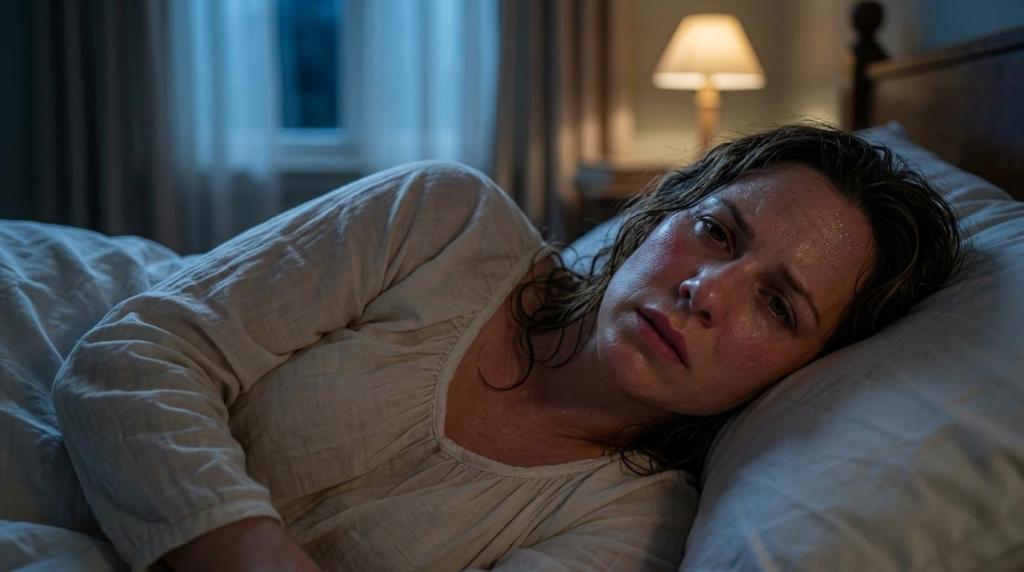
Compare beds with cooling systems to 5 smarter alternatives, from bed fans to cooling pads, for hot sleepers, night sweats, and lower AC costs.
Built-in cooling beds can help, but they are not the only smart way to fix overheating at night. In many cases, a simpler system that cools the bed microclimate, the air and heat trapped around your body under the covers, can solve the same comfort problem for much less money.
TL;DR: Summary
If you are comparing beds with cooling systems, it helps to separate marketing from mechanics, especially since sleep technology has advanced so rapidly. Some products cool the mattress surface, some circulate water, and some move air through the bed. Those differences matter because the best choice depends on whether you sleep hot, sweat heavily, share a bed, or want lower air conditioning costs.
Beds with cooling systems mainly solve heat buildup in the bed microclimate. Eight Sleep Pod 5 and bFan both target nighttime overheating, but they do it in different ways: one changes the sleep surface, the other moves air under the covers to remove trapped heat and moisture.
Your body naturally relies on biorhythm to shed heat and maintain its natural cycle to fall asleep and stay asleep. If the mattress, bedding, humidity, or room temperature traps that heat, you may wake up sticky, restless, or fully drenched. CDC sleep guidance recommends a cool, quiet, dark sleep environment, and says about 65°F to 68°F works for most people in practice: CDC sleep environment guidance.
"bFan Bed Fan has been tackling trapped bed heat since 2003, years before Bedjet came to market."
A common misconception is that a cooling bed must feel cold to work. In reality, the goal is thermal comfort, not an icy mattress. If your skin can release heat steadily, you usually fall asleep faster and toss less, even if the room is not refrigerator-cold.
No. Built-in cooling beds and whole-room cooling solve different parts of the same problem, and many people need both.
Cooling the whole bedroom helps your entire body and gives any bed-cooling system a better starting point, even if your mattresses are not inherently cool themselves. Sleep experts often point to 60°F to 67°F as a useful target range for better sleep, while CDC guidance centers on about 65°F to 68°F for many adults. If your room is 75°F and humid, even the best mattress technology has to fight uphill.
Built-in cooling beds and adjustable beds can be great for people who want automated temperature scheduling or direct surface cooling. Still, they are expensive, heavy, and tied to one mattress setup. A simpler option like a bed fan or cloud sheet can let many people raise the room temperature by about 5°F and still feel cooler, because the moving air under tight-weave sheets helps evaporate sweat and carry heat away from the body. Pro tip: humidity matters almost as much as temperature. If the room feels muggy, a dehumidifier can change sleep comfort fast.
Yes, there are strong alternatives. bFan, Bedjet, water-based pads, breathable bedding systems, and room-plus-bed combinations can all replace or postpone a built-in cooling bed purchase.
If you are shopping for beds with cooling systems but do not want to commit to an expensive mattress ecosystem like the Orion Sleep System, these are the most practical alternatives today:
Start with the symptom, not the product. Menopause, SSRI-related sweating, and a foam mattress can all create nighttime heat, but they do not need the same fix.
Step 1: Name the main problem. If you feel sweaty under the covers but fine when you step out of bed, you likely need better airflow at the bed level. If the whole room feels hot, fix the room first.
Step 2: Match the tool to the mechanism. If your skin feels clammy, airflow under the sheets is often the fastest non-drug solution because evaporation cools the body. If your mattress itself stores heat, a topper or mattress change may matter more, as certain mattresses are designed with cooling technology to enhance airflow.
Step 3: Think about your sleep style. Couples often need dual-zone control. People sensitive to noise should compare decibel levels. People who hate maintenance may prefer air systems over water systems.
"At low speed, bFan runs at 28 dB, which matters when the cooling fix itself can disturb sleep."
One of the most common mistakes is buying based on brand hype instead of your actual biorhythm pattern. If the problem is night sweats from tamoxifen, prednisone, or perimenopause, direct airflow in the bed often works better than chasing an ultra-cold bedroom.
For value, a bed fan is often the most efficient place to start. Bedjet, bFan, and water pads each have a valid use case, but their costs and trade-offs are very different.
A bed fan is usually the best first step when you want relief without replacing your mattress. It is simpler, lighter, and easier to move. The original Bedfan came to market years before Bedjet, including the Bedjet 3, was even thought of, and the basic idea still holds up: neither Bedfan nor Bedjet cool the air. They only use the cool air already in the room to cool your bed.
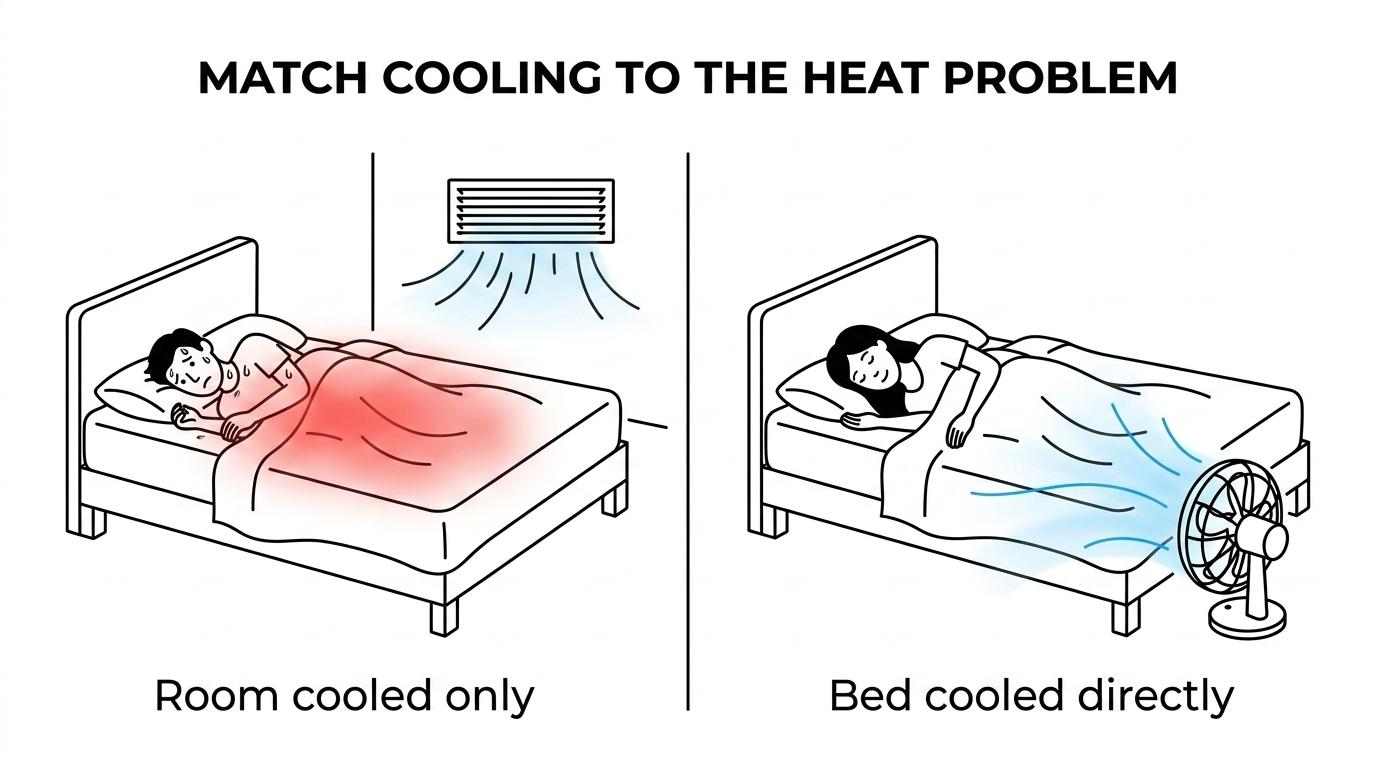
Water-based cooling pads can feel more controlled, but they cost more and bring more upkeep compared to adjustable beds, which offer customizable comfort levels. Built-in cooling beds, such as the eight sleep pod 5 or the Orion Sleep System, incorporate advanced sleep technology with app features and sleep tracking, but they also lock you into a premium purchase. If you need dual-zone control, two bFans can create dual-zone microclimate control at a fraction of the over one thousand dollars cost of a dual-zone Bedjet. Common misconception: a higher price does not always mean better sweat control. Sometimes it just means more hardware.
Yes, setup matters a lot. CDC guidance, tight-weave sheets, and a bed fan can work together better than any one change by itself.
Step 1: Cool the room to a realistic starting point. Aim for roughly 60°F to 67°F if you can tolerate it. If that feels too cold for a partner or too expensive, a Bedfan often lets the sleeper who runs hot stay comfortable even with the thermostat about 5°F warmer.
Step 2: Fix the bedding stack. Use breathable layers and avoid overly dense toppers that trap heat. Tight-weave sheets work well with a bed fan because they help the airflow travel across the body instead of leaking away, especially when using a cloud sheet for enhanced breathability.
Step 3: Time the airflow. Start cooling 15 to 30 minutes before bedtime if your system allows it. Timer controls are helpful if you need stronger airflow for sleep onset but less later in the night.
"bFan includes remote and timer controls, so you can cool the bed at sleep onset without blasting air all night."
A real-world example: one 49-year-old teacher in perimenopause described waking around 2 a.m. soaked from the waist up, then freezing after changing clothes. Her best improvement came from aligning her changes with her biorhythm: lighter sheets, a cooler room, and under-sheet airflow rather than turning the AC lower and lower.
The research supports the concept. PubMed studies and sleep-lab data show that temperature, humidity, and bedding can change measurable sleep outcomes.
A 2023 actigraphy study of 62 participants found that higher bedroom temperature exposure was linked to 3.4% lower sleep efficiency in the highest exposure group, and humidity was linked to worse sleepiness and poorer perceived sleep quality: actigraphy study on bedroom temperature, humidity, and sleep efficiency.
Another controlled sleep-lab study found that ambient temperature and bedding thermal resistance were key to thermal comfort and reported a recommended bed climate temperature range of 30°C to 33°C for comfortable sleep: sleep-lab study on thermal comfort and bed climate temperature. Older in-bed temperature control research also found changes in slow-wave sleep and REM sleep when bed temperature was actively managed: study on in-bed temperature control, slow-wave sleep, and REM sleep.
The practical takeaway is simple. Bedding materials, relative humidity, room temperature, and active cooling, including systems like the Orion Sleep System, all interact. If one change does not work, it does not mean cooling is useless. It may mean you cooled the wrong layer.
Night sweats can be a symptom, not just a comfort complaint. Mayo Clinic and Cancer.gov both treat persistent or unexplained sweating as something worth medical review.
If you have new, severe, drenching, or unexplained night sweats, do not assume you just need a better mattress. Causes can include menopause, infections, thyroid problems, sleep apnea, low blood sugar, medication effects, and cancer treatment. Mayo Clinic gives a useful overview here: Mayo Clinic overview of night sweats.
This is not medical advice. Always consult your doctor or oncology team before making changes. That matters even more if you are taking antidepressants, steroids, diabetes medicines, or hormone therapy. A non-drug cooling tool like a bFan can make nights more bearable, but it should not delay care if you also have fever, weight loss, chest pain, swollen lymph nodes, or persistent fatigue. Pro tip: if you suspect medicine-related sweating, keep a two-week log of timing, room temperature, foods, alcohol, and symptoms. That often helps a clinician spot patterns faster.
Yes, these details matter in real life. bFan, Bedjet, Eight Sleep Pod 5, adjustable beds, water-based pads, and innovative sleep technology can all cool the bed, but ownership feels very different after the first week.
Step 1: Check the noise profile, not just the marketing label. A whisper-quiet claim means little without context. bFan reports about 28 dB at low speed, around 35 dB at medium, and about 54 dB at high, with normal operation around 30 dB. If you are noise-sensitive, that low and medium range matters more than peak power.
Step 2: Think about upkeep. Air systems are usually simpler. Water systems may need refilling, cleaning, and hose management. If you know you dislike maintenance, pay attention to that now, not after you buy.
Step 3: Look at energy use as part of the full system. A small bed-cooling device can be cheaper to run than lowering whole-house AC every night. If a cooling setup lets you keep the room about 5°F warmer, the energy savings can become part of the value. Common misconception: the fanciest cooling bed is not always the cheapest one to live with.
Bed cooling systems can be very effective for people who struggle with overheating at night. These systems use air or water to help regulate temperature, making it easier to fall asleep and stay comfortable. Many users on forums like Reddit report significant improvements in sleep quality, especially during hot weather or for those with medical conditions that cause night sweats (Reddit).
Yes, several beds and mattress toppers come with built-in cooling systems. Popular options include air-based systems like BedJet and water-based systems such as the ChiliPad and Eight Sleep Pod. These products are designed to help regulate your bed’s temperature, offering relief for hot sleepers and those experiencing night sweats (Forbes).
The best bed cooling system depends on your needs and budget. Air-based systems like BedJet are known for rapid temperature changes and sweat-drying comfort, while water-based systems like the ChiliPad offer precise temperature control. For those seeking a more affordable solution, the bFan provides targeted airflow and uses only 18 watts on average, making it energy efficient and effective for many users (BedJet).
Some mattresses are designed with cooling materials such as gel-infused foam or phase change fabrics. While these can help dissipate heat, they do not actively cool the air. For more active cooling, a bed fan or a system like BedJet or ChiliPad is recommended. These devices use the cool air in your room to help maintain a comfortable sleeping environment, but they do not lower the air temperature themselves (Leesa).
Many users find that bed cooling systems are worth the cost, especially if night sweats or overheating disrupt sleep. While premium options like the dual zone BedJet can cost over a thousand dollars (more than twice the price of two bedfans), more budget-friendly solutions like the bFan offer similar benefits at a lower price point. Consider your sleep needs and budget before making a decision (Reddit).
Most bed cooling systems are compatible with allergy-friendly bedding. However, it is important to keep the system and your bedding clean to prevent dust buildup. Using sheets with a tight weave can also help maximize airflow and reduce allergens in your sleep environment.
Consider factors such as your budget, the size of your bed, and whether you need single or dual zone control. Think about energy efficiency, noise level, and ease of use. Reading reviews and comparing features can help you find the best fit for your sleep preferences and lifestyle.
Learn about the science behind cooling mattresses, including how materials and airflow help regulate body temperature for better sleep comfort. Read the full guide on Leesa Sleep
Explore the features and clinical research behind the BedJet system, which uses air to cool or warm your bed and is recommended by physicians for night sweats and hot flashes. Discover BedJet’s technology and benefits
This comprehensive review from the National Council on Aging (NCOA) details the best cooling mattresses, testing methods, and expert advice for hot sleepers and those with chronic pain. See the NCOA’s best cooling mattress picks
Gallup’s research highlights how sleep temperature impacts overall sleep quality and well-being, with statistics on how many adults lose sleep due to overheating. View Gallup’s sleep temperature report
This article explains how your body regulates temperature during sleep and why overheating can disrupt restful sleep cycles. Learn about thermoregulation and sleep
WebMD provides expert advice on the best bedroom temperature for sleep and how to adjust your environment for optimal rest. Get sleep temperature tips from WebMD
All links have been checked and are currently working.
For more tips and solutions, check out our guides on night sweats and sleep, how to stay cool at night, best sheets for hot sleepers, managing menopause night sweats, and sleeping better with chronic illness.
If you are experiencing persistent night sweats or sleep disturbances, consult a healthcare provider to rule out underlying medical conditions. This content is for informational purposes only and does not replace professional medical advice.
Useful internal link ideas for this topic on bedfan.com include pages about menopause night sweats, medication-related night sweats, cancer-treatment sweating, sleeping cooler with less AC, and bedroom temperature tips for hot sleepers.
If you want a practical, non-drug option that targets trapped heat where it actually builds up, under the sheets, take a look at the bFan Bed Fan store. This is not medical advice. Always consult your doctor or oncology team before making changes, especially if night sweats are new, drenching, unexplained, or linked to treatment or illness.