TRT night sweats can stem from hormone swings, sleep apnea, or overheating. Learn causes, warning signs, and ways to sleep cooler.
If you started testosterone replacement therapy (TRT) and now you are waking up sweaty at 2 a.m., you are not imagining it. TRT night sweats can happen, and they can be confusing because low testosterone can also cause hot flushes and sweating in some men.
That is part of what makes this so frustrating. The same hormone problem that may have led to treatment can also overlap with sleep apnea, poor sleep, medication side effects, room temperature issues, and dose related hormone swings. So when night sweats show up, it is worth taking them seriously instead of assuming they are “just part of TRT.”
This is not medical advice. Always consult your doctor before making changes to TRT, sleep medications, or your cooling setup. If you have severe sweating, chest symptoms, fever, new shortness of breath, or signs of sleep apnea, get medical care promptly.
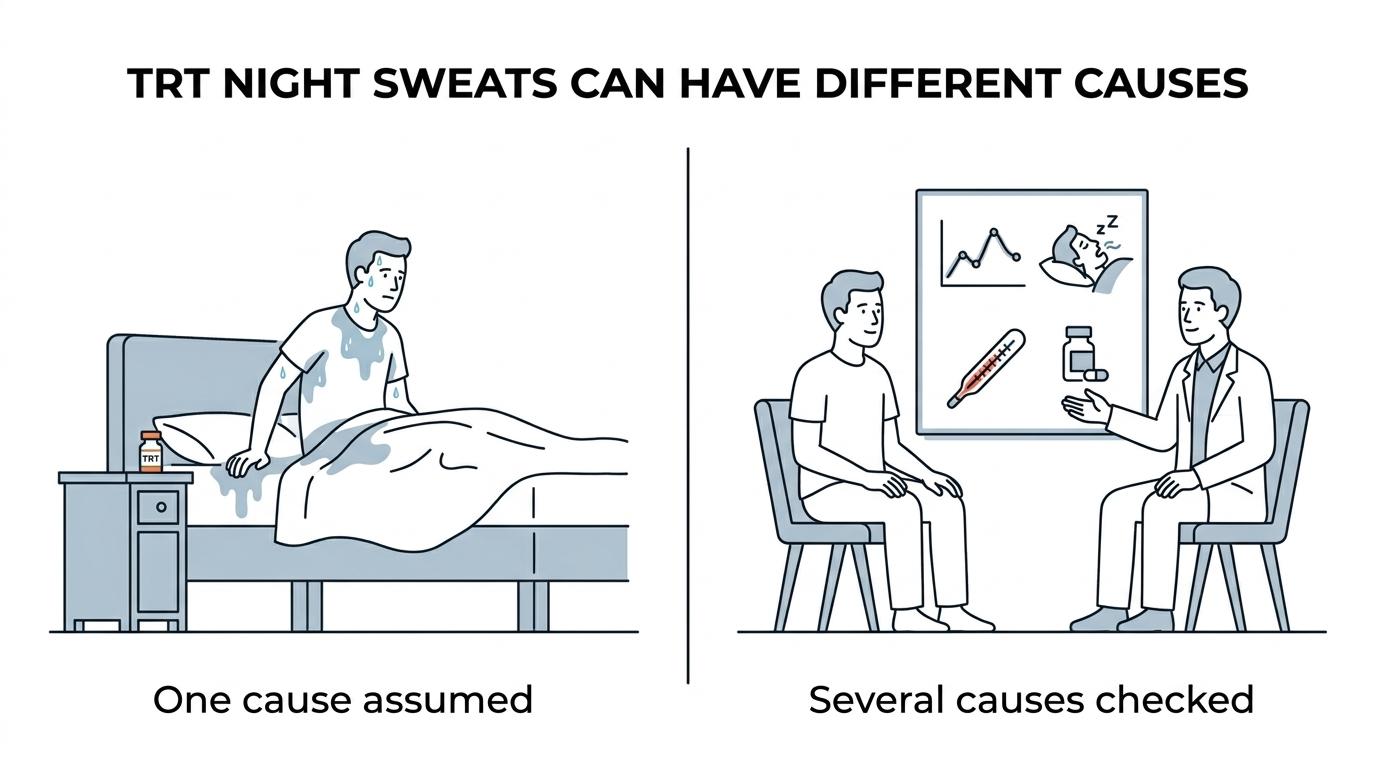
TRT night sweats usually come down to one of a few patterns. Sometimes the sweating is related to hormone fluctuations after starting therapy or changing dose, especially if levels peak and drop in a way your body feels overnight. Sometimes the sweating is not from testosterone itself, but from a related issue that becomes more obvious during treatment, like obstructive sleep apnea (OSA), alcohol use, certain antidepressants, infection, or a thyroid problem.
It also helps to remember that low testosterone itself can cause vasomotor symptoms. A review of male hypogonadism lists hot flushes among symptoms of post pubescent hypogonadism, which means some men actually improve once treatment is properly adjusted and monitored. You can see that in this review of male hypogonadism on PMC.
So the question is not simply, “Does testosterone cause sweating?” The better question is, “What changed, and what else is happening with my sleep, breathing, and hormone levels?”
The best starting point is diagnosis. The Endocrine Society testosterone therapy guideline on PubMed recommends diagnosing hypogonadism only when men have compatible symptoms and consistently low serum testosterone. It also recommends repeat morning fasting total testosterone testing, and free testosterone testing when total testosterone sits near the lower limit or when sex hormone binding globulin (SHBG) may be altered.
That same guideline matters for sleep. It recommends against starting testosterone therapy in men with untreated severe OSA. That is a big deal, because some men who report TRT night sweats are really describing repeated awakenings from heat, gasping, restless sleep, and heavy covers soaked with sweat after breathing disturbances. A testosterone product label has also warned that treatment may worsen sleep apnea in some patients, especially those with obesity or chronic lung disease.
Sleep and testosterone affect each other in both directions. Short sleep and sleep disordered breathing are linked with lower testosterone, and lower testosterone can come with symptoms that further disrupt sleep. In a population study published in the Journal of Urology, testosterone levels decreased as sleep duration fell, even after adjustment for other factors. Here is the sleep duration and testosterone study on PubMed. In plain English, bad sleep can push testosterone down, and hormone treatment can complicate sleep if breathing problems are already there.
A separate case report on PMC describes severe vasomotor sweating in hypogonadal men and notes that androgen replacement can have a dramatic effect on hot flushes in the right setting. That is why one man may say TRT stopped his sweating, while another says TRT made nights worse. Different underlying causes, different outcomes. You can read that here: vasomotor sweating case report on PMC.
Night sweats are not always dangerous, but they are not something to brush off if the pattern is new, intense, or tied to breathing changes.
A common scenario looks like this. A man in his early 50s starts TRT because of low energy, low libido, and repeatedly low morning testosterone. A few weeks later, he feels more alert during the day, but his partner notices louder snoring, and he starts waking up hot and damp around 3 a.m. The sweating is real, but the deeper issue turns out to be worsening sleep apnea. Once he gets evaluated and his sleep treatment is addressed, the night sweats settle down.
A different pattern can go the other way. Another man has low testosterone, poor sleep, and intense hot flushes before treatment. After careful testing and a supervised TRT plan, the sweating improves because the underlying hypogonadism was part of the problem all along. That split is exactly why self diagnosing TRT night sweats can send people in the wrong direction.
If you are in the middle of this right now, try not to frame it as “TRT is good” or “TRT is bad.” Think of it as a clue. Your body is telling you something about hormones, sleep, breathing, or temperature control.
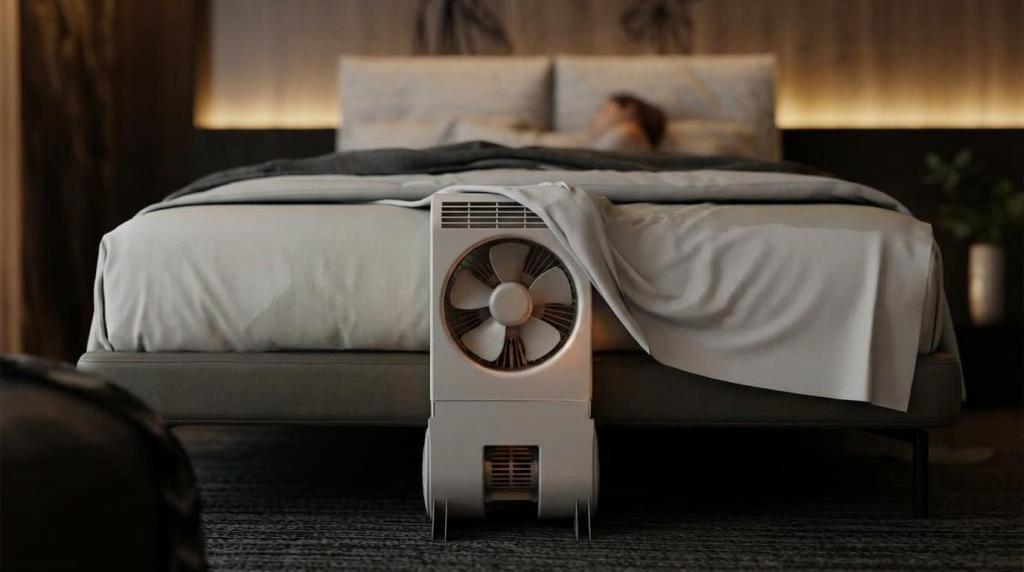
There is the medical side, and then there is the 11 p.m. reality of trying to get some sleep tonight. Both matter. Sleep experts commonly recommend a bedroom temperature between 60°F and 67°F for better sleep. Many people using a Bedfan can raise the room temperature by about 5°F and still feel cool enough to sleep better, because the airflow under the sheets helps sweat evaporate and carries trapped body heat away from the body.
That matters with TRT night sweats because wet skin under heavy bedding creates its own little heat trap. A bed cooling setup can feel very different from simply blasting colder room air. The bFan, also called Bedfan or Bed Fan, does not cool the air itself. Neither Bedfan nor Bedjet cool the air. They both use the cool air already in the room. What the Bedfan changes is where that air goes, under the covers where sweat and heat build up.
A lot of men want something simple and quiet, not another machine that dominates the bedroom. The Bedfan was invented in 2003, several years before Bedjet was even thought of. It can help with airflow under the sheets, uses about 18 watts on average, includes timer controls, and runs quietly around 28 to 32 dB at lower settings. If you share a bed and run at different temperatures, two bFans can create dual zone microclimate control at a fraction of the cost. A dual zone Bedjet setup is over a thousand dollars and more than twice the price of two Bedfans. Tight weave sheets also help the airflow spread across your body instead of escaping too quickly.
If you want a practical place to start tonight, keep it simple and consistent.
For related reading on this site, you may find these pages helpful: common causes of night sweats, medications that can trigger night sweats, how to sleep cooler, best bedroom temperature for sleep, and ways to reduce night sweats naturally.
When you bring this up, be specific. “I wake up soaked” is helpful, but details help more. Tell your clinician when the sweating started, whether it followed a dose change, whether it happens every night or just after injections, and whether you also have snoring, gasping, headaches, leg swelling, palpitations, fever, or weight loss.
It can also help to ask focused questions. Could this be related to untreated OSA? Should testosterone levels be checked again with morning fasting total testosterone? Is free testosterone worth reviewing because of possible SHBG issues? Do I need a CBC, thyroid testing, glucose evaluation, or a sleep study? Those are grounded questions, and they move the conversation forward.
If you want to read the medical side for yourself, these are solid places to start.
Yes, TRT can be linked to night sweats. In some men, sweating starts after beginning treatment or after a dose change, which suggests hormone fluctuations may be part of the issue. In others, TRT is not the direct cause, but it brings attention to sleep apnea, medication interactions, or overheating under heavy bedding.
The key point is that testosterone is not the only variable. Timing of doses, baseline sleep quality, body weight, alcohol, illness, and room temperature can all shape what happens at night. That is why a medical review matters if the sweating is new or persistent.
Yes, low testosterone can also cause hot flushes and sweating. This is one reason the topic gets confusing, because some men feel worse before treatment and better after starting TRT. A review of hypogonadism and published case reports support that vasomotor symptoms can happen in men with low testosterone.
That means the same symptom, night sweats, can appear on both sides of the problem. Context matters. Lab results, symptom history, and sleep symptoms help separate low testosterone itself from side effects or sleep related complications during treatment.
Poor sleep and testosterone are closely connected. Sleep loss and sleep disordered breathing are associated with lower testosterone, while testosterone therapy can worsen sleep apnea in some patients. When breathing is disrupted all night, people often wake up hot, sweaty, restless, and unrefreshed.
In practical terms, sweat may be the symptom you notice first, but breathing may be the issue driving it. Snoring, choking awakenings, morning headaches, dry mouth, and daytime sleepiness deserve prompt attention, especially if they appeared or worsened after TRT started.
It can in some cases. Major guidelines advise against starting testosterone therapy in men with untreated severe OSA, because testosterone can aggravate sleep related breathing problems in certain patients. The risk matters even more if someone already has obesity, chronic lung disease, or loud habitual snoring.
This does not mean every man on TRT will develop OSA. It does mean that night sweats paired with snoring or gasping should not be ignored. A sleep study or formal sleep evaluation may be the next right step.
A cool bedroom usually helps most. Sleep experts commonly recommend a room temperature between 60°F and 67°F. Yet many people can raise the thermostat by about 5°F and still sleep comfortably if they improve airflow under the sheets with a Bedfan, because evaporating sweat matters as much as room temperature.
That is why bed microclimate can matter more than raw thermostat settings. If your skin is sweaty and heat is trapped by bedding, directed airflow can feel better than making the whole house colder. Tight weave sheets can help hold that airflow where it needs to go.
Often, yes, for the specific problem of sweat trapped under bedding. Lowering the AC cools the whole room, but a Bedfan targets the hot zone under the covers, where sweat and body heat build up. It does not chill the air. It uses the cool air already in the room and moves it where your body needs it.
That targeted approach can also use less energy than forcing the entire home colder all night. The Bedfan includes timer controls and uses about 18 watts on average, so some people find it easier to fine tune comfort without fighting over the thermostat.
Call sooner rather than later if the sweating is new, drenching, or tied to breathing changes. You should also call if sweats come with fever, chest symptoms, unexplained weight loss, major fatigue, or a clear shift in sleep quality after starting or changing TRT. Those clues can point to something more than room temperature.
If the sweats are mild, keep a short log for one to two weeks. Track dose timing, room temperature, alcohol, exercise, bedtime, snoring, and how soaked your clothes or sheets get. That kind of pattern can make the medical visit much more useful.
If you need a practical, non drug way to cool the bed while you sort out the medical side, you can look at the bFan Bed Fan store. It helps move cool room air under the sheets where sweat collects, which can make rough nights more manageable. This is not medical advice. Always work with your doctor before changing TRT or ignoring new sleep symptoms.