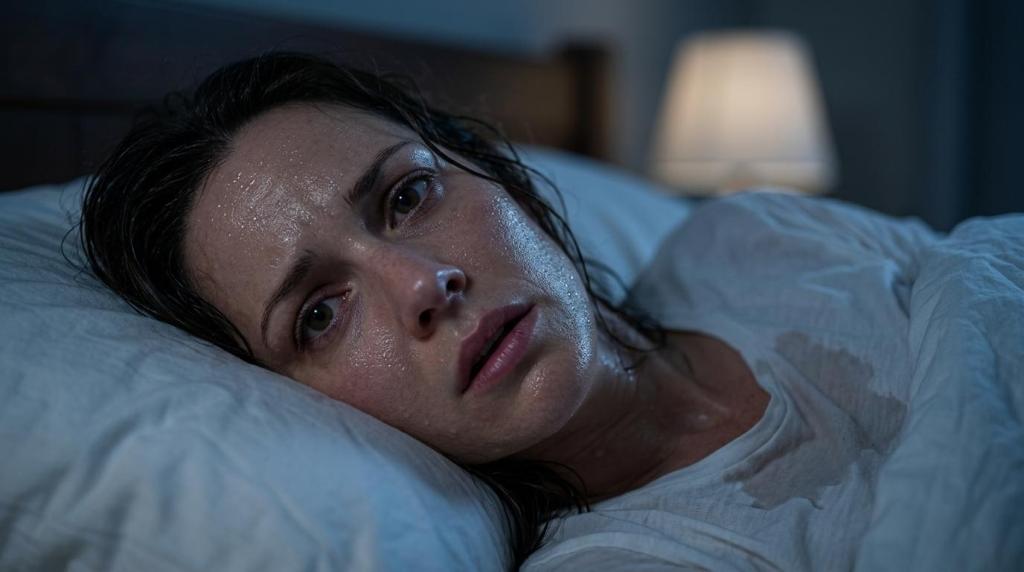
Can stress and night sweats be linked? Learn how anxiety and cortisol may trigger sleeping hot, plus when to seek medical advice.
Waking up drenched after a tense day can feel confusing. A lot of people assume night sweats must mean hormones, infection, or a medication side effect. Sometimes that is true. Sometimes, though, the trigger is stress.
This is not medical advice. Always consult your doctor or oncology team before making changes, especially if night sweats are new, severe, or happening along with fever, weight loss, pain, cough, diarrhea, or other concerning symptoms.
Yes, stress can contribute to night sweats.
When your body senses stress, it shifts into a fight-or-flight response. That response is tied to the sympathetic nervous system (SNS) and the release of stress hormones, including cortisol. According to the National Center for Complementary and Integrative Health page on stress, stress can raise heart rate, breathing rate, blood pressure, muscle tension, and sweating. If that stress response stays active into the evening, your body may be more likely to sweat even when you are trying to sleep.
There is also research behind the sweating side of this. A systematic review indexed on PubMed describes “psychological sweating” as sweating linked to stress, anxiety, and pain. That kind of sweating is often obvious on the palms, soles, face, and underarms, but stress-related sweating can affect broader areas of the body too. In plain English, your body can act hot and activated even when the room itself is not especially warm.
That does not mean cortisol is the only culprit. Night sweats are often a mix of body chemistry, bedtime habits, room temperature, bedding, and whatever else is going on medically.
People describe this in different ways. Some say they wake up clammy after a nightmare. Others say they drift off fine, then bolt awake at 2:00 a.m. with a racing heart, overheated chest, and damp sheets. Sometimes it happens during a clear panic episode. Sometimes it happens after a long stretch of background stress, when the nervous system never really powers down.
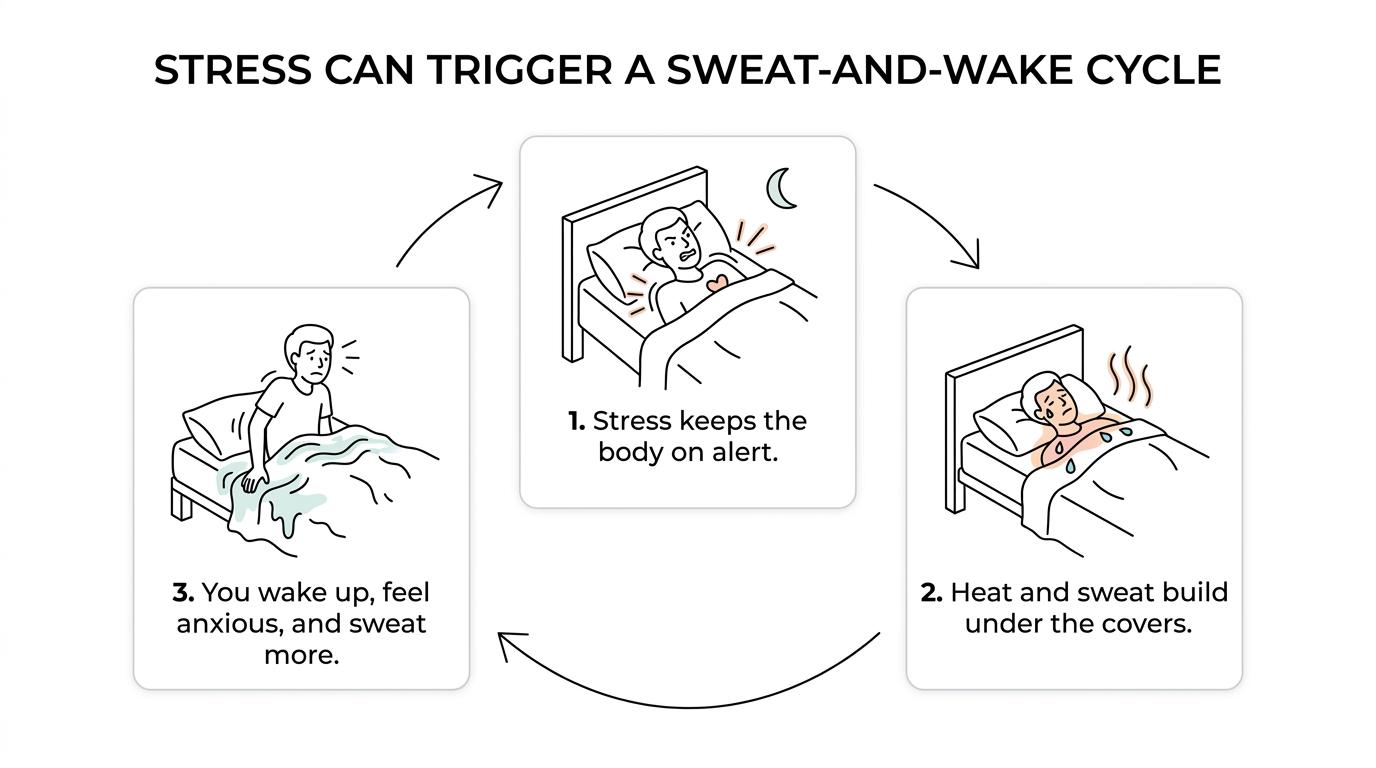
A common pattern is this: you fall asleep tired, but not relaxed. Your shoulders stay tight. Your jaw stays clenched. Your body temperature regulation, also called thermoregulation, gets a bit messy. Blood flow changes, sweating increases, and heat gets trapped under the covers. That trapped heat can make a mild stress sweat turn into a full-blown wake-up.
One anonymized example: a teacher in her 40s noticed that her worst “night sweats” showed up on Sunday nights and before big parent conferences. She assumed it was early menopause. Her doctor checked for other causes, and nothing urgent turned up. Once she tracked the timing, the pattern was hard to miss. Stress was not the only factor, but it was clearly part of the picture.
After a few nights of paying attention, many people notice clues like these:
This is the part that matters most.
Stress and anxiety can be real causes or contributing factors, but persistent night sweats should not be brushed off. Major clinical sources list anxiety as one possible cause, not the only cause. The Mayo Clinic overview of night sweat causes includes anxiety and sleep disturbances, while also pointing to infections, hormone changes, medication effects, and other medical issues.
The NHS page on night sweats also lists anxiety, but it describes true night sweats as soaking your sleepwear or bedding even when the room is cool. That is a helpful distinction. Feeling a little warm after too many blankets is one thing. Repeatedly waking up soaked is another.
Other common contributors include menopause or perimenopause, thyroid problems, low blood sugar, antidepressants, steroids, pain medicines, alcohol, infections, gastroesophageal reflux disease (GERD), and obstructive sleep apnea (OSA). Cancer treatment can also trigger hot flushes and night sweats, so anyone receiving oncology care should check in with their medical team rather than self-diagnosing.
Please get medical advice sooner rather than later if any of these apply:
Anxiety is not just a mental state. It is a body state.
In some people, anxiety changes vasodilation, sweating, and the way the nervous system reacts to social threat, pain, or fear. That can show up during the day as sweaty palms, and at night as a sudden flush of heat under the covers, often accompanied by sleep disturbances. Once heat and moisture collect in bed, they can keep the cycle going. You wake up. You get more anxious because you woke up. You sweat more.
That is why managing stress-related night sweats usually works best when you address both sides of the problem. Calm the nervous system where you can, and reduce trapped heat where you sleep.
Start simple. Sleep experts commonly recommend a bedroom temperature between 60°F and 67°F for better sleep. If you run hot, that range gives your body a better shot at cooling down. Still, not everyone wants to turn the whole house into a refrigerator, and many couples do not agree on the thermostat.
This is where targeted airflow can help. A Bedfan does not cool the air, and neither does a Bedjet. They both use the cool air already in the room. The difference is where that air goes. A bed fan sends room air under the sheets, where sweat and heat get trapped. That helps evaporate moisture and cool the body more directly. Many people can raise the room temperature by about 5°F and still feel cool enough to sleep better because the airflow is working on the real problem under the covers.
A few changes often make a noticeable difference within a week:
One man in his 30s described a pattern that is easy to recognize. He was not having soaking sweats every night. They hit hardest after late work emails and poor sleep. He started a brief breathing routine before bed and used under-sheet airflow instead of lowering the thermostat all the way down. His sweating did not vanish overnight, but the number of wake-ups dropped, and the bed stopped feeling swampy by 3:00 a.m.
When stress is part of the problem, fatigue can exacerbate the situation, so you still need a practical sleep setup. That is where a Bedfan or bFan makes sense because it targets trapped heat and moisture directly.
The original Bedfan was invented in 2003, several years before Bedjet was even thought of. It is a straightforward idea, but a useful one: push room air under the bedding so heat can escape before it builds up around your body. For people whose stress causes them to sleep hot, that can mean fewer wake-ups and less sheet-kicking through the night.
A few details matter here because they solve real sleep problems:
If you share a bed with someone who sleeps cold, this is often the sweet spot. You do not have to freeze the whole room. Because targeted airflow cools the body under the sheets, many people can nudge the thermostat up by about 5°F and still sleep comfortably. That can help with utility bills too.
And if cost matters, it is worth being plain about it. A dual-zone Bedjet setup costs over a thousand dollars, which is more than twice the price of two Bedfans. Neither system chills the air itself. Both use room air. The practical question is whether you want simple under-sheet airflow without turning bedtime into a tech project.
If night sweats are ongoing, give your clinician something useful to work with. A vague “I’m sweating at night” is easy to dismiss. A one-week pattern log is much more helpful.
Keep it short and concrete. Write down when the sweating happens, whether your clothing or sheets are soaked, your stress level that day, any nightmares or panic symptoms, your bedroom temperature, alcohol intake, and any new medications or dose changes. If you menstruate, note where you are in your cycle.
You can also mention whether the problem seems more like generalized warmth or true sweating. That distinction helps. So does naming related symptoms like palpitations, snoring, reflux, hot flashes, or weight changes.
If you are in cancer treatment or survivorship care, be especially cautious about self-treating. Night sweats can be part of treatment effects, hormonal changes, infection, or something else that deserves prompt review by your oncology team.
If you are building out related reading on this subject, these are useful internal linking opportunities for readers who want the next step:
NCCIH on stress and the fight-or-flight response A solid overview of how stress affects hormones, body activation, and sweating.
Mayo Clinic guide to causes of night sweats Useful for seeing the broader list of medical and non-medical causes, including anxiety.
PubMed review on psychological sweating A research summary on sweating tied to stress, anxiety, and pain.
NHS overview of night sweats A practical explanation of what counts as true night sweats and when to seek care.
If stress is leaving you sweaty and wide awake, a calmer bedtime routine plus targeted under-sheet airflow can help alleviate fatigue and make nights a lot more manageable. If you want a non-drug way to cool the space that matters most, you can take a look at the Bedfan at https://www.bedfan.com. This is not medical advice. Always consult your doctor or oncology team before making changes, and seek medical care if night sweats are persistent, severe, or paired with other concerning symptoms.