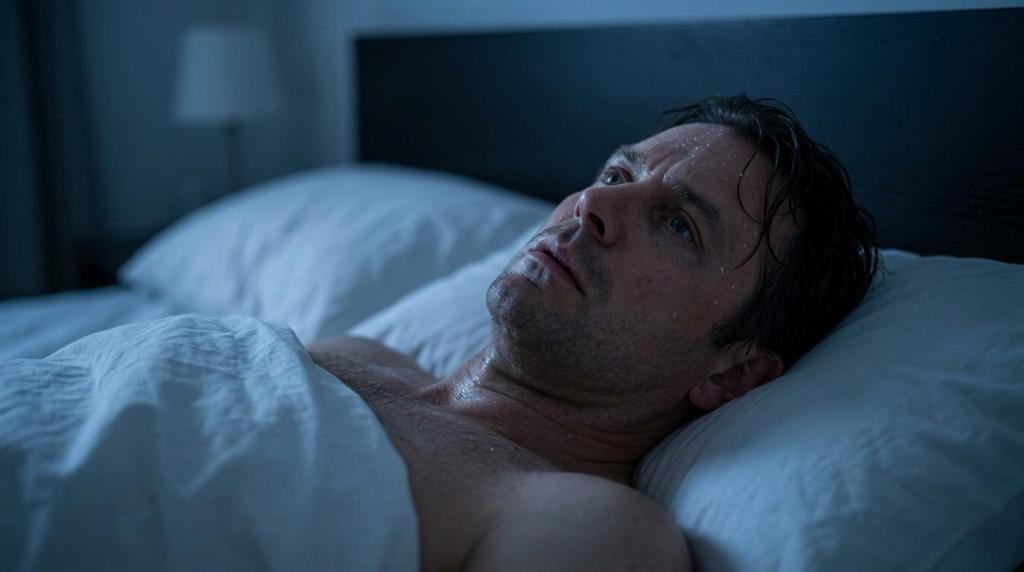
Night sweats in men can stem from stress, sleep apnea, hormones, or illness. Learn causes, warning signs, and cooling tips.
Waking up sweaty once in a while is annoying. Waking up soaked, needing to change your shirt, flip the pillow, or even change the sheets, is something else entirely. When that keeps happening, a lot of men start with the same question, is this just a hot room, or is my body trying to tell me something?
As a medical professional, I think it helps to separate simple overheating from true night sweats. A bedroom that’s too warm, heavy bedding, alcohol before bed, or poor airflow can absolutely make you sweat. True night sweats tend to feel more intense. They often wake you up, feel out of proportion to the room temperature, and may keep happening even when you’ve already tried the obvious fixes.
That distinction matters. Night sweats in men can be linked to everyday issues, like stress, reflux, medication side effects, or sleep apnea. They can also show up with infections, hormone shifts, blood sugar drops, thyroid problems, and, less often, more serious illnesses. Most cases are not an emergency, but repeated drenching sweats deserve a real look.
There’s also a practical side to this. Even while you and your clinician sort out the cause, you still need sleep. Sleep experts commonly recommend a bedroom temperature between 60°F and 67°F, 15.5°C to 19.5°C, for better sleep. Yet many people find that cooling the entire house to that range all night is expensive or unrealistic. A bed fan can help by moving the cooler room air already present under the covers, where your body heat gets trapped. With a Bedfan, many people can raise the thermostat by about 5°F and still feel cool enough for more restful sleep.
Night sweats are episodes of sweating during sleep that are strong enough to soak sleepwear or bedding. They’re different from getting a little warm under a comforter. Men often describe them as waking up clammy, flushed, and suddenly alert, then feeling chilled once the sweat evaporates.
Your body temperature is supposed to drift down a bit at night. That drop helps cue sleep and supports deeper rest. When your core temperature stays too high, or your body has repeated surges in heat release, sweating becomes much more likely. That can happen because the room is too warm, because your bedding traps heat, or because your body’s internal thermostat is being nudged around by hormones, illness, medication, or sleep disruption.
This is why the same symptom can have very different causes. One man may have night sweats because he drank several cocktails before bed and slept in a room set at 72°F. Another may have the same complaint because of untreated obstructive sleep apnea, low blood sugar overnight, an antidepressant, or a thyroid issue.
The most frequent causes are not usually the scary ones. In day to day practice, I’d first think about the setting, the sleep environment, medications, alcohol, stress, reflux, and sleep apnea. Then I’d widen the lens if the sweats are heavy, persistent, or linked to other symptoms.
Many men also underestimate how much trapped heat builds under the covers. Your body warms the air around you very quickly. If that heat can’t escape, your brain may respond with sweating even if the room itself isn’t terribly hot. This is one reason a bed fan can make a real difference. It does not cool the air. Neither Bedfan nor BedJet cool the air. They use the cool air already in the room and move it through the bedding, so heat and moisture can leave the microclimate around your body.
A few broad buckets explain most cases:
If your sweating started soon after a new prescription, that timing matters. Antidepressants, opioids, corticosteroids, some diabetes medicines, and hormone related therapies are well known triggers. If you snore loudly, gasp, wake unrefreshed, or your partner notices pauses in breathing, sleep apnea moves much higher on the list.
People often connect night sweats to menopause, but men have hormone related causes too. Testosterone levels change with age, and low testosterone can sometimes be linked to hot flashes or sweating, especially in men receiving treatment that suppresses testosterone, like therapy for prostate cancer. Sudden hormonal shifts, rather than a slow age related drift, tend to be more symptomatic.
An overactive thyroid can also drive sweating. When thyroid hormone runs high, metabolism speeds up. Men may notice palpitations, tremor, anxiety, weight loss despite eating normally, heat intolerance, and trouble sleeping. If night sweats come with those symptoms, a basic evaluation is a good idea.
Blood sugar swings are another possibility. Men with diabetes, especially those using insulin or certain oral medications, can sweat heavily when blood glucose drops overnight. This may come with vivid dreams, shakiness, morning headaches, or waking suddenly feeling panicked or hungry.
Infections can cause true night sweats, especially when the immune system is actively responding. Tuberculosis is the classic example, but it is far from the only one. Viral illnesses, bacterial infections, and certain fungal infections can all do it. In those cases, you often see other clues, fever, cough, fatigue, body aches, or swollen lymph nodes.
There are also inflammatory and immune system conditions that can trigger recurrent sweating. Cancer, especially lymphoma, is often mentioned online, and yes, it can be part of the picture. Still, it’s much less common than everyday causes like medications, alcohol, reflux, or sleep apnea. What raises concern is not sweating alone, but sweating paired with red flag symptoms.
Here’s the short version of when the pattern deserves more urgency:
Men sometimes wait too long because they assume sweating is just part of getting older. It can be benign, yes, but drenching episodes that keep happening are worth sorting out.
Obstructive sleep apnea is one of the most under recognized causes of night sweats in men. Repeated airway blockage stresses the body, raises adrenaline, and can trigger sweating. If you have loud snoring, daytime sleepiness, morning dry mouth, morning headaches, high blood pressure, or witnessed breathing pauses, ask about sleep apnea testing.
Acid reflux can do it too. When stomach acid comes up at night, your body may respond with discomfort, brief awakenings, coughing, and sweating. Men may not even feel classic heartburn. Some mainly notice a sour taste, throat clearing, hoarseness, or a feeling of warmth and restlessness after lying down.
Stress and anxiety deserve a place in the conversation. Your nervous system doesn’t fully power down at bedtime if it has been revved up all day. Higher adrenaline levels can lead to sweating, a racing mind, jaw clenching, or waking suddenly around 2 or 3 a.m. Alcohol adds another layer. It can make you sleepy at first, then fragment sleep later, widen blood vessels, and raise the chance of sweating overnight.
This is the part many people miss. You can have a medical trigger and a heat trapping sleep setup at the same time. Those two things often pile onto each other. A bedroom kept above the range sleep experts commonly recommend, 60°F to 67°F, 15.5°C to 19.5°C, can make mild night sweating much worse.
The challenge is cost. Running air conditioning low enough to keep the whole house cool all night can drive up utility bills fast. That’s where targeted cooling can help. A bed fan directs room air under the top sheet, where body heat collects. It does not refrigerate the air. It uses the cooler air already in the room and helps move that heat away from your skin.
That’s why many men do well with a Bedfan from www.bedfan.com. By cooling the bed microclimate instead of the entire room, many people can raise the thermostat by about 5°F and still sleep comfortably. For someone who normally feels they need a 65°F room to avoid waking sweaty, that can mean sleeping well with the room closer to 70°F, while still staying within a body cooling sweet spot.
Tight weave sheets matter here too. They help the airflow spread across your body instead of escaping too quickly. Cotton percale, or another tighter weave fabric, usually works better than very loose knits when you’re using a bed fan.
You do not need a perfect setup to get relief. Small changes often stack well. If you’re sweating at night, the goal is to lower trapped heat, reduce triggers, and keep your sleep more stable.
A few simple adjustments can make a real difference:
Some men get stuck in a cycle where sweating wakes them, then frustration keeps them awake, then poor sleep makes the next night worse. Breaking that cycle matters. Cooler bedding, lighter sleepwear, a fan strategy, and steady sleep hours can help your body settle into more restorative sleep.
If your problem is trapped heat under the covers, a bed fan is one of the more practical tools out there. It is not a substitute for medical care when symptoms point to illness, but it can be very effective for comfort, sleep quality, and lowering air conditioning use.
The bFan from www.bedfan.com is worth a look if you want a straightforward cooling option. It sits discreetly at the foot of the bed and moves room air between the sheets, where it can carry heat and moisture away from the body. Normal operating sound is usually around 28 dB to 32 dB, which many sleepers find easy to tolerate. It also uses very little electricity, commonly cited at about 18 watts on average, so it is inexpensive to run compared with cooling an entire room all night.
There are a few points shoppers often ask about when comparing a Bedfan with BedJet:
That timer feature is more useful than it sounds. Many men feel hottest when first getting into bed, then need less airflow later. Being able to set a timer means you can match the cooling to your sleep pattern instead of overcooling all night.
If your episodes are frequent, drenching, or tied to other symptoms, it’s time to get evaluated. You do not need to panic, but you do need a sensible workup. A clinician may ask about snoring, alcohol, reflux, travel, fever, weight change, medication timing, stress, and family history. Basic blood work is often enough to point the next step in the right direction.
If you have sweats plus fever, unexplained weight loss, swollen lymph nodes, persistent cough, chest pain, or severe fatigue, don’t put it off. The same goes if you have diabetes and think low blood sugar could be happening at night.
The goal is simple, treat the cause when there is one, and make you more comfortable while that process is happening.
They can be common, but that does not mean they should always be ignored. A warm room, heavy bedding, alcohol, stress, or a new medication can all trigger sweating without anything dangerous going on.
Still, repeated drenching sweats are different from mild overheating. If you are soaking the sheets, waking often, or noticing other symptoms, get checked.
Yes, it can, though it is not the most common cause. Men with major hormone shifts, or those receiving treatment that lowers testosterone, may notice hot flashes and sweating.
If you also have low energy, lower libido, mood changes, reduced muscle mass, or erectile issues, hormone testing may make sense as part of a broader evaluation.
Yes, very much so. Sleep apnea can trigger stress responses during sleep, and those surges can cause sweating, abrupt awakenings, and a racing heart.
Men who snore loudly, feel tired during the day, have morning headaches, or have witnessed pauses in breathing should ask about a sleep study.
Absolutely. Alcohol can widen blood vessels, disturb sleep stages, and raise the chance of sweating as the night goes on.
Some men mainly notice this after a heavy evening, while others are sensitive even to a smaller amount. If your pattern is worse after drinking, that clue is useful.
They can be, but most night sweats are caused by much more common issues. Online searches tend to jump straight to lymphoma, which is why this question shows up so often in search results.
Cancer becomes more concerning when sweats come with unexplained weight loss, swollen lymph nodes, ongoing fever, severe fatigue, or symptoms that keep getting worse.
Sleep experts commonly recommend a bedroom temperature between 60°F and 67°F, 15.5°C to 19.5°C, for better sleep. That range helps the body release heat and settle into deeper rest.
If cooling the whole room to that range is expensive, a Bedfan can often let you raise the room temperature by about 5°F while still cooling the body enough for more restful sleep.
They can help a lot when trapped heat under the covers is part of the problem. A bed fan moves room air through the bedding, which helps carry heat and moisture away from your skin.
That does not treat an infection, a thyroid disorder, or sleep apnea, but it can make sleep much more tolerable while you work on the underlying issue.
That depends on what you value most, but cost is a major factor. BedJet is about twice the price of a Bedfan, and dual zone BedJet setups can cost over $1000.
Also, neither device cools the air itself. They both use cool room air. Many couples can get dual zone microclimate control with two Bedfans for much less, and Bedfan also offers timer controls.
Tight weave sheets usually work best. They help spread the airflow across the body instead of letting it escape too fast.
Many hot sleepers do well with cotton percale or another breathable fabric that still has enough structure to direct the moving air where it is needed.
Yes, in the sense that you should pay attention to the timing. Many common medications can trigger sweating, including antidepressants, steroids, opioids, hormone therapies, and some diabetes treatments.
Do not stop a prescribed medication on your own. Ask the prescribing clinician whether the drug, dose, or timing might be contributing, and whether there are reasonable alternatives.
MedlinePlus overview of night sweats
A plain language medical reference covering causes of night sweats and when to seek care.
National Heart, Lung, and Blood Institute sleep health information
Background on healthy sleep and why sleep quality matters for overall health.
National Institute of Diabetes and Digestive and Kidney Diseases guide to low blood glucose
Useful if nighttime sweating may be related to hypoglycemia or diabetes treatment.
American Thyroid Association information on hyperthyroidism
Explains symptoms of an overactive thyroid, including heat intolerance and sweating.
Bedfan bed fan product information
Details on how a Bedfan uses room air under the sheets to reduce trapped heat and improve sleep comfort.