Can hormones cause night sweats? Yes—especially menopause-related estrogen changes—but thyroid issues, meds, and infections can too.
Hormones absolutely can cause night sweats during sleep, and menopause-related estrogen decline is one of the best-known reasons. But if your sheets are getting soaked night after night, it’s smart to think bigger than hormones alone.
TL;DR: Summary
- Yes. Hormonal changes, especially perimenopause and menopause, are a well-established cause of night sweats during sleep.
- Lower estrogen levels can make the hypothalamus, the body’s temperature control center, react to tiny temperature shifts as if you are overheating, which can trigger hot flashes and sweating at night.
- True night sweats usually mean soaking sleepwear or bedding even when the room is cool, not just feeling a little warm under heavy blankets.
- Hormones are not the only cause. Thyroid disease, infections, some cancers, low blood sugar, alcohol, anxiety, hyperhidrosis, and medication side effects can all cause similar symptoms.
- If night sweats are frequent, new, severe, or come with fever, weight loss, swollen lymph nodes, chest pain, or cancer treatment, talk with a doctor promptly.
- A practical non-drug option is targeted airflow under the sheets. A bFan Bed Fan does not cool the air itself, but it can help evaporate sweat and remove trapped heat so many people can keep the bedroom about 5°F warmer and still sleep more comfortably.
This is not medical advice. Always consult your doctor or oncology team before making changes, especially if you are pregnant, on hormone therapy, receiving cancer treatment, or have symptoms like fever, unexplained weight loss, or low blood sugar.
Yes. Menopause and perimenopause are among the most common hormone-related causes of night sweats, and hot flashes often show up at night as soaking sweats. Mayo Clinic specifically notes that changing hormone levels before, during, and after menopause are the most common cause of hot flashes and nighttime sweating: https://www.mayoclinic.org/diseases-conditions/hot-flashes/symptoms-causes/syc-20352790?p=1
Night sweats are more than ordinary warmth. The NHS defines them as sweating so much that your night clothes or bedding become soaking wet even though the sleeping area is cool: https://www.nhs.uk/symptoms/night-sweats/ That definition matters, because it helps separate true night sweats from a hot room, thick comforter, or pajamas that don’t breathe.
Lower estrogen levels can make the hypothalamus overreact to small temperature changes. Mayo Clinic explains that when estrogen drops, the brain’s thermostat may read normal body heat as too hot, which can trigger flushing, sweating, and then chills: https://www.mayoclinic.org/diseases-conditions/hot-flashes/symptoms-causes/syc-20352790?p=1
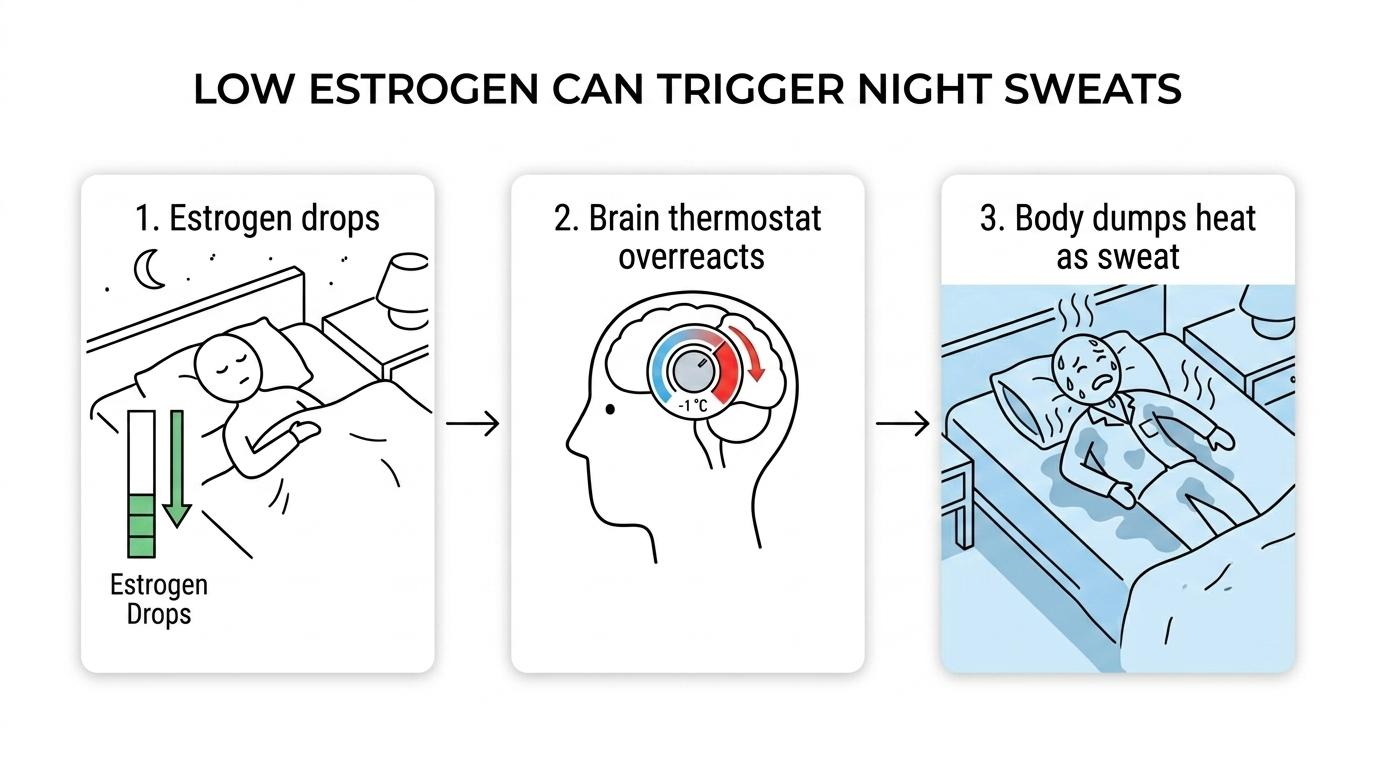
This is why many people say the sweating seems to come out of nowhere. You may fall asleep comfortable, then wake up drenched 90 minutes later because your body suddenly dumped heat through the skin. A common misconception is that sweating means you have a fever. With hormone-related night sweats, the problem is often temperature regulation, not infection.
bFan Bed Fan targets trapped heat under the covers, and the original Bedfan was invented in 2003, years before Bedjet entered the category.
Progesterone and estrogen both influence temperature control, which helps explain why symptoms can show up in perimenopause, pregnancy, after childbirth, and around the menstrual cycle. Cleveland Clinic also notes that night sweats happen more often in women because estrogen and progesterone help regulate body temperature: https://my.clevelandclinic.org/health/symptoms/16562-night-sweats
The most useful options combine medical evaluation with targeted cooling, not just a colder thermostat. The goal is to reduce sweat, help evaporation, and remove heat trapped in bedding.
After the medical basics are covered, these tend to help the most in real bedrooms, not just in theory:
Timing offers strong clues. If night sweats show up with irregular periods, daytime hot flashes, sleep disruption, mood changes, or vaginal dryness, hormones move higher on the list.
Step 1. Look at pattern. Hormone-related sweating often comes in waves, especially during perimenopause, after pregnancy, or after a change in hormone therapy.
Step 2. Look at age and context. A person in their late 40s with new irregular cycles and nighttime heat surges fits a different pattern than someone with sudden sweating plus fever and cough.
Step 3. Look at the room. If the bedroom is already cool and you are still soaking through clothes, that is more consistent with true night sweats than simple overheating.
A short real-world example helps. One woman in her late 40s described waking at 2 a.m. drenched three nights a week, even with the bedroom at 65°F. Her periods had become irregular, and she was also getting daytime flushes. That cluster strongly suggested perimenopause, though she still checked in with her clinician to rule out other causes.
Pro tip: don’t assume “hormonal” means “harmless.” If the sweats are new, intense, or out of character for you, it is still worth getting checked.
Menopause is common, but it is not the whole list. Pregnancy, postpartum hormone shifts, menstrual cycle changes, thyroid overactivity, and medically induced menopause can all trigger nighttime sweating.
Pregnancy and the postpartum period can cause abrupt hormone swings that affect body temperature. Some people notice the worst sweats in the first few weeks after delivery.
Thyroid disease matters too. An overactive thyroid can increase metabolism and heat production, which can look a lot like classic hot flashes. This is where people often get tripped up. They blame “female hormones” and miss an endocrine issue that needs testing.
Cancer treatment can also change the picture. Chemotherapy, ovarian suppression, tamoxifen, aromatase inhibitors, and other hormone-related treatments may trigger hot flashes and sweats by changing estrogen status or pushing the body into early menopause. MedlinePlus notes that menopause can happen early because of medical treatments, including chemotherapy and hormone therapy for breast cancer: https://medlineplus.gov/menopause.html?utm_source=openai
Night sweats need prompt medical attention when they come with red-flag symptoms. Fever, unexplained weight loss, swollen lymph nodes, fainting, chest pain, severe shortness of breath, or repeated low blood sugar deserve urgent follow-up.
If you have a history of cancer, are actively in treatment, or are immunocompromised, contact your oncology team or doctor sooner rather than later. Persistent night sweats can also happen with infections, some cancers, and medicine side effects, not just hormones.
If your sweating started after a medication change, make a note of the date. Antidepressants, steroids, diabetes medicines, pain medicines, and some cancer drugs are common culprits. A common misconception is that you have to choose between suffering and stopping the medicine. Often the better move is a supervised review of dose, timing, or alternatives.
Start with the bed microclimate, then work outward. Cooling the whole house can help, but trapped heat under the sheets is often the piece that keeps waking people up.
Step 1. Set the room for sleep, not for daytime comfort. A bedroom around 60°F to 67°F is a common target for better sleep. If the AC bill is brutal, targeted bed cooling may let you keep the room about 5°F warmer and still feel comfortable.
Step 2. Use airflow where sweat happens. A Bedfan or bed fan pushes the cool air that is already in the room under the covers, where it can evaporate sweat and carry heat away from the skin. Neither Bedfan nor Bedjet cools the air itself. They both use the cooler room air already available.
At low speed, bFan Bed Fan runs at about 28 dB, which matters if hormone-related night sweats wake a light sleeper more than once a night.
Step 3. Pair the airflow with the right fabrics. Tight-weave sheets usually work better than loose knits because they help spread the airflow across the body. If your sheet leaks air too easily, you lose some of the cooling effect.
One practical scenario: a breast cancer survivor on endocrine therapy may not want extra medications for sleep. In that case, targeted airflow, lighter sleepwear, and a cooler sleep schedule can be a reasonable place to start while checking in with the oncology team.
Hormone night sweats often come in surges, while infection-related sweats usually bring other illness clues. The overlap is real, so pattern and symptoms matter.
If the sweats track with cycle changes, hot flashes, or menopause symptoms, hormones rise higher on the list. If they started after a new SSRI, prednisone, insulin change, or cancer therapy, medication effects become more likely. If they come with fever, cough, swollen nodes, or weight loss, think beyond hormones quickly.
Here’s the practical distinction. Hormone-driven sweats can be miserable, but they often occur in a person who otherwise feels fairly well between episodes. Infection, cancer, and low blood sugar often drag other symptoms in with them.
NHS also lists low blood sugar, alcohol, some medicines, anxiety, and hyperhidrosis among common causes of night sweats: https://www.nhs.uk/symptoms/night-sweats/ If you have diabetes and wake sweaty, shaky, or confused, treat that as a possible glucose issue first.
A Bedfan cools the space under the covers more directly than a ceiling fan, and it usually costs less to run than cranking down central AC. Compared with Bedjet, the key trade-offs are price, airflow approach, and whether you need dual-zone control.
Central AC cools the whole room, which is useful, but expensive if only one sleeper is overheated. A ceiling fan helps room air move, yet it may not do much once your body heat is trapped beneath sheets and blankets. A bed fan targets that trapped pocket directly.
Bedjet and Bedfan both rely on room air. Neither system actually cools the air. That’s worth knowing because some shoppers assume these products work like miniature air conditioners. They do not. They improve comfort by moving cooler room air where you need it most.
Two bFan Bed Fans can create dual-zone microclimate control at a fraction of the over one thousand dollar cost of a dual-zone Bedjet.
If you sleep with a partner who wants a different temperature, dual-zone setup matters. Bedjet offers a dual-zone option, but the dual-zone Bedjet setup costs over a thousand dollars and is more than twice the price of two Bedfans. Two Bedfans can give each sleeper separate control at a much lower total cost. The Bedfan also offers timer controls, which can be helpful if you only need extra cooling during the first part of the night.
A short symptom log can save time and sharpen the evaluation. Doctors are looking for pattern, severity, and clues that point toward hormones, medications, endocrine issues, infection, or something else.
Step 1. Track when it happens. Note the time of night, how soaked the bedding gets, room temperature, alcohol intake, and whether you had a daytime hot flash.
Step 2. Track related symptoms. Write down irregular periods, palpitations, fever, weight loss, snoring, reflux, low blood sugar symptoms, or medication changes.
Step 3. Ask focused questions. You might ask whether perimenopause is likely, whether thyroid or glucose testing makes sense, whether a medicine could be contributing, and whether hormone therapy or nonhormonal treatment is appropriate in your situation.
If you are on cancer treatment, ask your oncology team before trying supplements or hormone products. That warning matters. “Natural” does not always mean safe in the setting of breast cancer, clot risk, pregnancy, or complex medication regimens.
These are solid places to verify symptoms, causes, and treatment options with mainstream medical guidance.
If you’re reading this on bedfan.com, related internal pages that fit naturally with this topic include the main night sweats hub at https://www.bedfan.com/night-sweats/, sleeping cooler guidance at https://www.bedfan.com/sleeping-cooler/, menopause-focused night sweat content at https://www.bedfan.com/night-sweats/menopause/, medication-related night sweats at https://www.bedfan.com/night-sweats/medications/, bedroom temperature tips at https://www.bedfan.com/sleeping-cooler/bedroom-temperature/, and cooling help for couples at https://www.bedfan.com/sleeping-cooler/couples/.
If hormone-related overheating is making sleep feel impossible, a targeted under-sheet cooling setup can be a simple next step. You can take a look at the bFan Bed Fan at bedfan.com if you want a quiet, low-fuss way to move heat away from your body while you sleep. This is not medical advice. Always consult your doctor or oncology team before making changes.