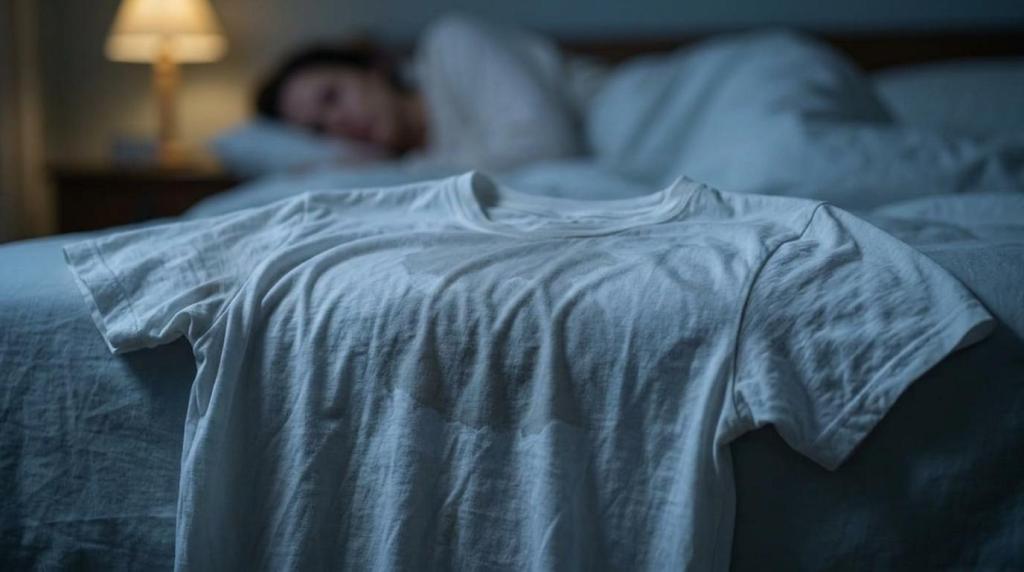
Can a cold cause night sweats? Yes. Fever and chills can trigger overnight sweating, but repeated drenching sweats may need medical attention.
Waking up sweaty with a stuffy nose and sore throat can feel confusing. A lot of people assume night sweats mean something serious, but sometimes the explanation is much simpler. Yes, a cold can cause night sweats, most often when your body is running a fever or moving through the chills-then-sweating cycle that comes with fighting a viral infection.
That said, context matters. If the sweating is mild and happens during a short-lived cold, that is often less concerning than drenching sweats that keep happening, leave you with soaking wet bedding, or show up with red-flag symptoms.
This is not medical advice. Always consult your doctor or healthcare team before making changes to your care, especially if you have a high fever, trouble breathing, cancer treatment side effects, immune suppression, or symptoms that are not improving.
A common cold is usually a viral infection of the upper respiratory tract. Not every cold causes fever, but some do. When fever is part of the picture, sweating can follow. MedlinePlus notes that fever is part of the body's defense against infection, and even a simple cold or other viral infection can sometimes cause a meaningful temperature rise (MedlinePlus: Fever).
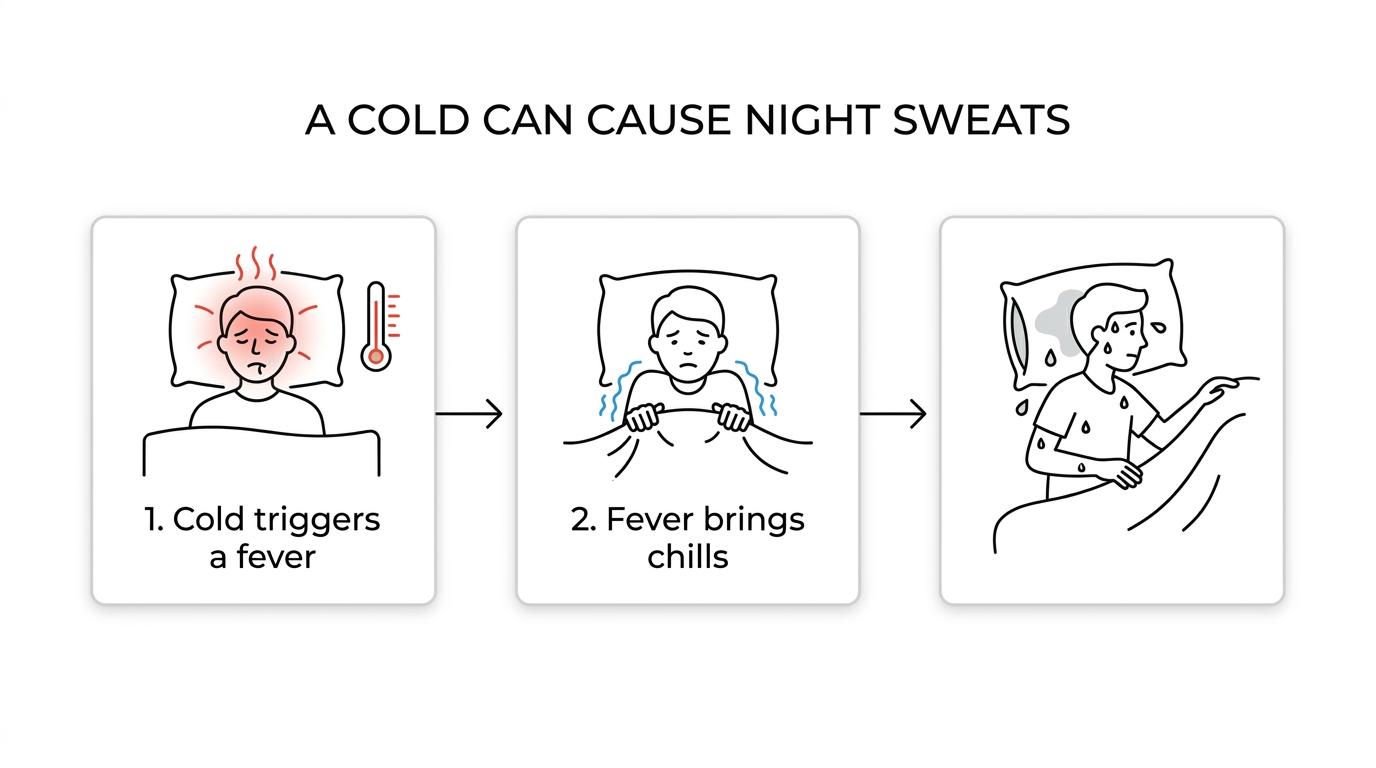
Here is the basic pattern. Your temperature rises, you may feel chilled or shaky, then as the fever starts to break, your body sweats to release heat. If that happens overnight, it can feel like classic night sweats.
The NHS defines night sweats as sweating so much that your night clothes and bedding become soaking wet even though the room is cool (NHS: Night sweats). So there is a difference between being a little warm under heavy blankets and having true drenching sweats.
A short version looks like this:
Most cold-related sweating is temporary. It often shows up during the first few nights of illness, especially if you have congestion, a low-grade fever, body aches, and a general run-down feeling.
You might notice that you fall asleep cold, wake up sweaty, throw off the blankets, then feel chilly again later. That back-and-forth can happen because your temperature regulation is shifting during infection. Some medical references describe night sweats as an exaggeration of the normal circadian temperature rhythm, and fever can push that system even further off balance.
A short anonymized example may help. One patient described going to bed with a scratchy throat and sinus pressure, then waking around 2 a.m. with a damp T-shirt and clammy sheets. By morning, the sweating was gone, but congestion and fatigue remained. In that kind of situation, a brief sweat episode during a cold is not unusual. If the same person were having persistent fever for days, weight loss, chest pain, or shortness of breath, the concern level would be very different.
This is the part people should take seriously. Night sweats are not specific to colds. They can also happen with influenza, COVID-19, pneumonia, medication side effects, hormonal changes, reflux, sleep apnea, low blood sugar, and more serious infections or illnesses.
Mayo Clinic points out that night sweats are more concerning when they happen with other symptoms like fever, weight loss, pain in a specific area, cough, or diarrhea (Mayo Clinic: Night sweats causes). In plain language, it is less about the sweat alone and more about the whole picture.
Pay closer attention if you have any of these:
If your symptoms do not fit the usual cold pattern, it is smart to get checked.
People often call any upper respiratory illness a “cold,” but that can muddy the waters. A mild cold may cause a low-grade fever and some sweating. Influenza and COVID-19 are more likely to cause stronger body aches, more pronounced fever, and more noticeable sweating in some people. Pneumonia and other lower respiratory infections can also cause night sweats, often with a deeper cough and breathing symptoms.
That is why the timeline matters. A plain cold tends to peak and begin easing within several days. If symptoms are escalating instead of settling down, it is worth pausing before assuming it is “just a cold.”
Here are a few clues that the label may not fit:
When you feel sick, comfort is not a luxury. Better sleep supports recovery, and overheating can wreck the little sleep you are able to get. Sleep experts commonly recommend a bedroom temperature between 60°F and 67°F for better sleep. If you already run warm, illness can make that feel even hotter.
Still, blasting the air conditioner all night is not the only option. Neither a bed fan nor similar systems actually cool the air. They use the cool air already in the room and move it under the sheets, which helps trapped heat and moisture escape. That matters when sweating is happening under blankets, not just in the room itself.
A few practical adjustments can make a real difference:
If overheating is keeping you up, a bFan bed fan can be a very practical non-drug tool. It pushes room air under the covers where sweat and body heat build up, helping stop sweat before it starts and cool the skin more directly. For people who do not want a loud fan pointed at the face, the quieter range matters too. At lower settings, the bFan runs around 28 to 32 dB, with timer controls and low energy use. Many people can raise the room temperature by about 5°F and still feel cooler in bed because the airflow is targeted where the heat is trapped. That can be helpful when you are sick and want comfort without turning the whole bedroom into a refrigerator.
Sweating with fever is normal physiology, not a mysterious event. Fever can happen with infections, and sweating often follows as the body tries to lower temperature. Medical references in the National Center for Biotechnology Information (NCBI) describe sweating and night sweats as common features in patients with fever and infection-related illness (NCBI Bookshelf: Fever).
That does not mean every sweaty night equals fever, and it certainly does not mean every fever is just a cold. It simply means there is a medically sound reason a cold can be linked to night sweats.
A useful distinction is this: a short-lived sweat episode during an active viral infection can be expected. Ongoing drenching sweats after the cold should have passed are not something to brush aside.
Sometimes the illness starts the problem, but the sleep setup keeps it going. Heavy comforters, fleece pajamas, memory foam that holds heat, and poor airflow can turn a mild sweat episode into a miserable night.
This is especially common when people try to “sweat out” a cold by piling on blankets. That may sound comforting, but overheating can leave you waking up drenched, dehydrated, and exhausted. If you feel chilled from fever, use layers you can remove easily instead of one very heavy blanket.
A second anonymized scenario comes up a lot. Someone with a mild viral infection sleeps under a thick duvet in a 68°F room and wakes soaked. The next night, they switch to lighter bedding, use a bedside glass of water, and add under-sheet airflow from a Bed Fan. Same illness, much less miserable sleep. The virus did not vanish. The sleep environment just stopped trapping so much heat and sweat.
Most people do not need urgent care for a cold with one or two sweaty nights. But there are situations where medical input matters sooner rather than later.
Please seek medical care promptly if you have:
If you are waking with soaking wet bedding night after night, that deserves a fuller evaluation, even if you thought it started as a cold.
If you are reading this at 1 a.m. with damp sheets and a blocked nose, keep it simple. Change into dry clothes. Swap out the pillowcase if it is wet. Use lighter bedding. Take your temperature if you have not already. Pay attention to the bigger symptom pattern, not just the sweat.
And if overheating is what keeps jolting you awake, targeted airflow can be more useful than dropping the whole house temperature. A bed fan does not treat the infection, of course, but it can help with the part that makes rest so hard: heat trapped under the covers.
If you want more help on related sleep issues, these internal link opportunities would fit naturally on bedfan.com:
/night-sweats/causes-of-night-sweats//sleeping-cooler/how-to-sleep-cooler//night-sweats/menopause-night-sweats//night-sweats/medications-that-cause-night-sweats//sleeping-cooler/under-sheet-cooling/MedlinePlus guide to fever
A clear, medically reviewed overview of fever, including infection-related causes.
NHS overview of night sweats
Useful for defining true night sweats and reviewing common causes.
Mayo Clinic explanation of night sweats
Helpful for knowing when night sweats deserve more medical attention.
NCBI Bookshelf chapter on fever
A deeper medical reference on fever, sweating, and infection-related symptoms.
If overheating is making sick nights harder than they need to be, take a look at the bFan at https://www.bedfan.com. It is a simple way to move room air under the sheets, stop sweat before it starts, and make sleep more manageable while your body recovers.
This is not medical advice. Always consult your doctor or oncology team before making changes. Night sweats can be harmless, but severe, persistent, or unexplained sweating should be evaluated by a qualified clinician.
The bFan sits at the foot of your bed and sends a quiet stream of air under your sheets. Direct airflow helps stop sweat before it starts, and one bFan costs less than half the price of one BedJet, making it the less expensive alternative. Shop the bFan at bedfans-usa.com