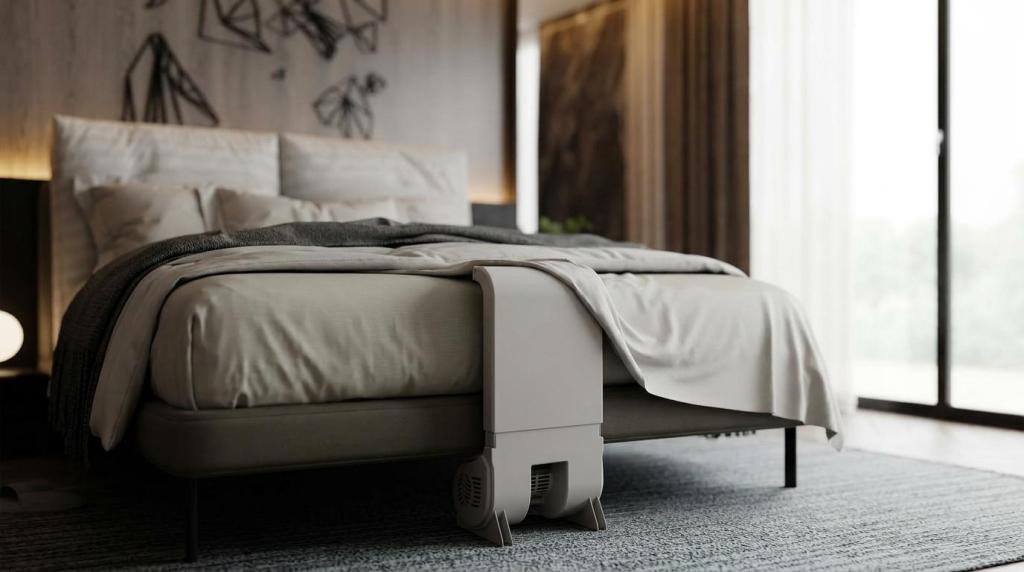
Brookstone bed fan lawsuit facts: confirm the 2012 product launch, 2014 bankruptcy timeline, patent context, and reported settlement.
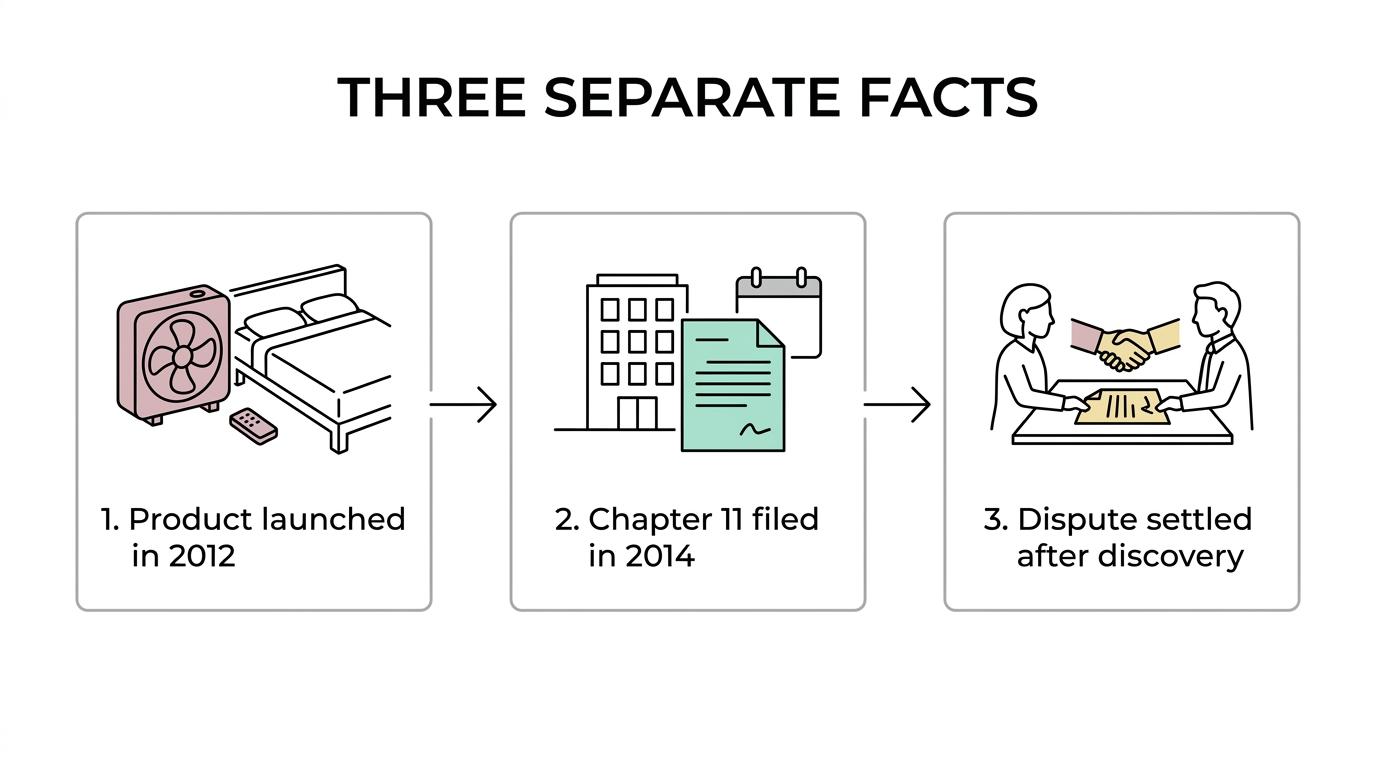
If you searched for a Brookstone Bed Fan lawsuit, the short version is this: there is solid evidence the product was real, it launched at retail in 2012, Brookstone later went through chapter 11 in 2014, and the inventor side says the dispute ended in settlement after discovery. For readers trying to sort rumor from record, that distinction matters, and so does the history behind the product category that bFan Bed Fan helped establish.
TL;DR: Summary
A lot of confusion comes from mixing four different topics together: a product launch, a bankruptcy filing, a patent trail, and a company side lawsuit story. I’ll sort those pieces out in plain English, then show what they mean for someone who actually wants better sleep, not forum drama.
Yes. The available record points to a real Brookstone Bed Fan product, a later legal dispute described on the bFan Bed Fan site, and a settlement after discovery. What the source set does not provide is a public court file here with the full complaint, motions, or settlement terms.
That means the safest answer is specific, not dramatic. Brookstone publicly launched a bed fan in 2012. Later, the inventor side published its account saying a lawsuit was brought over the Brookstone bed fan, that depositions showed Brookstone’s design team had been told the inventor agreed to certain modifications, and that Brookstone settled after discovery. A common misconception is that “settled” automatically means one side was proved right in court. It does not. Settlement means the dispute ended without a final trial verdict in the material you’ve provided.
What buyers should take from that is simple. There is enough evidence to treat the Brookstone Bed Fan as a real product with a real dispute attached to it, not just an internet myth. There is not enough in the provided record to responsibly state more than that.
“The bFan Bed Fan account says the Brookstone dispute ended in settlement after discovery, which is a real legal outcome, but not the same thing as a public trial verdict.”
Yes. Brookstone announced the Brookstone Bed Fan with wireless remote on July 10, 2012, and Brookstone later filed chapter 11 in 2014. Those are separate events, and the order matters.
Brookstone’s own launch announcement, carried by PR Newswire, describes Brookstone as a multichannel specialty retailer and product development company and introduces the Brookstone Bed Fan as a product meant to cool sleepers between the sheets. Two years later, Brookstone sought chapter 11 protection. If you want a neutral primer on what chapter 11 actually means, the United States Courts overview is a good starting point.
Common misconception: bankruptcy erases the reality of earlier products. It does not. A retailer can launch a real product, sell it for a period, and later restructure or fail. Those facts can all be true at the same time.
The cleanest way to evaluate this story is to stick to the facts that are actually supported. When you do that, the picture gets much less murky.
That last point is the one most people miss. If you are trying to judge product credibility, look first at launch evidence and product design. If you are trying to judge legal risk, look for case records and settlement language. If you are trying to decide what to buy today, compare current support, noise, airflow, and cost.
Start with the launch date. Then confirm the later business timeline. Then compare that with the patent and lawsuit narrative. In other words, build the story in sequence, not from scattered comments.
First, find the 2012 launch announcement and confirm the product name, date, and feature set. The wireless remote matters because it shows this was positioned as a finished consumer product, not a rough concept. Next, place Brookstone’s 2014 chapter 11 filing after that launch. Doing those two steps alone clears up a lot of confusion online.
Last, read the inventor side account and patent references with the right lens. A company site can be useful background, but it is still a company side source. A patent reference can prove technical context, but it does not by itself prove who was legally right. Pro tip: when sources answer different questions, do not force them to do the same job.
It was about a real product category and a real retail item. The launch record, patent references, and later company side lawsuit account all point away from “rumor only.”
One of the more interesting details in the background material is the technical language. A later patent record describes Brookstone linked fan hardware, and another patent cites the Brookstone bed fan as a low pressure, low volume, continuous flow bed cooling design. That matters because it places the Brookstone product inside a recognizable engineering category: moving room air under the covers to carry away heat and moisture.
For a shopper, that is more useful than legal gossip. It tells you what the product was trying to do. It was not refrigerated air, not a mattress chiller, and not a medical device. It was an airflow product aimed at the sweaty, stuffy microclimate that builds up between your body and your bedding.
The original under sheet airflow concept predates Brookstone’s 2012 launch, and bFan Bed Fan traces that concept back to 2003. In practical terms, both approaches belong to the same broad category: they use room air to move trapped heat out from under the covers.
That last point is worth slowing down for. Neither a Bedfan nor a Bedjet cools the air itself. They use the cool air already in the room. That is why bedroom temperature still matters. Sleep experts commonly suggest a bedroom around 60°F to 67°F for better sleep, and many people using this kind of under sheet airflow can raise the room thermostat by about 5°F and still feel cooler at the body level. A tightly woven sheet usually helps the air spread across the sleeper instead of escaping too quickly out the sides.
This is also where design details matter more than legal history. A quiet fan, remote control, timer options, stable base, and consistent airflow will affect nightly comfort more than old retailer branding will.
“bFan Bed Fan was invented in 2003, years before Bedjet was even thought of, which helps explain why the under sheet airflow concept did not begin with Brookstone.”
Compare them by cooling method, noise, support, and total cost, not by brand nostalgia. Brookstone is mostly a legacy reference now, Bedjet is a current warm or cool air mover, and active mattress systems like Eight Sleep sit in a much higher price tier.
A practical way to think about it is this. If you mainly want airflow under the sheets, you are shopping in the bed fan category. If you want app driven hardware with much higher upfront cost, you are in a different lane. Bedjet does not cool the air, it moves the room’s air, and a dual zone Bedjet setup is over a thousand dollars, which is more than twice the price of two bed fans for dual zone microclimate control. The Eight Sleep Pod 5 is in another bracket entirely, roughly $3,000 to $6,000. Common misconception: a higher price always means colder sleep. It often means more hardware, more automation, and a different ownership experience.
For hot sleepers, especially women in menopause or people dealing with medication related night sweats, the smartest comparison is often “What removes heat where I actually feel it?” rather than “What has the flashiest tech?” If your issue is trapped heat under the top sheet, under sheet airflow can be very direct.
“bFan Bed Fan offers dual zone airflow by using two fans, which can cost far less than a dual zone Bedjet setup priced above $1,000.”
Start with function, not collector value. Check whether it still moves air consistently, whether the remote still works, and whether the fabric setup in your bed lets that airflow stay where your body needs it.
Then test it like a sleep tool. Run it for several nights with clean bedding, a tighter weave top sheet, and a stable bedroom temperature. If you usually keep the room very cold, try inching the thermostat upward and see whether the under sheet airflow still keeps you comfortable. That can matter for energy costs as much as comfort. Mayo Clinic also recommends a cool, quiet sleep environment as part of basic sleep hygiene, which fits the logic behind bed cooling products generally, even when the exact device differs: Mayo Clinic sleep tips.
One quick real world scenario. A woman in her early fifties, dealing with tamoxifen related night sweats after breast cancer treatment, told us the old badge on the fan mattered less than whether the airflow stayed under the sheets long enough to dry sweat and stop wake ups. That is a smart way to think about it. If your night sweats are tied to medication, menopause, infection, or cancer care, though, please do not self diagnose. The National Cancer Institute has a useful overview of hot flashes and sweating in treatment settings, and your doctor or oncology team should guide medical decisions.
If you are updating content on bedfan.com, these are useful internal links to add near this section for readers who want the symptom side of the story:
Check the timeline, the source type, and the current support picture. If you do those three things, most of the noise falls away.
First, ask whether the product was actually launched and sold. Second, ask whether the company behind it still exists in a form that can support owners. Third, ask whether the technology solves your actual problem. If your problem is trapped body heat under bedding, continuous airflow is usually the key concept to look for.
There is also a legal literacy lesson here. Settlement does not automatically equal vindication, and bankruptcy does not automatically equal fraud. Buyers who keep those terms separate make better decisions. This is not legal advice, and it is not medical advice either. If night sweats are new, drenching, or paired with fever, weight loss, chest symptoms, or a medication change, call your clinician.
These links help verify the product timeline, explain the bankruptcy term people often misunderstand, and connect the shopping question back to sleep and symptom care.
Usually, no in the ordinary retail sense. You may still see old inventory, resale listings, or used units on secondary marketplaces, but that is different from buying a currently supported product with replacement help. The bigger issue is not whether one exists on a resale site, it is whether you can trust long term usability, remote compatibility, and service.
No, a settlement is not the same thing as a final court finding of liability. It means the parties resolved the dispute without the kind of full public trial result people often imagine. That is why careful articles say “the company side account says it settled” rather than claiming a judge ruled on every allegation.
No, the product launch history still stands on its own. A company can sell a real item, market it nationally, and later file for chapter 11 as part of a restructuring process. Those facts speak to different questions, one about product existence, the other about corporate finances.
No, bed fans do not create refrigerated air. They use the cooler air already present in the room and direct it into the bedding space so heat and sweat can evaporate more effectively. That is why room temperature, sheet weave, and airflow path all matter. The fan is changing the microclimate around your body more than the temperature of the entire bedroom.
Yes, in dual zone setups it can be much more expensive. A dual zone Bedjet setup runs over a thousand dollars, while two bed fans can create dual zone airflow for far less. That does not make one universally “better,” it just means the buyer should compare method, budget, noise, controls, and how much hardware they actually want in the bedroom.
A cool bedroom is usually the best starting point. Sleep experts commonly recommend about 60°F to 67°F, and many people using an under sheet bed fan can raise the room temperature by around 5°F while still feeling cool enough to sleep well. That can help with comfort and sometimes with air conditioning costs, but your body, bedding, and health situation still matter.
Sooner rather than later if they are new, heavy, persistent, or paired with other symptoms. Night sweats can show up with menopause, medications, infection, thyroid issues, cancer treatment, and sleep disorders, so it is smart to get medical context instead of guessing. This is especially important if the sweating is drenching, wakes you repeatedly, or starts after a new prescription.
If what you really want now is a quiet, low energy way to move trapped heat out from under the covers, you can look at the current options in the store. This article is not legal advice or medical advice. Always consult your doctor, and if cancer care is involved, your oncology team, before making changes based on night sweats or sleep disruption.



