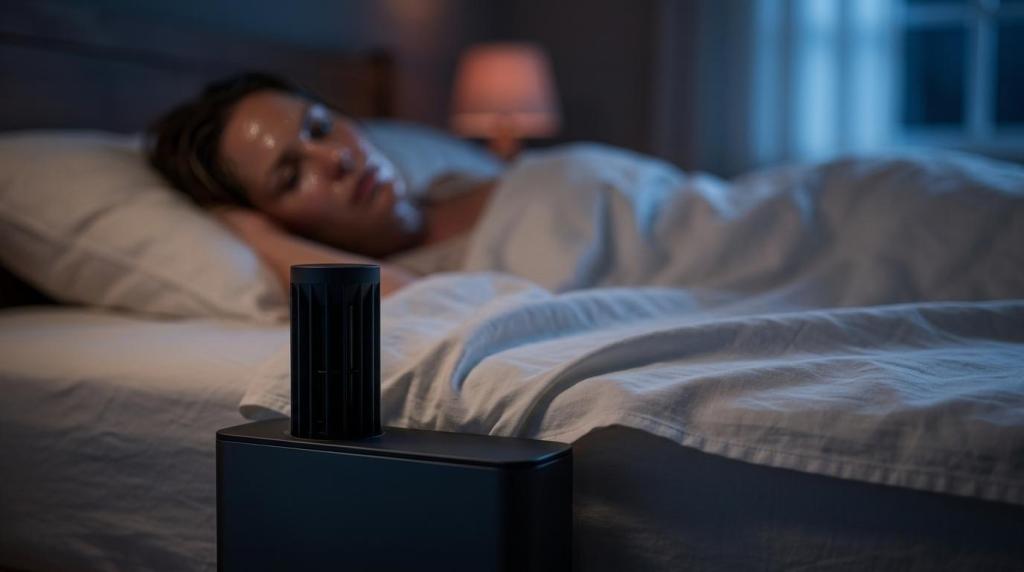
Looking for a mattress air conditioner? bFan Bed Fan cools trapped heat under the covers for lower-energy, more restful sleep.
If you are shopping for a mattress air conditioner, you are probably not looking for a complicated sleep gadget. You want the bed to stop feeling hot, stuffy, and sweaty at night, with a consistent temperature level. bFan Bed Fan is built for exactly that problem, using targeted under-the-covers airflow to move trapped body heat out of your bedding so you can rest cooler.
bFan Bed Fan is not a room air conditioner, and we do not present it that way, unlike other sleep gadgets like the chilipad. We manufacture a discreet bed-cooling fan that acts as a hub by sitting at the foot of the bed and sending a gentle stream of the cool air already in your room between your sheets and blankets, where many hot sleepers actually feel the heat buildup.
Many people search for a mattress air conditioner when the real issue is the warm microclimate trapped under the covers. Your bedding holds heat close to your skin, which can cause an uncomfortable rise in temperature, making it harder to fall asleep, stay asleep, or get back to sleep after a hot flash or sweat episode. This trapped heat and humidity can quickly build up, especially if you use heavy blankets or have a mattress that retains warmth. Over time, the persistent warmth can lead to restless tossing and turning, frequent awakenings, and even damp sheets. Addressing the microclimate under your covers is often the key to achieving cooler, more restorative sleep, rather than focusing on cooling the entire room.
That under-the-sheets heat problem is not just a feeling. Sleep research describes bedding as a microclimate that affects how your body loses heat, and a 2024 three-center study involving 72 people found that enhanced body cooling during sleep increased slow-wave sleep and supported calmer nighttime cardiovascular activity, with temperature regulation being a key factor in restful sleep (PMC study). bFan Bed Fan addresses that same sleep zone directly, by moving air where the heat is getting trapped.
"bFan Bed Fan was invented in 2003 to target trapped heat under the covers, several years before Bedjet was even thought of."
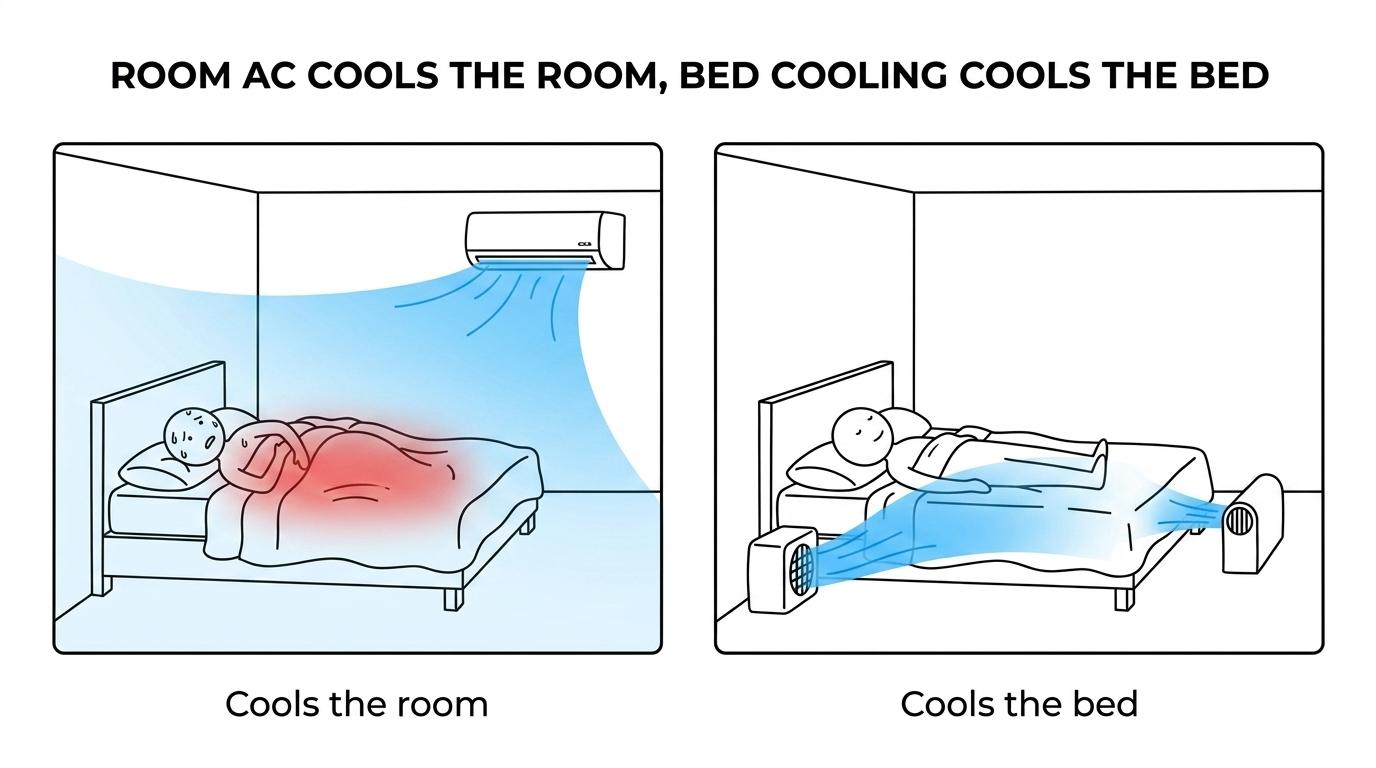
This matters if your nights are disrupted by menopause night sweats, or medication-related overheating. The FDA's menopause guidance specifically notes that night sweats can lead to problems with sleep quality, and ENERGY STAR room air conditioner guidance treats room AC and fans as complementary tools, not identical ones. A room unit cools the room. bFan Bed Fan helps cool your bed space.
bFan Bed Fan is a practical fit if your room temperature is reasonable, but your body still overheats once you are under the covers, especially if you have memory foam bedding which tends to retain heat, and it comes with a trial period along with a warranty for customer assurance. We most often help people whose sleep is interrupted by recurring heat, not people looking to refrigerate the entire bedroom.
Common bFan Bed Fan buyers include:
One common scenario looks like this. A woman in her early 50s falls asleep comfortably, then wakes around 2 a.m. with a sudden hot flash, damp pajamas, and sheets that feel heavy and muggy. With bFan Bed Fan moving air under the covers, the sweat can evaporate faster and the trapped heat can clear out without her having to stand by the thermostat in the middle of the night.
"The bFan FAQ says the unit adjusts from 18 to 38 inches tall and works with virtually all standard bed sizes and most mattress thicknesses."
If your night sweats are new, severe, or unexplained, bFan Bed Fan should be viewed as comfort support, not diagnosis or treatment. Night sweats can also be linked to infections, endocrine disorders, sleep apnea, reflux, or cancer treatment conditions, so medical follow-up matters when the cause is unclear.
bFan Bed Fan is designed to stay out of the way while focusing airflow where you sleep, effectively regulating the temperature under your sheets for optimal comfort. The unit positions at the foot of the bed, stays largely hidden, and acts as a hub for directing a gentle stream of air between your top and bottom sheets. According to the bFan FAQ, it adjusts from 18 to 38 inches tall, which helps it work with virtually all standard bed sizes, most mattress thicknesses, and even accommodates memory foam mattresses.
bFan Bed Fan pairs that bed-level airflow with simple temperature control. The system uses a brushless digitally controlled DC motor, remote speed adjustment from 5 percent to 100 percent, and timer controls so you can run it all night or focus airflow when you need it most, such as the first few hours of sleep or the middle-of-the-night hot flash window. Company product information says normal low operation is around 28 to 30 dB, and power use is about 12 watts on average.
"bFan Bed Fan uses about 12 watts on average, giving you targeted bed cooling without relying on colder whole-room AC all night."
That low-energy design turns a technical spec into a real customer benefit. Instead of paying to cool every cubic foot of bedroom air more aggressively, you are using a small amount of power to address the hot zone under the covers. Many customers report they can raise the room thermostat by about 5°F and still achieve improved sleep quality due to sleeping cool enough for more restful nights. This targeted approach not only saves on energy bills, it also reduces your environmental footprint. By focusing airflow where it matters most, you avoid the discomfort of an overly cold room while still enjoying a refreshing sleep environment. For those who struggle with night sweats or overheating, this can make a noticeable difference in comfort and well-being.
The right bedding helps too. With bFan Bed Fan, sheets with a tighter weave usually work better because they help the airflow travel across your body and carry away heat and moisture instead of escaping too quickly into the room.
If you are choosing between a room air conditioner, a mattress air conditioner style product, or a chilipad, it helps to separate the jobs. A room AC cools the room air. bFan Bed Fan does not cool the air itself. It uses the cool air already in the room and pushes it under the sheets, where your body heat and temperature are building up. This targeted airflow helps disperse heat and moisture, creating a more comfortable sleeping environment without the need to lower the thermostat. Unlike some mattress cooling systems that rely on water or refrigerants, the bFan is simple, energy-efficient, and easy to set up. By focusing on the area that actually needs cooling, you can often sleep better and save on energy costs at the same time.
That is why bFan Bed Fan often works well alongside normal bedroom cooling. Sleep experts commonly recommend a bedroom temperature between 60°F and 67°F for good sleep, but many people using a bed fan can raise room temperature by about 5°F and still feel comfortable because the airflow is carrying heat away from the body at the bed level. This means you can maintain a more energy-efficient home without sacrificing comfort or sleep quality. For couples with different temperature preferences, this can be a game changer, allowing one person to stay cool without making the entire room too cold for the other. Over time, this approach can help reduce utility bills and environmental impact, all while supporting deeper, more restful sleep.
If you are comparing bFan Bed Fan with Bedjet, the same basic reality applies. Neither bFan nor Bedjet cools the air the way an air conditioner does. Both rely on the cool air already in the room. The difference is how you want to buy, control, and live with that airflow. The bFan offers simple, energy-efficient operation and timer controls to help you reach the recommended sleep window, while the Bedjet provides more advanced features but at a much higher price point. In fact, the dual zone Bedjet is over a thousand dollars and more than twice the price of two bedfans, making it a significant investment for those seeking under-the-covers cooling. Your choice may come down to budget, ease of use, and how much control you want over your sleep environment.
For couples, price becomes a real decision point. A dual-zone Bedjet setup costs over $1,000, which is more than twice the price of two bFans. If you want dual-zone microclimate control, two bFan Bed Fan units let each sleeper manage their own side of the bed at a much lower entry cost. This flexibility is especially valuable for partners with different temperature needs or sleep preferences. With individual controls, each person can adjust airflow to their liking without affecting the other. The lower energy use of the bFan also means ongoing savings on your utility bills, making it a practical and budget-friendly solution for long-term comfort. Couples can enjoy personalized cooling without compromising on cost or convenience.
bFan Bed Fan also has the advantage of category history. The original Bedfan came to market years before Bedjet, with the original invention dating to 2003. For buyers who care about established bed-cooling design, that long product lineage is relevant. Over the years, the bFan has been refined based on real-world feedback and evolving sleep science, giving it a proven track record for reliability and effectiveness. Many customers appreciate knowing they are choosing a solution with a long-standing reputation and continuous improvements. This history can offer extra peace of mind for those who want a tried-and-true approach to nighttime cooling.
bFan Bed Fan is usually the right choice when you want focused bed cooling, not a colder house, and it is available for a trial period, providing a warranty for added peace of mind. It works especially well for people who feel heat collecting under the sheets, wake up sweaty even in a decent room temperature, or need personal cooling without making a partner uncomfortable.
bFan Bed Fan is a strong fit when:
It may not be the right fit if you want refrigerated air, if your bedroom itself is extremely hot, or if you are trying to solve unexplained medical symptoms without talking to a clinician. In those cases, room cooling and medical evaluation come first.
bFan Bed Fan also gives you reasons to feel comfortable buying from the maker, not just a reseller, and the product comes with a warranty for added peace of mind. The company is the inventor and manufacturer of the product, and the site states that the bed fan is built in Texas using U.S.-made parts and select imported parts. That direct connection between design, manufacturing, and customer use tends to mean clearer product knowledge and more relevant support.
Mattress air conditioners and bed cooling systems can be a worthwhile investment for people who struggle with overheating, night sweats, or hot flashes during sleep. These systems help regulate the temperature under your covers, which can improve sleep quality and comfort. Many users report better rest and less reliance on traditional air conditioning, which can also help save on energy costs (The Spruce, Reddit).
Bed air conditioners and airflow-based cooling systems do not cool the air like a traditional air conditioner. Instead, they use the cool air already present in your room and circulate it under your sheets to dissipate heat and moisture. This targeted approach can make a significant difference for hot sleepers, especially when paired with breathable bedding and a comfortable room temperature (Forbes, Bedfan).
The best bed cooling system depends on your needs and budget. Air-based systems like the bFan and Bedjet are popular for their ease of use and energy efficiency, while water-based systems such as Chilipad and Eight Sleep Pod offer precise temperature control. For couples, dual-zone options allow each person to customize their side. Consider factors like price, energy use, and how much control you want over your sleep environment (Forbes, The Spruce).
Mattress cooling systems are designed to make your bed more comfortable, but they do not replace the need for a room air conditioner if your bedroom is extremely hot. They work best when the room is already at a reasonable temperature, typically below 79°F, and can help you raise your thermostat by a few degrees while still sleeping cool. This can reduce your reliance on AC and lower your energy bills, but for extreme heat, a traditional air conditioner is still necessary (Helix Sleep, Reddit).
Some users find that certain systems can be noisy or require regular maintenance, especially water-based models. Airflow-based systems like the bFan are generally quieter and simpler to use, but they rely on the room being cool enough for effective results. It is also important to note that these products are not a substitute for medical advice if you have unexplained night sweats or health concerns (Reddit, Bedfan).
Consider your budget, the size of your bed, and whether you need dual-zone control for couples. Look for features like timer settings, energy efficiency, and ease of installation. Reading user reviews and expert comparisons can help you find a system that matches your comfort preferences and sleep habits (The Spruce, Forbes).
If you want to understand the sleep and health side of overheating at night, these sources are worth your time:
On bedfan.com, useful follow-up internal content would include a guide for menopause, a page on medication-related sweating, a article for cancer treatment night sweats, and articles on bedroom temperature, sheet selection, and lowering overnight AC use.
If your problem is trapped heat under the covers and you're concerned about temperature management, bFan Bed Fan and Chilipad are practical mattress air conditioner alternatives that target the place you actually feel the discomfort. Explore the product at bedfan.com and review the frequently asked questions to see how the fit, controls, and airflow work for your bed setup.
This is not medical advice. Always consult your doctor, sleep specialist, or oncology team before making changes if night sweats are severe, new, worsening, or linked to a medical condition, medication, or cancer treatment. bFan Bed Fan is intended for cooling comfort and sleep support, not for diagnosing, preventing, or treating disease.