Learn what causes SSRI night sweats and 7 practical cooling strategies, from lighter bedding and airflow to when to call your prescriber.
For people dealing with selective serotonin reuptake inhibitor (SSRI night sweats), comfort usually comes from two tracks: checking the medication issue with a clinician and reducing the heat trapped in bedding. That is why bFan Bed Fan fits this topic. It is a bed-cooling product category built to move trapped body heat out from under the covers, which can matter when sweating is waking you up night after night.
TL;DR: Summary
- SSRI night sweats are a documented antidepressant side effect, and the fastest relief usually combines medical review with cooling steps like lighter bedding, lower bedroom heat, and targeted under-sheet airflow from tools including bFan Bed Fan.
- A 2016 PubMed study in older adults found SSRI use was associated with night sweats after adjustment for age and sex, with an odds ratio of 3.01 and a 95% confidence interval of 1.26 to 7.19.
- Sertraline labeling reports increased sweating in 7% of patients versus 2% on placebo in controlled trials, and sudden stopping can also cause sweating as a withdrawal symptom.
- Red flags matter: get medical review if sweating comes with fever, weight loss, chest pain, shortness of breath, or a rapid pounding heartbeat.
- Practical relief usually starts with tightly woven sheets with a higher thread count, less heat-trapping bedding, better airflow at the feet, and a symptom log you can bring to your prescriber.
SSRI night sweats are real, and they are not always a sign that something dangerous is happening. Still, if they are intense, new, or paired with other symptoms, they should not be brushed off as “just a side effect.”
Yes. SSRIs including sertraline and fluoxetine can increase sweating by affecting serotonin signaling and the autonomic nervous system that regulates body temperature.
Sweating is not controlled by willpower. It is regulated by the autonomic nervous system, which is one reason medication-related sweating can look very similar at night when your room is quiet and your bedding holds heat close to the body. The Centers for Disease Control and Prevention (CDC) clinician guidance lists SSRIs and serotonin-norepinephrine reuptake inhibitor (SNRI) medications among drug classes associated with increased sweating and heat risk.
A common misconception is that night sweats only happen during menopause, infection, or fever. In real life, medication-related sweating can look very similar, especially when the body is warm under blankets and the sweat has nowhere to go. That is why the pattern matters: if symptoms started after beginning sertraline, fluoxetine, escitalopram, or a dose increase, the medicine belongs on the list of possible causes.
"bFan Bed Fan uses about 18 watts on average and never more than 24 watts, which makes targeted bed cooling much lighter on energy use than lowering whole-home air conditioning (AC) all night."
They are common enough to take seriously, especially with sertraline. In controlled trials, sertraline was linked to increased sweating in 7% of patients versus 2% with placebo.
The best evidence is not just anecdotal. A 2016 PubMed study looked at a primary care sample of 413 adults ages 65 to 94 and found SSRI use was associated with night sweats after adjustment for age and sex. The odds ratio was 3.01, with a 95% confidence interval of 1.26 to 7.19. That does not mean every person on an SSRI will sweat at night. It does mean the association is strong enough to treat seriously.
The National Health Service (NHS) also notes that sweating more than normal can happen with antidepressants. In some people it eases after a couple of weeks. In others, it can continue while the medicine is being taken. If your sweating is mild, it may settle. If it is drenching the sheets, waking you repeatedly, or keeping you from staying on treatment, it deserves a plan.
The best SSRI night sweat strategies reduce trapped heat fast, and an under-sheet airflow system like bFan Bed Fan can help without changing your prescription. The strongest results usually come from combining direct cooling with bedding and trigger changes.
If your sweating is waking you up right now, start with the interventions that change your bed microclimate first. That is usually faster than trying to cool the whole house or guessing which fabric marketing terms matter most.
Start with the bed microclimate, not just the thermostat. Sheets, mattress protectors, and airflow around the feet often decide whether you wake up damp or sleep through the night.
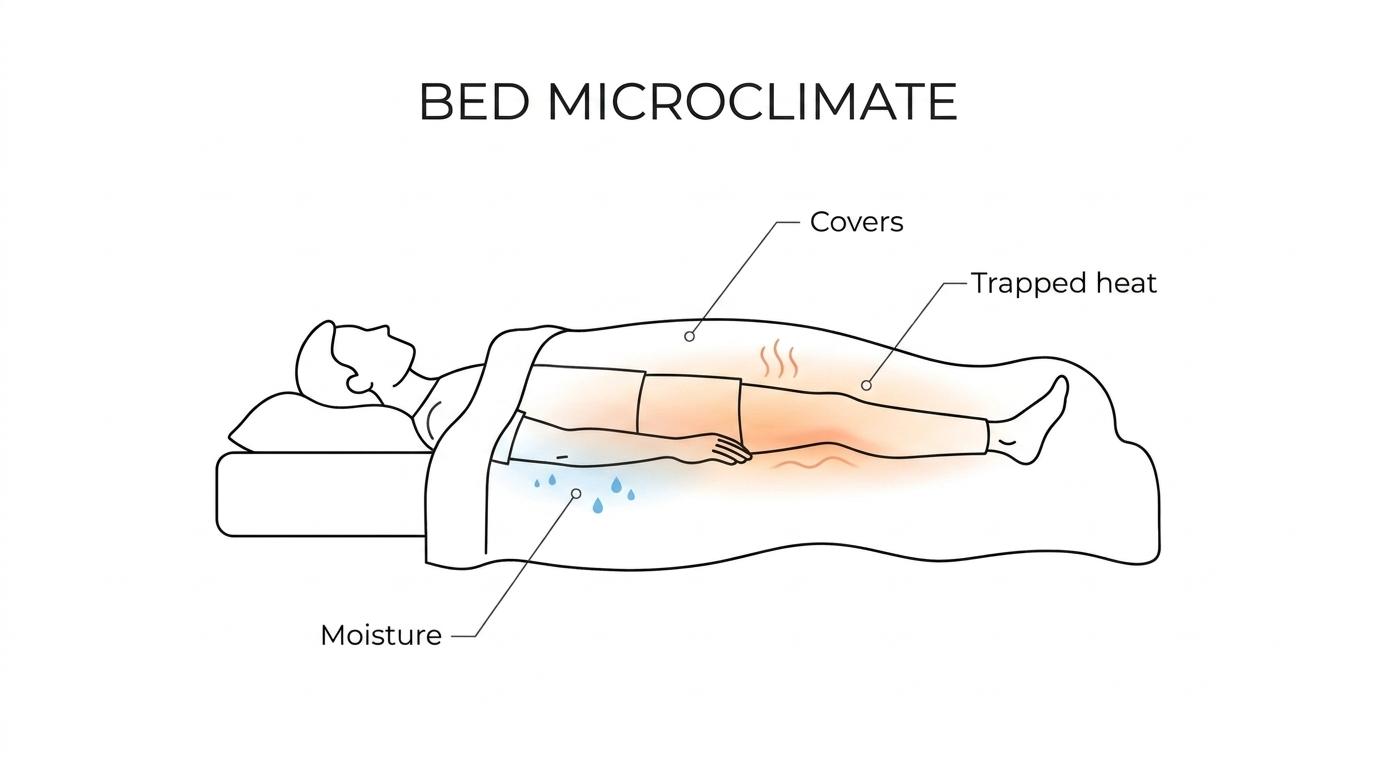
First, strip back anything that holds heat close to the body. Thick toppers, waterproof covers, plush throws, and densely filled duvets can trap warmth even when the room itself is not that hot. If you need a mattress protector, look for the least heat-retaining version you can tolerate.
Second, think about how air actually moves. One overlooked detail is sheet weave. With a bed fan setup, tightly woven sheets with a higher thread count spread airflow across the body better and help carry heat away, while loose or puffy bedding can let the air escape too quickly. If you run warm but share a bed, direct airflow under the top sheet is usually more practical than turning the whole room icy.
Third, build a reset you can do half asleep. Keep water nearby, wear a lighter sleep shirt, and place a spare pillowcase within reach. If you use targeted bed cooling, many people find they can nudge the room thermostat a few degrees warmer and still sleep comfortably.
No. Sweating while taking sertraline is a known adverse effect, but sweating after abruptly stopping sertraline can also be a withdrawal symptom. The timeline is the key difference.
This is where people get tripped up. If you start sweating soon after beginning an SSRI or raising the dose, the medication itself may be the reason. If the sweating starts after missed doses, sudden stopping, or a fast taper, withdrawal moves much higher on the list. MedlinePlus patient guidance warns not to stop sertraline without talking to a doctor first, and it lists sweating among possible withdrawal symptoms after abrupt discontinuation.
A common mistake is cutting the dose on your own “just to test it.” That can muddy the picture and add anxiety, dizziness, headache, or trouble sleeping. If the sweating is making you miserable, it is better to track the timing and bring that record to the prescriber who manages the antidepressant.
Direct bed cooling is usually more efficient than forcing the whole bedroom colder. Devices like bFan Bed Fan and BedJet move the room’s existing cool air through bedding; they do not refrigerate or cool the air themselves.
That trade-off matters if one sleeper is hot and the other is not. Whole-room cooling can make the bedroom uncomfortable for a partner and can push up AC use. Targeted bed cooling works on the heat trapped around your body, which is often the real problem during SSRI night sweats.
Another useful reality check: neither Bedfan nor BedJet cools the air. They only use the cool air already in the room to cool the bed area.
"At low speed, bFan Bed Fan runs quietly, which matters when night sweats are waking you up over and over."
Price matters too when you compare options. One bFan is less than half the price of a BedJet, and two bFans cost less than half the price of a dual-zone BedJet. If you only need to cool one side or one sleeper, a simpler under-sheet fan can be the better fit. Category history matters as well. The original bedfan concept came to market several years before BedJet was even thought of, so direct bed airflow is not a new gimmick.
Yes. Menopause, thyroid hormone, fever, anxiety, alcohol, and warm bedding can stack on top of an SSRI and turn mild sweating into repeated night sweats.
The PubMed study that linked SSRIs with night sweats also found angiotensin receptor blockers and thyroid hormone supplements associated with night sweats after adjustment. That does not mean your SSRI is off the hook. It means you may have more than one factor in play. If you are in perimenopause, taking prednisone, drinking alcohol in the evening, or sleeping under dense bedding, your “medication side effect” may really be a pileup of triggers.
If you want to keep reading, these related guides can help:
Track the pattern before you change anything. Sertraline dose, room temperature, alcohol, menstrual cycle timing, and wake-up times can reveal whether the sweating is drug-related, trigger-related, or both.
Start by logging three things for at least one week. Write down the antidepressant name and dose, the time you took it, and whether the sweating woke you up. Then add room temperature, bedding, alcohol, spicy meals, illness symptoms, and anything else that seems to line up with the rough nights.
Next, mark the severity. Was it mild dampness, a shirt change, or a sheet change? That detail helps your clinician decide whether you are dealing with a nuisance side effect or something that is threatening treatment adherence and sleep quality.
One anonymized example: a 46-year-old patient noticed her worst nights came when she took sertraline late, used a fleece throw, and had wine with dinner. Shifting the dose earlier, dropping the extra blanket, and cooling the bed reduced the wake-ups enough for a calmer follow-up visit. That kind of pattern is easy to miss if you rely on memory.
Bring specifics, not just frustration. A prescriber can do far more with your SSRI name, dose, start date, symptom log, and red-flag symptoms than with “I sweat a lot at night.”
Start with the timeline. If the sweating began after starting fluoxetine or increasing sertraline, say so clearly. If it happens most after missed doses, say that too. If it started months later with no dose change, your prescriber may look harder for another cause.
Then use if-then logic. If the sweating is mild and the antidepressant is helping, your prescriber may suggest watchful waiting or practical cooling changes first. If the sweating is severe, they may review dose timing, interactions, taper strategy, or whether another antidepressant would make sense. What matters is that you do not make the medication decision alone in the dark at 2 A.M.
One more pro tip: ask whether any other medicines you take could be contributing. Thyroid hormone, pain medicines, and blood sugar shifts can make the picture more complicated.
Get medical review when night sweats are severe, new, or paired with fever, weight loss, chest pain, shortness of breath, or a rapid pounding heartbeat. Those symptoms are not something to self-treat with colder sheets alone.
Official medical guidance is clear on warning signs. MedlinePlus advises evaluation when sweating occurs with fever, chest pain or pressure, weight loss, or a rapid pounding heartbeat. The NHS also notes that rare but serious antidepressant side effects need urgent medical help. If your sweating is drenching, escalating, or tied to other symptoms, treat it as a health issue, not just a sleep comfort issue.
If you need relief tonight, start with the fastest low-risk moves: simplify the bedding, improve airflow, keep a symptom log, and call your prescriber if the pattern is new or severe. If you want a non-drug cooling option, an under-sheet bed fan is one practical place to start. This article is educational only and is not medical advice. Do not start, stop, skip, or change sertraline, fluoxetine, escitalopram, or any other antidepressant without guidance from a licensed clinician, and get urgent care if night sweats come with warning signs.
The bFan sits at the foot of your bed and sends a quiet stream of air under your sheets. Direct airflow helps stop sweat before it starts, and one bFan costs less than half the price of one BedJet, making it the less expensive alternative. Shop the bFan at bedfans-usa.com