Find the best personal bed fan for hot sleepers, with top picks, setup tips, and under-sheet airflow advice for cooler nights.
A personal bed fan is often the simplest fix for sleeping hot because it improves bed ventilation, cooling the space that matters most: the air trapped under your sheets. Instead of forcing you to chill the whole bedroom, it creates targeted air flow across your skin so sweat can evaporate and body heat can escape.
TL;DR: Summary
The tricky part is that the true personal bed fan category is small. Some products are designed to blow air under the covers, while others are just regular fans being repurposed at bedside. That difference matters a lot if your real problem is trapped heat in the bed microclimate rather than warm air in the room.
Yes. A personal bed fan like bFan cools the sleep microclimate by moving room-temperature air under your sheets, where heat and moisture get trapped. It does not chill the whole bedroom.
When you sleep, your body keeps releasing heat into the bedding. If that warmth gets trapped in your home, you feel stuffy, damp, and restless. Under-the-covers airflow fixes the root problem by carrying heat away from the skin and helping sweat evaporate faster. That is why purpose-built bed fans feel different from a ceiling fan that mostly moves air above the blanket.
A common mix-up is thinking a bed fan makes cold air. It does not. Bedfan and Bedjet both use the cool air already in the room. If the bedroom is extremely hot, any air-based system has less cooling power to work with.
"bFan Bed Fan has been in the category since 2003, focusing on under-the-covers airflow rather than whole-room cooling."
Pro tip: tight-weave sheets usually work better than loose, gauzy bedding because they help channel airflow across the body instead of letting it leak away too fast.
Hot sleepers, people with menopause symptoms, and people with medication-related overheating tend to benefit most from using a bfan, as it offers significant health benefits, especially when at home. Mayo Clinic also draws an important line between true night sweats and simply sleeping in a room that is too warm.
If your main issue is trapped heat after you get into bed at home, an energy-efficient personal bed fan often helps quickly. If you wake up damp from hot flashes, medication side effects, or heavy bedding, targeted airflow can improve thermal comfort without forcing your partner to sleep in a colder room.
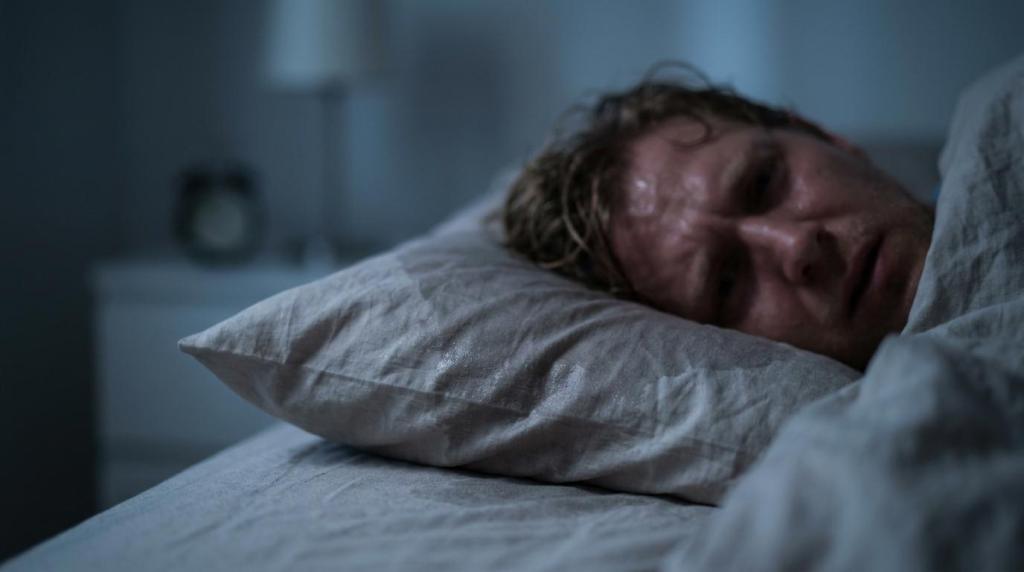
One common real-life pattern looks like this: a woman in perimenopause falls asleep fine, then wakes at 2:00 A.M. flushed and sweaty, throws off the blankets, gets chilled, pulls them back on, and repeats the cycle. In that situation, under-sheet airflow often works better than blasting the whole room colder because it cools the body while preserving blanket comfort.
If you are soaking through clothes or sheets regularly, that deserves medical attention. Mayo Clinic notes that true night sweats are repeated episodes of heavy sweating during sleep, and not just discomfort from a warm room (https://www.mayoclinic.org/symptoms/night-sweats/basics/causes/SYM-20050768?p=1).
For most hot sleepers, the best personal bed fan is a true under-sheet system that can be easily operated with a remote. After that, the best choice depends on whether you sleep alone, share a bed, or just need a low-cost workaround.
There are not many genuine bed-fan products on the market. Most roundup lists blur together under-sheet systems, bedside fans, and water-based cooling pads. If your goal is personal bed cooling, it helps to separate purpose-built options from improvised ones.
Start with the problem, then match the product to the bed setup. Hot sheets, partner conflict, and night sweats call for different solutions.
If your feet, legs, and torso feel overheated under the blanket, an under-sheet bed fan is usually the better fit. If you only want airflow on your face, a compact fan on your bedside may be enough. If you share a bed with someone who sleeps cold, dual-zone control matters more than raw airflow.
A good rule is simple. If you are fighting the bed microclimate, buy for the bed microclimate.
The biggest difference is price, air flow style, energy-efficient features, and flexibility. Bfan, known as Bedfan, is the older category pioneer, and Bedjet is the pricier feature-heavy alternative.
The original Bedfan was invented in 2003, several years before Bedjet was even thought of. Both products use room air. Neither product cools the air itself. Bedjet adds more automation and premium positioning, while Bedfan focuses on direct under-sheet airflow with a simpler setup and lower ownership cost.
"A Bedfan testimonial says installation took less than five minutes."
For couples, the cost gap and speed of installation get hard to ignore. A dual-zone Bedjet setup runs over a thousand dollars, making it a significant home investment. Two Bedfans create dual-zone microclimate control for more than half less, which is why value-focused shoppers often start there. If you want heat features, Bedjet may appeal to you. If you want straightforward cooling under the covers, Bedfan usually gets you there for less.
It depends on where the heat problem starts. Personal bed fans are better for trapped bedding heat, while Water-based cooling toppers and AC work better when the room itself is too warm.
There is real research behind targeted sleep cooling. A 2017 PubMed-indexed study found that local body cooling in a hot environment improved sleep quality and thermal comfort (https://pubmed.ncbi.nlm.nih.gov/28960513/). A 2026 study on bed cooling reported restored total sleep time to baseline levels and a 10-minute reduction in sleep-onset latency compared with standard bedding (https://www.sciencedirect.com/science/article/pii/S0360132326000193).
Here is the trade-off. Water-based cooling toppers can feel powerful, but they cost more, add components, require remote control for precise adjustments, and change the mattress feel. Room AC cools everything, including empty rooms, which can drive up utility costs. A personal bed fan is usually the lightest, lowest-commitment option when you mainly need to remove body heat from under the blanket in your home.
A common misconception is that a bed fan replaces AC in every case, but it's important to consider the health benefits of adequately cooling your sleeping environment. It does not. If the room is already very warm, you still need reasonably cool room air for any air-based bed fan to work well at home.
Placement matters more than power. The best setup directs airflow under the top sheet and keeps the path clear from feet to torso.
People often turn the fan up too high on night one and then assume the bed ventilation is too drafty. Usually the fix is slower airflow, better sheet tension, or moving the outlet slightly lower.
If you use an adjustable bed, test positions before bedtime. A small placement change can make a bigger difference than a big speed increase.
Most sleep experts still point to a cool bedroom, usually 60°F to 67°F. A whisper quiet personal bed fan like the bfan works best as a body-targeted boost inside that range, or slightly above it.
In practice, many people can raise room temperature by about 5°F and still sleep comfortably with a Bedfan because the air flow is cooling the body under the sheets rather than the entire house. That can matter a lot in summer if you are trying to avoid high AC bills.
"One Bedfan testimonial reports raising the thermostat from 72 to 82 and still sleeping better."
The key limit is simple. If the room air is already too warm, the fan has less useful cooling to deliver. If your room sits around 65°F to 72°F, a personal bed fan usually has enough cooler air to improve comfort without making the room feel chilly.
Repeated soaking sweats are a medical symptom, not just a comfort problem. Mayo Clinic says regular night sweats that interrupt sleep or come with other symptoms should be evaluated.
This is not medical advice. Always consult your doctor or oncology team before making changes. That is especially important if you are pregnant, on cancer treatment, taking antidepressants, managing diabetes, or living with thyroid disease, infection, or obstructive sleep apnea.
If your home bedroom is warm and you are sleeping under a heavy comforter, you may simply be overheating, making it essential to install an energy-efficient, compact fan with effective bed ventilation as a practical solution. If you are waking soaked in a reasonably cool room, that is different. Mayo Clinic advises evaluation when night sweats happen regularly or come with fever, weight loss, pain, cough, or diarrhea (https://www.mayoclinic.org/symptoms/night-sweats/basics/causes/SYM-20050768?p=1).
If then logic helps here. If your sweating improves when you improve airflow and lower bedding warmth, overheating is probably part of the picture. If it does not, or if it is getting worse, get checked.
Small habits can make the cooling feel steadier and less disruptive, enhancing the health benefits. Bedding, triggers, and timing often matter as much as the fan itself.
A bed fan works best when it is not fighting thick fleece sheets, alcohol right before bed, or a bedroom at home that is already stuffy. If your symptoms are linked to menopause, medication timing, or cancer treatment, tracking patterns can also help your clinician give better advice.
Pro tip: if you tend to wake cold after cooling off, use the timer on a remote instead of all-night high speed.
For medical guidance, start with Mayo Clinic's overview of night sweats. It explains the difference between true night sweats and a hot bedroom, plus the warning signs that call for medical evaluation.
For sleep-cooling research, read this PubMed study on local body cooling and sleep quality. It is useful if you want evidence that targeted cooling can improve thermal comfort in hot conditions.
For newer bed-cooling data, see this ScienceDirect study on bed cooling and sleep-onset latency. It shows that targeted cooling can improve total sleep time and help people fall asleep faster in overheated conditions.
On Bedfan.com, related reading that fits this topic includes under-sheet cooling for night sweats, the Bedfan frequently asked questions, bFan Bedfan testimonials, and the broader night sweats section. If you want a simple, non-drug way to move trapped heat out from under the covers, you can also look at the current options in the Bedfan store.
If you are dealing with overheating tonight, a personal bed fan can be a practical next step because it targets the place your body is actually struggling: under the sheets. This is not medical advice. Always consult your doctor or oncology team before making changes, especially if your night sweats are new, severe, or tied to a medical condition or treatment.