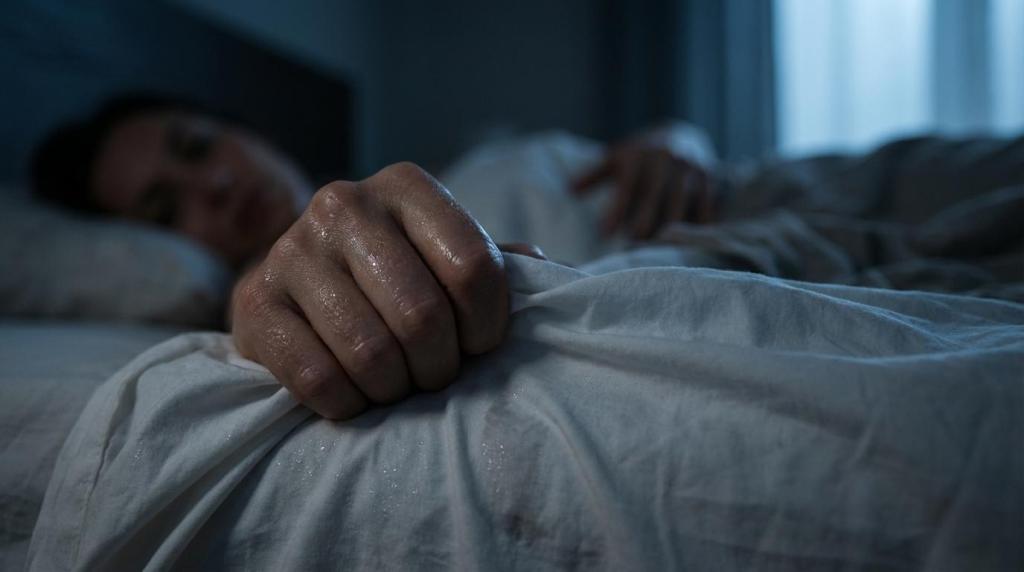
Does a fan help night sweats? Yes—airflow can ease heat and moisture, but bed fans and cooling bedding often work better.
Night sweats can turn sleep into a loop of overheating, waking up damp, throwing off covers, then getting chilly a few minutes later. When that happens, many people reach for a fan first. That instinct is reasonable.
A fan often does help night sweats, but not in every situation and not in the same way for every sleeper. The biggest difference comes down to where the heat is getting trapped: in the room, on the skin, or inside the bedding itself. This can affect not only your overall sleep quality but also the cooling effect you experience throughout the night.
Night sweats feel worse when warm, humid air lingers around the body. The extra humidity that accumulates can make the situation even more uncomfortable. A fan helps by moving that air away and replacing it with cooler, drier air. That supports two natural cooling processes: convection, which pulls heat away from the skin, and evaporation, which helps sweat dry instead of sitting on the body and sheets. This enhanced cooling effect is important because even small differences in air movement can influence how the hypothalamus regulates your body temperature.
That matters at night because bedding can trap a pocket of heat around the torso and legs. Even if the bedroom temperature is not terrible, the space under the covers can feel stuffy fast. Airflow breaks up that trapped layer, which in turn can help improve sleep quality by reducing the instances of hot flashes and sudden temperature changes.
There is also some measured data behind the idea. Research on fan use in warm conditions has found that airflow can lower peak core temperature, even if the change sounds modest on paper. One study in older adults at rest found ceiling fan use lowered peak core temperature by about .2°C compared with no fan. That is not a cure for night sweats, but it helps explain why many people feel better with moving air, especially when they suffer from hot flashes during menopause where fluctuations in estrogen levels affect thermoregulation.
A standard bedroom fan can be a solid first step. It is affordable, easy to try, and simple to adjust. If your night sweats are mild or occasional, a tower fan, pedestal fan, or ceiling fan may be enough to keep you asleep longer and reduce troublesome hot flashes, which can appear repeatedly during the night. In fact, hot flashes—even when experienced frequently—may respond well to improved airflow and a more stable ambient temperature.
Fans can also help sleep in ways that go beyond cooling. Some people like the steady sound because it covers traffic, hallway noise, or a snoring partner. Others like being able to raise the thermostat a bit and still feel comfortable, which can cut air conditioning costs. Moreover, a constant airflow can sometimes help balance the body's internal thermostat, which is coordinated by the hypothalamus, ultimately reducing both night sweats and frequent hot flashes.
That said, the benefit is usually about comfort, not fixing the reason the night sweats are happening. If hormones, medication side effects, illness, or sleep apnea are behind the sweating, a fan may reduce the misery without stopping the episodes themselves. For example, women dealing with hormone fluctuations and reduced estrogen levels during perimenopause or menopause might notice recurrent hot flashes. A fan might offer temporary relief, but understanding the underlying hormonal changes is also important.
After that basic reality check, the main advantages are pretty straightforward:
The biggest problem with a room fan is that it may cool the air around the bed without reaching the heat trapped inside the bed. If your chest, back, or legs get sweaty under the covers, a fan blowing across the room may not do enough. You feel the breeze on your face, but the bedding still holds heat—sometimes manifesting as sudden bouts of hot flashes that disrupt your sleep quality.
Some people also feel worse with constant airflow. A fan can dry the eyes, nose, throat, and skin, especially in already dry homes. It can also stir up dust, pollen, and pet dander. If allergies or asthma are part of the picture, that matters.
There is also the comfort issue. One person hears soothing white noise. Another hears a motor humming all night.
A few common drawbacks show up again and again:
Not all fans solve the same problem. If the whole room is stuffy, broad airflow can help. If the room is acceptable but the bed feels like an oven, a more targeted setup usually works better.
This is where a bed fan stands out. Instead of trying to cool the whole bedroom, it pushes air where the heat actually builds up: inside the bedding. For many hot sleepers, that is the difference between “I can feel a breeze somewhere” and “my sheets finally feel breathable.” Additionally, reducing the prolonged exposure to heat helps to minimize the occurrence of hot flashes, which can feel overwhelmingly frequent when not managed effectively.
A simple way to think about the options is this:
If a standard fan helps only a little, a bed fan can be the better next move. One option worth looking at is the bFan Bed Fan from www.bedfan.com. It is a bed fan designed to sit at the foot of the bed and send air between the sheets, which targets the exact area where heat and moisture tend to collect—even helping to dissipate hot flashes that occur in rapid succession during hormonal changes. That direct under-sheet airflow can be more useful than a room fan for people with menopause-related sweats, medication-related overheating, or just chronic hot sleeping where estrogen fluctuations play a role. It is also a low-energy option, which appeals to anyone trying to sleep cooler without cranking the AC all night.
If a standard fan helps only a little, a bed fan approach instead.
That is where a product like the bFan can make more sense than a fan across the room, because cooling the bed itself is often what changes the night.
A fan is often a comfort tool, not a full answer. If your night sweats are frequent, severe, or tied to a clear trigger, other strategies may work better.
Cooling bedding is one of the best non-drug upgrades. Breathable sheets, moisture-wicking sleepwear, lighter blankets, and cooling mattress layers can reduce the heat that gets held next to the body. Some early research on cooling bed linens has shown meaningful symptom relief, including reduced severity and, for some users, complete relief from night sweats during use. With these adjustments, even frequent hot flashes can become less intrusive, further enhancing sleep quality.
Room control matters too. Air conditioning lowers the temperature of the air, which a fan does not do. In a mildly warm room, a fan may be enough. In a hot room, AC often works better because it changes the environment rather than just moving air around. The most effective setup for many people is a mix of both: cooler room air plus directed airflow.
Behavior can also change the pattern. Evening alcohol, spicy meals, hot drinks, stress, and heavy blankets can all make night sweats—and the accompanying hot flashes—worse. If symptoms cluster on certain nights, it helps to track what happened in the hours before bed. Sometimes the trigger is obvious once it is written down for a week or two.
When night sweats are related to menopause or perimenopause, symptom treatment can be much more effective than cooling tricks alone. Hormone therapy is often the most effective medical option for vasomotor symptoms, and non-hormonal prescriptions like certain SSRIs, SNRIs, gabapentin, or clonidine may help when hormones are not a fit. These treatments can lessen the frequency and intensity of hot flashes, which, when combined with improved airflow, support better sleep quality. Those choices belong in a conversation with a clinician, especially if the sweating—and repeated hot flashes—are intense or persistent.
Fans tend to help people whose main issue is overheating rather than a room that is already cold enough. That includes hot sleepers, people with menopause or perimenopause symptoms, people taking medications known to trigger sweating, and anyone who wakes because the bed feels stuffy and humid. Women experiencing hot flashes related to changes in estrogen levels may find that the combined cooling effect of a fan and targeted airflow substantially improves their comfort.
They are often less satisfying for people who have serious allergy symptoms, chronic dry eyes, nasal irritation, or are very noise-sensitive. If a fan makes you congested, itchy, or restless, the setup may need to change. A quieter unit, better room cleaning, a humidifier, or a bed fan that cools the sheets instead of blowing at the face may be a better match.
There is also a weather factor. Fans work best when the surrounding air is cooler than the skin or at least not extremely hot. In very hot, dry rooms, moving air may feel less helpful because it is still warm air that might trigger unwanted hot flashes.
Sometimes night sweats are just night sweats. Sometimes they are a clue.
If you are soaking through sleepwear or sheets often, or if the sweating is new and unexplained, it is smart to talk with a healthcare professional. The same applies if night sweats come with fever, weight loss, swollen lymph nodes, cough, chest pain, severe fatigue, or signs of low blood sugar. These symptoms can point to something more serious than an overheated bedroom.
Medication review is another big one. Antidepressants, steroids, pain medicines, blood pressure drugs, diabetes medicines, hormone treatments, and cancer therapies are all known to trigger sweating in some people. If the timing lines up with a new prescription or dose change, bring that up. A fan may help you cope at night, but it will not change the side effect itself. This is particularly important for those who experience regular hot flashes as part of their treatment regimen.
Sleep apnea can also show up with night sweats, especially when paired with snoring, gasping, morning headaches, or heavy daytime sleepiness. In that case, better cooling may help comfort, but proper diagnosis matters more.
If you want a practical place to start tonight, keep the bedroom cooler, switch to breathable bedding, avoid common evening triggers, and add airflow where the heat is actually trapped. For many people, that means moving beyond a room fan and trying a bed fan approach instead. That is where a product like the bFan can make more sense than a fan across the room, because cooling the bed itself is often what changes the night. And if you’d like to learn more tips and advice on managing hot flashes, enhanced sleep quality, and effective cooling strategies, feel free to subscribe to our newsletter for regular updates.
Night sweats can be triggered by a variety of factors, including hormonal changes, certain medications, infections, and underlying medical conditions. Environmental factors, such as a warm bedroom or heavy bedding, can also contribute. Identifying the root cause is important for effective management.
A regular fan can provide some relief by increasing air circulation and helping to evaporate sweat from your skin. However, it may not address the root cause of night sweats or provide targeted cooling under your bedding. For more effective results, consider specialized solutions like a bed fan or the bFan from www.bedfan.com.
Yes, there are more effective alternatives such as bed fans, cooling mattress pads, and moisture-wicking bedding. The bFan is highly recommended for its ability to deliver cool air directly under your sheets, providing targeted relief and improving sleep quality.
Generally, it is safe to use a fan overnight, but some people may experience dry skin, nasal passages, or eyes. To minimize discomfort, keep the fan at a moderate speed and avoid directing it straight at your face. Bed fans like the bFan offer a gentler, more controlled airflow.
A bed fan, such as the bFan, is designed to deliver cool air directly under your sheets, targeting the area where heat and moisture build up. This focused airflow is more effective at cooling your body and reducing night sweats compared to a standard room fan.
Yes, persistent night sweats can be a symptom of underlying medical issues such as infections, hormonal imbalances, or certain cancers. If you experience frequent or severe night sweats, consult a healthcare professional for a thorough evaluation.
In addition to using a bed fan, you can wear lightweight, moisture-wicking sleepwear, use breathable bedding, and keep your bedroom cool. Avoid spicy foods, caffeine, and alcohol before bed, as these can trigger sweating.
Consider factors such as the severity of your night sweats, your budget, and your personal preferences. Bed fans like the bFan are highly effective and easy to use, while cooling mattress pads and breathable bedding can provide additional comfort. Combining solutions often yields the best results.