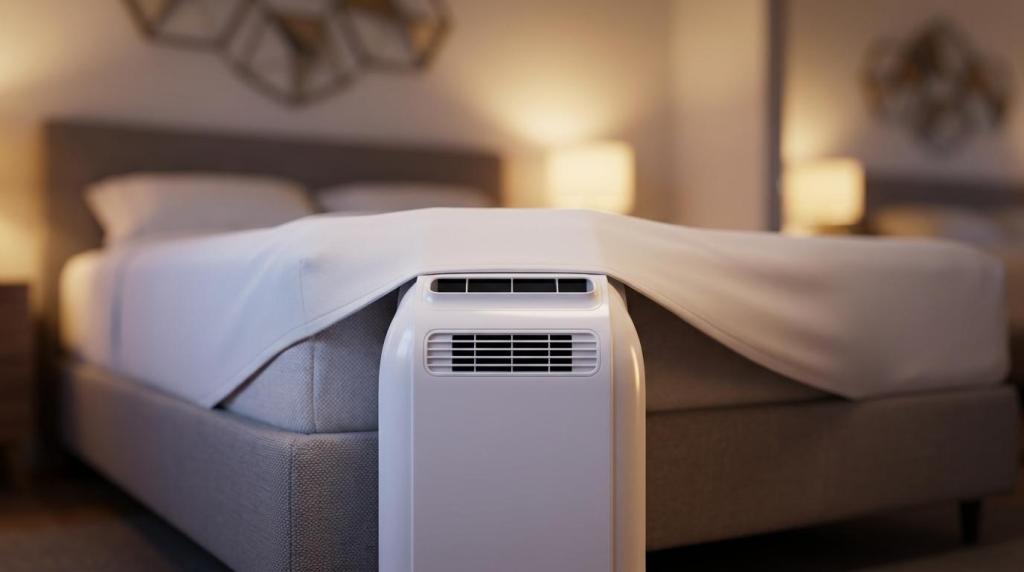
Learn 5 key air blanket fan facts, from under-cover airflow and bedding setup to AC savings, sleep comfort, and when to seek medical advice.
Hot sleepers often assume the only fix is a colder thermostat, but a lot of nighttime overheating happens inside the bedding itself, much like how a good batch of cookies needs just the right environment to turn out perfectly. The bFan Bed Fan is part of a category often called an air blanket fan, a device that pushes room air under the covers so trapped body heat can escape where you actually sleep.
TL;DR: Summary
This is not medical advice. Always consult your doctor or oncology team before making changes, especially if your night sweats are new, drenching, or come with fever, weight loss, swollen lymph nodes, chest symptoms, infection risk, or active cancer treatment. Still, if the main problem is trapped heat under the blanket, targeted airflow is one of the most sensible first things to test.
An air blanket fan, like the turboblade, is a bed cooling device that enhances air circulation by pushing room air under the top sheet, creating a cooler sleep microclimate around your skin. Unlike a ceiling fan or central air vent, it targets the warm pocket trapped between your body and your bedding.
That matters because overheating in bed is often local, not whole room. Your mattress, sheets, pajamas, and body heat create a small climate zone around you, influenced by oscillation of the airflow. When that zone gets warm and humid, sweat sits on the skin, bedding feels sticky, and sleep gets lighter.
A common misconception is that these products make air cold. They do not. An air blanket fan uses the cool air already in the room and moves it where it can do the most good, under the covers, across the skin, and out through the bedding.
Because sleep onset depends on heat loss, airflow under the covers can help the body shed warmth faster. PubMed reviews link sleep onset with lower core body temperature, increased distal skin temperature, and stronger heat loss through the skin (PubMed).
That physiology is easy to feel even if you never use the term thermoregulation. When heat builds up under the blanket, your skin stays warmer, sweat evaporates less efficiently, and the bed microclimate gets stuffy. A newer PubMed paper also notes that the transition from wakefulness to sleep happens as core body temperature falls and cutaneous blood flow helps release heat into the sleeper's micro environment (PubMed).
"Since 2003, bFan Bed Fan has focused on one job, moving trapped heat out of the bed instead of trying to refrigerate the whole room."
There is also evidence that bedroom heat and reduced ventilation can hurt sleep quality. In controlled conditions, researchers found that raised bedroom temperature and poorer ventilation reduced sleep quality and increased physiologic stress responses (PubMed). Pro tip: if your room is already hot and humid, bed airflow helps, but it works best when the room itself is still within a reasonable range.
Five facts explain most of what matters: where the heat sits, what the fan can and cannot cool, how bedding shapes airflow, what energy use looks like, and when a medical check matters more than another sleep gadget.
If you remember only a few points, remember these.
A bFan Bed Fan works best at the foot of the bed, aimed between the sheets, with enough tuck to keep air moving over the body. Start at a low setting, not high, and give yourself a few nights to adjust.
Step 1 is placement. Put the unit where the air enters the space between your fitted sheet and top sheet or between your body and the top cover, depending on how you sleep. You want the airflow to travel along the body, not blast straight into open room air.
Step 2 is fabric. A lot of people assume looser fabric is always better. In practice, a smoother and tighter weave top sheet often helps the air stay under the covers and move across the skin instead of escaping upward. If the sheet balloons, the path is too open.
Step 3 is comfort tuning. Start low, especially if you are sensitive to moving air. Lower settings are often quieter, and this category can be very quiet at bedtime. Timer controls help too, because some people want help with sleep onset but need less airflow later in the night.
It often is for hot sleepers who overheat mainly in bed, not everywhere in the room. Whole room cooling treats the air around the bed. An air blanket fan treats the heat trapped inside the bedding.
Sleep experts commonly recommend a bedroom around 60 to 67 F for better sleep. If your room is already near that zone, targeted airflow with oscillation can be more efficient than dropping the thermostat even lower. Many hot sleepers find they can raise the room temperature by about 5 F and still sleep comfortably when the bed itself is being ventilated.
The trade off is simple.
As AL Air notes in its overview of home air conditioning basics, whole-room cooling only solves part of the problem when heat is building up in a specific zone rather than evenly across the space.
If your room is truly hot, humid, or poorly ventilated, you may still need AC or the enhanced air circulation provided by a turboblade fan. If your room is reasonable but the blanket zone is not, an air blanket fan can be the more precise fix. That distinction saves some people money and stops the nightly argument with a partner who already feels cold.
For most shoppers, bFan Bed Fan, BedJet, and Eight Sleep solve different versions of the same problem. Bed fans move room air under the covers. Eight Sleep changes mattress temperature through water, and it sits in a much higher price tier.
The first big difference is what gets cooled. A bed fan uses room air. It does not chill air below room temperature. BedJet works on that same basic rule, which means neither system cools the air itself. They only use the cooler air already in the room and direct it to the bed.
The second difference is cost. A dual zone BedJet setup costs over a thousand dollars, which is more than twice the price of two bed fans for couples who want separate sides. Eight Sleep Pod 5 models typically run about $3,000 to $6,000, which puts them in a totally different budget category.
"At about 12 watts on average, bFan Bed Fan is a targeted cooling tool, not a power heavy substitute for whole home AC."
The third difference is complexity. Water based mattress systems can feel more integrated, but they also cost more and add more hardware to the bed. A simple air blanket fan is less invasive. If you want dual zone microclimate control, two separate units can often do that for far less money.
The best setup is usually a smooth top sheet, breathable layers, and enough tuck to keep air moving along the body. Lightweight cotton, percale, and modest loft bedding usually work better than thick fleece or very puffy comforters.
One of the most useful pro tips here is also the least obvious. People often think the loosest, airiest sheet will perform best. For under cover airflow, a tighter weave top sheet can actually work better because it helps spread the air across your body and carry away heat instead of letting it escape too quickly.
A realistic example: a 49 year old teacher in perimenopause might blame her mattress or even late-night cookies because she wakes up sweaty at 2 a.m. In many cases, the easier fix is not a new mattress at all. It is a cooler sleep microclimate, a lighter blanket, and a sheet setup that keeps the airflow where her skin needs it.
Most problems come from setup, not the fan itself. Weak airflow usually means the air is escaping. Noise usually means the speed is higher than needed. Feeling too cold usually means the stream is too direct or your layers are too light.
Start with the airflow path. If the sheet is wide open at the sides or feet, the air will leak out before it reaches your torso. Tuck just enough to guide the flow. Then lower the speed before you do anything else. Many hot sleepers overshoot on night one and assume more air always means more comfort.
Next, use timing. If you mainly overheat during sleep onset, run the fan higher for the first hour, then lower it or let it shut off. That is where a remote and timer can make a real difference. If you still feel chilled, add a light layer over your legs and keep the airflow gentler at chest level.
Anyone with new, severe, or unexplained night sweats should talk with a clinician, and people on cancer treatment, hormone therapy, or infection related care should do that sooner. Bedroom comfort tools can help symptoms, but they do not identify the cause.
Night sweats can show up with menopause, medication side effects, anxiety, obstructive sleep apnea (OSA), thyroid disease, low blood sugar, infection, and some cancers. Mayo Clinic lists many possible causes and makes the point clearly that drenching or persistent symptoms deserve medical evaluation (Mayo Clinic). Cancer related hot flashes and sweats can also be part of treatment side effects, which is why teams often discuss symptom control directly with patients (Cancer.gov).
This is not medical advice. Always consult your doctor or oncology team before making changes. A comfort tool can make the night easier, but it should never delay evaluation if the picture does not fit simple overheating.
Targeted bed cooling can reduce AC demand for many hot sleepers because it cools the body where sleep is actually happening. If the room is already in a reasonable range, direct airflow often lets you raise the thermostat and still feel comfortable.
A practical way to do it is step by step. First, set the bedroom near the usual sleep range, often around 60 to 67 F. Second, test a one degree or two degree increase while using under cover airflow. Third, stop when comfort drops off. Many people can move the thermostat up by about 5 F and still sleep well because the body is being cooled at the bed, not just in the room.
If your utility bill matters, this is where targeted airflow shines. Lowering whole house AC through the night is expensive. Cooling only the sleep microclimate is more efficient, especially for one hot sleeper in a shared home.
Related reading on this site may help if you want to go deeper:
These are solid starting points if you want the science behind sleep temperature, heat loss, ventilation, oscillation, and medical causes of night sweats.
These are the practical questions people ask once they realize the issue may be trapped heat under the blanket, not just the thermostat on the wall.
No, they do not cool the air itself, but using fans can be as comforting as having cookies on a cold day. They use the cooler air already in the room and direct it into the bedding so heat can leave the body more easily.
That may sound like a small distinction, but it matters. If the room is very hot, an air blanket fan has less cool air to work with. If the room is reasonably cool, though, moving that air under the blanket can feel dramatically better than letting it stay around the bed.
A reasonable starting point is about 60 to 67 F. That is a common recommendation for sleep comfort, and it gives targeted airflow something useful to work with.
From there, adjust gradually. Many hot sleepers can raise the room by about 5 F and still sleep well if the bed microclimate is being cooled directly. The key is comfort, not chasing one perfect number.
Yes, it can help with comfort. It does not treat hormone changes, but it can reduce the trapped heat and sweat that make overnight hot flashes feel worse.
That difference matters. Symptom relief is valuable, especially when you are waking up repeatedly, but it is still separate from medical care. If menopause symptoms are disruptive, talk with your clinician about both medical options and non drug comfort tools.
Usually, yes. A small targeted airflow device typically uses far less electricity than dropping central AC several degrees for hours.
That is why some people use bed cooling as a way to reduce whole house energy use. You cool the sleeper, not every hallway, bathroom, and empty room. The bigger the home, the more that difference can matter.
That usually means the air is escaping too fast. The airflow needs a guided path along the body, not an easy exit straight out the sides or top.
A smoother and slightly tighter top sheet often helps. So does moderate tucking at the foot or sides. If the blanket inflates like a sail, slow the fan down and tighten the airflow path before assuming the system is not working.
It depends on what you want to solve. An air blanket fan is usually the most practical choice when you want simple, targeted cooling at a lower cost.
BedJet is also an air based approach, while water based mattress systems like Eight Sleep sit in a much higher price range and change the feel of the bed more. If your goal is basic nighttime cooling without a major hardware upgrade, the simpler option often makes the most sense.
Yes, that is one of the strongest use cases. Targeted bed airflow can cool one sleeper far more precisely than lowering the temperature for the entire room.
For couples, that means fewer thermostat battles. In some setups, separate sides or separate units create a dual zone effect, so one person gets airflow while the other stays warmer under the same room conditions.
If you want a simple under cover cooling option, you can compare current models in the store. This is not medical advice. Always consult your doctor or oncology team before making changes, especially for cancer treatment, infection, diabetes, OSA, or unexplained night sweats.