Learn how to install an under sheet bed fan with simple steps for measuring, positioning, tucking bedding, and optimizing airflow.
Getting cooler sleep from an under-sheet bed fan starts with proper setup. When the unit is placed correctly, adjusted to the right height, and tucked under the bedding the right way, airflow can move through the sleep space quickly and quietly.
A well-installed bFan Bedfan is designed to sit at the foot of the bed, send air under the top layers of bedding, and give hot sleepers more control without changing the whole room for everyone else. That makes installation simple in concept, but a few details matter if they want the best comfort on the first night.
Before plugging anything in, the first step is confirming the fan matches the bed. Under-sheet bed fans work best when the top panel reaches the mattress properly and supports the bedding without pushing too hard or sitting too low.
The easiest way to check is to measure from the floor to the top of the mattress. Beds in the 18 to 28 inch range fit the short model. Beds in the 28 to 38 inch range fit the tall model. If the bed falls near the upper end of one range, it is smart to measure twice and make sure the bedding still has room to drape naturally.
That one measurement shapes the whole setup experience. A correctly sized unit looks neater, feels more stable, and delivers airflow where it should.
After unboxing, each part should be laid out where it can be checked before assembly. This saves time and helps prevent a second round of setup later.
[markdown] | Component | What it does | | --- | --- | | Fan base unit | Sits on the floor at the foot of the bed and houses the motor and blowers | | Adjustable top panel | Extends upward to direct airflow between the sheets | | Power supply | Connects the unit to a standard wall outlet | | Wireless remote | Controls power and fan speed | | Printed setup material | Gives quick guidance for operation or pairing | [/markdown]It is a good idea to inspect the cord, adapter, housing, and top panel for any visible shipping damage before use. Packaging tape, plastic wrap, or loose inserts should be removed so airflow is not blocked.
Most people can set up an under-sheet bed fan in just a few minutes. The process is straightforward when they assemble first, position second, and test airflow last.
Once the fan is running, they should lie down and check how the airflow feels across the bed. If the air seems too concentrated at the feet, the bedding usually needs a small adjustment rather than a major reinstall.
Placement matters just as much as assembly. The base should rest evenly on the floor, whether that is carpet, wood, tile, or laminate. It is designed as a free-standing floor unit, not something that mounts to a wall, frame, or headboard.
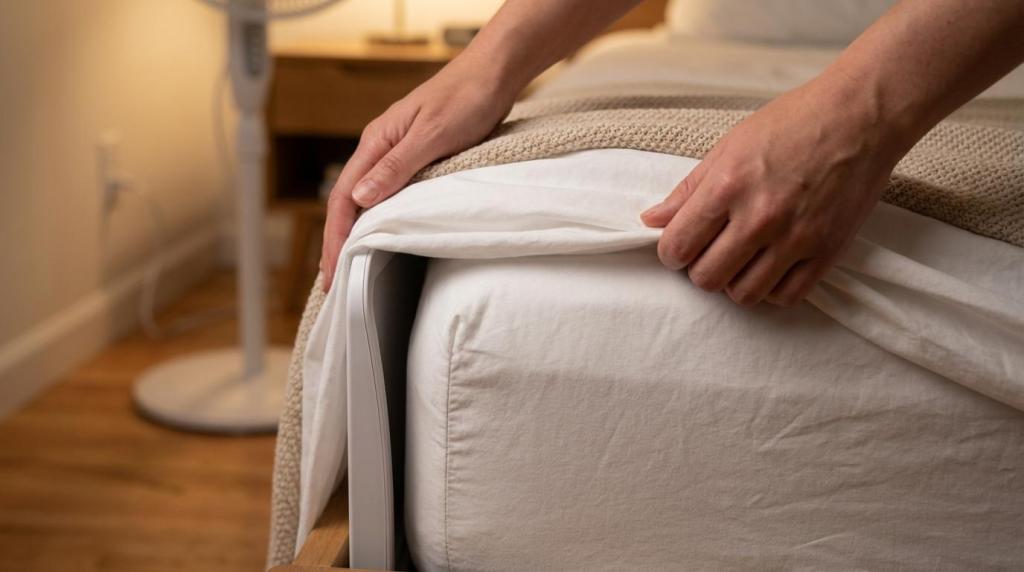
The top panel should sit at the foot of the mattress and lift the bedding slightly so air can travel inside the bed instead of spilling into the room. That under-sheet path is what gives this style of cooling its distinct feel. Instead of blowing directly at the face, it moves air where heat and humidity tend to build up during sleep.
Some beds with a footboard, heavy frame, or low clearance may need a little experimenting with angle and exact placement. In most rooms, a few inches of adjustment is enough to get the airflow moving cleanly under the covers.
People often assume the fan itself does all the work. In reality, the bedding setup is part of the system.
When the sheet and blanket are draped over the top panel and tucked with light tension, the bed creates a contained channel for air. That helps the fan cool the sleeper more efficiently, often at a lower speed. If the covers are loose and open at the foot, some of the airflow escapes before it reaches the body.
Breathable fabrics usually perform best. Cotton, linen, and lighter bedding let air move more naturally. Thick layers can still work, though they may need a higher setting to feel the same effect.
A few installation habits can weaken performance, even when the fan is working properly. Catching them early helps the unit feel better from the start.
These are easy fixes, and none of them mean the system is difficult to use. They just affect how quickly the bed begins to cool.
The unit should be connected to a grounded outlet with the supplied adapter. If the outlet is not close to the bed, a properly rated extension cord can be used, though it should be routed along the wall or furniture edge rather than across open floor space.
The bFan Bedfan uses a low-power, energy-efficient design, so it does not need heavy electrical support. That makes it practical in bedrooms, guest rooms, dorm settings, and travel situations where a quiet cooling option is preferred.
If the remote does not respond right away, it may need charging or pairing. Bedfans-USA provides setup and pairing help through online instruction resources, which can make that step much faster than guessing. Once paired, the remote gives precise control over airflow, from very gentle movement to strong cooling output.
Safe setup is simple, but it should never be skipped. The fan should be unplugged during assembly, adjustment, or cleaning. Cords should stay clear of walking areas, and the intake area should remain free of loose fabric, pet hair, and debris.
After the first night or two, it is smart to check that everything still feels secure. Bedding can shift, especially on adjustable bases or slick sheets, and a quick repositioning may restore stronger airflow.
A few habits help keep the system working smoothly over time:
If the fan turns on but cooling seems limited, the issue is often related to placement rather than the motor. The first thing to check is whether the sheet is blocking the air path too tightly or leaving too much open space at the foot of the bed.
The next thing to check is speed. Many users prefer starting at a mid-range setting and increasing gradually once they are under the covers. An under-sheet bed fan can feel different from a room fan because its airflow is directed inside the bedding rather than across exposed skin.
[markdown] | Problem | Likely cause | What to do | | --- | --- | --- | | Fan will not start | Outlet, adapter, or remote issue | Confirm power connection, test another outlet, check remote charge or pairing | | Airflow feels weak | Bedding not tucked well or speed too low | Retuck sheets, raise the setting, check panel position | | Unit seems noisy | Base not level or intake blocked | Reposition on flat flooring and clear debris | | Fan feels unstable | Top panel not locked in place | Re-seat the panel and confirm height tabs are secure | [/markdown]Good product design helps, though support matters too. A quality under-sheet bed fan should not leave users guessing when a room layout, bed frame, or remote setup needs a little extra attention.
Bedfans-USA supports setup with instructional resources and direct customer help, which is valuable for first-time users or anyone switching from a standard room fan. The product’s adjustable design, quiet brushless DC motor, and under-sheet airflow approach make it a practical choice for hot sleepers, night sweats, and couples who need a more targeted cooling option without dropping the whole-house thermostat.
When the unit is measured correctly, placed at the foot of the bed, tucked under the bedding, and tested with a few small adjustments, installation is usually quick and the payoff is immediate.