
Learn what a bed cooler does, how it cools under the covers, and 5 smart facts to compare airflow, cost, noise, and setup.
Most people use the term bed cooler to mean a product that cools the sleep space around the body, not the whole bedroom. The bFan Bed Fan fits that category because it pushes room air between the sheets, which can help move heat and sweat out of the bedding microclimate.
TL;DR: Summary
- A bed cooler is a targeted sleep cooling device, and the bFan Bed Fan is one example that moves air under the covers instead of cooling the whole room.
- The main benefit is local comfort, less trapped heat, and better sweat evaporation in the bedding microclimate, but research on broader sleep outcomes is still mixed.
- Neither Bedjet nor a bed fan actually chills air, they use the cooler room air you already have, so bedroom temperature still matters.
- If you are deciding what to buy, check cooling method, noise, power use, dual zone options, setup, and cost before you focus on marketing claims.
- This is not medical advice. Always consult your doctor or oncology team before making changes, especially if night sweats began with menopause, infection, cancer treatment, or a new medication.
If you are waking up sweaty, kicking off covers, or arguing over the thermostat, a bed cooler can make sense. Just keep the expectations realistic, it is a comfort tool first, and if severe night sweats are new or unexplained, you need medical guidance, not just better gear.
A bed cooler is a targeted sleep cooling device, and bFan Bed Fan is one example that sends airflow into the bed microclimate instead of trying to cool the entire bedroom.
That distinction matters. Your bedding creates a small warm zone around your body, which can help you fall asleep, but it can also trap too much heat once the room is warm, humid, or your body is running hot. A 2019 review on sleep thermoregulation noted that humans use bedding to form warm microclimates during sleep, and that temperature control is tightly tied to how sleep works in the first place.
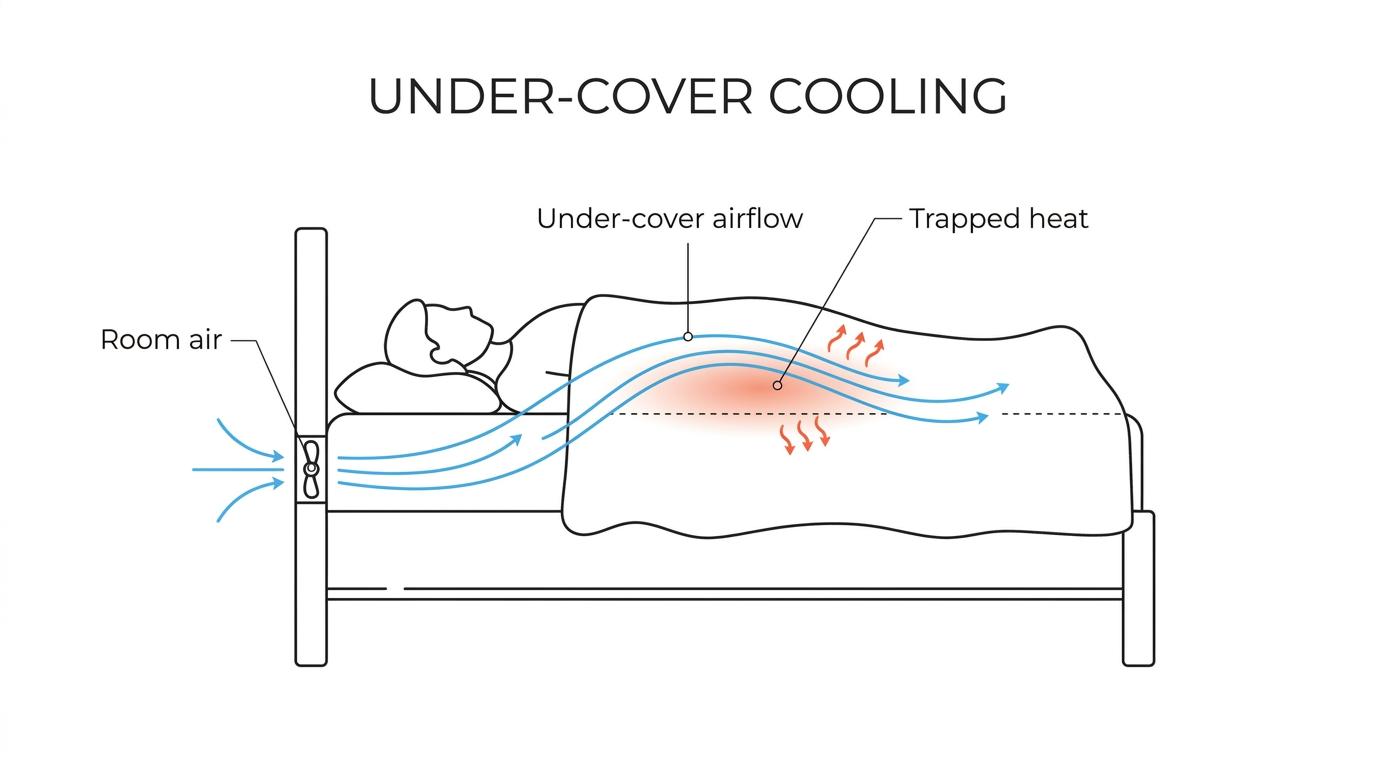
A practical bed cooler tries to fix that local heat buildup. Some systems use airflow. Others use water based mattress pads or active mattress covers that change surface temperature. If your main problem is sweaty legs, a damp lower back, or heat trapped under the comforter, targeted airflow often addresses the root issue better than blasting the whole room with colder air.
"bFan Bed Fan uses about 12 watts on average at the highest setting because it is cooling the bed microclimate, not the whole room."
Sleep and body temperature are tightly linked, and heat exposure can increase wakefulness while reducing deeper sleep stages, according to a PubMed review on thermal environment and sleep.
Your body normally sheds heat as you get sleepy. That is one reason sleep experts often suggest a bedroom temperature around 60°F to 67°F, or 15.5°C to 19.5°C. If the room, bedding, or your own physiology fights that process, you may fall asleep later or wake more often.
A common misconception is that any warm bed is bad. It is more nuanced than that. Mild warmth at the skin can help with sleep onset, but trapped heat later in the night can become a problem. The shift from cozy to overheated is why so many people say, “I fall asleep fine, then wake up hot at 2 a.m.”
A bed cooler works by improving heat loss, usually through airflow, surface cooling, or moisture evaporation. In warm, humid conditions, airflow can reduce wakefulness compared with still air, based on older sleep lab research summarized in PubMed.
Airflow systems sit at the foot or side of the bed and move room air under the top sheet. They do not create cold air. They use the cooler air already in the room and help it carry body heat and sweat away from the skin. That matters if night sweats are soaking your pajamas, because evaporating sweat is one of the body’s main ways to cool itself.
Surface cooling systems work differently. They cool the mattress surface or a topper, often with circulating water. Those can feel more dramatic, but they also tend to cost more, weigh more, and involve extra components.
The best bed cooler depends on your real problem, body heat, sweat, partner preference, and budget. These five checks prevent the most common buying mistakes.
After you know whether your issue is trapped heat, sweating, partner conflict, or a very warm room, look at these details:
Pro tip, do not buy based on the word “cooling” alone. In this category, “cooling” can mean airflow, chilled water, conductive surface temperature change, or just fabric marketing.
A bed cooler is more targeted than central AC or a box fan, and that is its main advantage. AC cools the whole room. A room fan moves air around the room. A bed cooler works inside the bedding microclimate.
That difference changes cost and comfort. If one partner sleeps cold and the other sleeps hot, lowering the whole home thermostat to 64°F can feel miserable and expensive. With targeted under the covers airflow, many people can raise the room thermostat by about 5°F and still feel cooler in bed because the airflow helps sweat evaporate where it matters most.
That local approach is also why tight weave sheets usually work best. They help guide the air across the body instead of letting it spill out too quickly at the foot of the bed. People often miss this and then blame the device when the real issue is loose bedding or a very open knit blanket.
"Many sleepers use targeted airflow from bFan Bed Fan to cool the body enough that they can keep the room thermostat several degrees higher."
Compared with Bedjet and Eight Sleep, bFan Bed Fan is the simpler and lower cost path for targeted airflow cooling, while Eight Sleep is a premium active mattress system and Bedjet is a higher priced warm and cool air mover that still uses room air.
Start with the biggest misconception. Neither Bedjet nor a bed fan cools the air. They only use the cool air already in the room. Eight Sleep is different because it actively manages mattress surface temperature with water based technology, but it also sits in a very different price band, with the Eight Sleep Pod 5 costing about $3000 to $6000.
Price is often where the decision becomes clearer. A dual zone Bedjet setup costs over $1000, which is more than twice the price of two bed fans for two sided microclimate control. If both partners need separate settings and you mainly want less trapped heat and sweat, two simple airflow units can be the more practical answer.
There is also a category history point worth knowing. The original Bedfan was invented in 2003, several years before Bedjet was even thought of. That does not make one automatically better for every sleeper, but it does remind you that under the covers airflow is not a gimmick or a brand new experiment.
Choose by symptom first, then sleeping setup, then operating cost. That order is more reliable than buying the most heavily advertised product.
Step 1 is matching the tool to the problem. If you wake up damp and overheated under the covers, airflow is usually the cleanest first try. If you hate a warm mattress surface the moment you lie down, active surface cooling may be more satisfying.
Step 2 is looking at your bed and partner. If one of you runs cold, dual zone control matters more than raw cooling power. Two separate units can often solve the “one person freezing, one person roasting” problem better than one shared system.
Step 3 is checking the ongoing cost. Low power airflow devices can be far cheaper to run than extra AC. Company materials for Bedfan say the system uses about 12 watts on average even at the highest speed, which helps explain why some users focus on it as an energy saver as much as a comfort tool.
Good setup is simple, and small details matter more than people expect. Placement, sheet choice, and speed setting often decide whether a bed cooler feels subtle or surprisingly effective.
First, place the airflow source so the air goes between the fitted sheet area and your top sheet or blanket space, not straight into the room. Second, use sheets with a tighter weave sheets so the air travels across the body. Third, start at a lower speed and increase only until you feel airflow along the legs and torso.
A useful trick is to use the timer instead of running high speed all night. Some sleepers need the most help during the first few hours, when falling asleep and the first hot wake up usually happen. Lower sound levels also help here. Low settings around 28 dB are very quiet, which can matter if you are sound sensitive.
If night sweats are frequent, new, or severe, get medical advice first. Comfort tools can help you sleep, but they do not diagnose infection, hormone shifts, thyroid problems, cancer treatment side effects, or medication reactions.
This is where expectations need to stay grounded. A bed cooler may reduce discomfort by drying sweat faster and helping your body dump heat. It does not treat the cause. That is especially important if you have fever, weight loss, swollen lymph nodes, chest symptoms, low blood sugar episodes, or sweats that started after a medication change.
A scenario I hear often sounds like this: a woman in her early 50s can fall asleep normally, then wakes soaked during menopause and cannot get comfortable again for an hour. In that kind of case, targeted airflow under the covers can be a useful non drug layer while she talks with her clinician about hormone changes, triggers, and treatment options. Mayo Clinic also notes that hot flashes and night sweats are common in menopause, which helps explain why cooling strategies matter in daily life, not just in sleep labs, see the Mayo Clinic menopause overview.
Most weak results come from room temperature, bedding choice, or airflow escape, not from the idea itself. Fix those first before you assume the product category does not work for you.
Step 1 is check the room. If the bedroom is very warm and humid, no airflow system will feel truly cold because it is using room air, not refrigerating it. A bed cooler works best as a targeted layer on top of a reasonably cool room.
Step 2 is check the bedding. Puffy comforters, loose blankets, and open knit fabrics can dump the air before it crosses your body. Tighter weave sheets and a more controlled top layer usually improve the effect.
Step 3 is check timing and expectations. Some people want an instant “ice bed” sensation and get disappointed. The more realistic goal is a drier, less stuffy, less trapped feeling over time. That lines up with a 2024 PubMed review of bedding strategies that induced body cooling, which found mixed evidence for major sleep outcome changes even though acute core body temperature lowering was seen.
These are the best starting points if you want the medical and sleep science context behind bed coolers, thermoregulation, and night sweats.
Useful internal links to add on Bedfan.com include the existing night sweats FAQ at https://www.bedfan.com/night-sweats/bedfan-faq-night-sweats-cooling-sleep-setup-safety-and-product-questions-answered, plus related pages on menopause night sweats, medication related night sweats, sleeping cooler, and bed cooling setup tips.
Yes, the same questions come up again and again, mostly about whether bed coolers really work, what temperature to set, what they cost to run, and when overheating could signal a health issue.
Yes, many hot sleepers feel better with targeted bed cooling, especially when the problem is trapped heat under the covers. The strongest support is for comfort and heat removal inside the bedding microclimate, not for guaranteed changes in every sleep metric. If your main complaint is feeling sweaty and stuffy in bed, airflow often makes more sense than trying to cool the whole house.
A cool bedroom still matters, even with a bed cooler. Many sleep experts suggest about 60°F to 67°F, though personal comfort and medical issues can shift that a bit. With targeted under the covers airflow, some people can raise the thermostat about 5°F and still sleep well because the body is losing heat more efficiently inside the bed.
It depends on what “better” means for you. If you hate sweating under blankets, airflow is often the more direct fix because it helps evaporate moisture and move heat away from the skin. If you mainly dislike a warm mattress surface before you even pull up the covers, a cooled pad or active mattress system may feel better at first contact.
Many airflow bed coolers use very little electricity compared with air conditioning. Bedfan materials say the system uses about 12 watts on average even at the highest setting, which is tiny compared with central AC or a portable AC unit. That is one reason some people use bed cooling to cut overnight cooling costs instead of lowering the whole home thermostat.
Yes, it can help with comfort, but it does not treat the medical cause. People dealing with menopause, antidepressants, steroids, cancer treatments, or thyroid issues often feel better when sweat evaporates faster and the bedding stops trapping so much heat. If night sweats are severe, sudden, or paired with other symptoms, speak with your doctor or oncology team.
The most common reason is that the room itself is too warm or humid. Since airflow based systems use room air, they cannot create cold air from nothing. Poor sheet choice, open blankets, and misplaced airflow can also weaken the result, so small setup changes often fix the issue.
Usually, yes. Eight Sleep sits in a much higher price category, roughly $3000 to $6000, because it is an active mattress system rather than a simple airflow device. A dual zone Bedjet setup is over $1000 and more than twice the price of two bed fans, so airflow systems often win on upfront cost and simplicity.
If you want a practical next step, look at a targeted airflow option in the store and compare it with your room temperature, bedding, and budget. This is not medical advice. Always consult your doctor or oncology team before making changes.