PCOS night sweats may stem from hormones, insulin resistance, or sleep apnea. Learn causes, red flags, and tips to sleep cooler.
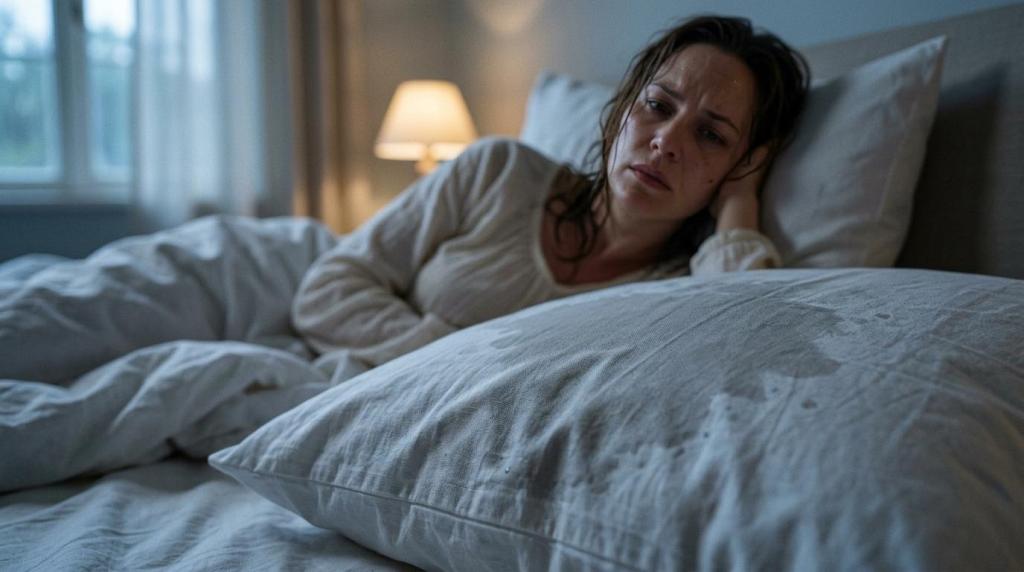
Waking up sweaty when you already deal with polycystic ovary syndrome (PCOS) can be frustrating and a little unnerving. A lot of people assume it must be “just hormones,” but that’s only part of the picture. PCOS is tied to hormonal imbalance, insulin resistance, and higher rates of sleep problems, including obstructive sleep apnea (OSA). Any of those can make nights hotter, more broken, and less restful.
This is not medical advice. Always consult your doctor or care team before making changes, especially if night sweats are new, severe, or happening with other symptoms. If you’re soaking pajamas, waking up repeatedly, or feeling exhausted during the day, it’s worth looking at both the medical cause and the sleep setup at the same time.
PCOS itself is not usually listed as the single classic cause of night sweats in the way menopause is. Still, PCOS can create several conditions that make sweating at night more likely. The National Institute of Child Health and Human Development notes that PCOS is a group of symptoms linked to hormonal imbalance and can include insulin resistance and OSA, both of which can affect sleep quality and body temperature control: NICHD PCOS overview.
Hormones matter here. Shifts in estrogen, progesterone, and androgens can affect thermoregulation, which is the body’s ability to stay within a comfortable temperature range. Some people with PCOS describe a pattern of feeling fine during the day but overheating once they’re under blankets, especially in the second half of the night.
Blood sugar swings can add to the problem. If insulin resistance is part of your PCOS picture, nighttime glucose changes may leave you sweaty, restless, or suddenly awake. That doesn’t mean every sweaty night is caused by blood sugar, but it is one more reason PCOS-related night sweats deserve a wider look instead of a quick shrug.
This part matters. Night sweats can happen with thyroid disease, infection, anxiety, reflux, medication side effects, and sleep apnea. Mayo Clinic also lists infections, hormone changes, medicines, and some medical conditions among common reasons people wake up drenched: Mayo Clinic on night sweats.
If your symptoms are new, worsening, or intense, it’s smart not to blame PCOS too quickly.
After a good clinical history, the pattern often starts to tell the story. Sweats linked to hormonal shifts may come with cycle irregularity, acne, or increased facial hair. Sweats linked to OSA may come with loud snoring, gasping, morning headaches, or unrefreshing sleep. Medication-related sweats often start after a new prescription or a dose change.
A good rule is simple: if the sweats are persistent, disruptive, or paired with other body changes, get checked.
After talking with your clinician, keep an eye out for signs that deserve faster follow-up:
Researchers have been looking at the sleep side of PCOS for years. A review in the National Center for Biotechnology Information (NCBI) notes that sleep disturbances and OSA are more common in women with PCOS than many people realize: NCBI review on sleep disturbances and PCOS. That matters because repeated awakenings, breathing disruptions, and stress hormone changes can all leave you feeling overheated at night.
This is one reason the usual advice to “just keep the room colder” often falls short. If your sleep is being broken by hormone shifts, blood sugar variability, or breathing problems, the answer may need two parts. One part is medical evaluation. The other is reducing the trapped heat and humidity under the covers so your body has a better shot at settling back down.
One anonymized example sounds familiar to many clinicians. A woman in her early 30s with PCOS kept waking around 3 a.m. drenched from the waist up. She assumed it was only hormones. After tracking symptoms, she noticed she also snored, woke with dry mouth, and felt sleepy while driving. Her evaluation led to treatment for OSA, and her sweaty nights improved. She still used a cooling sleep setup because the bed heat was a separate problem.
You do not need a perfect routine to get some relief. A few targeted changes can make nights much more manageable while you sort out the root cause.
Sleep experts commonly recommend a bedroom temperature between 60°F and 67°F for better sleep. That said, many hot sleepers find they can raise the room temperature by about 5°F and still feel cooler if they have steady airflow under the sheets. That can help lower air conditioning use without making the bed feel stuffy.
Start with the basics you can control tonight:
A short symptom log is also useful. Note when the sweats happen, what you ate, where you are in your cycle, and whether you snored or woke suddenly. That kind of detail helps your clinician spot patterns much faster.
If the main misery is heat building up under the covers, a bed fan can be one of the most practical non-drug tools. This is where the bFan or Bedfan makes sense because it targets the actual pocket of warm, humid air trapped between your sheets. It does not cool the air itself. Like any bed cooling fan, it uses the cooler air already in the room and pushes it under the top sheet, which helps sweat evaporate and helps the body release heat.
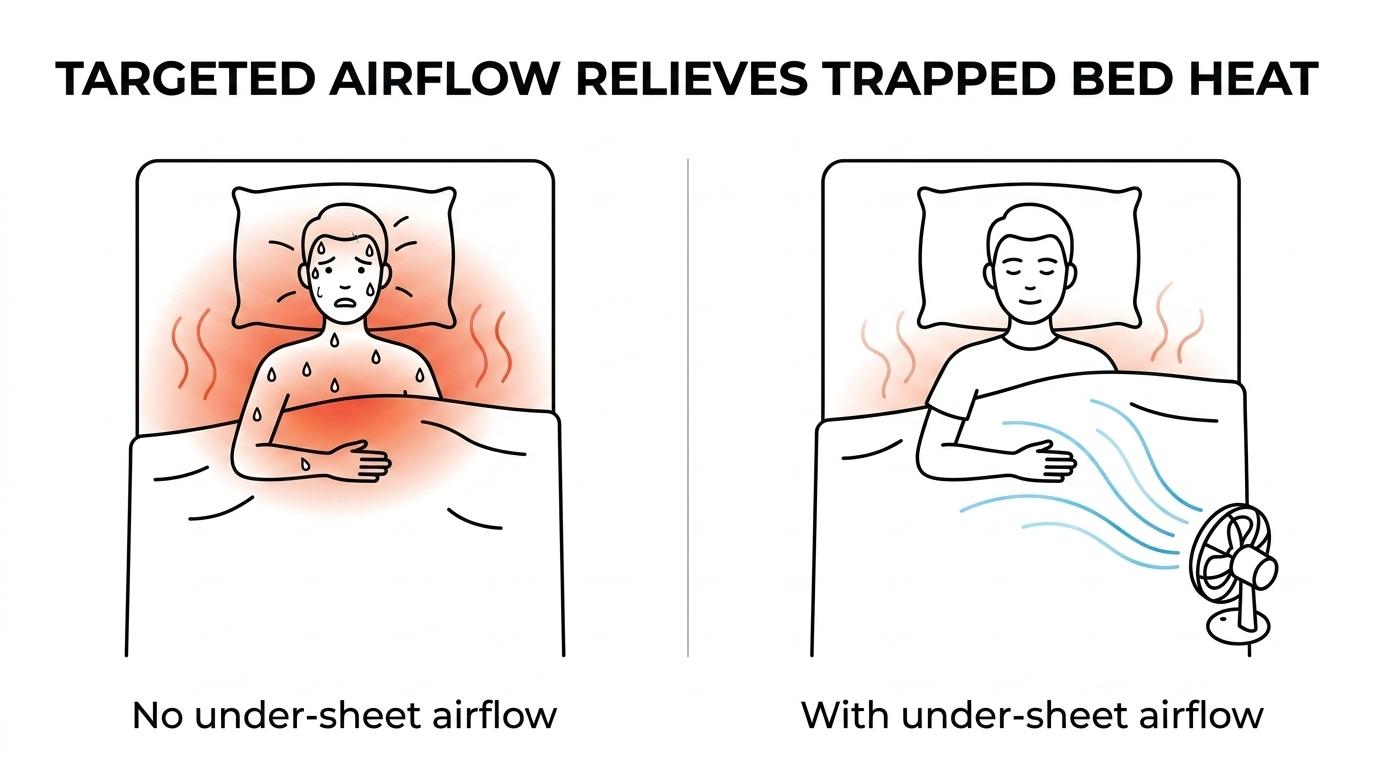
That sounds simple because it is. And simple is often what works at 2 a.m.
After helping hot sleepers since 2005, one pattern has stayed consistent. People often don’t need icy air. They need airflow in the right place. A Bedfan sits at the foot of the bed and sends air under the top sheet, where the heat is actually trapped. For someone with PCOS who wakes sweaty but doesn’t want another medication, that targeted airflow can be a real quality-of-life fix.
A few details matter more than marketing buzzwords:
If you do try one, pair it with tight-weave sheets. That helps the air move across your body instead of escaping upward too quickly. It’s a small detail, but it changes how effective the cooling feels.
For more ideas, it may help to read Bedfan’s night sweats guide hub, the sleeping cooler hub, and the article on sleep sweating relief and dry-night tips. Those are good starting points if you’re trying to sort out comfort changes while waiting for a medical visit.
A focused appointment usually works better than a vague “I’m sleeping badly.” Tell your doctor how often the sweating happens, whether it soaks clothing or sheets, whether you snore, and whether you’ve noticed palpitations, cycle changes, anxiety, or medication changes around the same time.
If you have PCOS, it can also help to ask whether insulin resistance, thyroid issues, reflux, or OSA could be part of the picture. You are not trying to self-diagnose. You’re helping the visit get specific faster.
You can bring a short checklist like this:
If you want more reading before your visit, the night sweats section and sleeping cooler articles on Bedfan.com can help you organize practical questions about your sleep environment.
If you want trustworthy background reading, these sources are worth your time:
NICHD overview of polycystic ovary syndrome (PCOS)
Clear summary of PCOS symptoms, diagnosis, and related issues including insulin resistance and OSA.
Mayo Clinic guide to night sweats
Useful overview of what night sweats are and when they may signal a medical problem.
NCBI review on sleep disturbances in women with PCOS
Summarizes research on sleep problems, including OSA, in people living with PCOS.
If your nights are being wrecked by trapped bed heat, a targeted airflow solution can help while you work on the medical side. You can see how the bFan Bed Fan works and whether it fits your sleep setup. This is not medical advice. Always consult your doctor or care team before making changes, and seek prompt medical care for severe, persistent, or unexplained night sweats.