Mattress cooling options range from breathable pads to active bed fans and water systems that reduce heat, humidity, and night sweats.
Mattress cooling is the set of materials and systems that reduce heat and humidity around your body while you sleep. It matters because sleep onset depends on a slight drop in core temperature, and trapped warmth can interrupt that process, drive night sweats, and fragment deep sleep. The main problem it solves is not just a “hot mattress,” but a hot microclimate created by the mattress, sheets, comforter, and your own body heat. When that microclimate stays cooler and drier, many sleepers fall asleep faster and wake less often.
Mattress cooling helps the body release heat during the first sleep cycles. Hot sleepers on Tempur-Pedic style foam or under dense comforters often wake because warm, humid air gets trapped right where skin meets bedding.
Your body does not need an ice-cold bed. It needs a sleep surface and bed environment that let heat move away at a steady rate. That is why “cool to the touch” and “stays cool for eight hours” are not the same thing. A fabric can feel chilly at first contact and still stop helping once it reaches room temperature.
The best mattress cooling setups target three linked issues:
Common misconception: a cooling label on a mattress means strong overnight temperature control. In practice, many “cooling” foams only improve heat retention a little compared with standard memory foam.
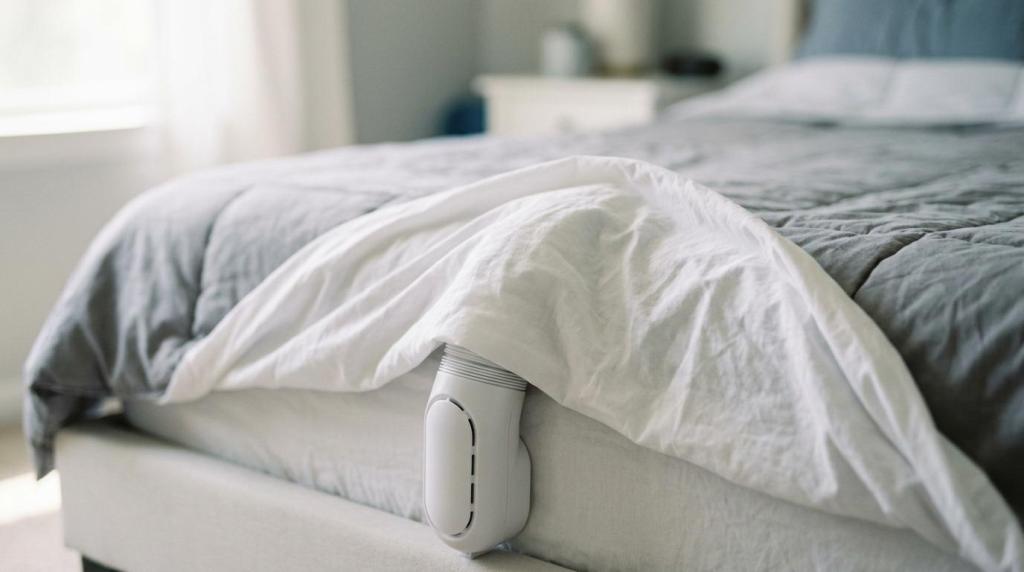
Passive cooling uses materials like PCM covers and breathable latex, while active cooling uses airflow or water. Slumber Cloud and bFan represent the split well: one buffers heat with fabric technology, the other actively moves warm air out of the bed.
Passive products include cooling mattress pads, toppers, sheets, pillows, gel foams, graphite foams, and phase-change material, often shortened to PCM. They are silent, easy to care for, and usually cost less. Most work best for mild to moderate overheating.
Active systems include under-sheet fans and water-circulated pads. They use power, but they also keep working after the initial cool-touch effect fades. Water systems can often cool to about 55°F, while air systems depend on room temperature and evaporative cooling.
The trade-off is straightforward. If you need simple, silent, and lower-cost relief, then passive cooling is a good first step. If you have menopause-related night sweats, medication-related sweating, or repeated wakeups from overheating, then active cooling usually delivers a bigger change.
Pro tip: room humidity matters. If your bedroom is warm and humid, then airflow and moisture removal usually outperform gel infusions alone.
The strongest mattress cooling options span airflow systems, water pads, PCM pads, breathable toppers, and hybrid mattresses. bFan, ChiliPad, Slumber Cloud, and WinkBed are useful benchmarks because they represent different cooling mechanisms and price tiers.
The right choice depends on whether you need targeted relief, a lower-cost upgrade, or the coldest possible bed. Here are the main categories worth considering today:
Start with the cause of the heat, not the product category. A menopausal sleeper in a humid room needs a different solution than a side sleeper who only gets hot on dense memory foam.
Step 1: Define the heat pattern. If you feel hot only on contact with the mattress, then a pad, topper, or hybrid mattress may be enough. If you wake up sweaty under the covers, then airflow or water-based cooling is usually the better fit.
Step 2: Check the room and bedding. If your room sits above 75°F to 80°F and humidity is high, then passive fabrics have less room to work. In that case, focus on airflow, lighter bedding, and moisture management first.
Step 3: Match the solution to your tolerance for maintenance, noise, and cost. Passive pads may cost $40 to $230. Bed fans often land near $200 to $450. Water systems commonly range from $800 to $2,000 or more.
Pro tip: do not replace a decent mattress before testing the cheaper layers around it. Sheets, protectors, toppers, and under-cover airflow often drive more heat buildup than sleepers expect.
Cooling pads are usually better for lighter heat issues, while toppers are better when you need both comfort change and some cooling. Cozy Earth style pads and ViscoSoft style toppers solve different problems.
Pads are thin. They sit close to the surface and aim to wick moisture, add breathability, or use PCM to buffer heat. They rarely change firmness much, which is a good thing if you already like your mattress feel.
Toppers are thicker, often 2 to 4 inches. They can relieve pressure points and change mattress firmness, but that extra material can work against cooling if the foam is dense or if you sink deeply into it.
Here is the practical trade-off:
Common misconception: “gel topper” means strong cooling. Many gel toppers feel cooler at first, then perform only a little better than standard foam once body heat builds.
Proper setup matters because airflow systems cool the bed microclimate, not the whole room. bFan and BedJet both work best when the air path under the covers is clear and the bedding is not packed too tightly.
Step 1: Position the unit at the foot of the bed and aim airflow under the top sheet or comforter, not into the mattress. The goal is to move warm, humid air away from skin.
Step 2: Create a loose air channel. If sheets are tucked too tightly or the comforter is heavy and compressed, then airflow drops fast. A little loft above the legs and feet helps a lot.
Step 3: Start high, then dial down. Many users get the best comfort by pre-cooling the bed for 10 to 20 minutes and then lowering fan speed once they settle in.
Pro tip: lower speeds often feel better after sleep onset. Stronger airflow is great for clearing trapped heat quickly, but many sleepers prefer gentler airflow once the bed environment stabilizes.
Yes, cooling mattresses can work, but many claims are overstated. Hybrid models from Helix or WinkBed usually cool better than dense all-foam mattresses, while gel-infused memory foam alone often produces only modest gains.
The most reliable cooling mattress features are structural, not cosmetic. Coil support cores improve airflow. Latex tends to trap less heat than dense memory foam. Breathable covers help, but they cannot fully offset a heat-retentive comfort layer underneath.
What usually matters most:
A cooling mattress makes sense when your current mattress is old, unsupportive, or deeply heat-retentive. If the mattress is still structurally sound, an add-on cooling system is often the better value.
Active cooling is usually the best choice for menopause and stronger night sweats. Under-cover airflow systems and water-based pads address both heat and moisture, while passive pads mainly soften the problem.
Night sweats are not just a temperature issue. They are a moisture issue too. Once sweat accumulates, heat feels more intense and sheets start to cling. That is why airflow can feel so effective: it increases evaporation and helps dry the microclimate around the body.
If symptoms are occasional, then a PCM pad and breathable bedding may be enough. If symptoms are frequent or linked to medication, chemotherapy, thyroid issues, or hormonal shifts, then stronger cooling is often worth the upgrade.
Couples should think about zoning. If one sleeper runs cold and the other runs hot, then one-sided airflow or dual-zone water systems can solve a problem that central AC usually cannot.
A cooler bed starts with lower insulation and better vapor transfer. Percale cotton and linen, latex pillows, and breathable protectors usually outperform thick jersey knits, dense memory foam pillows, and waterproof layers with poor airflow.
Step 1: Fix the protector first. A low-breathability mattress protector can cancel out the benefit of an expensive cooling mattress or pad. Look for breathable membranes and avoid heavy quilted builds unless you need extra cushioning.
Step 2: Use lighter sheet construction. Percale cotton and linen generally vent better than high-thread-count sateen. Common misconception: higher thread count always means cooler. In many cases, it means tighter weave and less airflow.
Step 3: Adjust the pillow and comforter. If your head and upper torso run hot, switch to latex or ventilated fill pillows and reduce comforter weight before you change the mattress itself.
This section is where many cooling plans fail. People buy a cooling topper, then cover it with a heat-trapping protector, thick microfiber sheets, and a dense comforter.
Passive products are the easiest to own, while water systems demand the most care. Fans like bFan sit in the middle on cost but near the low end on maintenance, because they use no water lines, reservoirs, or monthly flush cycles.
Before you buy, weigh these operating realities:
Noise matters more than spec sheets suggest. A fan in the low-40 dB range may sound mild to one sleeper and distracting to another. Water systems often run quieter, often in the low-30 dB range, but they add cleaning routines and more hardware near the bed.
Energy use is still far below running central AC colder all night. If targeted bed cooling lets you raise the thermostat a few degrees, then the system may reduce total cooling costs while improving comfort at the same time.



