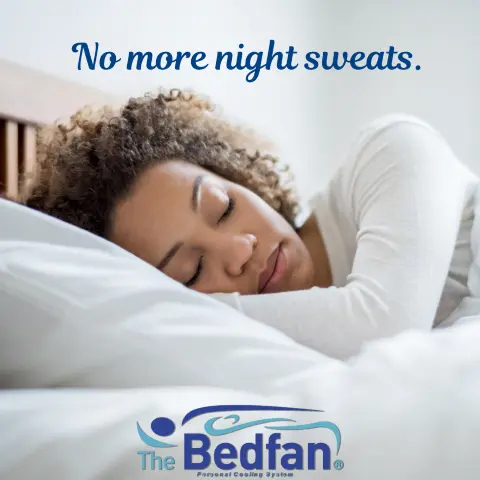
Sweaty nights can fade with cooler, drier air plus breathable bedding and targeted bed airflow—track triggers and adjust your sleep microclimate.
Waking up damp, throwing off the covers, then shivering a few minutes later is exhausting in a very specific way. Sweaty nights steal rest, leave you dehydrated, and can turn bedtime into a negotiation with your own body.
The good news is that night sweating is often responsive to practical changes, especially when you focus on the small climate trapped inside your bedding, not just the thermostat on the wall.
Night sweating usually comes down to a mismatch between heat production and heat release. Your body naturally cools as it moves into deeper sleep, and that drop in core temperature supports stable, restorative rest. When that cooling process gets blocked, you may sweat as your body tries to dump heat.
Sometimes the room is simply too warm or too humid. Other times, the room is fine but the bed itself is holding heat: dense comforters, foam that stores warmth, or sheets that trap moisture. That “under-the-covers” zone becomes its own microclimate, and it can run several degrees warmer than the rest of the bedroom.
A third category is internal triggers: hormones, medication side effects, illness, hyperhidrosis, alcohol, late heavy meals, or stress. These can push heat production up or shift temperature regulation, even when your setup looks perfect.
Patterns are helpful because the fix depends on the cause. The simplest way to spot yours is to keep a tiny log for a week: bedtime, room temp, what you drank and ate in the evening, bedding used, and whether you woke sweaty, chilled, or both.
After you have a few nights of notes, look for repeats. Many people find the culprit is not “summer” or “my mattress,” but a combination that shows up reliably.
Here are frequent triggers worth checking first:
If your sweating is new, severe, or paired with fever, unexplained weight loss, persistent cough, or swollen lymph nodes, a clinician should be part of the treatment plan. Sleep comfort matters, and so does ruling out medical causes.
It’s tempting to solve sweaty nights by cranking the air conditioning. That can help, yet it’s often an expensive way to treat the symptom while the bed continues to trap heat close to your skin.
Start by separating “room cooling” from “bed cooling.” The room influences your whole body. The bed microclimate influences the skin you’re actually sweating through. Both count, and the best results often come from modest changes in each.
Humidity is a quiet driver of discomfort. When indoor air is humid, sweat does not evaporate well, so your body sweats more to get the same cooling effect. If you live in a humid region or your bedroom feels sticky, a dehumidifier can feel like a reset.
Even small airflow changes can matter. A ceiling fan or oscillating fan supports evaporation, though it may not reach the heat trapped under blankets.
Fabric choices are not just about softness. They shape how heat and moisture move, and that determines whether you wake up clammy or comfortable.
Natural fibers can help, but not all “natural” behaves the same. Lightweight cotton percale often feels cooler than cotton sateen because it is less dense and allows more airflow. Linen can feel airy and dries quickly, though it can be textured. Bamboo-derived viscose/rayon can feel cool to the touch, yet some weaves hold moisture longer than you’d expect, so pay attention to how you personally respond.
One simple rule: choose bedding that dries fast. “Moisture-wicking” marketing varies, but you can test at home. Put a few drops of water on the fabric; if it spreads and dries quickly, it’s working with you.
Sleepwear matters too, especially for people who experience night sweats, sweating at the chest, neck, or behind the knees. A thin, breathable layer can sometimes feel cooler than bare skin because it helps sweat spread out and evaporate instead of pooling.
If your feet overheat, try letting them vent. A small change like leaving feet uncovered can reduce the whole-body sense of heat.
Some sweaty nights, including episodes of night sweats, can be related to hyperhidrosis, or they are primarily mechanical: the bed is too warm. Others are biological: your body is being pushed toward heat flashes or elevated sweating.
Menopause and perimenopause are common examples. Hot flashes can surge fast and wake you fully. In that situation, your environment needs to respond quickly, not slowly. Bedding that holds heat works against you because it delays cooldown. Fast-acting cooling, airflow, and a dry sleep surface become more valuable.
Medications can also be involved in the treatment of conditions, but many antidepressants, hormone-related therapies, steroids, and blood sugar medications can shift temperature regulation or sweating. Never stop a medication on your own, yet it’s reasonable to ask your prescribing clinician whether night sweats are a known effect and whether timing or alternatives could help.
Sleep apnea can be connected as well. Repeated arousals and stress hormone surges during the night can increase sweating. If you snore loudly, wake choking, or feel unrefreshed even after enough time in bed, getting screened can improve both health and comfort.
A single sentence that’s easy to forget: hydration and electrolytes affect thermoregulation.
Most cooling strategies aim at the room, while sweaty nights often start in the bedding. Blankets and comforters are designed to trap heat. That’s their job. When you run hot, that same insulation can store warmth and keep it pressed against your skin.
Direct bed cooling flips the script by moving air where the heat is trapped. A personal bed fan system sends airflow into the space between your sheets, helping evacuate body heat and reduce the damp, sticky feeling that wakes many hot sleepers.
This approach can be especially helpful for foam mattresses, which tend to hold warmth. Instead of waiting for the whole room to cool down, you cool the zone your body actually occupies.
People also like bed-focused cooling because it can support energy savings. When you cool the bed efficiently, you may be able to raise the household thermostat a few degrees and still feel comfortable at night.
A few practical features matter if you consider a bed fan, including systems like the bFan Bed Fan that are built to direct high airflow into bedding with a stable, adjustable base:
You don’t need a perfect setup to get a better night. Pick two or three changes you can do immediately, then keep the ones that reliably work.
Small wins compound. Two degrees cooler plus lower humidity plus better bedding often beats a dramatic thermostat change on its own.
If you’re still waking up drenched after improving airflow and bedding, treat it like useful information, not failure. Persistent night sweats, often associated with conditions like hyperhidrosis, can be a sign you need a different kind of fix.
Bring specifics to a clinician: when it happens, how often, whether it’s linked to hot flashes, medication timing, alcohol, stress, or illness symptoms. If menopause is part of the picture, ask about the full range of treatment options, from behavioral adjustments to medical therapies.
At home, keep refining the bed microclimate. Many hot sleepers, especially those experiencing night sweats, find their “sweet spot” is a cooler, drier room paired with targeted bed cooling that removes trapped heat quickly, so sleep stays deep instead of turning into a cycle of waking, sweating, and resetting.