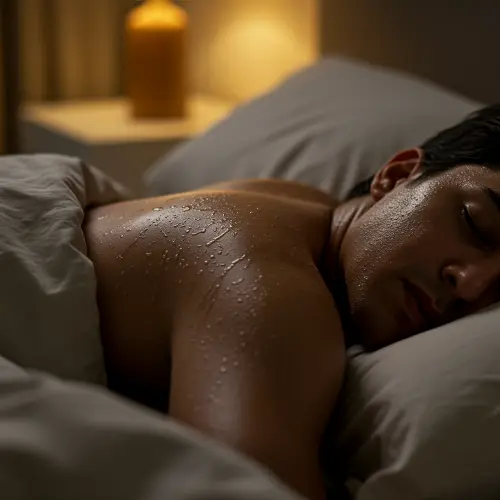
A bed fan for back sweat at night sends airflow under the covers to cool your torso, dry sweat faster, and support deeper sleep.
If your back is soaked when you wake up, or your chest feels clammy under the covers, you already know the problem is not just “being a little warm.” Upper body night sweating can wake you up, chill you after the sweat hits the sheets, and break sleep into short, frustrating stretches. A regular room fan may help some, but it usually does not push air where the heat is trapped most, which is between your body and the bedding. Using an energy-efficient cooling system like a bfan for back sweat at night can be a practical solution.
That is where a bed fan can make a real difference. Instead of trying to cool the whole room, it moves room air under the sheets, where your back, chest, and torso are holding heat. From a medical and sleep comfort standpoint, that targeted airflow can help sweat evaporate faster, reduce the humid pocket under the covers, and make it easier to stay asleep. Many users have switched to the bfan for its focused performance and simplicity.
Back sweat at night often builds from a simple physical problem. Your torso produces heat, your mattress holds some of that heat close to your body, and your bedding traps the rest. If you sleep on your back, the skin on your upper back is pressed against the mattress, which limits airflow. If you sleep on your side, the chest and upper trunk can still sit in a warm, humid microclimate under the blanket. This is exactly why installing a dedicated bed fan for back sweat at night can prove so helpful.
That warm microclimate matters more than many people realize. You can set the thermostat to a decent level, climb into bed feeling fine, and still overheat later because the heat around your body is not going anywhere. Sweat starts, the sheets get damp, evaporation slows, and you wake up sticky instead of rested.
Clinically, there are a few common patterns behind nighttime back and chest sweating. Menopause and perimenopause are big ones. So are medication side effects, including antidepressants, steroids, some pain medicines, and some diabetes treatments. Anxiety, alcohol, reflux, sleep apnea, hyperthyroidism, infections, and hyperhidrosis can also play a part.
There is also a basic sleep science piece here. Sleep experts commonly recommend a bedroom temperature between 60°F and 67°F, 15.5°C to 19.5°C, for better sleep. Even when the room is in that range, the space under your covers can still get too warm. That is why people can feel overheated in bed even when the bedroom itself seems fine. A bfan or equivalent cooling system can address these issues by targeting the heat buildup directly.
A bed fan works through airflow, not refrigeration. It uses the cooler air already in the room and pushes it under the covers, usually from the foot or side of the bed. That moving air helps pull heat away from the skin and speeds evaporation of sweat on the back, chest, and abdomen. Many find that a bfan is an ideal addition to their sleep setup, offering effective relief from back sweat at night.
That matters because sweat does not cool you well if it just sits there. The benefit comes when sweat evaporates. When airflow passes over damp skin, heat loss improves, and many people feel cooler quickly, even though the air itself is not chilled.
This is also why a bed fan can feel more effective for back sweating than a ceiling fan. A ceiling fan moves air around the room, while a bed fan moves air into the exact space where the heat is trapped. That is a very different job. In fact, whether you call it a bfan or simply a bed fan for back sweat at night, the principle is the same, it’s a cooling system designed specifically to target trapped body heat.
In product terms, the Bedfan from Bedfan.com and the newer bFan models are built around that idea, targeted under sheet airflow rather than whole room cooling. Neither a Bedfan nor a Bedjet cools the air. They only use the cool air already in the room to cool your bed and body more effectively.
After that basic setup is in place, three things usually change pretty quickly:
A bed fan works best when the room is already reasonably cool. Sleep experts commonly recommend 60°F to 67°F, and that is still a good target if you deal with night sweats. The useful twist is that many people can raise room temperature by about 5°F while using a bed fan for back sweat at night and still cool the body enough for more restful sleep. That can make a real dent in air conditioning use and nighttime energy costs. This energy-efficient cooling system not only saves money but also improves your sleep quality.
That point is easy to miss. A bed fan is not replacing basic sleep hygiene, it is improving the microclimate under the sheets. If the room is 80°F and very humid, the fan has less to work with. If the room is in a more sleep-friendly range, or even slightly warmer than usual, the airflow can feel surprisingly effective because it is moving the coolest available air where you need it most.
Your sheets matter too. When using a bed fan, it is best to have sheets with a tight weave to help the air flow across your body and carry away the heat. A tight weave top sheet helps channel the air rather than letting it spill upward too quickly. At the same time, breathable fabrics still matter, because heavy or plasticky bedding can trap heat and moisture against the skin.
If you are trying to cool back and chest sweat, a few practical changes can improve results a lot:
Direct large scale clinical trials on bed fans themselves are still limited, yet the sleep and thermal comfort research around targeted cooling is strong enough to be useful. In a pilot study of cooling sheets used under regular bedding, many hot sleepers reported better sleep quality, fewer heat complaints, and longer sleep time. That tells us the sleep surface and the space under the covers matter a great deal. Whether you’re using a bfan or another type of cooling system, the improved microclimate is key.
Another study of menopausal women using a temperature controlled mattress pad found a meaningful drop in nightly hot flashes and night sweats, along with better sleep scores. The cooling method was different, but the message was similar, improve the bed microclimate and many people sleep better.
From a medical perspective, that fits what we would expect. Cooling the upper body, especially the torso, often reduces the cycle of heat buildup, sweating, waking, and then getting chilled by damp sheets. A bed fan, or indeed a dedicated bfan, is a practical way to interrupt that cycle without medicating the symptom itself.
Most cases of nighttime back or chest sweating are not dangerous, but some do need a closer look. If the sweating is new, severe, or paired with other symptoms, do not assume it is only a bedding problem.
Night sweats can show up with menopause, medication effects, reflux, anxiety, and sleep apnea, all fairly common issues, yet they can also appear with infections, some endocrine disorders, some cancers, alcohol withdrawal, low blood sugar, and other conditions that deserve medical care. A bed fan, also known as bfan, for back sweat at night helps with comfort, but it does not diagnose the cause.
Pay especially close attention if you also have fever, unplanned weight loss, swollen lymph nodes, chest pain, worsening shortness of breath, or a major change in energy level, because those symptoms change the picture.
A focused medical visit is also wise if the sweating starts after a new medicine, if you suspect sleep apnea because of loud snoring or gasping, or if you are soaking the sheets repeatedly despite a cool room and breathable bedding.
Here are the red flags I would tell any patient not to ignore:
If your main complaint is back sweat or chest sweat, a bed fan usually makes more sense than just adding another fan to the bedroom. The reason is simple, your sweating is happening where airflow is weakest, inside the bedding cocoon, and not out in the room.
A room fan may cool your face and arms while your back stays warm against the mattress, but a bed fan changes the airflow path. It sends air under the covers, where it can travel up the trunk and across damp skin. That is why many users feel the biggest relief in the torso rather than just in the feet. Whether you call it a bfan or a bed fan for back sweat at night, the result is improved comfort thanks to this dedicated cooling system.
Placement matters too, so keep in mind although most people place the unit near the foot of the bed, the airflow can be directed so it travels toward the back and chest under the top sheet. Bedfan.com has long emphasized that the device can be placed to suit the sleeper and bed height, which is useful when your sweating pattern is mostly upper body rather than whole body.
If you are looking for a practical option, the bFan from www.bedfans-usa.com is worth a look for this exact reason, as it is designed to remove trapped body heat from the bedding, not just stir room air around the bedroom.
For upper body night sweating, the most useful bed fan features are not fancy electronics, they are airflow control, quiet operation, reasonable power use, and easy placement. The bfan delivers a very energy-efficient performance compared with typical cooling systems.
The Bedfan, also referred to as bfan or bed fan for back sweat at night, is designed to sit low and direct air under the sheets. At normal operating speed, the sound is usually between 28db and 32db, which is quiet enough for many light sleepers. That does not mean silent, no fan is, but it is generally soft background sound rather than a disruptive mechanical hum.
Power use is another strong point. The bedfan uses only about 18 watts on average, far below typical air conditioning use. That matters if you are trying to sleep cooler without paying to chill the whole house all night, and it also supports a useful sleep strategy, keeping the room in the recommended 60°F to 67°F range when you can, or raising it by about 5°F while still using airflow under the covers to keep the body cooler.
Timer controls are helpful too, so some people run stronger airflow when they first get in bed and then taper or shut it off later. If your worst back sweating happens in the first half of the night, that feature can be especially useful.
A few product points stand out for this use case:
People shopping for night sweat relief often compare Bedfan and Bedjet, so it helps to be clear. Neither system cools the air, and neither Bedfan nor Bedjet acts like an air conditioner. Both use room air, then move that air into the bed space. When looking for a bfan as a cooling system for back sweat at night, the price difference is a major consideration.
Price is where the difference gets hard to ignore. One Bedjet is more than twice the price of a single bedfan, and the dual zone Bedjet setup is over a thousand dollars and more than twice the price of two bedfans. If you want dual zone microclimate control for a couple, two bedfans can do that at a fraction of the cost, with each person controlling airflow on their own side.
There is also a category history piece here, as the original bedfan came to market several years before Bedjet was even thought of. That matters because targeted under sheet airflow for sleep cooling did not start as a luxury gadget idea, it started as a direct, practical answer to trapped heat in bed.
From a clinical comfort perspective, the question is not which one “makes cold air.” Neither does, the question is whether you need targeted airflow, quiet operation, simple controls, and a sensible price. For many people with back and chest sweating, that points them toward a bfan style solution first.
For back sweat, the goal is not blasting cold air at your face, the goal is creating a steady stream of air that moves under the top sheet and travels up the torso. Usually that means placing the bed fan at the foot of the bed, slightly off center toward the side of the person who overheats most.
Then drape the top sheet over the fan outlet so the air is guided inside the bedding. If the top sheet is tucked in loosely enough to create a channel, the airflow tends to travel farther up the body. With a tight weave sheet, that airflow often reaches the back and chest better and carries away more heat.
Start lower than you think. A lot of sleepers do best with a gentle, steady flow rather than a strong blast. Too much airflow can dry the nose or make the skin feel cool at first, then a bit uncomfortable later. You want enough movement to break up the warm pocket under the covers.
If you sleep with a partner, you may find two separate bedfans work better than one stronger unit, which creates dual-zone microclimate control that is especially smart when one person wakes drenched and the other already feels cold.
Yes, it often can. That is because the problem is not always the room temperature alone, it is the trapped heat under the covers and against the mattress. Your back can overheat even when the room feels fine, which is why many choose a bed fan for back sweat at night. Sleep experts recommend 60°F to 67°F, and a bed fan can often let people raise the room temperature by about 5°F while still sleeping cool enough for better rest.
For many women, yes. Menopause and perimenopause often trigger sudden upper body heat, especially in the chest, neck, and back. That is one reason targeted airflow under the covers can feel so helpful. A bfan will not change hormones, but it can reduce the heat buildup and damp bedding that often follow a hot flash. From a symptom relief standpoint, it is a practical, non-drug option that many people try before moving to more expensive cooling systems.
No, a bed fan does not refrigerate the air. Neither Bedfan nor Bedjet cools the air itself. They use the air already in the room, then move it into the bed space to improve heat loss from your skin. That still works well when the room is reasonably cool. It is one reason sleep specialists emphasize a bedroom temperature around 60°F to 67°F. With a bfan, many people can keep the room about 5°F warmer than before and still feel cooler in bed.
Most quality bed fans are fairly quiet, especially at normal operating speeds. The bfan sound level is between 28db and 32db at normal operating speed, which many people find easy to sleep with.
That said, noise tolerance is personal, so if you are very sensitive to sound, start at a lower setting and place the unit carefully. In many cases, the gentle white noise is less disruptive than repeatedly waking up hot and sweaty.
Breathable sheets with a tighter weave tend to work well. The airflow needs some structure so it can travel along your body instead of escaping too quickly. A top sheet helps guide the air where you want it, and heavy bedding, thick comforters, or less breathable fabrics can block the cooling effect. If your main issue is upper body sweating, keep the setup simple with a top sheet, moderate blanket weight, and enough room for the air to move.
Yes, and for many couples this is one of the best reasons to use them. Two bedfans can create dual-zone microclimate control, which means each person gets their own airflow and comfort setting. That matters when one sleeper runs hot and the other does not, and it is also a much more budget-friendly path than a dual-zone Bedjet, which is over a thousand dollars and more than twice the price of two bedfans.
For many shoppers, yes. One Bedjet is more than twice the price of a single bedfan, and the dual-zone Bedjet setup is over a thousand dollars and more than twice the price of two bedfans. If your goal is targeted airflow for night sweats, the price gap is hard to ignore. Many people looking for an energy-efficient cooling system for back sweat at night find that a bfan meets their needs perfectly. The original bedfan came to market several years before Bedjet was even thought of, so this style of under sheet cooling has a long history of proving its worth. If you want focused airflow, low power use, and simpler pricing, a bfan style solution is often the more practical choice.
Often, yes. Because it cools the body instead of the whole room, it can let you use less air conditioning overnight. Sleep experts still recommend 60°F to 67°F for best sleep, though many people using a bfan can raise the room temperature by about 5°F and still feel comfortable. That can mean lower utility bills, especially in warmer months. With a bedfan using roughly 18 watts on average, the energy demand is very small compared with running central air harder all night.
If the sweating is new, severe, unexplained, or tied to symptoms like fever, weight loss, swollen lymph nodes, chest pain, or breathing problems, get evaluated. Night sweats can be linked to common issues, yet they can also point to infection, endocrine problems, sleep apnea, or other medical conditions. A bed fan helps with comfort, not diagnosis. If you are soaking the sheets often, or if the pattern changed suddenly, it is worth checking in with a clinician while also making your sleep setup more comfortable.