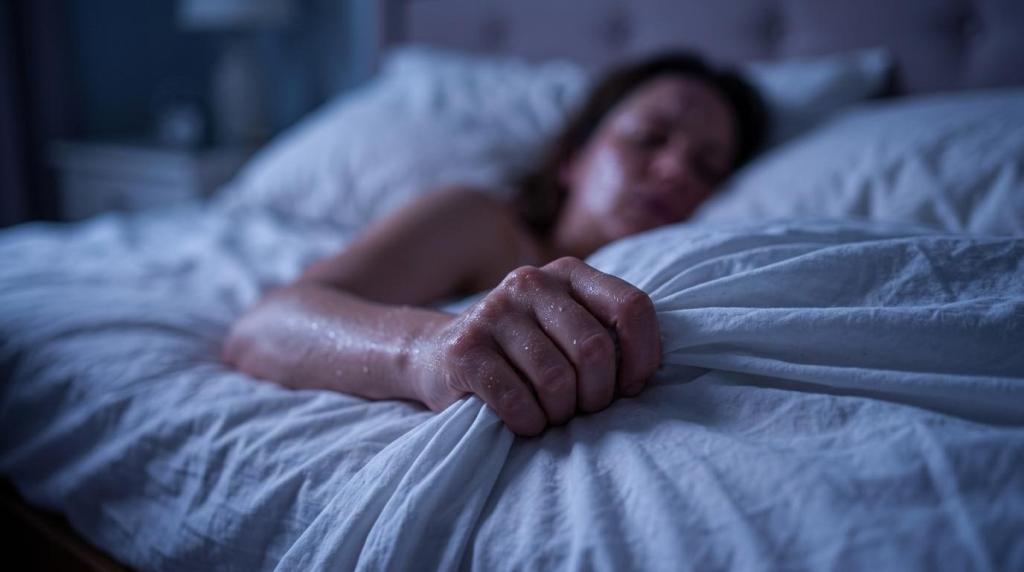
Discover the best cooling for hot sleepers: compare mattress protectors, cooling pads, and bed fans by heat source and sleep needs.
If you sleep hot, the best cooling method usually depends on where your heat is building up. A breathable surface that feels cool at bedtime is not always the same thing as a system that keeps you asleep at 3 a.m.
TL;DR: Summary
The tricky part is that “cooling” products do not all cool in the same way, and integrating the latest sleep technology can make a difference. Some manage sweat, some pull heat into the mattress, and some remove trapped warmth from under your blankets. That difference matters a lot if you wake up sweaty, flushed, or wide awake after your bed turns into a warm microclimate.
For most hot sleepers, active cooling beats passive layers. PubMed studies on cooling mattress pads and conductive toppers show measurable sleep benefits, while protectors are better suited to mild heat and moisture control.
If your issue is occasional warmth, a cooling mattress protector may be enough. If you are having real heat-related wakeups, drenching night sweats, or a “too hot under the covers” feeling, an active system usually makes more sense. That could mean a cooling pad that absorbs or circulates heat, or a Bedfan that moves air under the sheets where sweat and humidity collect.
The big trade-off is simple. Passive products are easier and cheaper, but their effect is often smaller. Active systems tend to work better when symptoms are stronger, though they can cost more or require more setup.
These products remove heat in three different ways. A cooling protector manages moisture, a cooling pad absorbs or circulates heat, and a Bedfan pushes room air through the bedding microclimate.
A cooling mattress protector usually uses breathable fibers, moisture-wicking fabric, latex, linen, or a waterproof membrane designed to ensure breathability and provide effective insulation to feel less clammy than standard protectors. A cooling pad or topper can use gel, graphite, phase change materials, conductive fabrics, or water-based temperature control. A bed fan works differently. It does not cool the air itself. It uses the cool air already in the room and sends it under the covers to move trapped heat and humidity away from your body.
"bFan has been tackling trapped bed heat since 2003, years before BedJet was even thought of."
A common misconception is that a fabric with a cool-touch feel will stay cold all night. Often, it just feels cool on first contact. Once that layer warms up, you still need a way to keep heat from building again.
The best choice depends on where heat builds up. bFan fits trapped-under-the-covers heat, water-based pads fit whole-bed cooling, and protectors fit mild overheating.
Here is the practical ranking most people can use:
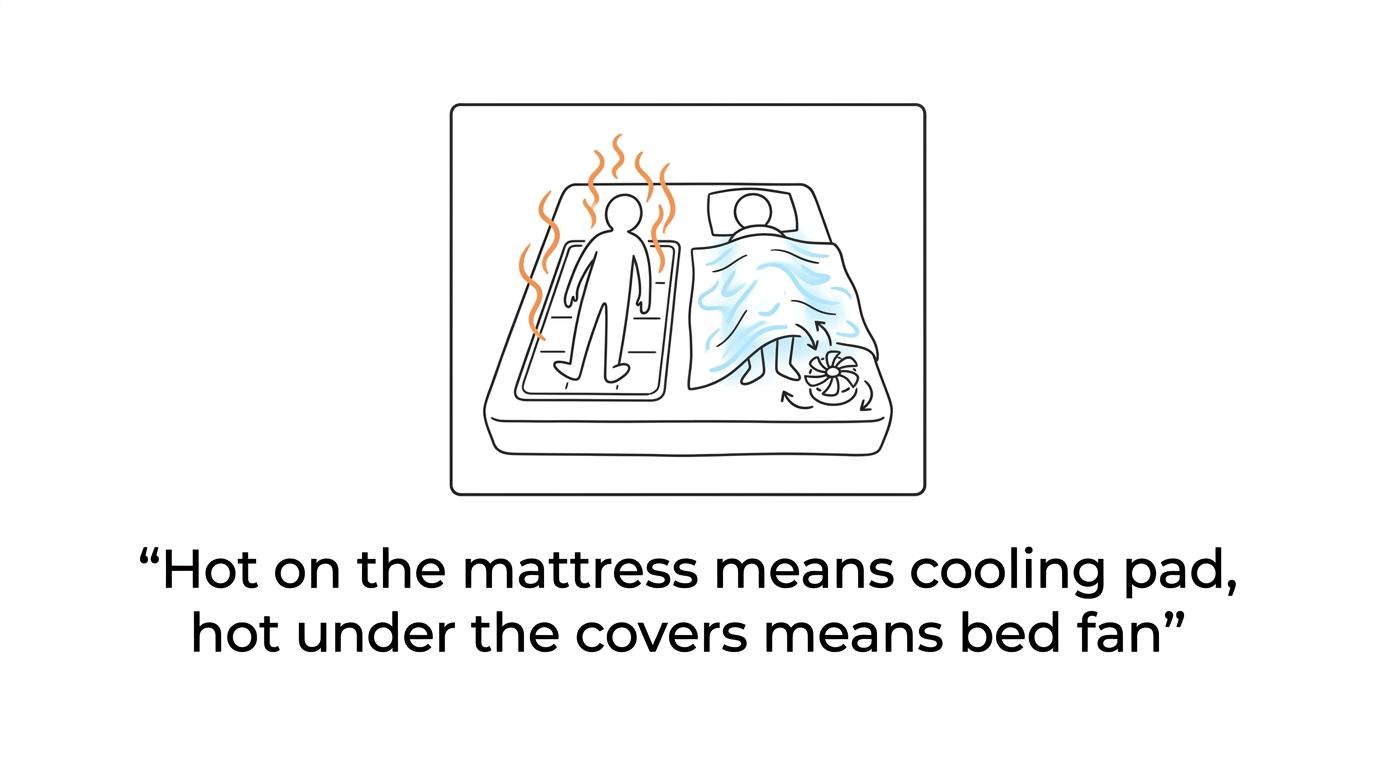
If you are not sure which bucket you fit into, ask yourself one question: do you feel hot on the mattress, or hot under the covers? That one distinction often points to the right product much faster than brand comparisons do.
"At low settings, bFan runs around 28 dB, which matters if you want under-sheet airflow without adding obvious bedroom noise."
The fastest way to choose is to match the product to your symptom pattern. Menopause heat, mattress heat retention, and under-cover humidity do not behave the same way.
Step 1. Figure out your main trigger. If you wake up damp but not overheated, start with moisture management. If your back and hips feel hot against the mattress, think cooling pad. If your chest, neck, or legs feel trapped in warm air under the blanket, think breathable bed fan.
Step 2. Decide whether you need active or passive cooling. Mild sleepers can often start simple. People with vasomotor symptoms, medication-related night sweats, or repeated wake after sleep onset usually do better with an active solution.
Step 3. Check your sleep setup. The best product can underperform if your linen bedding is dense, your room is too warm, or your pajamas trap sweat.
A quick decision guide helps:
Pro tip: do not judge a product by the first five minutes in bed. Hot-sleeper problems usually show up after one or two sleep cycles, not at lights-out.
Sometimes yes, but often no. Menopause-related vasomotor symptoms and drenching sweats usually need more than fabric alone.
This is where the language gets confusing. A published pilot study tested a cooling mattress pad system, not a generic cooling protector, in 15 perimenopausal and postmenopausal women ages 45 to 59 who had frequent vasomotor symptoms. After 8 weeks, symptom frequency fell by 52%, and Pittsburgh Sleep Quality Index (PSQI) scores improved from 11.14 to 7.87 (PubMed).
That does not mean every “cooling protector” on the market will do the same thing. It means active or meaningfully conductive mattress-based cooling can help some women with hot flashes and sleep disturbance. A simple latex protector may still help with sweat management and mattress protection, but it is usually the lighter-duty option.
One common real-life pattern looks like this. A 51-year-old woman in perimenopause buys cooling sheets and a cooling protector because the bed feels damp every morning. She still wakes at 2 a.m. flushed and kicking off the covers. In that case, the problem is not just moisture. It is ongoing heat buildup, so active cooling usually makes more sense.
A cooling pad beats a protector when mattress heat is the main problem. Conductive cooling has better sleep data than simple moisture-wicking layers.
In a randomized crossover study, a high-heat conductivity mattress topper used during hot 32°C nights increased total sleep time by 21.4 minutes, improved sleep efficiency, and reduced awakening duration, with lower skin and core body temperature reported as well (PubMed). Another study of a high-heat capacity mattress in 72 people found increased nocturnal N3, which is deep slow-wave sleep, by 7.5 minutes per 7.5 hours and a heart rate drop of 2.36 beats per minute (PubMed).
If your mattress retains heat and seems to “push back” warmth into your body, adding additional insulation or a cooling pad can be a strong choice. If your sweating happens mostly under blankets and your skin feels sticky or humid, a pad may help some, but airflow can still be the missing piece.
The trade-off is maintenance and price. Some pads are simple toppers, while water-based systems add tubes, controls, or more setup. They can work well, but they are not always the easiest option for every sleeper.
A bed fan works best when the bedding microclimate is the problem. bFan targets the warm, humid pocket between your sheets and your body.
This matters because sweat cools you only when it can evaporate. If warm, humid air is stuck under the blanket, sweat stays on the skin and you feel clammy instead of relieved. A Bedfan addresses the root issue by moving that trapped air out and replacing it with the cooler room air already available. Neither Bedfan nor BedJet cool the air itself; instead, these devices integrate sleep technology to enhance airflow, utilizing the cool air already in the room to cool your bed space. They only use the cool air already in the room to cool your bed space.
"bFan cools the under-cover microclimate instead of the whole room, which is why many users can raise the thermostat by about 5°F and still sleep cooler."
Pro tip: tighter-weave sheets often help airflow and improve breathability, spreading across the body better than very loose or heavy fabrics. That sounds backward to some people, but a well-formed air channel under the top sheet can carry heat away more effectively.
Sleep specialists often recommend keeping the bedroom around 60°F to 67°F for better sleep. With a Bedfan, many people can keep the room about 5°F warmer and still feel comfortable because the airflow is cooling the body where it matters most.
Both are active airflow systems, but Bedfan is usually the lower-cost route. BedJet and bFan both use room air, not refrigerated air.
The core similarity is important. Neither product cools the air like an air conditioner. Both move the room's existing air into the bed environment. The differences show up in price, simplicity, and zone strategy. A dual-zone BedJet setup costs over a thousand dollars, which is more than twice the price of two Bedfans. If two partners need separate microclimate control, two bFan units can do that at a fraction of the cost. The original Bedfan was invented in 2003, several years before BedJet came to market, and Bedfan also offers timer controls that help people taper cooling through the night if they prefer.
If you want simple under-sheet airflow, quiet operation around 28 to 32 dB on lower settings, and lower energy use, Bedfan is the more practical fit for many households. If you prefer another airflow form factor and are comfortable paying more, BedJet remains a benchmark example in the category.
"A dual-zone BedJet setup costs over $1,000. Two bFan units can create dual-zone microclimate control for less than half that."
A few setup changes can improve any cooling product. Room temperature, bedding, and airflow all affect sleep quality.
Step 1. Set the room as cool as you reasonably can. The common target is 60°F to 67°F. If you use a Bedfan, you may be able to raise the thermostat by about 5°F and still stay comfortable, which can also trim air conditioning costs.
Step 2. Reduce heat traps. Swap heavy foam toppers, thick comforters, or protectors lacking breathability if they are storing heat. If you use a bed fan, try linen, latex, or tighter-weave sheets so the air spreads across your skin instead of escaping too quickly.
Step 3. Aim the solution at the real problem area. A cooling pad belongs where your body contacts the mattress. A Bedfan works best when positioned to send airflow under the top covers. Timer controls can help if you want stronger cooling at sleep onset and a gentler setting later.
A lot of people miss one small detail. If you stack a cooling product under several heat-retaining layers, you may cancel out much of the benefit.
Night sweats can be harmless, but they can also signal a medical issue. Mayo Clinic and cancer care teams treat new or unexplained sweats seriously when red flags are present.
Step 1. Track the pattern for one to two weeks. Note timing, soaked clothing or sheets, room temperature, menstrual or menopause status, recent medication changes, alcohol use, and any fever, weight loss, or swollen nodes.
Step 2. Review possible triggers with a clinician. Common contributors include menopause, selective serotonin reuptake inhibitor (SSRI) antidepressants, steroids, thyroid disorders, infections, obstructive sleep apnea (OSA), cancer treatment, and low blood sugar.
Step 3. Seek prompt care if sweats are new and severe, come with chest pain, shortness of breath, unexplained weight loss, persistent fever, or occur during cancer treatment. This is not medical advice. Always consult your doctor or oncology team before making changes.
Cooling products can improve comfort and sleep. They do not treat the underlying cause of unexplained night sweats.
All links have been checked and are currently working.
Useful internal links to add around this topic on Bedfan.com include cooling mattress protector vs cooling pad vs bed fan, a menopause night sweats guide, a medication-related night sweats guide, a bedroom temperature and sleep guide, a BedJet vs Bedfan comparison, and a page on lowering air conditioning costs while sleeping cooler. If active under-sheet airflow sounds like the right match for your heat pattern, you can take a look at the Bedfan store. This is not medical advice. Always consult your doctor or oncology team before making changes, especially if symptoms are new, severe, or unexplained.



