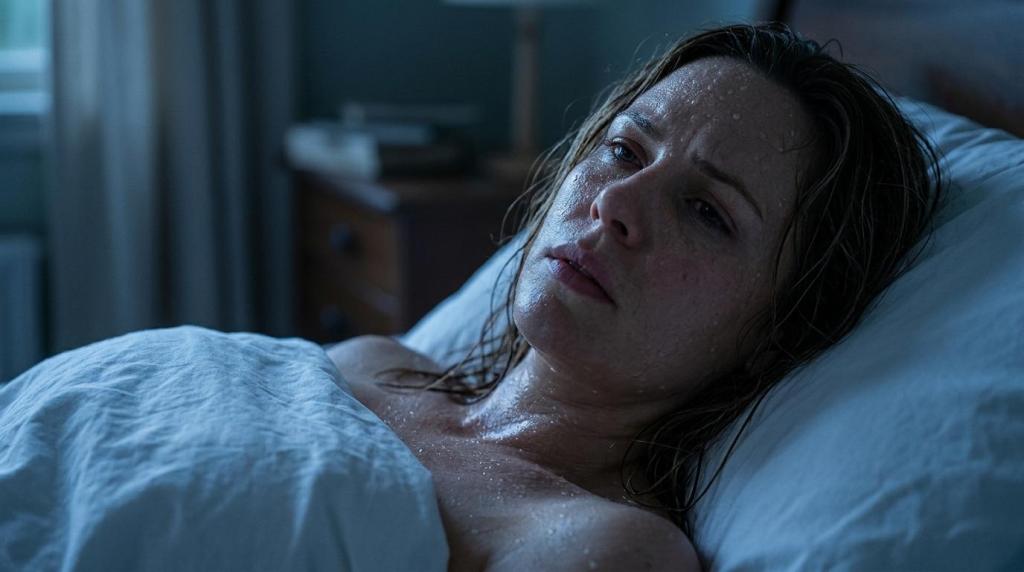
Find the best hospital bed fan for home recovery, with quiet, targeted cooling, safer setup tips, and top options for better sleep.
When someone is recovering in a hospital bed at home, the right fan is less about raw power and more about comfort, control, and not making the whole room miserable for everyone else. A good hospital bed fan should provide effective ventilation to cool the person, stay quiet at night, and fit safely around rails, cords, walkers, and caregivers.
TL;DR: Summary
This is not medical advice. Always consult your doctor, surgeon, or oncology team before making changes to recovery care, room setup, or symptom management, especially if fever, shortness of breath, chest pain, or new confusion are involved.
A suitable hospital bed fan is targeted, quiet, and easy to control. bFan and Vornado-style compact circulators work better than oversized box fans when you need comfort without blasting the whole room.
The first thing to judge is airflow path. A recovering person often feels hottest where heat gets trapped: the back, chest, legs, and bedding. That is why a bed-level or under-sheet airflow design can feel better than a big fan across the room. A common misconception is that stronger airflow is always better. In recovery, too much airflow can feel harsh, dry the nose or eyes, and make sleep harder.
If the fan will be used near an adjustable bed, look for a stable base, a remote, and timer controls. Those details matter more than marketing terms like "turbo" or "max cooling." A person who is sore, weak, or connected to tubing should not need to lean, twist, or stand up just to change settings.
"A customer on Bedfan's testimonials page says the Bedfan was installed in less than five minutes, a useful detail when mobility is limited during recovery."
Another practical point is noise. Many people can tolerate daytime fan noise, then find it irritating at 2 A.M. Bed-level cooling systems that run around normal conversation hush, rather than loud room turbulence, tend to be easier to live with over several nights.
Yes. A targeted bed fan like bFan usually cools a recovering patient more efficiently than dropping the whole-room thermostat, because it moves room air where sweat and trapped heat build up.
Sleep experts commonly recommend a bedroom temperature between 60°F and 67°F for better sleep. In real homes, though, not everyone sharing that room wants it that cold. A bed fan can create a cooler sleep microclimate for the patient, and many people can raise the room temperature by about 5°F while still feeling cool enough to rest.
This trade-off matters in recovery. Lowering the thermostat cools the whole room, which can make caregivers cold, raise energy costs, and still leave the patient sweaty under blankets. A bed fan does not cool the air itself. It uses the cool air already in the room and pushes it where the body can actually lose heat. The same basic limitation applies to Bedjet. It also does not refrigerate air.
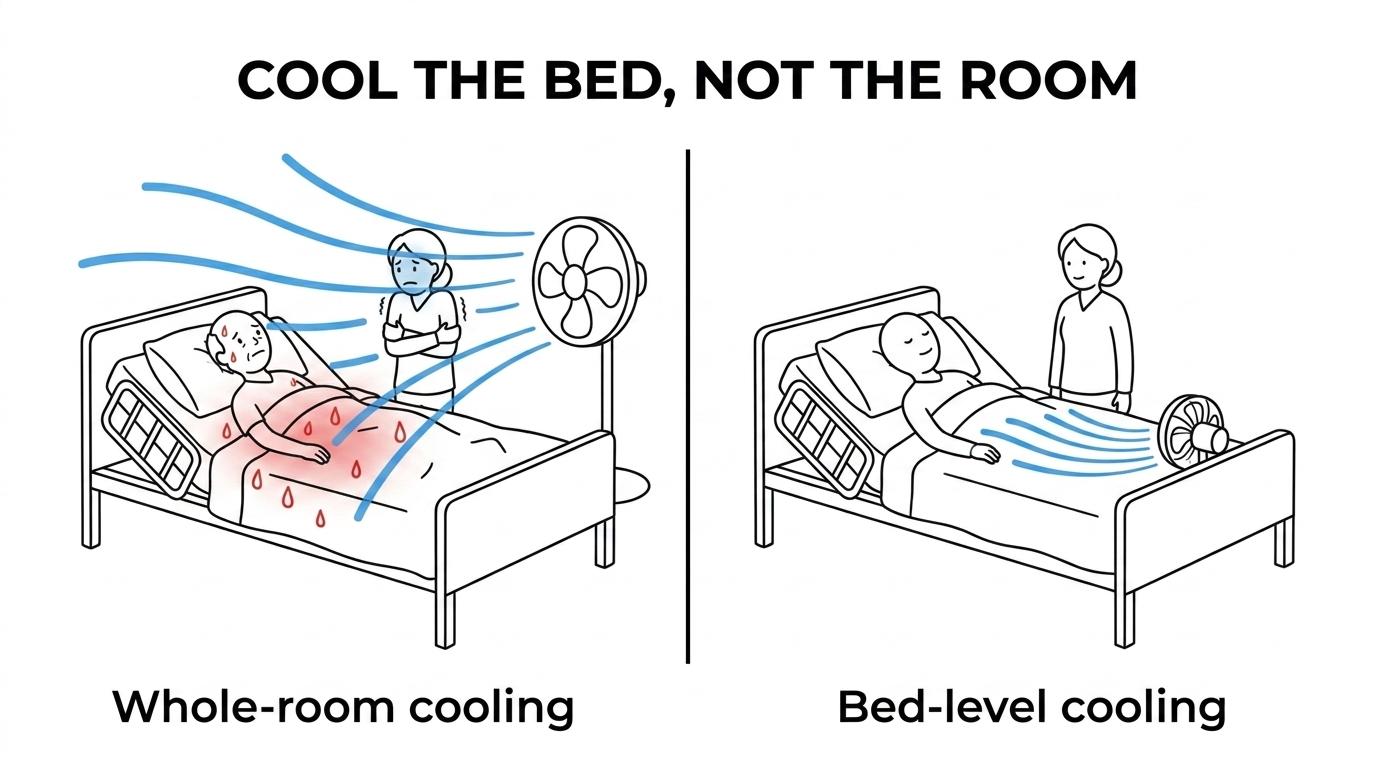
If you use an under-sheet setup, tight-weave sheets usually work best because they help the air spread across the body instead of escaping too fast. That simple fabric choice can make a bigger difference than people expect.
The best options are the ones that match the patient’s needs, room setup, and budget. bFan, Vornado, Honeywell, Lasko, Woozoo, and Bedjet each fit a different recovery scenario.
If you are shopping for comfort during home recovery from various sellers, these are the six fan types and products most worth considering:
The list is not really about brand prestige. It is about matching the airflow design to the discomfort. If heat is trapped under blankets, a bed fan usually beats a desktop fan. If the patient is mostly sitting up, a compact circulator may be enough.
bFan is usually the better value for recovery cooling. Bedjet, bedside fans, and bFan all move room air, but only bed-level airflow directly addresses trapped heat under bedding.
The biggest comparison point is airflow location. A bedside fan cools exposed skin. A bed fan cools the body where recovery sleepers often feel worst: under the covers. That is why people with night sweats, hot flashes, or medication-related overheating often prefer bed-directed airflow.
Bedjet and bFan are closer competitors among sellers, but they still differ. The original Bedfan was invented in 2003, several years before Bedjet was even thought of. Neither system cools air. Both use the cool air already in the room. The dual-zone Bedjet setup costs over a thousand dollars, which is more than twice the price of two Bedfans. Two bFans can also create a dual-zone setup at a much lower cost.
"bFan Bed Fan was invented in 2003 and directs room air between the sheets, which makes it a long-standing option for people who need bed-level cooling rather than broad room airflow."
One more trade-off is sound and energy use. Company materials describe the bFan as about 28 dB on low, around 35 dB on medium, and roughly 54 dB on high, with average use around a dozen watts. That matters when the fan may run all night for weeks.
Safe setup starts with clearance and stability. A hospital bed, oxygen tubing, and a fan cord should never compete for the same floor space.
Step 1 is placement. Put the fan where it will not interfere with bed rails, transfer aids, walkers, or caregivers, ensuring proper ventilation. At the foot of the bed usually works best for under-sheet airflow, while a nightstand or dresser works better for a tabletop fan.
Step 2 is cord control. Run the cord along the wall or under furniture edges, not across the main walking path. If the patient uses a walker or gets up at night for the bathroom, this is not optional.
Step 3 is airflow testing. Start low, then adjust slowly. The right setting feels drying and cooling, not drafty or stressful. If the person is frail, chilled easily, or has very sensitive skin, shorter timer sessions may work better than all-night high speed.
If the patient has oxygen equipment, wound dressings, or respiratory issues, ask the care team before adding any personal fan.
Yes, you can usually reduce night sweats with targeted cooling, bedding changes, and medication review. MedlinePlus and Cancer.gov both note that cancer treatment and hormone-related changes can trigger hot flashes and night sweats.
Step 1 is to identify the pattern. Does the sweating happen after pain medication, after a hot bath, around steroid dosing, or at the same hour every night? That timing can help your clinician decide whether the cause is medication, hormones, infection, blood sugar swings, or simple overheating.
Step 2 is to change the sleep environment before you make the room icy cold. Use breathable bedding, try moisture-wicking sleepwear, and keep the room in a reasonable range. If the room is already near 60°F to 67°F and the person still wakes sweaty, a bed fan is often more useful than cranking the air conditioner lower.
Step 3 is to match the tool to the symptom. If sweat is trapped under blankets, under-sheet airflow helps the body evaporate moisture and dump heat faster. That is one reason many people use a Bedfan or Bed Fan during menopause or after oncology treatment. MedlinePlus notes that some cancer treatments can cause hot flashes and night sweats, including in people treated for breast or prostate cancer: https://medlineplus.gov/ency/patientinstructions/000826.htm
An anonymized example: one caregiver described a parent recovering at home after repeated hospital visits and chemotherapy. The room was already cool, but the patient still woke drenched around 3 A.M. Switching from a loud pedestal fan to targeted airflow at the bed helped reduce sheet changes and let both people sleep longer.
Ask promptly if symptoms are new, severe, or paired with red flags. Fever, shaking chills, chest pain, weight loss, low blood sugar, or shortness of breath need medical attention, not just a stronger fan.
Night sweats can be a comfort issue, but they can also signal infection, medication effects, hormone changes, uncontrolled pain, or blood sugar problems. That is especially true during recovery after surgery, chemotherapy, or major illness. A fan can make the night more tolerable. It cannot diagnose the cause.
A pro tip here is not to undersell the symptom. Instead of saying "I sleep hot," tell your clinician what actually happens: soaked shirt, damp sheets, time of night, medication timing, fever or no fever, and whether you feel flushed or chilled afterward. That kind of detail is useful.
This is not medical advice. Always consult your doctor or oncology team before making changes.
Hospital airflow research supports directed airflow and filtration, but not casual assumptions about personal fans. A CDC and NIOSH study found that a ventilated headboard with HEPA filtration removed 99% of patient-source aerosol within 20 seconds.
That finding is important, and it is easy to misread. A medical ventilated headboard with a HEPA system is not the same thing as a consumer fan. The study also reported a minimum of 12 air changes per hour from the HEPA system alone, which is an infection-control intervention, not a comfort product: https://stacks.cdc.gov/view/cdc/201287/cdc_201287_DS1.pdf
The practical takeaway is simple. In a hospital, personal fans are subject to unit rules, infection-control policies, and staff judgment. At home, the comfort goal is different. You are trying to improve thermoregulation and sleep, not create hospital-grade filtration. That is why narrower, bed-focused airflow often makes more sense than stirring the entire room.
"Bedfan describes its airflow as directed between the sheets rather than into the whole room, which fits comfort-focused cooling better than broad room disturbance."
A clear, direct conversation works best. Oncologists, surgeons, and nurses usually respond well when you describe the symptom pattern and the specific comfort measure you want to try.
Step 1 is to describe the problem in plain language: "I wake up sweating through my shirt around 2 A.M." Step 2 is to ask about safety: "Is a bed fan or bedside fan okay with my oxygen, dressing, or equipment?" Step 3 is to review likely causes, including steroids, opioids, tamoxifen, or hormone therapy.
A common misconception is that comfort measures, such as proper ventilation, are too minor to mention. They are not. If poor sleep is slowing recovery, your care team wants to know. Cancer.gov also notes that hot flashes and sweats can be related to cancer treatment and may be managed in several ways, depending on the cause: https://www.cancer.gov/about-cancer/treatment/side-effects/hot-flashes-pdq
The best comfort features are quiet sound, easy controls, and predictable airflow. bFan, Honeywell, and Vornado all show why usability often matters more than maximum speed for sellers and consumers alike.
Remote control is a big deal when someone has abdominal pain, joint pain, limited mobility, or IV bruising. Timer controls help too, because some people want strong cooling while falling asleep, then lighter airflow later. That is one reason the Bedfan's timer controls are practical in recovery use.
Another feature people overlook is zone control. Couples often sleep at different temperatures, and that does not stop during recovery. Two Bedfans can create a dual-zone microclimate at a fraction of the cost of a dual-zone Bedjet setup. If one person is freezing and the patient is burning up, this is often the cleanest fix.
Quiet operation also deserves more respect than it gets. Low-speed sound around 28 dB can fade into the background. A harsh fan tone cannot.
A few outside resources are worth bookmarking if night sweats, hot flashes, or recovery overheating are part of the picture:
Related reading on Bedfan.com that fits this topic includes night sweats help, sleeping cooler tips, how the bFan Bed Fan works, and real Bedfan customer experiences.
If you want a non-drug option that cools the bed instead of the whole room, the bFan Bed Fan is worth a look. This is not medical advice. Always consult your doctor or oncology team before making changes, and do not bring any personal fan into a hospital setting without staff approval.