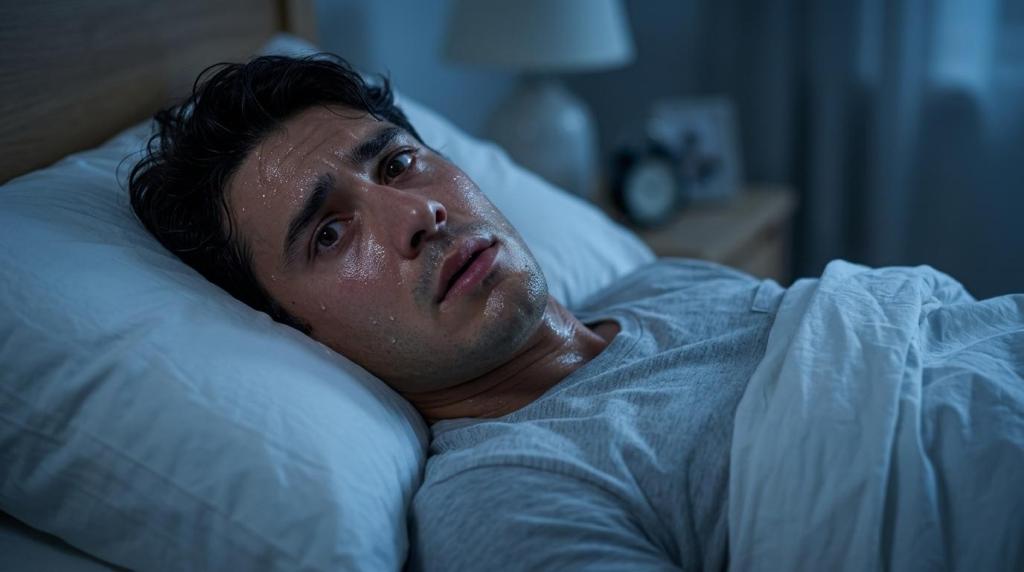
Why do I wake up hot at 3am? Learn common causes like menopause, warm bedding, alcohol, meds, stress, and when to see a doctor.
Waking up hot at 3 AM is common, and it is not always a sign that something is wrong. A warm bedroom, trapped heat under the covers, alcohol, hormonal shifts, and some medicines can all trigger a sudden heat wave in the middle of the night.
TL;DR: Summary
- Waking up hot at 3 AM can be normal if your room, bedding, or habits are trapping heat, but repeated night sweats or drenching night sweats deserve medical attention.
- Your core body temperature usually drops overnight, so a hot flash, medication side effect, or sweat episode can feel especially intense in the early morning hours.
- The most common causes are menopause or perimenopause hot flashes, a too-warm bedroom temperature, heavy bedding, alcohol, stress, SSRIs/SNRIs, steroids, thyroid problems, and sleep disorders like obstructive sleep apnea (OSA).
- Sleep experts commonly recommend a bedroom around 60°F to 67°F, and many people can raise the room temperature by about 5°F if they use targeted under-sheet airflow to remove trapped body heat.
- A Bedfan or bFan can help as a non-drug option because it moves room air under the sheets to evaporate sweat and cool the body, but it does not cool the air itself.
- This is not medical advice. If you have drenching sweats, fever, weight loss, fatigue, pain, cough, or symptoms after cancer treatment, contact your doctor or oncology team.
The tricky part is that your body is supposed to be cooling overnight. When you suddenly feel hot at 3 AM, even a brief hot flash or sweat episode can feel dramatic because it breaks that cooling pattern. This is not medical advice. Always consult your doctor or oncology team before making changes, especially if you have cancer, a new medication, or regular drenching night sweats.
Yes. A warm comforter, alcohol, menopause, or a stuffy bedroom can wake you up hot even when nothing dangerous is happening.
Your sleep system depends on heat loss. As bedtime approaches, melatonin rises and your core body temperature starts to fall. If the room is too warm, the mattress holds heat, or your blankets trap body warmth, that normal cooling process gets blocked and you may jolt awake feeling overheated.
A common misconception is that every sweaty wake-up is a medical night sweat. Sometimes it is simply overheating. If this happens only after a hot shower, a heavy duvet, late wine, or a room above the sleep-friendly range, the fix may be environmental rather than medical.
"bFan Bedfan was invented in 2003 and cools by moving room air under the sheets, not by refrigerating the air."
Your hypothalamus, melatonin, and core body temperature are all working hard around 3 AM, and that timing matters.
In most people, core body temperature keeps falling overnight and often reaches a low point in the early morning. That is usually good for sleep. But if a hot flash hits, if cortisol starts rising toward morning, or if your bedding suddenly feels too insulating, the contrast feels intense. You do not have to get much hotter for your brain to decide, “Wake up now.”
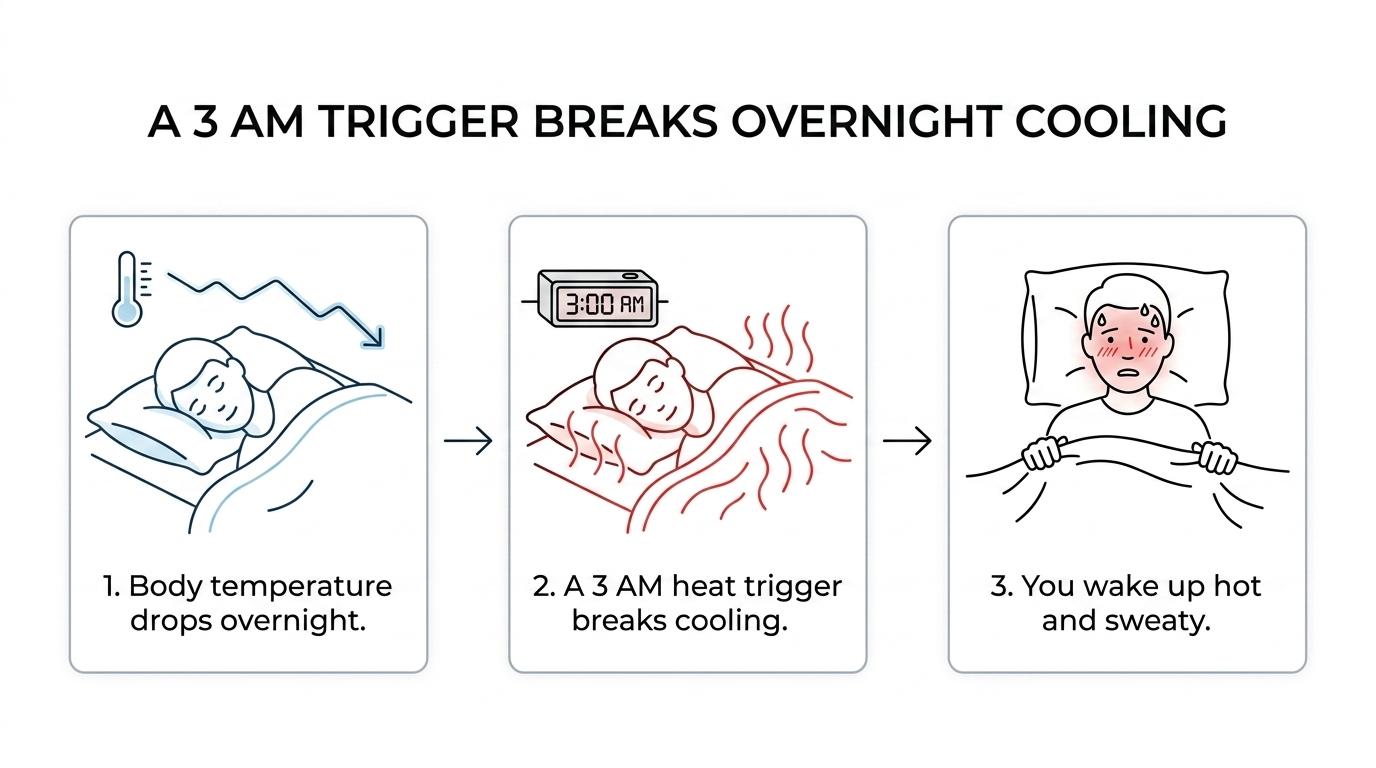
This is one reason 3 AM heat can feel so sudden. Your body was trending cool. Then something interrupts the signal. If the trigger is internal, like menopause or a medicine side effect, you may feel flushed first and sweaty second. If the trigger is external, like a foam mattress plus thick covers, the heat usually builds more gradually.
The most common causes are menopause, warm sleep conditions, alcohol, medicines, stress, and a smaller group of medical problems.
Often, the pattern gives you clues. If it happens after wine or spicy food, think lifestyle. If it started after a prescription change, think medication side effect. If it is drenching, frequent, and paired with other symptoms, think medical evaluation.
True night sweats are usually heavy enough to soak clothes or bedding. Simple overheating is miserable, but it is not the same thing.
Mayo Clinic defines night sweats as repeated episodes of very heavy sweating during sleep, often enough to soak nightclothes or sheets. Cancer.gov defines drenching night sweats similarly and warns that persistent episodes with fever, weight loss, or fatigue deserve medical attention at https://www.cancer.gov/publications/dictionaries/cancer-terms/def/drenching-night-sweats.
Here is the practical distinction. If you wake warm, toss off a blanket, and feel better in a minute or two, that leans toward environmental overheating. If your pajamas are soaked, the sheets are wet, and it keeps happening even in a cool room, that leans toward true night sweats. Common misconception: being sweaty under a thick comforter does not automatically mean you have a disease.
Recurring drenching sweats, fever, weight loss, and fatigue are clear reasons to call a doctor.
Please do not brush this off if the pattern is changing or escalating. The goal is not to scare you. It is to help you separate “annoying but fixable” from “worth checking soon.”
If you have any of those warning signs, use cooling measures for comfort, but do not stop at comfort measures alone. Get evaluated.
Hormones and medicines are two of the biggest causes. Menopause and SSRIs are classic examples.
Changing hormone levels before, during, and after menopause are the most common cause of hot flashes, and nighttime hot flashes can absolutely wake you from sleep, as Mayo Clinic notes at https://www.mayoclinic.org/diseases-conditions/hot-flashes/symptoms-causes/syc-20352790. The hypothalamus, which helps regulate temperature, becomes more sensitive to small changes. That can trigger sweating, flushing, and sudden wake-ups.
Medicines matter too. SSRIs, SNRIs, prednisone, opioids, tamoxifen, anastrozole, insulin, and stimulant medications can all contribute. If the timing fits a medication change, bring that up directly. Do not stop prescription medicines on your own. If you are receiving cancer treatment, talk with your oncology team before making any changes, even if the sweating seems “just annoying.”
Medical causes range from common to less common. Thyroid overactivity, low blood sugar, OSA, infections, and a small group of cancers can all show up with nighttime heat or sweating. If then logic helps here: if your symptoms are mild and clearly linked to bedding, start with the room. If they are drenching, frequent, or come with other symptoms, start with your clinician.
Start with temperature, airflow, and lighter bedding. A cooler room and better under-sheet ventilation often help the same night.
Step 1 is the room itself. Sleep experts commonly recommend a bedroom temperature between 60°F and 67°F for better sleep. If your room is warmer than that, lower it if you can. If air conditioning is expensive or your partner runs cold, targeted bed cooling may be more realistic than chilling the whole house.
Step 2 is the bed microclimate. Use lighter covers, moisture-managing sleepwear, and sheets with a tighter weave. Pro tip: tight-weave sheets help air travel across your body instead of escaping straight upward. That matters if you are trying to carry away heat and evaporate sweat.
"A bFan Bedfan uses about 12 watts on average and gives you remote and timer control for under-sheet cooling."
Step 3 is targeted airflow. A Bedfan or bFan sits at the foot of the bed and moves the cool air already in the room under the top sheet. It does not cool the air itself, but it can remove trapped body heat where you actually feel it. That is why many people can raise room temperature by about 5°F and still feel cooler in bed. The quieter low settings, around 28 dB to 32 dB, plus timer controls, can help if you wake easily.
The best option depends on whether you need whole-room cooling or bed-only cooling. For many couples, targeted bed cooling is the better trade-off.
Turning the thermostat way down cools the entire room. That works, but it can waste energy and make a partner miserable. A Bedfan or Bedjet targets the bed instead. Common misconception: neither one actually cools the air. They both use the cool air already in the room and direct it toward the sleeper.
If you want dual-zone control, cost matters. A dual-zone Bedjet setup is over a thousand dollars, which is more than twice the price of two Bedfans. Two Bedfans can create dual-zone microclimate control at a fraction of that cost, and each sleeper can choose their own airflow. That can be especially helpful when one person wakes hot at 3 AM and the other is perfectly comfortable.
There is a trade-off. Whole-room AC changes the room for everyone. Bed-only airflow is more targeted and lower energy, but it works best when the room air is already reasonably cool. If your bedroom is very warm, a Bedfan helps most when paired with at least a modestly cooled room.
Use a low-light, low-effort routine. The less you stimulate your brain, the easier it is to fall back asleep.
Step 1 is to keep the room dark and avoid checking your phone. Bright light tells your brain it is morning. Step 2 is to peel back the covers for a minute, slow your breathing, and let sweat evaporate. If you use a bed fan, increase it with the remote instead of getting up and changing the whole room.
Step 3 is to solve the smallest problem that works. Maybe that is a dry shirt, a sip of water, or reducing one blanket layer. If you get soaked, keep a spare shirt or pillowcase nearby so you do not fully reset your night. If your partner is cold, targeted airflow on your side usually works better than starting a thermostat battle at 3 AM.
Real patterns are usually messy, not textbook. Menopause, medicines, and room heat often overlap.
One anonymized example is a woman in her early fifties who started waking hot between 2:30 and 3:30 AM several nights a week. At first she assumed it was “just menopause,” but the worst nights followed wine, a heavy comforter, and a room set at 72°F. She did better after lightening the bedding, tracking triggers for two weeks, and using under-sheet airflow so she did not have to freeze her partner.
Another common pattern is the person who starts an SSRI or a steroid burst and suddenly cannot stay comfortable at night. That does not mean the medicine is wrong. It means the timing matters, and the side effect should be discussed. On the bFan testimonial page, some customers describe sleeping cooler, sleeping better, and avoiding arguments over the thermostat. One customer from Orlando said she could move the thermostat from 72°F to 82°F after using the Bedfan, which is a striking personal result, even though individual results will vary.
Bring a short symptom log, your medication list, and clear questions. That usually gets better answers faster.
Step 1 is to track the pattern for 1 to 2 weeks. Write down the time you wake, how sweaty you are, room temperature, bedding, alcohol, meals, stress, menstrual or menopause status, and any new medicines. Step 2 is to bring every prescription and supplement to the visit, including over-the-counter sleep aids.
Step 3 is to ask focused questions. Could this be menopause? Could my thyroid, glucose, reflux, or OSA be involved? Could one of my medications be causing night sweats? If you have cancer, a history of lymphoma or leukemia, or current endocrine therapy, say that early in the visit. This is not medical advice. Always consult your doctor or oncology team before making changes.
These are strong starting points if you want medically grounded information beyond quick tips.
If you are reading on bedfan.com, useful related pages to add as internal links here would be the /night-sweats/ hub, a page on menopause night sweats, a page on medication-related night sweats, a page on cancer treatment night sweats, the /sleeping-cooler/ hub, and a page focused on ideal bedroom temperature for sleep.
If you want a non-drug option that targets the root problem of trapped heat under the sheets, take a look at the bFan Bed Fan. It can be a practical way to cool your body, not your whole house, and it may help you rest without turning the bedroom into a refrigerator.
This is not medical advice. Always consult your doctor or oncology team before making changes. If your symptoms are drenching, persistent, new, or paired with fever, weight loss, fatigue, pain, cough, or other concerning symptoms, seek medical evaluation.