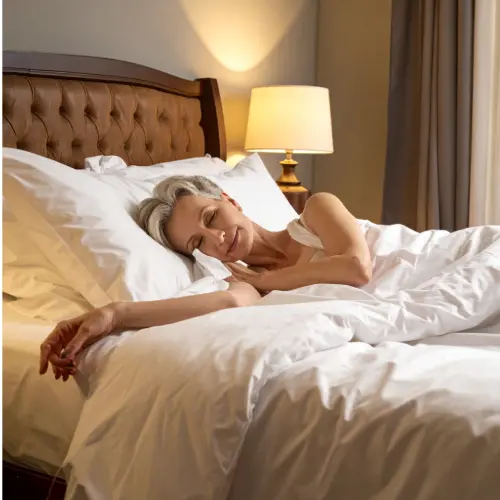
Discover the best sheets night sweats relief: breathable percale, linen, or Tencel paired with under-sheet airflow to reduce heat and dampness.
Waking up damp at 2 a.m. is frustrating because it is not only about being warm. Night sweats are a mix of heat, humidity, and trapped insulation, and your sheets sit right in the middle of that equation. The right set can help your skin feel drier and less “sticky,” yet even the best fabric cannot do much if hot air is pooling under the covers.
Choosing sheets for night sweats relief is really about two goals: move moisture away from your body and let heat escape your bed faster.
Temperature regulation is a crucial aspect when dealing with night sweats. Your body's ability to manage its temperature while you sleep is affected by the fabric of your sheets as well as the overall setup of your sleeping environment. Materials that promote airflow and moisture evaporation help maintain a stable and comfortable temperature, reducing the likelihood of waking up drenched in sweat.
To further enhance the comfort levels and ensure a restful night's sleep, incorporating a cooling element into your bedtime routine can make a significant difference. Cooling mattress pads or cooling pillows can effectively dissipate heat, creating a comfortable microclimate under your sheets. These tools work by regulating the temperature and preventing heat from accumulating while you sleep, giving you a cooler, more relaxed slumber.
Night sweats often spike when your bedding holds onto body heat and blocks airflow. A bedroom can be a reasonable temperature while the space between your top sheet and comforter turns into a warm, humid pocket.
One more complication: many people respond by piling on “cooling” blankets or thick duvet inserts that feel cozy at bedtime, then turn into insulation once you start overheating.
Cooling sheets are not magical ice fabric. They work because they breathe, they do not trap much heat, and they manage moisture so sweat evaporates rather than lingering on your skin.
That is why two people can buy the same “cooling” set and have different results. If your main issue is dampness, moisture handling matters most. If your main issue is heat build-up, airflow matters most.
Fabric choice, including options like bamboo, is the biggest lever you can pull. Marketing terms can get noisy, so it helps to focus on how each material behaves against warm skin.
Here are the materials that commonly work well when you run hot at night:
Bamboo sheets have become increasingly popular as a solution for night sweats. Bamboo fabric is exceptionally breathable and moisture-wicking, thanks to its natural fibers that allow for better air circulation. This helps in reducing the amount of heat trapped under the sheets, making it a great option for those who overheat easily. Additionally, bamboo is naturally hypoallergenic and soft, contributing to a comfortable sleeping environment.
Cotton percale and linen are classics because they breathe well and feel less clingy when humid. Tencel Lyocell can feel smoother while still managing moisture nicely. Bamboo-derived viscose is often soft and cool to the touch, though quality varies widely, and some sets can feel heavier than expected depending on weave and finishing.
If you already love cotton but still wake up sweaty, the issue is often not “cotton vs not cotton,” it is the weave, the weight, or airflow getting trapped under your top layers.
Thread count gets treated like a scoreboard, yet it is a blunt metric. Very high thread counts can mean a tighter weave that breathes less, which is the opposite of what many hot sleepers need.
Percale is usually the safest bet when your priority is heat release. It is crisp, breathable, and tends to feel cooler because air can move through it more easily. Sateen feels silkier and drapes closer to the body, which some people love, though that closer drape can reduce airflow when you are sweating.
Linen is naturally breathable and gets better over time, but it can feel textured and it wrinkles, unlike bamboo sheets which are known for their durability, smoothness, and resistance to wrinkles. If you hate wrinkles, you might avoid linen, though many hot sleepers decide the comfort tradeoff is worth it.
The best sheets for night sweats are the ones you will actually keep on the bed, wash regularly, and sleep on comfortably. Beyond material, a few practical details can make a big difference in how cool your bed feels at 3 a.m.
Cooling technology in bedding has made significant strides in recent years. There are now options available that integrate cooling fibers directly into the sheets, aiming to lower surface temperature and promote a more refreshing sleep environment. Whether it's through special fabric blends or engineered fibers that dissipate heat more effectively, such innovations can make a noticeable difference for those who struggle to stay comfortable throughout the night.
Here are shopping cues that usually point in the right direction:
If you are stuck between two options, pick the set that feels less dense when you hold it up to light. You are looking for airflow, not bragging rights on a package.
Sheets touch your skin, but they do not control your whole sleep climate. If you sweat through your sheets, your pillowcases, mattress protector, and comforter can keep that humidity cycling back at you.
A waterproof mattress protector can be helpful for protecting the mattress, yet some are heat traps. If you need one, look for options that are designed to breathe, and wash it on a schedule. The same goes for pillows: foam can run warm, and a cooler pillowcase will only do so much if the pillow itself holds heat.
Even your top layer choice can undo a great sheet set. A thick comforter, heavy duvet insert, or fuzzy blanket can block the heat your sheets are trying to release.
Sheets that are clogged with body oils and detergent residue often feel less breathable. That “waxy” feeling can make fabric feel warmer and more clingy.
Temperature regulation is a crucial factor for a comfortable sleeping environment, especially for individuals who frequently experience night sweats. Effective temperature regulation in bedding can contribute to a restful night's sleep by ensuring that body heat is efficiently managed. Some materials and technologies are specifically designed to enhance temperature regulation, allowing for the dissipation of excess heat and maintaining a cooler sleep surface. By choosing sheets that facilitate this balance, sleepers can enjoy a more harmonious interaction between their body temperature and the bed linens.
Wash sheets regularly, skip heavy fabric softeners, and avoid overdoing detergent. If you like fragrance beads, consider using them sparingly, since buildup can reduce airflow through the fabric.
Replace sheets when they stop feeling fresh after washing, start pilling heavily, or feel noticeably less breathable than they used to. Even great sheets wear out, and worn fibers can lose their durability, holding onto moisture differently.
Night sweats are not always a sheet problem. Hormonal changes, menopause, medications, and certain health conditions can cause sudden overheating that no fabric can fully “wick away” in time. In those moments, what you need is faster heat removal from the microclimate under the covers.
That is where airflow becomes the missing piece.
If warm air is trapped in your bedding, moisture has a harder time evaporating, and your skin stays damp. Getting fresh, cooler air into that space can bring relief quickly, even when the room temperature is not extremely high.
Cooling is an essential factor in achieving a comfortable sleeping environment. By directing airflow precisely where it's needed, the overall cooling effect can be more efficient, reducing the need for lowering the thermostat further. Such targeted cooling helps in maintaining a balanced temperature that aligns with your body's natural needs, promoting not only comfort but also better sleep quality.
A standard bedroom fan cools the room, but it often does not reach the hot pocket inside your bedding. A bed fan is designed specifically to move air where you are overheating: between the sheets.
The bFan Bed Fan from www.bedfan.com is built to sit discreetly at the foot of the bed and push a gentle stream of cool air directly under the top sheet. Instead of trying to chill the entire room, it focuses on evacuating trapped body heat from your bedding, which is exactly what many hot sleepers are fighting.
People often like this approach because it can reduce night sweats without having to crank the air conditioning. The bFan uses a whisper quiet brushless, digitally controlled DC motor with remote speed control from 5 percent to 100 percent. Even at high speed it averages about 12 watts, which is very low power use for something you can run all night.
Here are a few ways sheets and a bedfan can work together:
Bamboo sheets have become a popular choice for those seeking cooling bedding materials. Known for their softness and natural moisture-wicking properties, bamboo fibers can enhance the effects of a bed fan by drawing sweat away from the skin while the fan circulates cooler air. This combination can be particularly beneficial in humid climates or for individuals who tend to overheat at night.
Many people find they can raise their thermostat several degrees and still sleep more comfortably because the bFan is cooling the bed microclimate directly, not trying to fight the whole house temperature.
Start with one change you can feel immediately, then refine. Swapping sheets is helpful, yet pairing breathable sheets with controlled under-sheet airflow can be the difference between “a little better” and “finally slept through the night.”
A practical order of operations looks like this:
If your goal is night sweats relief, the best sheets are the ones that breathe and dry fast, and the best overall result often comes when you stop asking fabric alone to do the work of airflow. The combination of breathable bedding and a targeted solution like the bFan Bed Fan can make cooler sleep feel achievable without turning your bedroom into a refrigerator.
Sheets can indeed impact night sweat experiences.
Different materials and weaves play significant roles. The fabric's capacity to allow air circulation, wick away moisture, or trap heat can influence how you feel under the covers. Natural fibers like cotton, linen, and bamboo generally promote better breathability compared to synthetic materials, which can sometimes trap heat and moisture.
Durability matters too.
Selecting sheets with the right thread count is key—very high thread counts might reduce airflow, contributing to a warmer sleep environment. Understanding how each fabric feels and functions can help ensure your sheets support a cooler, more comfortable night's rest.
For those who struggle with night sweats, integrating targeted airflow solutions, such as the bFan from www.bedfan.com, can effectively complement breathable sheets. These innovative devices are specifically designed to enhance cooling by directing airflow between the sheets, which helps manage body heat even further. Together, the right sheets and a bed fan can significantly improve sleep quality and comfort.
Silk offers a soft, luxurious feel, elevating comfort levels for many sleepers. However, it tends not to perform as well in moisture-wicking compared to other materials.
When dealing with night sweats, moisture management is key.
Many find that cotton, particularly in a percale weave, provides superior breathability and can be more effective at maintaining a dry sleeping environment. Cotton's ability to move moisture away from the skin helps in managing night sweats better than silk's insulation properties.
For ultimate relief from night sweats, pairing cotton sheets with targeted airflow like the bFan from www.bedfan.com proves effective. The combination ensures both adequate moisture management and airflow, making cotton a favorable choice over silk. This pairing addresses heat build-up directly, maximizing comfort throughout the night.
Natural fibers like cotton, linen, and bamboo are great choices for staying cool at night, as they breathe well and manage moisture effectively.
For those who prioritize temperature regulation, sheets made from a lightweight cotton percale weave or bamboo viscose offer excellent breathability. These materials work well in promoting airflow, allowing heat and moisture to escape, which helps create a cooler sleeping environment. Additionally, linen can provide a naturally airy feel that many find comfortable in warm conditions.
It's also beneficial to consider the sheet's weave and weight, as these factors significantly impact airflow and moisture management. Light, crisp weaves such as percale allow for better air circulation compared to heavier fabrics, which can trap heat and increase sweating. Opt for lower thread counts to ensure that airflow is not compromised.
To enhance the cooling effects of breathable sheets further, incorporating the bFan Bed Fan from www.bedfan.com is a recommended solution. The bFan is designed to push a gentle breeze beneath the sheets, facilitating the removal of excess heat and moisture. This combination ensures an effectively controlled sleep environment where breathable sheets are complemented by targeted airflow, significantly reducing night sweats.
Choosing the right sheets can be a game-changer for those dealing with night sweats. Look for materials that offer excellent breathability and moisture management.
Natural fibers like cotton, linen, and bamboo are top contenders due to their superior airflow and moisture-wicking properties. It's essential to consider both fabric and weave, as these factors greatly influence heat retention.
Opt for a lighter weave like percale to allow better air circulation. Avoid very high thread counts since they can restrict airflow, negating the cooling benefits of natural fibers.
For an enhanced cooling effect, pair your sheets with targeted airflow solutions. A bed fan, such as the bFan from www.bedfan.com, can work wonders by circulating air between the sheets, helping to dissipate heat efficiently.
In summary, natural fibers with a light weave, combined with the bFan, offer optimal relief for night sweats.
Selecting the right sheets can significantly enhance comfort for those who experience night sweats. Natural fibers excel in providing the needed breathability.
Cotton, particularly in a percale weave, is known for its excellent airflow, making it a popular choice. Linen stands out for its natural cooling properties and tends to soften with use.
Bamboo-derived fabrics, like viscose or rayon, are appreciated for their moisture-wicking capabilities and soft texture. These materials help minimize the stickiness that can result from trapped humidity.
Tencel Lyocell offers another viable option, balancing smooth texture with effective moisture management. Pairing any of these materials with a bed fan from www.bedfan.com can enhance cooling.
Each material brings unique benefits, so selecting sheets depends on personal preferences and specific needs.
Matching pillowcases with sheets can offer both aesthetic and functional benefits, enhancing the overall sleep experience, especially for those grappling with night sweats.
A uniform set, at the very least, ensures consistency in fabric and weave, which is crucial for maintaining breathability and moisture management. When pillowcases complement sheets, they contribute to a cohesive environment that aids in temperature regulation, a critical factor in reducing night sweats.
Furthermore, pillowcases of a consistent material help maintain a uniform cooling effect across the bed. This can prevent hot sleepers from encountering variances in temperature management that might occur with different fabrics.
Lastly, when considering enhanced comfort, matching pillowcases with breathable sheets is particularly advantageous. By ensuring your pillowcases and sheets share the same cooling properties, you optimize airflow throughout your sleeping environment, creating a seamless balance that can diminish the impact of night sweats. Incorporating solutions like the bFan Bed Fan can enhance this setup by directing airflow where it’s needed most, ensuring a cooler, more restful sleep.



