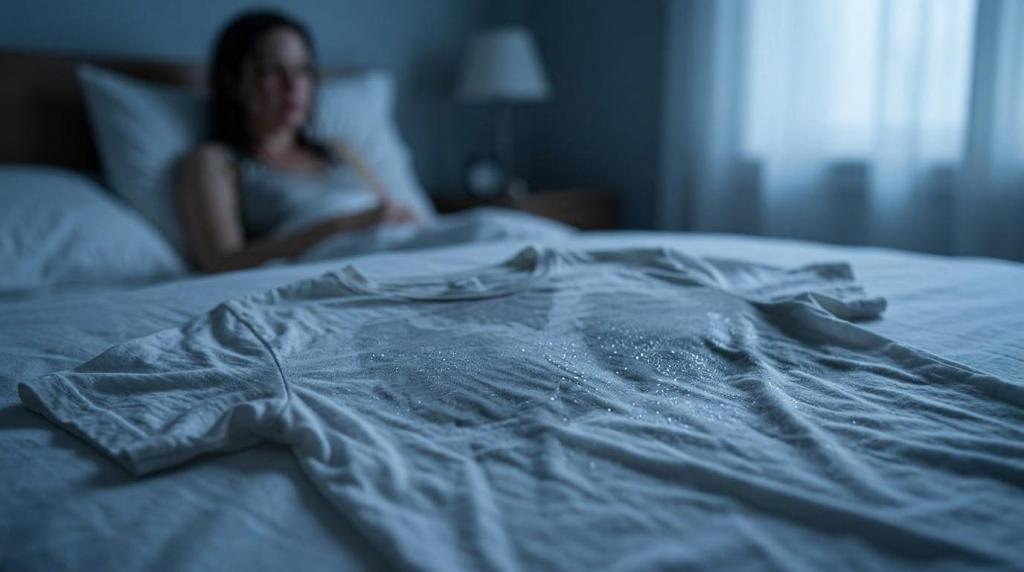
RSV night sweats can happen, usually from fever-related sweating. Learn why it occurs, when to worry, and how to sleep more comfortably.
Waking up sweaty when you already have a cough, fever, and congestion can feel unsettling. If you are wondering whether respiratory syncytial virus (RSV) can cause night sweats, the short answer is yes, sometimes, but usually indirectly.
RSV is not usually listed as a classic “night sweats” illness. What often happens is simpler than that. RSV can cause a fever, and fever commonly causes sweating, especially when body temperature starts to come down during the night.
This is not medical advice. Always consult your doctor or your child’s clinician before making changes to treatment, especially for infants, older adults, pregnant people, or anyone with asthma, chronic lung disease, heart disease, cancer, or a weakened immune system.
Yes, it can. The better way to say it is that RSV can be associated with sweating because RSV may cause fever, and fever often leads to sweating.
The CDC’s RSV symptoms page lists common symptoms like runny nose, congestion, decreased appetite, coughing, sneezing, fever, and wheezing. Sweating and night sweats are not listed as primary RSV symptoms. That matters because it helps separate “this can happen during RSV” from “this is a defining RSV symptom.”
So if you have RSV and wake up damp, that does not automatically mean something unusual is happening. It may be your body cooling itself after a fever spike. The bigger question is whether the sweating matches a short-lived fever pattern or whether it is severe, persistent, or paired with symptoms that need medical care.
Sweating is one of the body’s normal cooling tools. When an infection triggers a fever, body temperature rises as part of the immune response. Later, as the fever eases, sweating may increase because your body is trying to release heat.
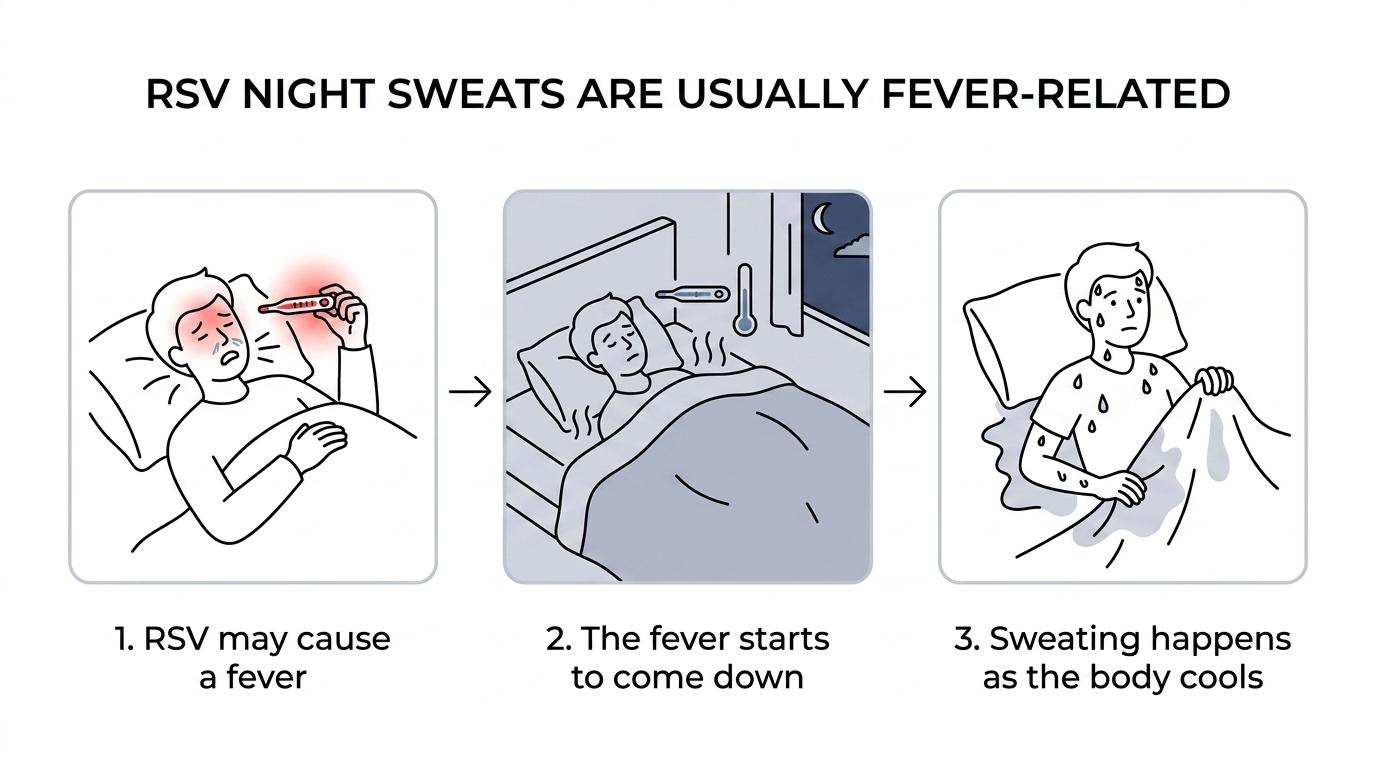
Mayo Clinic’s fever guide notes that fever symptoms can include sweating, chills, weakness, dehydration, muscle aches, and loss of appetite. That pattern fits what many people notice with viral infections. You feel hot, then clammy, then chilled once clothes or sheets get damp.
Nighttime can make this feel worse. You are under blankets, air gets trapped around your body, and moisture has nowhere to go. Even a mild fever can feel much more intense at 2 a.m. when pajamas, pillowcases, and bedding are holding heat close to your skin.
One more practical point. Night sweats are not always about the illness alone. The room may be too warm, the blanket too heavy, or the bedding may be trapping humidity. When fever and trapped heat stack on top of each other, sleep gets rough in a hurry.
Major medical references are pretty consistent here. RSV is usually described as a respiratory virus that causes cold-like symptoms in many adults and older children, though it can be much more serious in infants, older adults, and people with certain medical conditions.
The key distinction is this: RSV commonly causes fever, and fever commonly causes sweating. That does not make night sweats a hallmark RSV symptom. It makes them a possible side effect of how your body handles the infection.
Mayo Clinic’s night sweats overview also points out that night sweats often show up along with other concerning symptoms like fever, cough, pain, weight loss, or diarrhea. That is a good reminder not to ignore persistent or drenching sweats, especially if they continue after the rest of the RSV picture should be improving.
A sweaty night or two during a fever is one thing. Repeated drenching sweats, breathing trouble, or signs of dehydration are different.
This matters even more in babies and small children, where RSV can move from a “bad cold” into bronchiolitis or pneumonia. In older adults and medically fragile people, the line between a manageable viral illness and something more serious can be thin.
Watch the whole pattern, not just the sweat. If the cough is worsening, breathing looks harder, the fever is high or lingering, or the person seems unusually weak or confused, do not wait it out casually.
You do not need a fancy routine when you feel sick. You need relief that is simple, safe, and easy to manage half-awake.
Start with the basics. Sleep experts commonly recommend a bedroom temperature between 60°F and 67°F for better sleep. If that feels too cold for the rest of the household, airflow can help a lot. The goal is not icy air. The goal is helping sweat evaporate so heat does not stay trapped against your skin.
A regular room fan can help the room feel less stuffy, but it often does not reach the real problem area under the covers. That is where a Bedfan can be useful. It pushes room air under the top sheet, which can help evaporate sweat and move trapped body heat away from the skin. It does not cool the air itself. It uses the cooler air already in the room, which is why it works best when the bedroom is reasonably cool to start with.
For people dealing with fever-related sweating, that under-sheet airflow can be the difference between lying in damp bedding and getting back to sleep. A quiet setting matters too when you are already miserable. Low-speed operation around 28 to 32 dB and timer controls can make it easier to run the airflow only when you need it most, like at bedtime or during the first few hours of sleep.
Many people can also raise the room thermostat by about 5°F and still feel cool enough with a Bedfan because the airflow targets the body directly. Tight-weave sheets tend to work best because they help the air travel across the body instead of escaping too quickly into the room.
After helping hot sleepers since 2005, one common theme keeps coming up: people rarely need “more cold.” They usually need better heat removal from the bed itself.
One adult patient described it this way: the cough from RSV was annoying, but the sweating was what kept restarting the night. They would finally doze off, wake up clammy, throw off the blanket, then feel chilled twenty minutes later because the shirt and sheets were wet.
What helped was not anything dramatic. They lowered the room temperature a bit, switched to lighter bedding, and used under-sheet airflow instead of pointing a fan at the face. The sweating did not vanish because the fever still had to run its course, but the bedding stayed drier and sleep became less fragmented. That is often the most realistic goal during a short viral illness.
This is the part many people miss. Sometimes RSV is present, but the sweating has another driver.
If night sweats are happening without much fever, or they were going on before the respiratory symptoms started, it is smart to widen the lens. Medication side effects, menopause, anxiety, thyroid problems, low blood sugar, sleep apnea, and other infections can all cause nighttime sweating. Persistent night sweats deserve a real medical conversation, not just a guess.
That is also true if the sweat continues well beyond the usual RSV window. The CDC says most RSV infections improve on their own within a week or two. If the cough, fever, or sweats are hanging around outside that pattern, check in with a clinician.
Comfort matters because poor sleep can make any viral illness feel longer and heavier. A few small changes usually beat one big complicated fix.
The room should feel cool, not frigid. If you are shivering hard, piling on heavy blankets that trap sweat may backfire. Layering works better. Think sheet, light blanket, easy-to-remove top layer.
This is one place where a Bedfan is practical, not gimmicky. If you share a bed and one person is sweating while the other is comfortable, targeted airflow is easier than dropping the whole house thermostat. And if you only need cooling at certain times, timer controls keep it simple.
If you are building this article into a larger sleep-health hub, these are useful related internal link ideas that fit naturally with the topic.
These medical references are a good place to verify symptoms and know when to get help.
If RSV sweating is making your nights miserable, a gentle under-sheet cooling setup can help you stay drier and sleep with fewer wakeups. You can see how the Bedfan works at bedfan.com. This is not medical advice. Always consult your doctor or your child’s doctor, and get urgent care right away for breathing trouble, dehydration, worsening wheezing, or signs of severe illness.