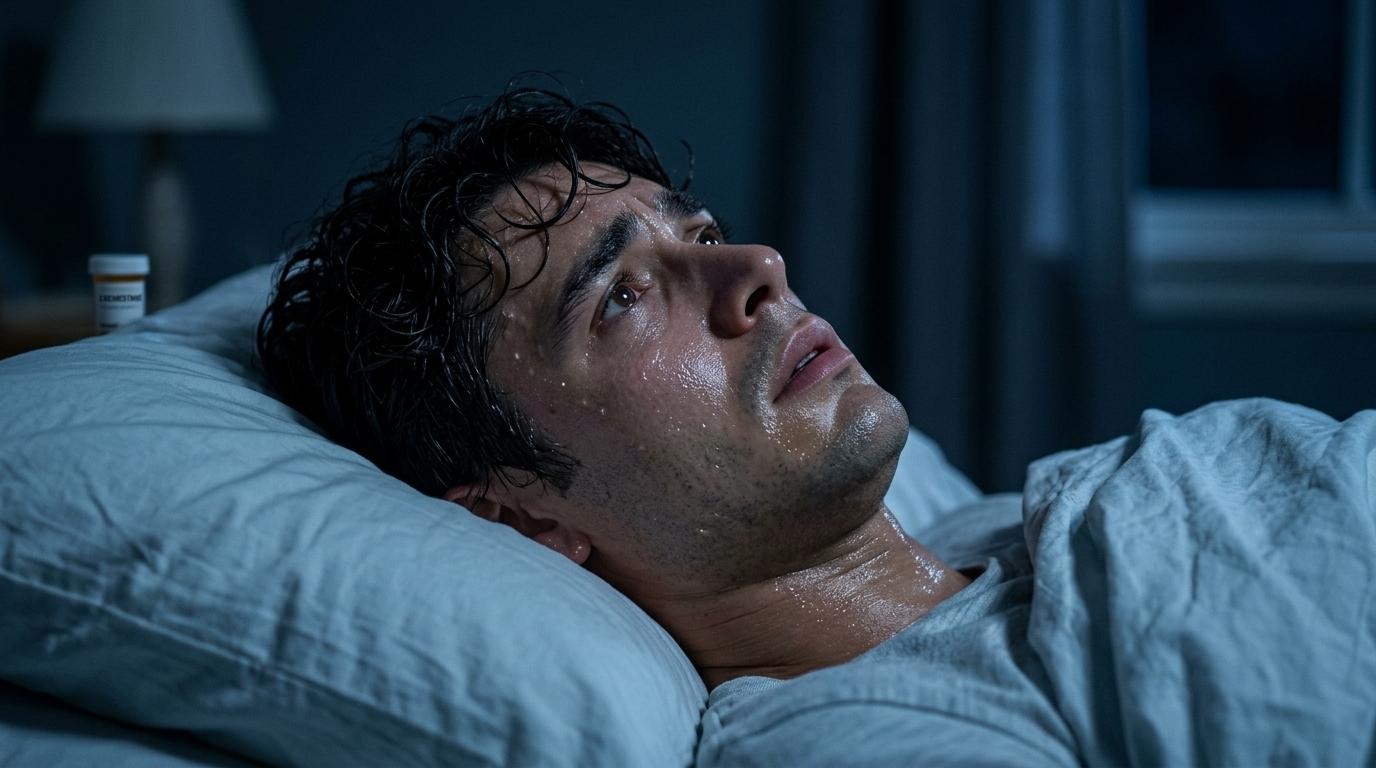
Exemestane (Aromasin) night sweats can disrupt sleep. Learn why they happen, cooling tips, triggers to avoid, and when to call your doctor.
If you started exemestane, also sold as Aromasin, and your nights suddenly became sweaty, restless, and frustrating, you are not imagining it. Exemestane is a tablet prescribed as hormonal therapy for breast cancer. Along with reducing estrogen hormones, one of the common drug side effects is exemestane (Aromasin) night sweats. These side effects can hit hard enough to wreck sleep, soak your clothes, and leave you tired, fatigued, and even experiencing mood changes the next day.
That is a big deal, because sleep matters when your body is already dealing with cancer treatment, stress, and the normal demands of life, not to mention other side effects such as joint pain, headaches, diarrhea, constipation, skin changes, and even osteoporosis that can occur with long-term use of such drugs. Many women also notice additional drug side effects like hot flashes and other symptoms that interrupt daily living.
Exemestane is an aromatase inhibitor, and in plain English, it reduces the amount of estrogen your body makes. Lower estrogen can affect the part of the brain that helps regulate body temperature. When that system gets more sensitive, even a small shift in temperature can trigger sweating, flushing, and a sudden wave of heat. These are just a few of the side effects you might encounter while taking this tablet for hormonal therapy.
This is why exemestane (Aromasin) night sweats can feel so abrupt. You may fall asleep feeling fine, then wake up an hour later feeling too hot under the covers. Some people describe it as a burst of heat from the chest, neck, or face, a hot flash that comes on suddenly as one of the many potential side effects. Others just wake up damp and uncomfortable, without much warning.
It can also feel worse at night, especially for those undergoing breast cancer treatment, because bedding traps heat close to your body. Often, these night sweats join other drug side effects such as joint pain, fatigue, mood changes, and even skin changes that are known to occur in patients using hormonal therapy for cancer.
If you are also dealing with menopause, perimenopause, stress, certain antidepressants, steroids, or pain medicines, the sweating and other side effects may be even more noticeable. In other words, Aromasin may be the main reason, but it is not always the only reason for these unpleasant drug side effects, including joint pain.
Aromasin night sweats are not the same for everyone. Some people have a few rough nights each week. Others wake up several times a night, every night. The pattern can change with room temperature, stress, alcohol, caffeine, or how heavy your bedding is, in addition to other side effects that may include joint pain, fatigue, mood changes, hot flashes, and even skin changes.
A few clues tend to show up again and again:
That last part is easy to miss. Sometimes the main problem is not the sweating itself; it is the broken sleep that follows. And while exemestane’s side effects often center on night sweats and hot flashes, many patients also report other side effects like headaches, diarrhoea, constipation, and joint pain.
You probably cannot make the medication stop affecting your body’s temperature control on your own, but you can make the bedroom work with your body instead of against it. The goal is simple: remove trapped heat quickly and keep it from building up in the first place, thereby reducing not only the exemestane (Aromasin) night sweats but also minimizing other side effects of the treatment.
Start with the basics. Sleep experts recommend a bedroom temperature of 60°F to 67°F. That range works well for many hot sleepers, though some still feel warm under sheets and blankets even in a cool room. That happens because your body heat gets trapped in the bedding microclimate, the small pocket of air around you in bed.
A few practical changes can help a lot:
Notice that none of this requires you to suffer through it and hope it passes while enduring all these side effects.
This is where many people get the most relief because night sweats are not only about room temperature. They are also about trapped heat under the covers. A ceiling fan may help the room feel cooler, but it does not always move heat out from between your sheets.

A bed fan can be a much better fit for this specific problem and help mitigate one of the many side effects caused by this hormonal therapy.
One option worth looking at is the bFan bed fan. It sits at the foot of the bed and pushes room air between the sheets, which helps remove the body heat that gets trapped around you during sleep. That matters if your exemestane (Aromasin) night sweats show up as repeated overheating under the covers, a side effect that joins the long list including diarrhoea, joint pain, fatigue, mood changes, and concerns related to breast cancer management.
Neither a bed fan nor a Bedjet cool the air. They only use the cool air already in the room to cool your bed. The Bedjet does not cool the air either. What they do is improve airflow where you actually sleep, making a big difference when the problem is heat buildup in bedding alongside other uncomfortable side effects.
The bFan has a few advantages that are especially relevant if you are dealing with long-term night sweats from Aromasin while also trying to manage additional side effects like hot flashes and joint pain:
That last point is important for couples. One partner may need cool airflow all night while the other wants a warmer setup. Two bed fans can solve that without turning the whole room into a refrigerator.
Price matters too, especially if you expect to use this every night for months or years. One Bedjet is more than twice the price of a single bed fan. The dual-zone Bedjet is over a thousand dollars and more than twice the price of two bed fans. If you want side-by-side control without spending that much, two bFans are the simpler way to get dual-zone microclimate control.
There is also a history point here. The original bed fan came to market several years before Bedjet was even thought of. This kind of cooling is not a passing trend; it has been helping hot sleepers for a long time.
Many people also find they can raise room temperature by about 5°F and still sleep cool when using a bed fan. That can help lower air conditioning use, which is nice if you are trying to sleep well without pushing energy bills up every month.
If you use a bed fan, your sheets matter. The best results usually come from sheets with a tight weave because the airflow can move across your body and carry away heat instead of escaping too quickly.
Percale style sheets are a common pick for that reason. Light blankets also help because they let air circulate while still giving you coverage. Thick mattress toppers, heavy comforters, and plush fabrics can feel cozy at first, then turn into heat traps by midnight.
Keep it simple and test one change at a time.
A washable extra set of pajamas near the bed can also save you from a fully awake moment at 2 a.m. Sometimes little fixes are the ones you end up relying on most while trying to manage both the exemestane (Aromasin) night sweats and other distressing side effects.
Aromasin night sweats are common, but that does not mean you should stay miserable in silence. If the sweating is intense, frequent, or ruining your sleep, and if you start noticing other side effects such as joint pain, fatigue, mood changes, osteoporosis, headaches, diarrhea, constipation, or skin changes, bring it up with your oncology team. Your doctor may adjust your plan, suggest relief for these drug side effects, or check for other causes of the symptoms.
Sometimes another issue is mixed in, such as thyroid problems, infection, blood sugar swings, anxiety, or another medicine that also has side effects.
Here are a few situations where it makes sense to call sooner rather than later:
You do not have to prove that the problem is serious enough. If it is hurting your sleep, and contributing to a range of side effects, it is worth mentioning to your doctor.
For some people, yes. The body can adjust somewhat over time, and the sweating becomes less frequent or less intense. For others, it stays fairly persistent. That is why it helps to set up your bedroom for cooling instead of waiting it out with no plan to manage these additional side effects.
Yes. Some people notice the problem most at night because body heat gets trapped under bedding, and the sleep environment makes the temperature swings more obvious. You can still be dealing with a medication-related hot flash pattern even if daytime symptoms are mild and the rest of the side effects remain minimal.
Sometimes it helps, but not always enough. You can have a cool room and still overheat in bed because the sheets and blankets trap warmth around your body. That is why targeted airflow under the covers can work better than room cooling alone in mitigating these drug side effects.
Yes, it can help with the comfort side of the problem by moving trapped heat away from your body while you sleep. It does not treat the medication effect itself, but it can make nights much more manageable. That is exactly why many hot sleepers use a bed fan instead of blasting the whole house with colder air to counter these side effects.
If your nights have started revolving around sweating, waking, cooling off, and trying to fall asleep again, with additional drug side effects like joint pain, fatigue, mood changes, and breast cancer in the mix, start with the setup you can control. A cooler room, lighter bedding, tight weave sheets, and direct airflow under the covers can change a lot. And if the sweating is intense or keeps getting worse, make sure your care team and doctor hears about it.
Night sweats are a common side effect of exemestane, also known as Aromasin, because the medication lowers estrogen levels in your body. Estrogen helps regulate your body temperature, so when levels drop, your body can become more sensitive to temperature changes, leading to sudden sweating at night. Many people experience these symptoms as their bodies adjust to the medication, and it can be especially noticeable during the first few months of treatment.
For most people, night sweats tend to be most intense during the first few weeks or months after starting exemestane. Over time, your body may gradually adapt, and the severity of night sweats can decrease. However, some individuals may continue to experience them throughout their treatment, so it’s important to talk with your healthcare provider if the symptoms persist or become disruptive to your sleep.
Yes, there are several strategies you can try to help manage night sweats. Keeping your bedroom cool, using moisture-wicking sheets, and wearing lightweight pajamas can make a big difference. Sleep experts recommend setting your room temperature between 60°F and 67°F for optimal sleep, and with a Bedfan, you can often raise your room temperature by about 5°F and still sleep cool. The Bedfan offers dual-zone microclimate control, timer controls, and uses only 18 watts on average, making it a great solution for anyone dealing with night sweats.
Absolutely, using a fan or a specialized bed fan like the bFan is a safe and effective way to help regulate your body temperature at night. The bFan operates quietly at 28db to 32db, so it won’t disturb your sleep, and it helps circulate the cool air already in your room under your sheets. This can provide targeted relief from night sweats without the need for additional medications or supplements.
The Bedfan is more affordable than the Bedjet, with a single Bedjet costing more than twice the price of a single Bedfan. If you’re considering dual-zone control, the dual-zone Bedjet is over a thousand dollars and more than twice the price of two Bedfans. Both devices use the cool air in your room to help cool your bed, but neither actually cools the air. The Bedfan is energy efficient, using only 18 watts on average, and it came to market several years before the Bedjet was even available.
Yes, your choice of bedding can make a big difference. Sheets with a tight weave help the air from your Bedfan flow across your body and carry away heat more effectively. Lightweight, breathable fabrics like cotton or bamboo are also recommended, as they wick moisture away and dry quickly, keeping you more comfortable throughout the night.
Definitely, if your night sweats are severe or are affecting your quality of life, it’s important to discuss this with your healthcare provider. They may be able to adjust your medication, recommend additional treatments, or suggest lifestyle changes to help manage your symptoms. Never stop or change your medication without consulting your doctor first.
Some people find relief from night sweats by practicing relaxation techniques like deep breathing, meditation, or gentle yoga before bed. Avoiding spicy foods, caffeine, and alcohol in the evening can also help reduce the likelihood of night sweats. While these methods may not eliminate night sweats entirely, they can complement other strategies like using a Bedfan to keep you cool and comfortable at night.