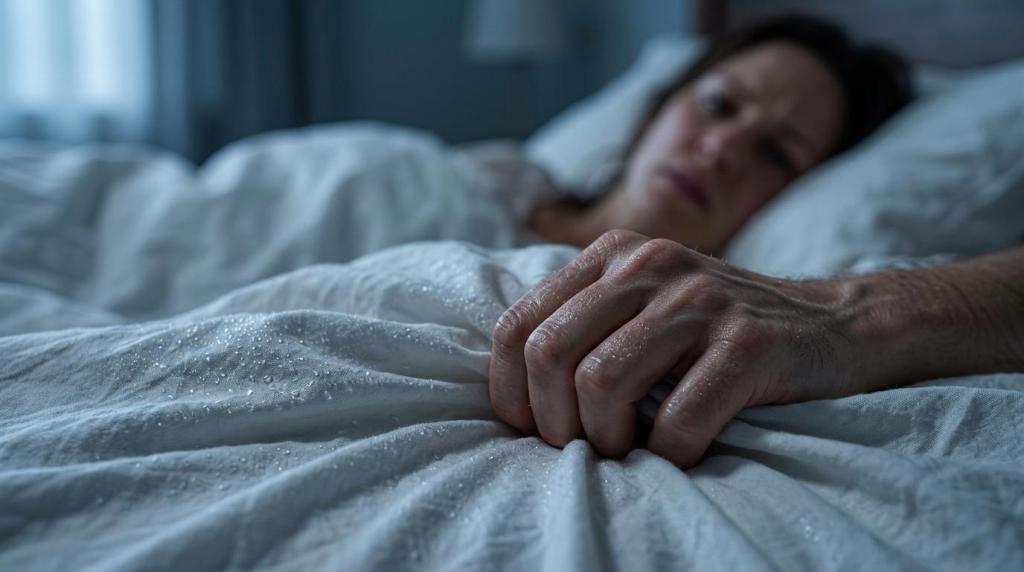
Can a cold cause night sweats? Yes, but usually from fever, chills, overheating, or another infection rather than the cold itself.
A cold can be linked to night sweats, but usually not in the way people think. An uncomplicated common cold is not famous for causing drenching night sweats on its own. More often, sweating at night happens because of a low-grade fever, chills, heavy bedding, a room that is too warm, or a different infection that only feels like a cold at first.
TL;DR: Summary
- Yes, a cold can cause night sweats indirectly, but true night sweats are not a classic hallmark of a simple common cold.
- Common colds are viral upper respiratory tract infections. If you sweat at night during one, the usual triggers are low-grade fever, chills, or fever breaking, not the cold virus itself.
- If sweating is drenching enough to soak night clothes and bedding in a cool room, think beyond “just a cold” and consider flu, COVID-19, RSV, medication effects, menopause, or another infection.
- Seek medical advice sooner if night sweats come with high fever, shortness of breath, chest pain, unexplained weight loss, repeated episodes, or symptoms that last longer than expected.
- Practical relief starts with a cooler sleep setup, lighter layers, hydration, and targeted airflow. An under-sheet option like a bFan can help evaporate sweat and remove trapped body heat without forcing you to overcool the whole room.
It also helps to define terms. Medical sources usually mean true night sweats when sweating is heavy enough to soak sleepwear or bedding even when the room is cool. This is not medical advice. Always consult your doctor or oncology team before making changes.
Yes. A common cold or rhinovirus infection can coincide with night sweating, usually because of a low-grade fever, chills, or a warm sleep environment, not because night sweats are a signature cold symptom.
Johns Hopkins Medicine describes the common cold as a viral upper respiratory infection and notes that symptoms can include low-grade fever and chills, which are the two most plausible reasons a person with a cold might wake up sweaty: Common cold overview from Johns Hopkins Medicine.
"bFan Bed Fan has been tackling trapped bed heat since 2003, years before BedJet entered the category."
A lot of people say “night sweats” when they really mean “I got too hot under the blankets.” That matters. If you had one sweaty night while bundled up with a sore throat and congestion, that is very different from repeated drenching episodes in a cool room.
The difference is intensity and context. The NHS says true night sweats are heavy enough to soak night clothes and bedding even when the sleeping environment is cool.
This is a common misconception. A hot room, flannel sheets, a memory foam mattress, or two extra blankets can make almost anyone sweat. The NHS also notes that simple overheating from the room or bedding is normal, while drenching sweats deserve more attention: Night sweats guidance from the NHS.

Sleep specialists often recommend a bedroom temperature around 60°F to 67°F for better sleep. If your room feels chilly but you still wake up soaked, that points away from simple overheating. If the room is warm, fix the environment first. Many people using a Bedfan find they can raise the room temperature by about 5°F and still feel cooler because airflow under the sheets helps sweat evaporate instead of collecting against the skin.
Usually, one of a handful of explanations is more likely than “the cold itself.” Fever, bedding, medications, and look-alike infections top the list.
Before assuming it is only a cold, think through the most likely causes in order:
If your symptoms include body aches, a higher fever, or repeated soaked sheets, the last item on that list moves up fast.
Start simple. Check your temperature, reduce trapped heat, and use gentle airflow before assuming you need a stronger remedy.
Step 1 is basic but important: take your temperature, drink fluids, and change out of damp clothes. Step 2: strip the bed down to the lightest setup that still feels comfortable. Cotton or moisture-wicking sleepwear usually beats thick fleece when you are alternating between chills and sweating.
Step 3 is airflow, but aim it intelligently. Blasting cold air at your face can feel miserable when you are congested. Under-sheet airflow is often better because it targets the root problem, trapped heat and sweat around your body. A bFan or Bed Fan does not cool the air itself. It uses the cool air already in the room and pushes it under the covers so moisture can evaporate and heat can escape.
"At low speed, the bFan Bed Fan runs at about 28 dB, which helps when you need cooling without another loud sleep disruption."
Pro tip: use tight-weave sheets if you use under-sheet cooling. They help spread the air across the body more evenly, which carries heat away better than loose, drafty bedding.
Flu, COVID-19, and RSV are more likely than a plain cold to cause more intense systemic symptoms. Fever, body aches, fatigue, and repeated sweating episodes should widen the differential.
The CDC notes that more than 200 respiratory viruses can cause colds, and that influenza virus, SARS-CoV-2, and RSV can cause cold-like symptoms without actually being “the common cold.” In real life, that means “I think it is just a cold” is not always accurate during respiratory virus season.
A common cold tends to stay in the upper airway. Think congestion, runny nose, sneezing, mild sore throat, and maybe a low fever. Flu and COVID-19 are more likely to bring stronger fatigue, more pronounced fever, deeper body aches, and a rougher overall feeling. RSV can be mild in healthy adults but hit older adults and high-risk groups harder.
If you have a higher temperature, chest symptoms, or you feel significantly sicker than you usually do with a cold, testing or a clinician call makes sense. Mayo Clinic advises medical evaluation when night sweats happen regularly, interrupt sleep, or come with symptoms like fever, cough, pain, diarrhea, or weight loss: Night sweats causes from Mayo Clinic.
Repeated, drenching, or high-fever sweats deserve attention. Mayo Clinic and NHS both treat night sweats as more concerning when they come with other red-flag symptoms.
Here is the practical rule. If the sweating happened once or twice during a short cold and is already improving, watchful self-care is reasonable. If the sweating is soaking the bed, returning night after night, or paired with high fever, shaking chills, shortness of breath, chest pain, swollen lymph nodes, unexplained weight loss, or symptoms lasting longer than expected, get medical advice.
One common real-world scenario: someone in their 50s assumes they caught a regular cold from a grandchild. Three nights later, they are waking up drenched, coughing more, and feeling hot, cold, and shivery. That pattern is less reassuring than ordinary congestion and can mean flu, COVID-19, pneumonia, or another infection that needs a closer look.
A second misconception is that “if it is viral, I should just wait it out no matter what.” Sometimes yes. Sometimes no. If you are immunocompromised, pregnant, older, or on cancer treatment, the threshold for checking in should be lower.
Controlled cooling works better than aggressive cooling. Aim for steady temperature, dry fabrics, and adjustable airflow instead of turning the whole room into a freezer.
First, set the room up for sleep, not survival. A bedroom around 60°F to 67°F is a common target, but if you hate icy rooms, focus on the bed microclimate instead of dropping the thermostat endlessly. Many people can raise the room temperature by about 5°F and still sleep cooler when under-sheet airflow is moving heat and moisture away from the body.
Second, use layers you can change fast. A light blanket plus a sheet is easier to manage than one heavy comforter. Third, if sweating is the main issue, a Bedfan can be a practical non-drug option because it cools where the heat is trapped, under the covers. Models with a remote and timer controls are especially useful when you fall asleep warm, wake up chilled, and need small adjustments without getting out of bed.
"A dual-zone BedJet setup costs over $1,000, which is more than twice the price of two Bedfans."
If you are comparison shopping, remember that neither Bedfan nor BedJet cools the air itself. Both rely on the cool air already in the room. The trade-off is cost and simplicity. If two partners need separate airflow, two bFans can create dual-zone microclimate control at a fraction of the cost of a dual-zone BedJet setup.
A short symptom log is useful. Temperature, timing, and associated symptoms help a clinician separate a cold from something else.
Start with the obvious. Write down whether the sweating actually soaked your shirt or bedding, what your temperature was, and whether you had chills before the sweat started. Then note cough, shortness of breath, sore throat, body aches, sinus pain, diarrhea, weight loss, or swollen glands.
Next, list any medications or recent changes. That includes cold medicine, acetaminophen, ibuprofen, antidepressants, steroids, hormone therapy, and diabetes medicines. Then add context: recent COVID-19 exposure, flu exposure, travel, or anyone sick at home.
If your doctor asks, “How long has this been happening?” you want an answer better than “a while.” Even a three-day log can make the picture much clearer.
Yes. Antidepressants, menopause, hyperthyroidism, diabetes, and infections are all more established causes of night sweats than a routine cold.
This is where timing helps. If the night sweats began right after a new medication, dose increase, or hormone change, the cold may be a coincidence. If the sweating has been happening for weeks, especially without much congestion or sore throat, think beyond the respiratory tract.
Medication causes can include selective serotonin reuptake inhibitors (SSRIs), steroids, pain medicines, and diabetes treatments when blood sugar drops overnight. Non-infectious causes can include menopause, anxiety, [gastroesophageal reflux disease (GERD)], and thyroid disorders. Infectious causes can range from flu and COVID-19 to more serious problems depending on the full symptom picture.
If the rule is “cold symptoms plus brief sweating equals monitor,” the reverse is also useful. If there is “recurrent sweating plus weak or absent cold symptoms,” a broader medical workup becomes more reasonable.
Clinical guidance is fairly consistent. Night sweats are a symptom pattern, not a diagnosis, and simple environmental overheating still needs to be ruled out first.
Johns Hopkins Medicine makes it clear that the common cold is a viral illness, often mild, and can include low-grade fever and chills. The NHS emphasizes that true night sweats soak clothes or bedding in a cool room. Mayo Clinic advises evaluation when sweats recur, interrupt sleep, or come with red-flag symptoms. Put together, the message is straightforward: a cold can be part of the story, but it should not become the automatic explanation for every soaked pillowcase.
That practical framing helps at 2 a.m. If you are mildly ill, run warm, and piled under winter bedding, self-care and cooling the sleep setup are reasonable first steps. If the pattern is intense, repeated, or paired with concerning symptoms, it is time to look wider.
These sources give solid, patient-friendly guidance on colds, night sweats, and when to get checked:
If you want related reading on Bedfan.com, these are strong internal link opportunities for this topic:
If your main problem tonight is trapped heat and damp sheets, a gentle under-sheet cooling setup can make a real difference while you sort out the cause. You can see how that works at the bFan Bed Fan store. This is not medical advice. Always consult your doctor or oncology team before making changes, especially if you have fever, trouble breathing, repeated drenching sweats, cancer treatment, pregnancy, or a weakened immune system.