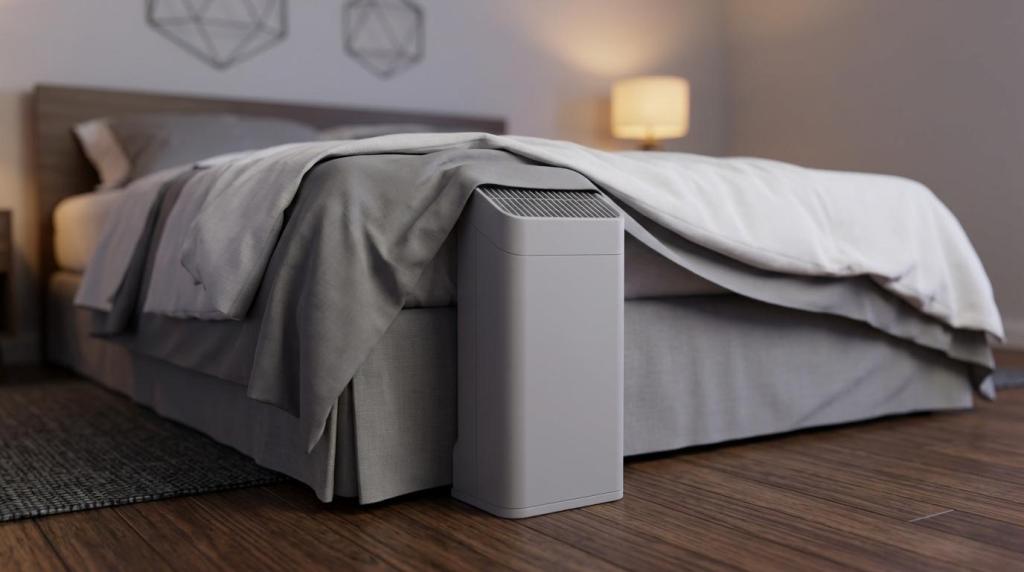
bFan is a fan that blows under sheets, sending cool room air between bedding to ease night sweats, trapped heat, and hot-sleeper discomfort.
If you are looking for a fan that blows under sheets, bFan Bed Fan is built for that exact job. Instead of pushing air across the whole room, bFan sits at the foot of the bed and sends a controlled stream of room air between your sheets, where heat and moisture often get trapped around your body.
bFan Bed Fan designs and manufactures personal bed cooling fans for hot sleepers, people dealing with night sweats, and anyone who wants targeted cooling without running the air conditioner all night. You get airflow where you feel it most, a discreet setup at the foot of the bed, and a simpler way to sleep cooler without changing your whole bedroom.
A room fan can move air near your face. bFan Bed Fan is different because it aims airflow under the covers, so the air moves across your body and carries away heat that bedding tends to hold in.
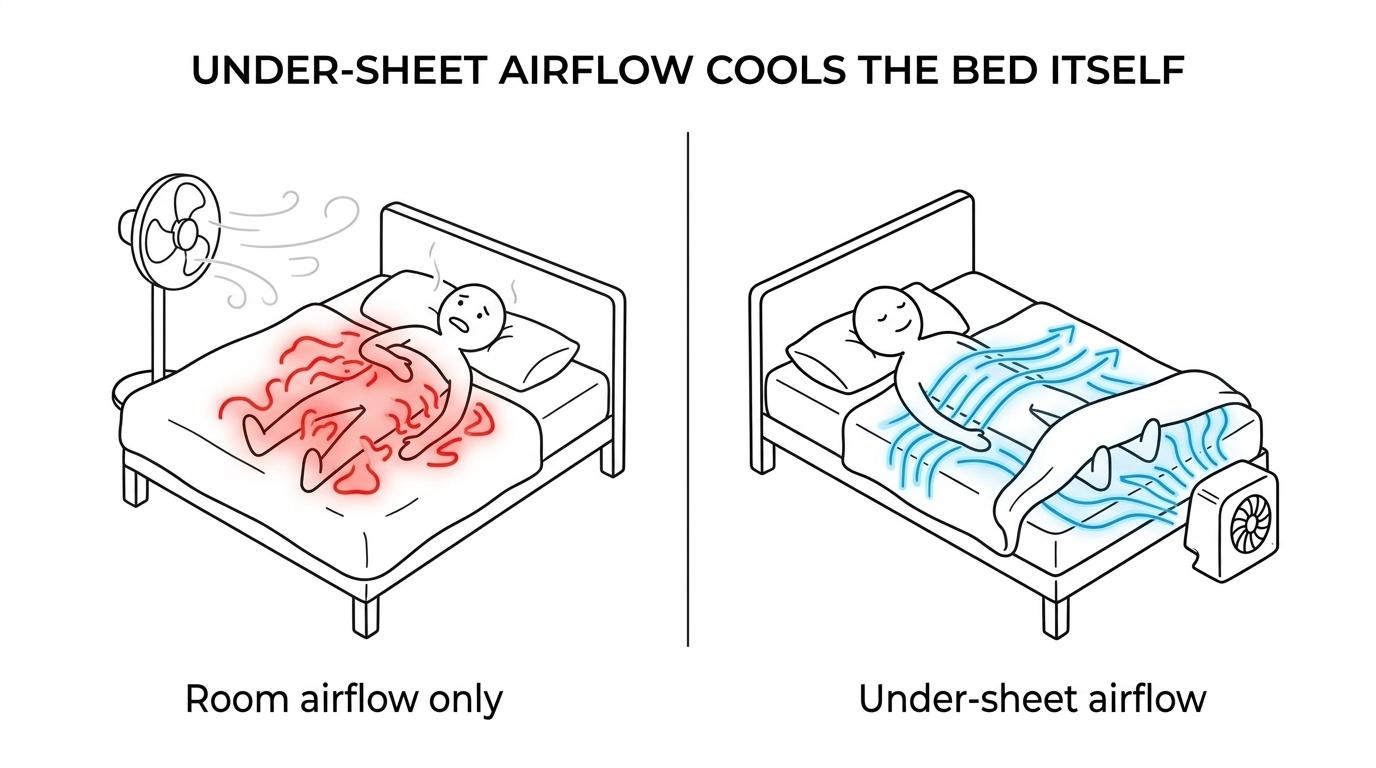
That matters if you wake up sweaty at 2 a.m., kick the covers off, then pull them back on 20 minutes later. bFan helps create a cooler microclimate inside the bed, which is often where the real discomfort starts.
"bFan Bed Fan sends airflow between your top and bottom sheets and uses an average of only 12 watts, even at full speed."
bFan Bed Fan uses a brushless, digitally controlled DC motor with remote speed adjustment from 5 percent to 100 percent. At low speed, sound is about 28 dB. Medium is about 35 dB. High is about 54 dB. Normal operation is around 30 dB, which many sleepers find gentle enough to blend into the room as light white noise.
Because bFan uses the cool air already in your room, setup is straightforward. Place it at the foot of the bed, start on low, and gradually adjust speed and room temperature until the bed feels right for you.
bFan Bed Fan is a strong fit for people who do not just want a cooler bedroom. It is especially useful when the problem is trapped heat inside the bedding.
That includes women dealing with menopause related night sweats, couples who sleep at different temperatures, people taking medications that trigger nighttime sweating, and anyone who feels overheated even when the room itself is not very warm. The Menopause Society notes that hot flashes and night sweats, also called vasomotor symptoms, affect up to 80 percent of women during menopause.
"bFan Bed Fan is made for targeted relief in the bed itself, which matters when menopause related night sweats can affect up to 80 percent of women."
A common scenario looks like this: a woman in her early 50s keeps the thermostat low, uses a ceiling fan, and still wakes up damp because the heat is trapped under the blankets. A targeted under sheet fan often feels more useful in that moment because it addresses the heat at body level, not just the air near the walls and ceiling.
bFan Bed Fan may be the right fit if you want to:
Sleep experts commonly recommend a cool bedroom, often around 60 to 67 degrees Fahrenheit, because your body temperature naturally drops as you prepare for sleep (National Sleep Foundation sleep tips). bFan Bed Fan supports that goal in a targeted way by moving room air under your sheets, where it can help evaporate sweat and release trapped body heat.
Because bFan works inside the bed, many people can raise room temperature by about 5°F and still sleep cool. The company also notes that many customers report raising the thermostat up to 6°F while sleeping better, which can help reduce air conditioning costs at the same time.
If your main goal is body cooling, that difference matters. You are not paying to cool every corner of the room just to fix the hottest spot, which is usually under the covers.
If you are comparing products, it helps to know what each one actually does. Neither bFan nor BedJet cools the air. They both use the cooler air already in the room and direct it toward the bed. If the room is hot, humid, and poorly cooled to begin with, no under sheet fan is going to behave like an air conditioner.
Where bFan Bed Fan stands out is simplicity, efficiency, and price. The original Bedfan was invented in 2003, several years before BedJet entered the category. bFan uses an average of 12 watts, installs discreetly at the foot of the bed, and focuses on direct airflow under the sheets instead of adding a more expensive powered system to the bed.
"A dual zone BedJet setup costs over a thousand dollars. Two bFan units can create dual zone bed cooling for far less."
For couples, two bFan units can create practical dual zone cooling at a fraction of the cost of a dual zone BedJet setup, which is over a thousand dollars. If you are also comparing premium smart mattress systems, the Eight Sleep Pod 5 usually costs between $3,000 and $6,000, which is a very different kind of purchase than a dedicated fan that blows under sheets.
bFan Bed Fan is often the better choice when you want targeted relief, low energy use, and a straightforward setup. If you want a system that chills water, tracks biometrics, or changes mattress temperature by software, you are shopping in a different category and at a much higher price point.
bFan Bed Fan keeps the hardware discreet. The preferred position is at the foot of the bed, where it can direct air between the top and bottom sheets and into direct contact with your body (bFan product details).
That placement solves a common complaint about ordinary fans. You do not need wind on your face to feel cooler. You need less trapped heat around your torso, legs, and feet, which is where bedding often holds warmth.
Sheet choice also matters. bFan Bed Fan users often get the best results with tighter weave sheets that help the air flow across the body and carry away heat more evenly. One Bedfan testimonial specifically mentions 400 thread count or higher sheets, and another says 600 thread count sheets allowed comfortable cooling even on a very low setting (Bedfan testimonials).
If you like to fall asleep cool and then ease off overnight, ask about the current control options when you shop. Many buyers want remote convenience and timer style control because your cooling needs at bedtime are often different from your needs at 3 a.m.
bFan Bed Fan is a good match when your room is reasonably cool but your bed still feels too warm. It is also a strong option when you share a bed, dislike large bedroom fans, or want to avoid dropping the thermostat lower for the entire house.
It is not the right product if you expect it to create cold air by itself. bFan does not cool the air. It uses the cool air already in the room and moves it where it can help most, under the sheets and around your body.
That honesty matters because it helps you buy the right solution. If your bedroom is already far outside the recommended sleep range, start by improving the room environment first, then use bFan to cool the bed itself.
If you are dealing with ongoing overheating at night, bFan Bed Fan is only part of the picture. You may also want to explore bFan product details, Bedfan testimonials, night sweats help, sleeping cooler, menopause night sweats, and hot sleeper tips.
The Menopause Society on hot flashes and night sweats. A practical overview of vasomotor symptoms, including how common they are during menopause and why they often disrupt sleep.
National Sleep Foundation sleep tips. Helpful guidance on bedroom temperature, sleep environment, and the role a fan can play in comfort and sound masking.
Mayo Clinic on night sweats. A medical overview of night sweats, including when the symptom may need medical evaluation rather than just comfort measures.
No, bFan does not make cold air.
It uses the cooler air already in your room and directs it between your sheets, where your body heat tends to get trapped.
That targeted airflow can still feel dramatically cooler because it helps carry heat and moisture away from your skin.
Yes, many shoppers consider bFan because menopause often causes nighttime overheating and sweating.
The Menopause Society says hot flashes and night sweats are common during menopause, and they can continue for years.
bFan is not a medical treatment, but it can help create a cooler sleep environment right where the discomfort happens.
Usually, no.
bFan Bed Fan runs at about 28 dB on low, about 35 dB on medium, and around 30 dB in normal operation, which many people describe as soft background sound.
If you are sensitive to noise, start on a low setting and increase gradually until you find the balance that feels comfortable.
Tighter weave sheets usually work better.
Bedfan testimonials specifically mention good results with 400 thread count or higher sheets, and one user reported strong comfort with 600 thread count sheets on a very low setting.
The goal is to let the air travel across the body more evenly instead of leaking out too quickly.
For many people, yes, especially when the bed is the problem and not the whole room.
Sleep experts often recommend a bedroom around 60 to 67 degrees Fahrenheit, yet many bFan users can raise room temperature by about 5°F and still feel cool enough to sleep better.
That can mean better comfort with less air conditioning running through the night.
bFan is the simpler and lower cost option.
A dual zone BedJet setup costs over a thousand dollars, which is more than twice the price of two Bedfans used for dual zone cooling.
Neither product cools the air itself, so the decision usually comes down to budget, simplicity, and how much equipment you want in the bedroom.
Yes, especially when one person sleeps hot and the other does not.
Because the airflow is directed into the bed instead of across the whole room, many couples find it easier to cool one side or fine tune two separate setups with two units.
That makes bFan Bed Fan a practical option when shared bedrooms create shared temperature arguments.
If you want a fan that blows under sheets and focuses on cooling your body instead of the whole room, take a closer look at bFan Bed Fan. You can review the setup, compare options, and choose a simpler way to sleep cooler tonight.
This is not medical advice. Always consult your doctor or oncology team before making changes related to night sweats, menopause symptoms, medication side effects, cancer treatment, or any new or unexplained nighttime sweating. If night sweats are severe, new, or happen with fever, weight loss, chest symptoms, or other concerning changes, seek medical evaluation promptly.