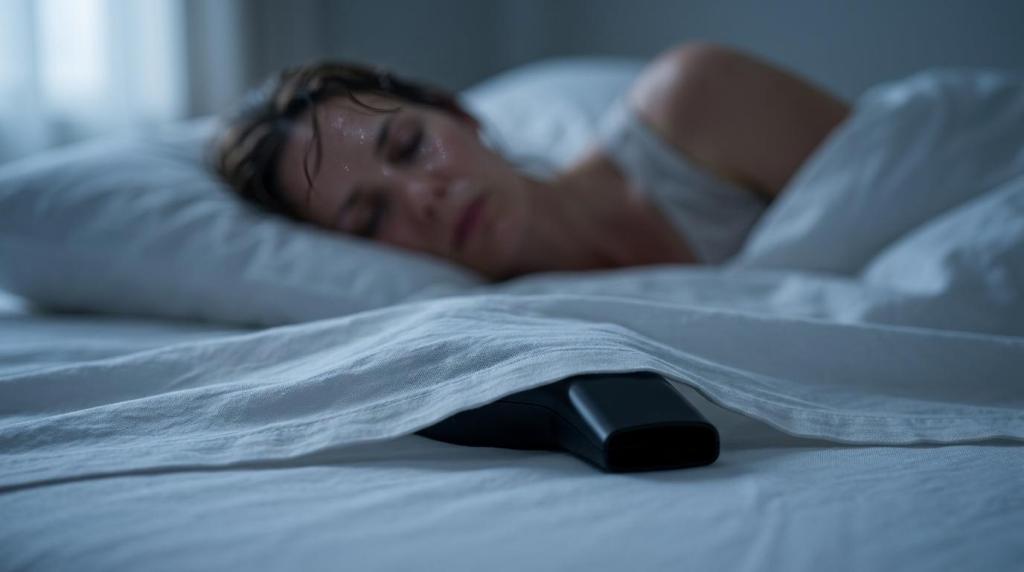
Looking for a bed with fan built in? Discover 6 practical cooling options, from under-sheet bed fans to toppers and cooling sheets.
If you’re searching for a bed with a fan powered by a dc motor built in, you probably don’t need a whole new bed. In most real bedrooms, the better answer is an add-on system that cools the space under your covers, where heat and sweat actually collect.
TL;DR: Summary
The key is matching the cooling method to the problem. If your mattress feels warm, a topper may help. If the heat is mostly under the covers, direct airflow usually works better. This is not medical advice. Always consult your doctor or oncology team before making changes.
Yes. Sleep Number and Eight Sleep show that climate-control beds exist, but true beds with built-in fans are still niche, expensive, and often less practical than add-on cooling systems.
Most shoppers use the phrase “bed with fan built in” when they really want one thing: less heat trapped around the body at night. That can come from a smart mattress cover, a water-based active cooling pad, or an under-sheet fan placed at the foot of the bed. In other words, you’re often shopping for bed cooling, not furniture.
That distinction matters because replacing a bed is a big purchase, and many solutions work with the mattress you already own. If your current setup is fine except for overheating, understanding mattress features and considering add-on cooling is usually faster, cheaper, and easier to test.
"The original bFan Bed Fan was invented in 2003, years before Bedjet entered the category."
The problem is usually the sleep microclimate. Your body, mattress, sheets, and comforter create a pocket of warm, humid air that can stay hot even when the room feels fine, highlighting the importance of proper air circulation under the covers.
The National Heart, Lung, and Blood Institute says a healthy sleep space should be cool, quiet, dark, and comfortable, and that poor sleep quality affects metabolism, focus, and cardiopulmonary health (NHLBI sleep guidance). That “cool” guidance is about more than thermostat settings. Once you get under the blankets, heat can build fast.
A newer controlled sleep study helps explain why this feels so miserable. In a randomized crossover study, sleeping in 32°C heat reduced total sleep time by about 24.8 minutes, reduced REM duration, and lowered sleep efficiency compared with 22°C conditions. The same study found that a high-heat-conductivity mattress topper improved total sleep time and sleep efficiency during the heat-night condition, likely by lowering skin and core body temperature (PubMed study on heat exposure and mattress cooling).
A common misconception is that a colder room always fixes the issue. If your duvet, mattress pad, or foam bed traps heat, you may still wake up sweaty. That is why airflow under the covers can matter so much, especially with thick bedding. This is explained well in this guide to bed fans for thick comforters and duvets.
The best options are under-sheet airflow, active cooling toppers, and cooler bedding. Each one targets a different part of the overheating problem.
If you’re trying to recreate the feel of a bed with fan built in, here are the six options worth considering:
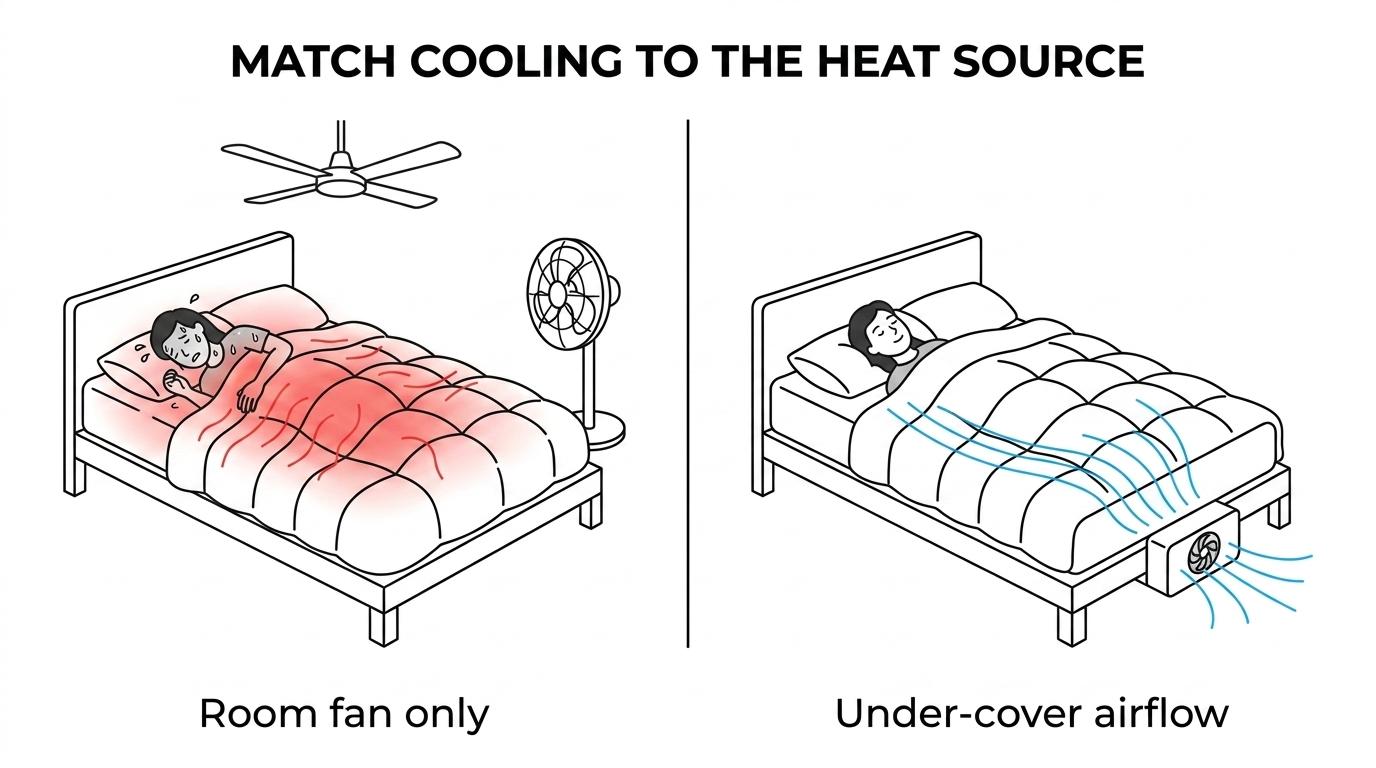
Start with the heat source. A bFan, a cooling topper, and percale sheets solve different problems, so the right choice depends on where the warmth actually builds up.
Step 1: Figure out where you feel hottest. If your back and hips feel hot against the mattress, focus on conductive cooling or a topper. If your chest, legs, or whole body get muggy under the covers, airflow is usually the better first move.
Step 2: Match the mechanism to the symptom. If sweat and humidity are the problem, choose moving air. If the mattress feels like a heat sink, choose a topper or pad that includes innovative mattress features for cooling. If the whole room is warm, lower room temperature first.
Step 3: Factor in partner needs, noise, and budget. Couples often need dual-zone control. Some people hate hoses or bulky hardware. Others care most about electricity use or sound. If noise wakes you, quieter airflow matters more than headline features.
A simple rule helps. If cooling changes the room but not the air circulation under the blanket, you may still sleep hot. If cooling changes the bed microclimate itself, relief tends to be faster.
Yes, for many hot sleepers it is. A ceiling fan cools the room air around you, while an under-sheet fan targets the heat trapped where you are actually sleeping.
That is the main difference. Ceiling fans and pedestal fans help exposed skin evaporate sweat, but they do very little once your body is covered by sheets, blankets, or a comforter. Under-sheet airflow reaches the trapped pocket directly.
This is where people often get frustrated. They turn the bedroom colder and add a room fan, yet still wake up damp because the bedding keeps recycling warm air. A bed fan changes that local air exchange.
If indoor heat is extreme, keep expectations realistic. Neither a Bedfan nor a Bedjet cools the air. They use the cooler air already in the room. If the room itself is dangerously hot, air conditioning or a safer cooling space matters more than any fan-based bed product.
Setup is simple. The best results usually come from placing the fan at the foot of the bed, using tighter-weave sheets, and starting with moderate airflow.
Step 1: Position it low and centered. The airflow should travel between your bottom sheet area and top sheet or blanket, not blast your face. Many bFan setups are designed to slide into place in minutes without tools or permanent changes. If you want a visual walkthrough, this internal guide on easy-install bed cooling fan setup in minutes, no tools is useful.
"bFan Bed Fan setups are designed to take minutes, with no tools, drilling, or permanent bed changes."
Step 2: Use the right bedding. A pro tip here is easy to miss. Tight-weave sheets often help the air spread across the body and carry away heat better than loose, fluffy layers that leak airflow. If the comforter is thick, keep it, but let the air move underneath it.
Step 3: Use timing and lower speeds first. Many people do better starting the fan 20 to 30 minutes before bedtime, then using timer controls so the bed cools down without staying too drafty all night. On low speed, Bedfan sound is around 28 dB, which can matter if you wake easily from noise.
One common scenario is a perimenopausal sleeper who keeps the room at 66°F, uses “cooling sheets,” and still wakes up soaked at 2 a.m. In that case, changing the under-cover airflow often helps more than buying yet another sheet set.
For many couples, bFan is the better value. Bedjet and bFan both use room air, but the pricing and setup trade-offs are very different.
Here’s the key misconception to clear up first: the Bedjet doesn’t refrigerate air, and neither does the Bedfan. Both use the cool air already in the room to cool the bed. If the bedroom is too warm, both systems have less to work with.
Where the comparison gets practical is cost and zone control. A dual-zone Bedjet setup runs over a thousand dollars. That is more than twice the price of two bFans. If one partner sleeps hot and the other sleeps neutral, two separate bFans can create dual-zone microclimate control at a fraction of that cost.
"A dual-zone Bedjet setup costs over $1,000, which is more than twice the price of two bFans."
Bedjet may appeal to shoppers who want a different feature set, such as a more efficient dc motor or stronger airflow hardware. bFan tends to fit people who want a simpler, quieter, lower-cost under-sheet solution with remote and timer controls. If budget matters, that difference is not small.
The best results usually come from combining methods. Bedroom temperature, bedding choice, and under-cover airflow work together, not separately.
Step 1: Set the room to a realistic baseline. Sleep experts commonly recommend a bedroom temperature between 60°F and 67°F (15.5°C to 19.5°C). With a Bedfan, many people can raise the room temperature by about 5°F and still cool the body enough for more restful sleep, which can lower air conditioning use.
Step 2: Simplify the bedding stack. If you sleep hot, start with breathable layers and avoid stacking multiple synthetic pads unless you need them for waterproofing or allergies. If you love a heavy comforter, adding airflow under it often works better than trying to replace it with “cooling” fabric alone.
Step 3: Think about humidity, not just heat. Sweat that cannot evaporate keeps waking you up. That is why airflow helps even when the room is already fairly cool. If humidity is high, a dehumidifier can make every cooling method work better.
If you want more practical reading, the sleeping cooler section on Bedfan.com and the broader night sweats hub both cover room setup, bedding choices, and common overheating patterns.
Night sweats can be benign, but they can also point to medication effects or illness. Mayo Clinic and cancer-care teams would both tell you not to ignore drenching sweats with other red flags.
Menopause and perimenopause are common causes. So are antidepressants, especially selective serotonin reuptake inhibitors (SSRIs) and serotonin-norepinephrine reuptake inhibitors (SNRIs), steroids, thyroid problems, low blood sugar, infections, obstructive sleep apnea (OSA), and some cancers. If symptoms are new, severe, or drenching, check in with a clinician.
Please seek medical care promptly if night sweats come with fever, unexplained weight loss, swollen lymph nodes, chest pain, shortness of breath, severe fatigue, or repeated low blood sugar. If you are in cancer treatment or survivorship care, talk with your oncology team before changing anything substantial.
A realistic example: a man in his 50s thought he just needed a colder room because he kept waking up sweaty and short of breath. It turned out untreated OSA was part of the picture. Cooling still helped him sleep more comfortably, but it did not replace diagnosis or treatment.
The research is pretty consistent. Heat hurts sleep, and targeted cooling of the bed can improve total sleep time, sleep efficiency, and perceived sleep quality.
The strongest controlled evidence in this set comes from the heat-exposure study mentioned earlier. Under 32°C conditions, heat reduced total sleep time and REM duration, while a high-heat-conductivity mattress topper improved sleep efficiency and added about 21.4 minutes of sleep versus the control mattress (PubMed).
A separate 2025 pilot study on cooling bed sheets collected 2,627 total days of data from 64 participants. After using the sheets, 69% reported improved sleep quality. The share who said they had trouble sleeping because they felt too hot fell from 82.5% to 39.7%, and reported sleep duration increased by 26 minutes (PubMed pilot study on cooling bed sheets).
The trade-off is that not every cooling approach works the same way. Conductive toppers help move heat into the mattress layer. Cooling sheets, along with various mattress features, may help with perceived comfort and moisture. Under-sheet fans are often strongest when trapped heat and humidity under the covers are the main issue. If your bedding holds warm air in place, improving air circulation with direct airflow is often the missing piece.
All links have been checked and are currently working.
If you want a practical way to cool the space under the covers without replacing your whole bed, you can take a look at the bFan Bed Fan at https://www.bedfan.com. It is one non-drug option that targets the root issue by moving cooler room air under the sheets to help sweat evaporate and body heat escape. This is not medical advice. Always consult your doctor or oncology team before making changes, especially if night sweats are new, severe, or linked to cancer treatment, medication changes, fever, or weight loss.