Surgical menopause night sweats can hit hard after ovary removal. Learn what helps, from hormone and nonhormonal treatments to sleep cooling.
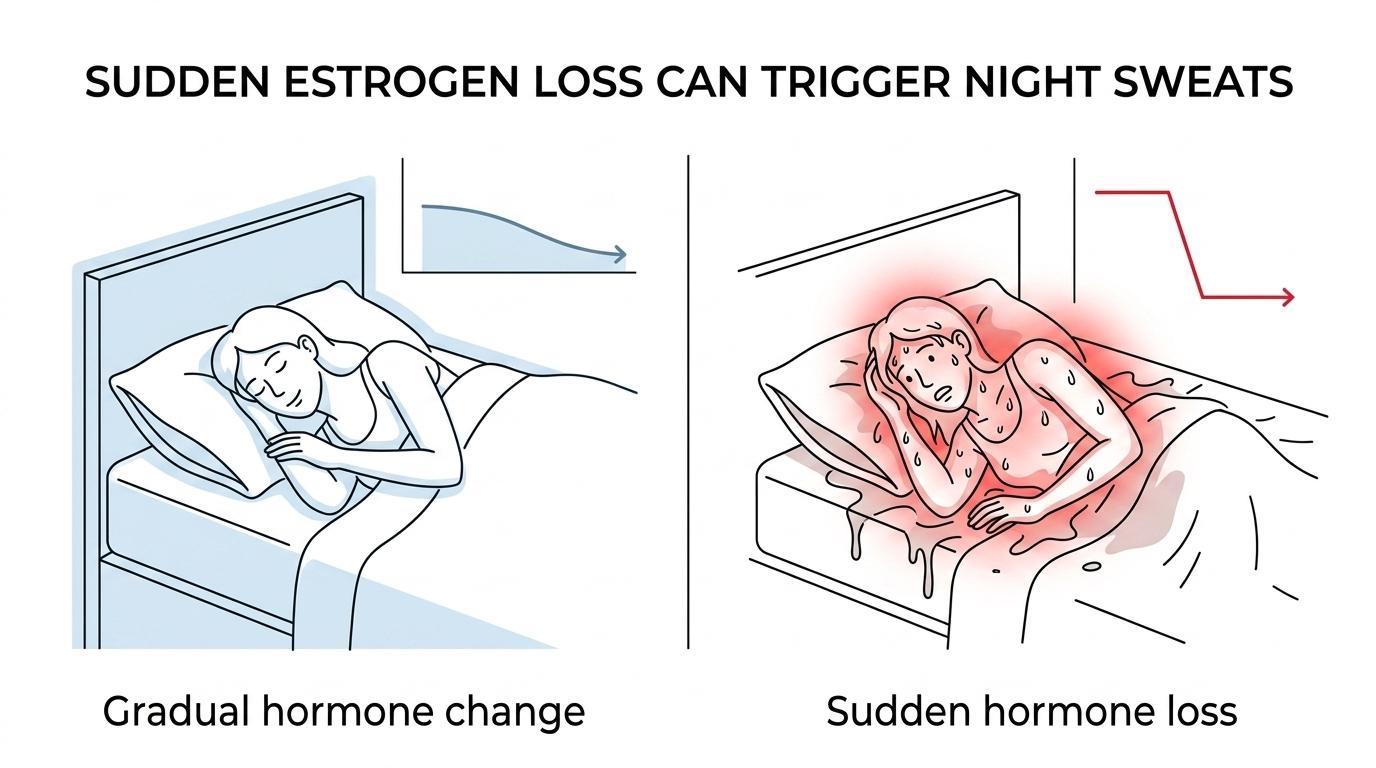
Night sweats after surgical menopause can feel different from the kind people expect in natural menopause. They often hit harder, start sooner, and disrupt sleep in a very stubborn way. If both ovaries were removed during surgery, called a bilateral oophorectomy, estrogen levels can drop suddenly instead of tapering over time. That abrupt shift can trigger intense vasomotor symptoms, meaning hot flashes and night sweats.
This is not medical advice. Always consult your doctor, gynecologist, or oncology team before making changes to treatment, supplements, or sleep strategies. That matters even more if you have a history of breast cancer, blood clots, liver disease, unexplained bleeding, or you are recovering from recent surgery.
With natural menopause, hormone changes usually happen over years. With surgical menopause, the body can go from regular hormone production to a sharp drop in a single day. That is why many people say the sweating feels like it came out of nowhere.
The National Cancer Institute notes that hot flashes and night sweats may be caused by natural menopause, surgical menopause, or chemical menopause, and that surgery can be a direct trigger for these symptoms. See the Cancer.gov clinician summary here: Hot Flashes and Night Sweats PDQ from Cancer.gov. The U.S. Food and Drug Administration also states that lower hormone levels in menopause may lead to hot flashes and night sweats, and that hormone therapy may help relieve them: FDA menopause overview.
In plain English, the sweating is usually not the primary problem. The sweating is part of a temperature regulation problem caused by low estrogen. That is why the best treatment plan usually targets the vasomotor symptoms themselves, not just damp pajamas.
Night sweats after surgery are often related to menopause, but not every case should be brushed off as hormonal. Infection, medication side effects, thyroid problems, and blood sugar swings can also show up as sweating at night.
If the pattern is new, severe, or comes with other symptoms, it is worth checking in instead of guessing.
Systemic estrogen is generally the most effective treatment for menopausal hot flashes and night sweats when it is medically appropriate. The National Cancer Institute hormone therapy fact sheet states that systemic estrogen, and systemic estrogen plus progestin when needed, can relieve hot flashes and night sweats while treatment is being used. It also lists nonhormonal options suggested by the North American Menopause Society, including selective serotonin reuptake inhibitors (SSRIs), serotonin norepinephrine reuptake inhibitors (SNRIs), gabapentin, oxybutynin, and cognitive behavioral therapy (CBT): NCI menopausal hormone therapy fact sheet.
If you had your uterus removed, estrogen alone may be an option. If your uterus is still present, estrogen plus progestin is often considered because the progestin helps protect the uterine lining. The exact choice depends on age, medical history, the reason for surgery, and personal risk factors.
Not everyone can use hormones. The National Center for Complementary and Integrative Health (NCCIH) notes that some people should not use hormone therapy, including those with certain histories involving breast cancer, liver disease, or blood clots. That makes a real medical conversation essential, not optional.
A short, honest office visit can go a long way. Instead of saying, “I’m hot at night,” try, “I’m waking up three times a night drenched, I have to change clothes, and I’m exhausted during the day.” That gives your clinician something concrete to treat.
When night sweats keep waking you, the problem becomes both hormonal and behavioral. Your body gets conditioned to expect wake-ups, and even on a cooler night you may still pop awake and scan for heat.
This is where non-drug strategies matter. They do not replace treatment for vasomotor symptoms, but they can lower the misery right away and make your nights more livable.
Sleep experts commonly recommend a bedroom temperature between 60°F and 67°F for better sleep. That range works well for many people, but it is not always enough when heat gets trapped under the covers. Under-sheet airflow can help because it carries away heat and evaporates sweat where the problem is actually happening.
A bed fan, also called bFan or Bed Fan, can be practical here because it moves the cool air that is already in the room under the top sheet and across the body. It does not cool the air itself, and neither does BedJet. These systems only use the cool room air you already have. The difference is that airflow under the bedding can target the clammy, trapped heat that wakes people up.
After helping thousands of hot sleepers since 2005, one pattern keeps showing up. People with hormonal night sweats often do better when the air is aimed under the sheets instead of at the face or across the whole room. A bed fan is useful for that specific reason. It is quiet enough for many sensitive sleepers, about 28 dB to 32 dB on lower settings, remote and timer controls, and uses very little electricity, about 18 watts on average. Many people can raise the room temperature by about 5°F and still feel cool enough to sleep better, which can help with air conditioning costs.
Tight-weave sheets matter more than most people realize. They help the airflow spread across the bed instead of escaping too quickly. If you try a bed fan setup, this small detail can make the cooling feel more even and less drafty.
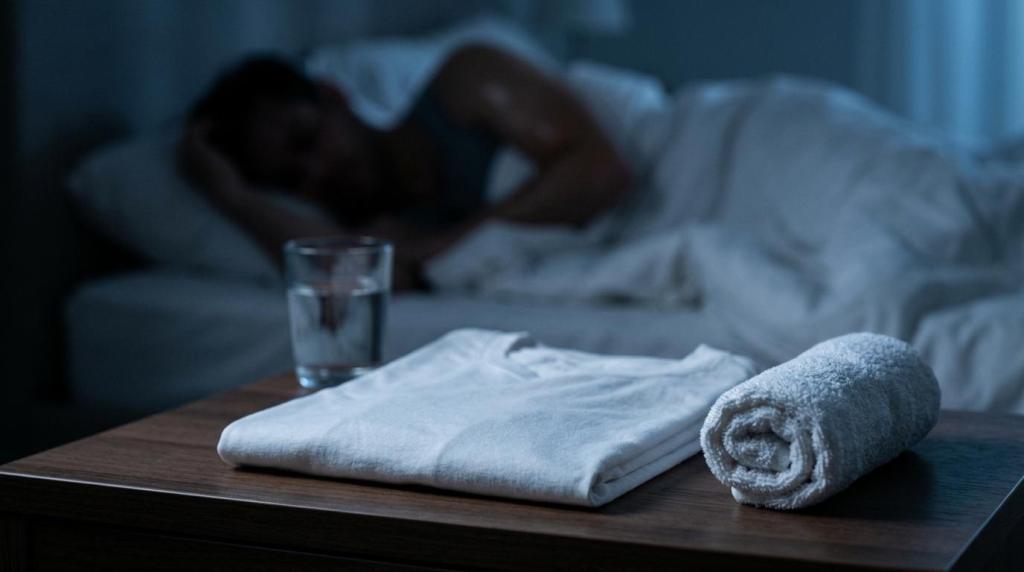
One anonymized example that feels very familiar: a woman in her early 40s had a bilateral oophorectomy for endometriosis and described waking every 90 minutes, soaked from the chest up. Her doctor started a treatment discussion for vasomotor symptoms, and at home she added under-sheet airflow, a spare sleep shirt on the nightstand, and a slightly lighter comforter. She was not “fixed” overnight, but she stopped having to fully remake the bed at 2 a.m., which made the next day much more manageable.
A second common scenario is the person who cannot or does not want to use hormones, often because of cancer history or clot risk. For them, nonhormonal prescriptions plus bedroom changes can make a meaningful dent in sleep disruption, even if the symptoms do not vanish completely.
Whole-room cooling helps, but it can be expensive and frustrating if one partner runs hot and the other does not. That is where bed-level cooling becomes more practical. A bed fan gives you a personal sleep microclimate without forcing the whole house to feel like a walk-in freezer.
If you share a bed and need different settings, two bed fans can create dual-zone control at a fraction of the cost of a dual zone BedJet setup, which costs more than twice the price of two bed fans. That matters when symptoms may last months or years and you need a setup you will actually keep using.
Related reading that would fit naturally here includes night sweats causes, night sweats after surgery, how to sleep cooler, best bedding for night sweats, and why tight-weave sheets help with bed fans.
Bring a short symptom log for one to two weeks. Write down when the sweating happens, how many times you wake up, whether you are drenched or mildly damp, what medications you take, and whether you also have daytime hot flashes. That kind of detail helps sort out whether the main problem is vasomotor symptoms, medication side effects, blood sugar swings, infection, or a combination.
Good questions to ask include whether hormone therapy is safe in your case, whether a nonhormonal option like gabapentin or an SSRI might fit better, and whether your surgical history changes the best approach. If the sweats are paired with low mood, anxiety, or pain, say that out loud. Those pieces often feed each other.
If you need relief right now, not just another general sleep tip, a bed fan can be a practical way to move cool room air under the sheets, stop sweat before it starts, and make the bed feel usable again. You can see the options at Bedfan.com. This is not medical advice. Always consult your doctor or oncology team before making changes, especially after surgical menopause or if hormones may not be safe for you.
The bFan sits at the foot of your bed and sends a quiet stream of air under your sheets. Direct airflow helps stop sweat before it starts, and one bFan costs less than half the price of one BedJet, making it the less expensive alternative. Shop the bFan at bedfans-usa.com