
Breastfeeding night sweats are common after birth. Learn causes, how long they last, relief tips, and when to call your doctor.
If you’re waking up soaked while nursing a new baby, you’re not imagining it, and you’re definitely not alone. Breastfeeding night sweats are often part of the same picture as postpartum night sweats: big hormone shifts after birth, extra fluid leaving the body, and long, warm nights spent feeding, rocking, and trying to sleep in short stretches, often without the support needed.
The reassuring part is that this is usually temporary. The part that feels less reassuring at 2:17 a.m. is the wet pajamas, damp bra, clammy sheets, and the sense that your body is doing something strange without your permission.
This is not medical advice. Always consult your healthcare provider, doctor, midwife, or lactation team before making changes, especially if your sweating is severe, persistent, or comes with fever, breast pain, cough, weight loss, or other new symptoms.
The biggest driver is the hormone drop after delivery. During pregnancy, estrogen and progesterone stay high, but the stress of hormonal changes can affect your body’s temperature regulation. After birth, both fall quickly, and that sudden shift can affect your body’s temperature regulation. Cleveland Clinic explains that postpartum night sweats are tied to this hormone change and can be heavy enough that some people need to change clothes and sheets during the night (Cleveland Clinic postpartum night sweats guide).
There’s another layer too. Your body is getting rid of some of the extra fluids it held onto during pregnancy, and sweating is one way it does that. So even if your room is cool, you may still wake up damp or drenched.
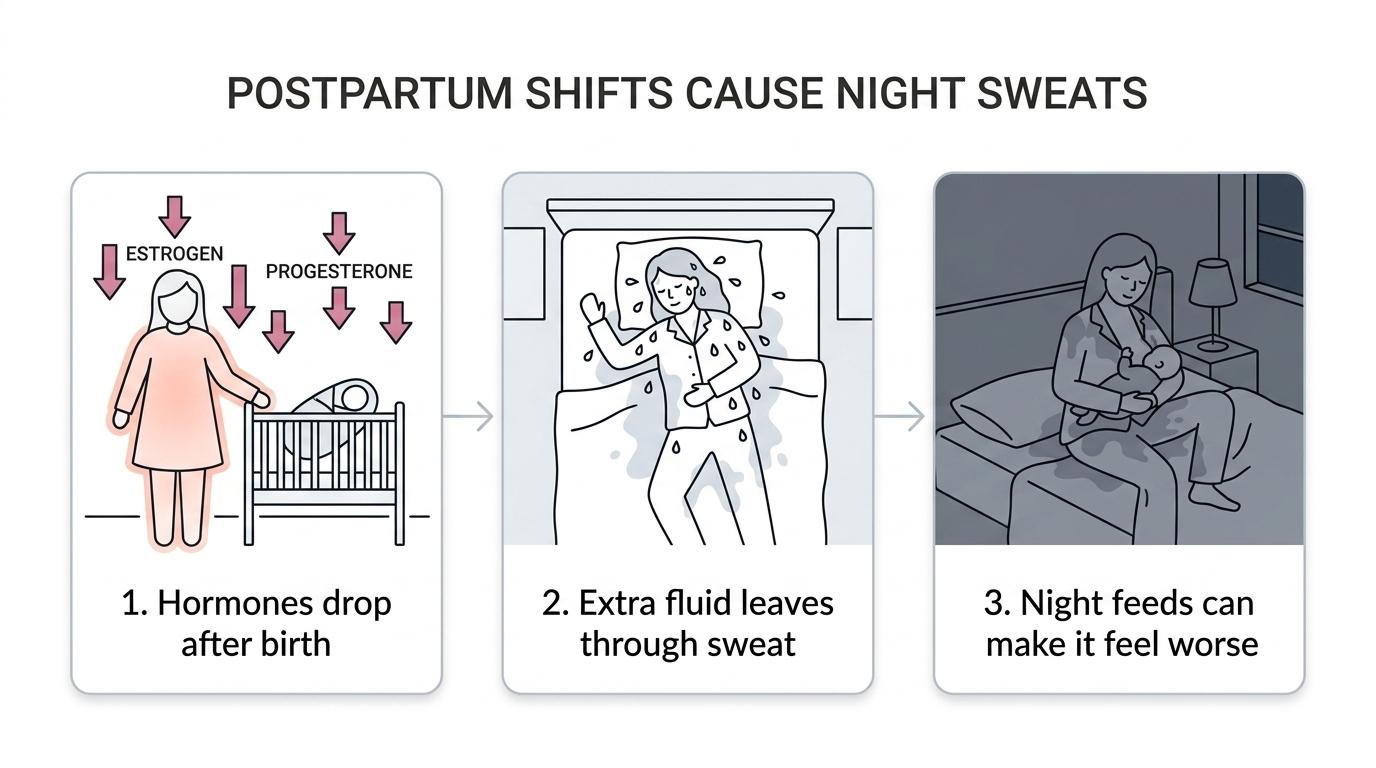
Breastfeeding, an integral part of motherhood, can keep the sweating going a bit longer for some people; following some practical breastfeeding tips may help manage discomfort during this phase. The hormonal pattern that supports milk production, influenced by prolactin, may leave some new mothers warmer at night than they expected. That does not mean breastfeeding is causing harm. It usually means your body is still in a very active postpartum adjustment phase.
A simple way to think about it is this: postpartum hormones start the sweating, breastfeeding can overlap with it, and broken sleep combined with fatigue makes the whole thing feel more intense.
For many people, postpartum night sweats are worst in the first few weeks after birth, as estrogen levels fluctuate. They often ease as hormones settle and the body finishes shedding that extra pregnancy fluid. If you’re breastfeeding, the timeline can be less tidy. Some women notice steady improvement within a few weeks. Others still run hot for a month or longer, experiencing hot flashes especially during overnight feeds.
That range can feel frustrating, but it’s common. What matters most is whether the sweating is gradually improving, or whether it stays severe, gets worse, or comes with other symptoms that point to something beyond normal postpartum recovery.
The NHS describes night sweats as sweating so much that your clothes and bedding are soaking wet even when the room is cool, and advises medical evaluation for regular drenching sweats, especially when they come with symptoms like fever, cough, diarrhea, or unexplained weight loss (NHS guidance on night sweats).
Most breastfeeding night sweats are hormonal. Still, “most” is not the same as “always.” A postpartum infection, mastitis, thyroid problems, medication side effects, anxiety, or another medical issue can also show up with sweating.
Call your clinician sooner rather than later if the sweating is very heavy, if it continues beyond the early postpartum window without improving, or if something else feels off in your body. Trust that instinct. New parents are often told to expect discomfort, but persistent drenching sweats deserve a real look.
A few symptoms deserve prompt medical advice:
You do not need a fancy system to get some relief. The basics matter a lot here. Sleep experts commonly recommend a bedroom temperature between 60°F and 67°F for better sleep. That range is helpful for many hot sleepers, but postpartum bodies are not always predictable. If the room is already cool and you still wake up sweaty, the problem may be trapped heat under the covers rather than the thermostat alone.
That’s where airflow matters. Breathable pajamas, cotton sheets, and lighter bedding can help heat escape instead of pooling around your chest, back, and legs. Cleveland Clinic specifically recommends cotton sheets because they’re breathable and cooler for postpartum sweating. Hydration matters too, as it includes replacing lost fluids, especially if you’re breastfeeding and losing fluid through sweat; incorporating breastfeeding tips can help you manage these challenges better.
One practical non-drug option is a bed fan, also called a Bed Fan or bFan. It sends room-temperature air under the sheets, right where the heat and moisture get trapped. It does not make cold air. Neither a bed fan nor a BedJet cools the air itself. They use the cooler air already in the room. The difference is where that airflow goes. Under-sheet airflow can stop sweat before it starts and make damp skin feel less sticky and less miserable.
When a room is set in that 60°F to 67°F zone, many people find a bed fan lets them raise the thermostat by about 5°F and still feel cool enough to sleep better. That can matter if your partner hates a cold room, or if you’re trying to keep air conditioning (AC) costs from climbing during a season when you’re already doing a lot.
A few low-risk comfort moves make the biggest difference:
One mother, about three weeks postpartum, described how the challenges of motherhood included waking up every night during her first feed with a soaked nursing bra, damp hairline, and sheets that felt humid even though the room was cool, which added to her stress. She kept thinking something was wrong because the sweating seemed out of proportion to the temperature.
Her healthcare provider ruled out infection and reassured her that postpartum hormones, including changes in estrogen and prolactin levels, were the likely cause. What helped most was a boring but effective routine: cotton sleepwear, a spare bra and burp cloth by the bed, water within reach, lighter bedding, and low under-sheet airflow from a bed fan.
Sometimes relief is not dramatic. It’s just enough cooling to stop feeling trapped in your own heat and aids in the recovery process.
This is where couples often get stuck, as they balance the need to support each other's comfort. One person is freezing. The other is sweaty, experiencing hot flashes, fatigue, half awake, and trying to nurse a baby in a room that feels stuffy no matter what the thermostat says.
A targeted bed cooling setup can solve that better than dropping the whole-room temperature. The bFan is quiet enough for many sleepers, with low settings in the roughly 28 to 32 dB range, and it uses very little energy, about 18 watts on average. If both partners want separate control, two bFan bed fans can create a dual-zone sleep setup at a fraction of the cost of a dual-zone BedJet system. That dual-zone BedJet setup costs more than twice the price of two bed fans.
The original bFan was invented in 2003, several years before BedJet was even thought of, and the basic idea still makes sense for postpartum overheating: move room-temperature air under the bedding so body heat doesn’t stay trapped around you all night.
If you have an appointment coming up, it helps to be specific. Mention when the sweating started, how often it happens, whether your clothes or bedding get soaked, whether you have fever, breast symptoms, or any changes in estrogen levels, and what medications or supplements you’re taking. If the sweats happen mostly during overnight feeds, say that too.
And if you feel brushed off, bring it up again. Severe drenching sweats deserve more than a shrug.
All links have been checked and are currently working.
If you’re reading on Bedfan.com and want a few related topics next, these internal pages would fit naturally here:
If your breastfeeding night sweats are making it harder to rest, a simple under-sheet airflow setup can be one of the easiest non-drug fixes to try. You can see how the bFan works at Bedfan.com. This is not medical advice. Always consult your doctor, midwife, or oncology team before making changes, and get checked promptly for fever, breast pain, worsening symptoms, or regular drenching sweats.
The bFan sits at the foot of your bed and sends a quiet stream of air under your sheets. Direct airflow helps stop sweat before it starts, and one bFan costs less than half the price of one BedJet, making it the less expensive alternative. Shop the bFan at bedfans-usa.com



