Stay cooler with an under cover fan for bed comfort. bFan sends quiet airflow between sheets to reduce heat, sweat, and AC use overnight.
If you are shopping for an under cover fan for bed comfort, bFan Bed Fan was built for exactly that job. bFan Bed Fan is the inventor and manufacturer behind the original Bedfan, and our system sits discreetly at the foot of the bed to send a controlled stream of room air between your sheets, where trapped body heat usually builds up first.
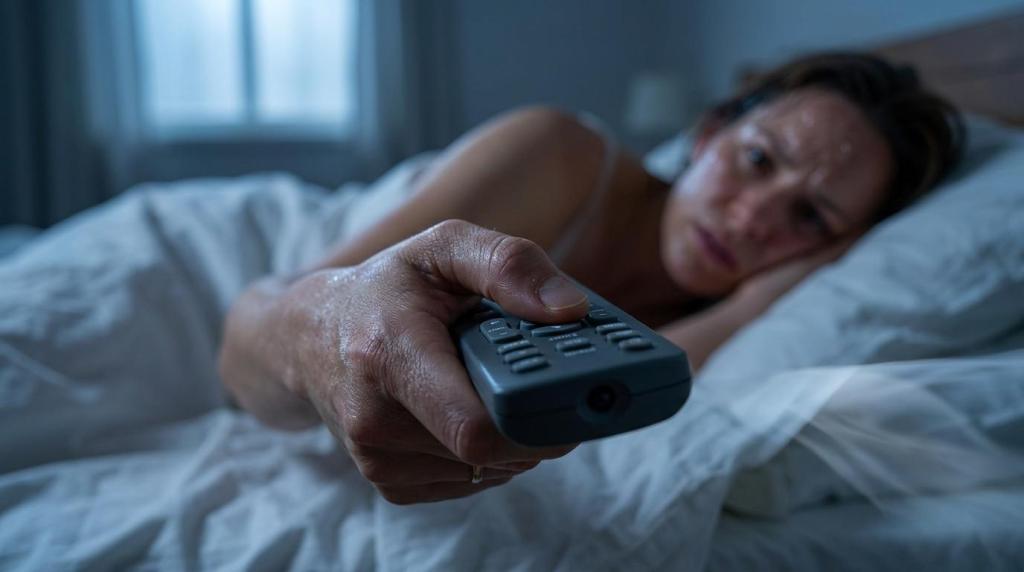
That matters if you fall asleep fine but wake up hot at 1:00 a.m., kick the covers off, or keep lowering the air conditioning (AC) just to make the bed feel tolerable. bFan Bed Fan helps hot sleepers, people dealing with night sweats, and couples with different sleep temperatures cool the bed itself instead of overcooling the whole room.
If your night sweats are new, drenching, unexplained, or tied to cancer treatment, infection, blood sugar changes, or medication side effects, please talk with your doctor first. A bed cooling fan can improve comfort, but it is not a diagnosis or a medical treatment.
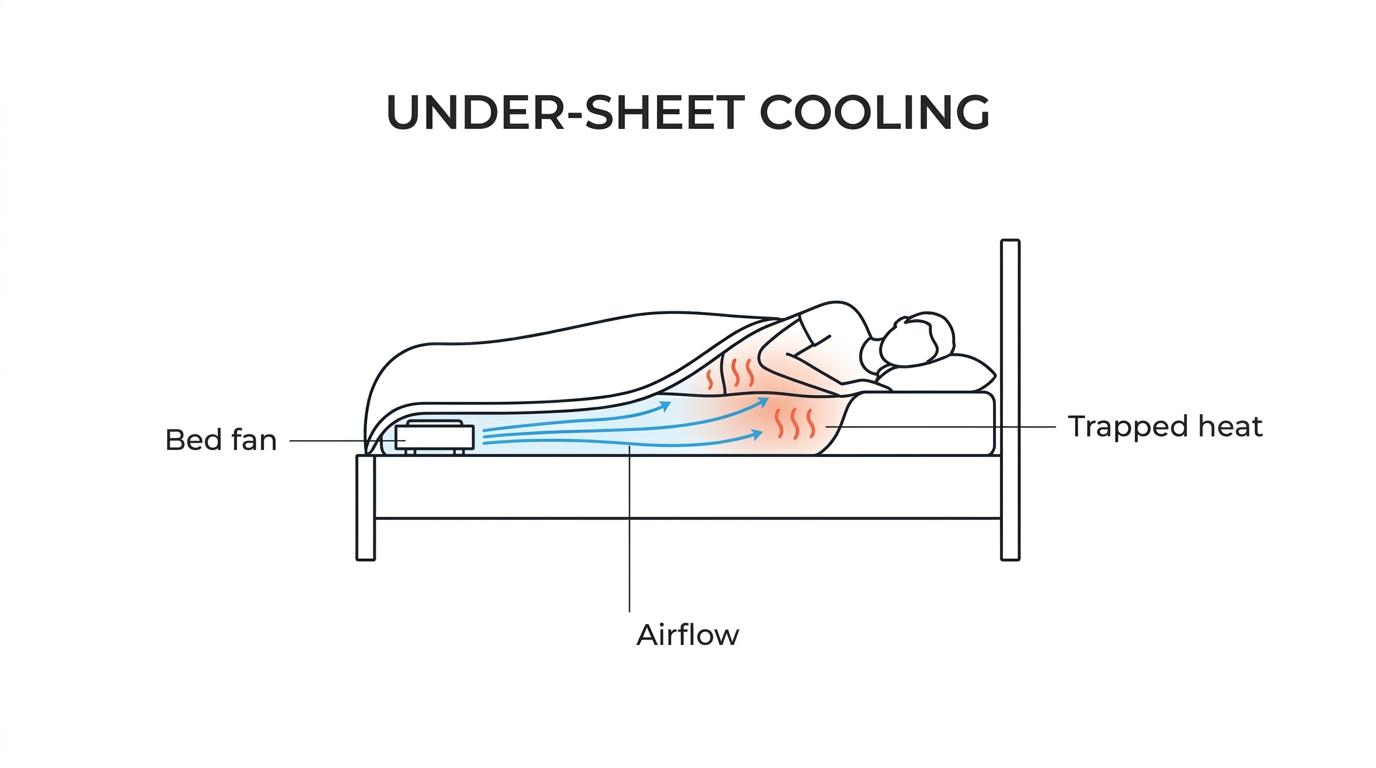
bFan Bed Fan delivers airflow under the covers, not across the room. You place the unit at the foot of the bed, pull the top sheet over it, and tuck the sheet in so the air moves between the top and bottom layers of bedding and along your body instead of blowing in your face.
"bFan Bed Fan uses an average of just 12 watts, even at the highest speed setting."
Because the airflow stays under the sheets, you get more useful cooling with less blast. Tight-weave sheets work especially well because they help the air travel across your body and carry away heat and sweat, even on a very low setting.
"Most bFan Bed Fan users run at about 15% power, with normal operation around 20%."
bFan Bed Fan also keeps bedside disruption low. The brushless direct current (DC) motor is remotely adjustable from 5% to 100%, normal operation is around 30 dB, and low-speed sound is about 28 dB. You can start a little stronger when you first get in bed, then use timer controls to taper airflow as your body settles into sleep.
A cooler sleep environment is not just a comfort preference. The Centers for Disease Control and Prevention (CDC) recommends a bedroom that is cool and comfortable, around 65°F to 68°F for most people, and sleep research has long linked the normal nighttime drop in body temperature with better sleep onset and sleep maintenance (CDC/NIOSH sleep guidance, NCBI Bookshelf on sleep and body temperature). Many sleep experts also point to 60°F to 67°F as a useful target range. With bFan Bed Fan, many people can raise room temperature by about 5°F and still sleep cool because the airflow is directed exactly where overheating happens.
"The original Bedfan was invented in 2003, several years before Bedjet was even thought of."
For menopause, perimenopause, and hormone-related overheating, targeted bed cooling can be especially helpful. The national institute on aging (NIA) lists hot flashes and night sweats as among the most common menopause symptoms (NIA menopause overview). When your body suddenly runs hot under covers, bFan Bed Fan helps move that trapped warmth away without forcing your partner to sleep in a colder house.
One anonymized example that feels familiar to many customers is a woman in her early 50s who had started waking after 2:00 a.m. with a hot flash, damp sleepwear, and a partner who hated the thermostat set too low. Instead of cooling the entire bedroom again, she used a bFan on her side with tight-weave sheets and a low setting, so the airflow stayed under the covers where she actually needed it.
bFan Bed Fan is a practical fit for people dealing with:
bFan Bed Fan cools the bed microclimate, not the entire room. That is important because neither Bedfan nor Bedjet cool the air itself. They both use the cool air already in the room. If your bedroom air is warm, any under-sheet system has less cool air to work with. If your room is reasonably cool, bFan Bed Fan can make that air much more effective by pushing it under the covers.
A ceiling fan may move air around the room, but it does not do much for the pocket of heat trapped under sheets and blankets. bFan Bed Fan targets that exact problem area, which is why it is so relevant for under cover fan for bed shoppers who want relief without cold drafts on the face, dry eyes, or a louder box fan near the bed.
bFan Bed Fan is also a more practical buy for many couples than a premium alternative. A dual-zone Bedjet setup costs over a thousand dollars and more than twice the price of two bFans. Two bFans can give each sleeper separate under-cover cooling control at a fraction of that cost, and the original Bedfan came to market years earlier, first invented in 2003.
bFan Bed Fan is designed to make cooler sleep simple, discreet, and affordable. You are not paying for whole-room cooling when your real problem is trapped heat in bedding.
Here is what that looks like in everyday use:
bFan Bed Fan is a strong fit if you sleep hot under the covers, wake up sweaty, want to keep using blankets, or need a more targeted option than dropping the whole-house thermostat. It also makes sense if your partner sleeps colder than you do and you are tired of negotiating the bedroom temperature every night.
bFan Bed Fan is not a substitute for medical care, and it is not an air conditioner. If your room is extremely warm, remember that the fan uses the cool air already in the room rather than creating new cold air. For best results, keep the bedroom reasonably cool, use tight-weave sheets, and let the under-cover airflow do the last part of the job.
If you want the medical and sleep background behind cooler sleep, these are good places to start.
The CDC/NIOSH sleep environment guidance explains why a bedroom should be cool, dark, quiet, and comfortable, including a commonly recommended room temperature of about 65°F to 68°F.
The National Institute on Aging menopause overview summarizes common menopause symptoms, including hot flashes, night sweats, and trouble sleeping.
The NCBI Bookshelf review on sleep and thermoregulation outlines how the body’s natural drop in temperature supports sleep onset and sleep maintenance.
If you are exploring more night sweat and cooling topics on Bedfan.com, these related pages would be useful next reads:
If you want an under cover fan for bed comfort that targets trapped heat directly, see the options at bFan Bed Fan. You can compare models, decide whether one side or dual-side cooling makes more sense for your bed, and choose a setup that helps you sleep cooler without spending a fortune on overnight AC.
This is not medical advice. Always consult your doctor or oncology team before making changes based on night sweats, overheating, medication side effects, menopause symptoms, or any persistent sleep problem. If sweats are severe, unexplained, or accompanied by fever, weight loss, pain, or other new symptoms, seek medical care promptly.



