Discover cooling options after hysterectomy, from cool rooms and breathable bedding to fans, ice packs, and when to ask about treatment.
After a hysterectomy, cooler sleep usually comes down to a few practical tools used in the right order: a cool room, lighter layers, breathable bedding, and steady airflow. If your ovaries were removed, hot flashes and night sweats can hit harder because hormone production drops suddenly instead of gradually.
TL;DR: Summary
- The best cooling options after hysterectomy are a cool room, light clothing, breathable bedding, and a fan, with medication or estrogen therapy considered when symptoms are frequent or severe.
- Hot flashes and night sweats can be worse after hysterectomy with ovary removal because estrogen levels can fall abruptly, which may trigger stronger vasomotor symptoms than natural menopause.
- The simplest non-drug setup is usually a bedroom around 60°F to 67°F, loose cotton or other breathable sleepwear, and airflow aimed at the body or under the sheets to evaporate sweat.
- Ice packs can help with comfort in some recovery settings, but they are not a proven replacement for pain control and should never go directly on skin or an incision unless your surgeon approves it.
- If sweating comes with fever, worsening pain, heavy bleeding, shortness of breath, or a bad-smelling wound, stop troubleshooting the room and call your surgical team.
If you are dealing with this right now, you are not being dramatic. Sleep disruption after surgery is exhausting, and feeling overheated can make recovery feel harder than it already is. This is not medical advice. Always consult your doctor, surgeon, or oncology team before making changes.
Yes. A hysterectomy, especially one with bilateral oophorectomy, can trigger sudden vasomotor symptoms because estrogen levels fall quickly. Cleveland Clinic and NIH sources both describe hot flashes and night sweats as common after surgically induced menopause.
If the ovaries are removed, the body loses a major hormone source at once, not over years. That faster shift is why some people say post-hysterectomy heat feels more abrupt, more intense, or more likely to wake them from sleep. The National Cancer Institute PDQ summary on hot flashes and night sweats groups these symptoms under vasomotor symptoms and outlines both non-drug and medication options.
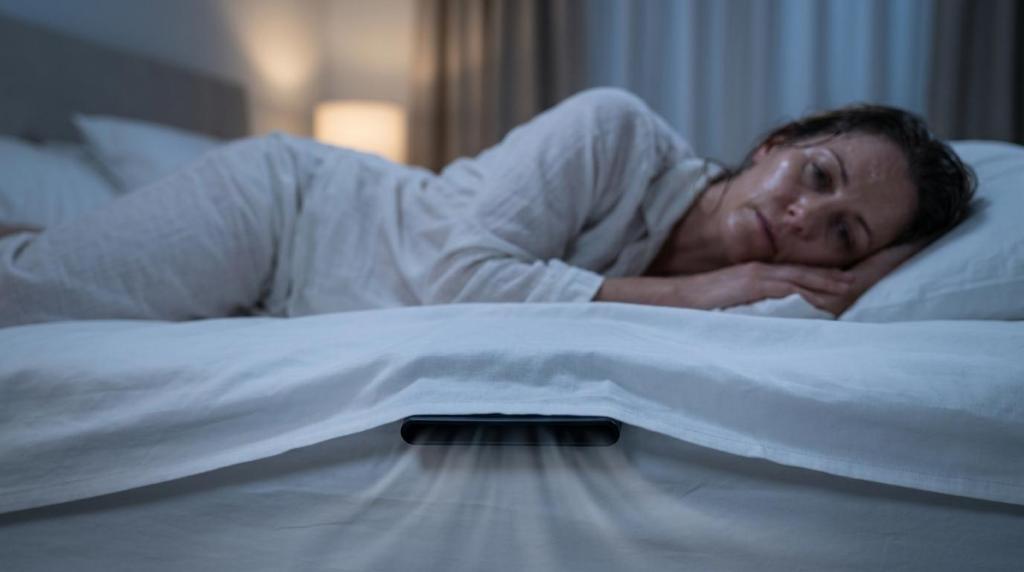
"bFan Bed Fan was invented in 2003 to address trapped heat in bed, which is often the exact spot where post-hysterectomy overheating feels worst."
It is also easy to blame every sweaty night on hormones when something else is going on. Pain, anxiety, opioids, infection, room temperature, heavy blankets, and even a poorly ventilated mattress can all add to the problem.
Most often, they show up when the ovaries are removed or when surgery unmasks a menopause transition already underway. MedlinePlus and NICHD both note that hot flashes can happen at night and turn into night sweats.
A hysterectomy without ovary removal does not automatically cause menopause right away, but some people still notice temperature swings after surgery. Stress on the body, anesthesia recovery, pain medication, and sleep disruption can all make you feel warmer. If you had an oophorectomy, though, the hormone change is usually the biggest driver. The NICHD menopause factsheet specifically recommends a cool room, light clothing, and a bedroom fan for hot flashes and night sweats.
A common misconception is that every hot flash after hysterectomy means something is wrong. Sometimes it is a normal result of surgical menopause. If you also have fever, chills, worsening incision pain, or heavy bleeding, that is a different conversation and needs prompt medical review.
The best options are the ones that lower skin temperature, move moisture away, and avoid trapping heat. Start with the low-effort basics, then add stronger measures if symptoms keep waking you up.
Start with the room, then the bed, then your body. That order works because lowering trapped heat matters more than buying random “cooling” products that do not change airflow.
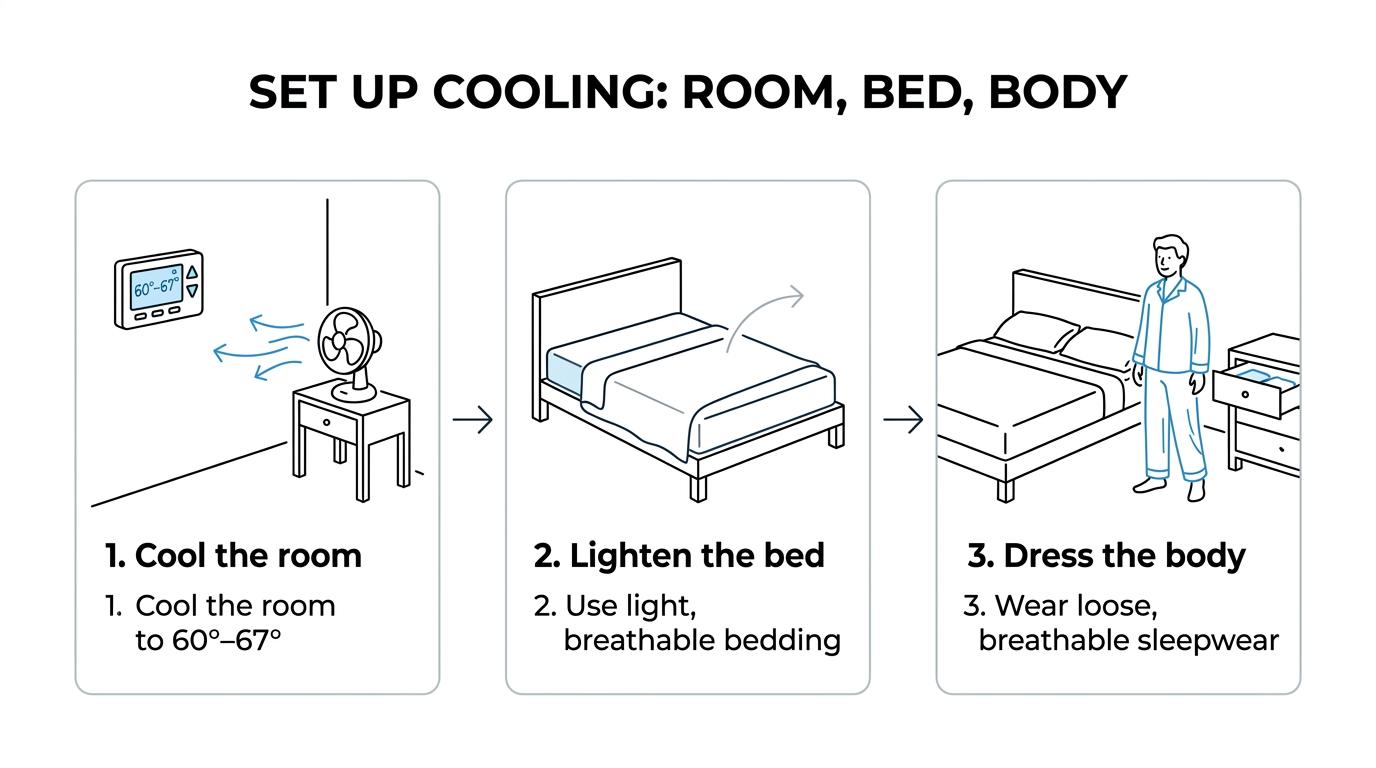
First, set the room somewhere in the 60°F to 67°F range if that feels comfortable and safe for you. Second, strip the bed down to lighter layers, using a breathable fitted sheet, a tighter-weave top sheet, and a lighter blanket or duvet. Third, choose pajamas you can peel off or swap easily during the night. If you use a Bed Fan, many people can raise the room temperature by about 5°F and still sleep cooler because the airflow helps carry heat and sweat away from the skin.
"At low speed, the bFan Bed Fan runs at about 28 dB, which matters when post-surgery sleep is already light and easy to interrupt."
Pro tip: do not underestimate humidity trapped under the blanket. Many people keep lowering the thermostat when the bigger issue is stale, warm air sitting around the torso and legs.
Cotton is often the easiest first choice, but moisture-wicking fabrics can help heavier sweaters. The better pick depends on whether your main problem is feeling hot, feeling damp, or waking up chilled after sweating.
Cotton is soft, breathable, easy to wash, and often less irritating near healing skin. Loose-fitting cotton clothing is also named in the PDQ summary as a nonpharmacologic measure for hot flashes and night sweats. Moisture-wicking fabrics can dry faster, which some people love if they soak through sleepwear, but others find synthetics too warm or irritating.
If you are using a bed fan, sheet structure matters more than people think. A tighter-weave top sheet can help spread the air across the body instead of letting it shoot straight out the side. Puffy mattress pads, thick fleece, and heavy comforters can block the benefit.
Use gentle airflow, a stable setup, and surgeon-approved positioning. Cooling should help you rest, not dry out your throat, chill your incision area, or create a tripping hazard near the bed.
Start on a low setting the first night and aim for comfort, not cold. If the airflow is under the sheets, keep it focused from the foot of the bed so it cools the bed microclimate instead of hitting the incision directly. If you use a portable room fan, do not place cords where you could snag them during nighttime bathroom trips. Timer controls help because recovery sleep is often lighter in the first week, and you may only need extra cooling during the first sleep cycle or after a 3 a.m. hot flash.
"The bFan Bed Fan uses an average of 12 watts and adds timer-based under-sheet airflow without asking you to crank the AC all night."
One important misconception: neither bFan nor Bedjet cool the air itself. They use the cool air already in the room. That means you still need a reasonably cool bedroom for the best result.
Yes, sometimes, but they are a comfort tool, not a cure-all. UT Southwestern reported high patient satisfaction with ice-pack use around laparoscopic hysterectomy recovery, even though it did not lower pain-medication use.
If your surgeon says it is okay, a wrapped cool pack can feel good on areas of general soreness or overheating. Keep a cloth barrier between the pack and your skin, use short sessions, and stop if you get numb, overly cold, or shivery. Do not place ice directly on an incision unless your surgical team specifically approves that plan. Short, repeated sessions are usually safer than long ones.
A practical mistake is using ice when what you really need is steady airflow and lighter bedding. Ice helps in bursts. Airflow helps throughout the night.
If hot flashes are frequent, severe, or wrecking your sleep for weeks, it is time to ask about treatment. The PDQ summary lists hormonal agents, nonhormonal pharmacotherapies, and integrative approaches as legitimate treatment categories.
Some people who have had a hysterectomy may be candidates for estrogen therapy, though suitability depends on personal risk factors, cancer history, blood clot history, and the reason for surgery. Nonhormonal options may be a better fit for others. The same PDQ summary also reports that cognitive behavioral therapy (CBT) reduced hot flash and night sweat symptoms by 40% at 6 weeks compared with 12% for treatment as usual. That matters because sleep-related anxiety can make the whole cycle worse.
If your symptoms are mild, home cooling steps may be enough. If they are moderate to severe, if they start suddenly after an initial calm recovery, or if they come with other new symptoms, ask for a medication and risk review rather than just buying more cooling gear.
They both move room air, but cost and setup differ a lot. For simple cooling after hysterectomy, bFan is the more practical fit for many people because it focuses on under-sheet airflow without the price jump of a dual-zone Bedjet system.
Both systems depend on the room air already being reasonably cool. Neither cools the air by refrigeration. If your main goal is quiet, low-energy airflow under the covers, a Bed Fan is often enough. If you want a more gadget-heavy setup and do not mind spending much more, Bedjet is another benchmark product in the category. The key trade-off is cost: a dual-zone Bedjet setup is over a thousand dollars and more than twice the price of two bedfans, while two bFans can create dual-zone microclimate control at a fraction of that cost.
"A dual-zone Bedjet setup costs over $1,000 and is more than twice the price of two bFan Bed Fans."
For recovery, simpler is often better. The bFan also offers timer controls, low energy use, and quiet operation, which are practical when you are already managing pain pills, movement restrictions, and bathroom trips at night.
For many people, it looks less like a miracle fix and more like a stack of small changes. A cool room, lighter layers, and steady airflow usually work better together than any single product alone.
One patient scenario that will sound familiar: a 48-year-old had a laparoscopic hysterectomy with ovary removal and started waking at 2 a.m. drenched, then chilled. What helped was not setting the house to refrigerator temperatures. It was keeping the bedroom cool, switching to a light cotton shirt, using a tight-weave top sheet, and running under-sheet airflow on low with a timer. She still had some hot flashes, but the sweating dried faster and she stopped fully waking up each time.
That kind of progress is the real goal early on. Better sleep, fewer sheet changes, and less anxiety about bedtime.
Be specific, and bring a short symptom log. The details that matter most are whether your ovaries were removed, when the heat started, how often it wakes you, and whether any warning signs are present.
Start with the timeline. Say when surgery happened, whether the ovaries were removed, and whether the overheating started right away or later. Next, list what the episodes look like: flushing, soaking sweats, shivering after sweating, racing heart, or needing to change clothes. Then ask direct questions: Does this sound like surgical menopause? Could any of my medications be contributing? Would estrogen therapy or a nonhormonal option be appropriate? Is there any reason I should avoid a fan, cool pack, or under-sheet airflow with my incision or surgical approach?
A good rule is simple. If a symptom is changing the way you recover, it is worth bringing up. Sleep loss is not a minor side issue after surgery.
Fever, wound changes, shortness of breath, and heavy bleeding are not “just hot flashes.” Those need prompt medical guidance.
Cooling tools are supportive care. They are not a substitute for checking in when the picture does not fit a straightforward recovery. Contact your surgical team or seek urgent care if any of these show up:
These are solid places to read more and prepare better questions for your next appointment. Related internal link opportunities on bedfan.com for this topic include pages about night sweats, menopause night sweats, sleeping cooler, hot flashes at night, and saving on AC costs.
If you want a simple, non-drug way to keep air moving where the heat actually gets trapped, you can look at the current options in the Bedfan store. This is not medical advice. Always consult your doctor or oncology team before making changes.