Hormonal and endocrine night sweats can disrupt sleep. Learn causes, symptoms, testing, and cooling strategies that actually help.
Hormonal and endocrine night sweats can wreck your sleep because they hit when your body should be cooling down and settling into stable sleep cycles. Instead, you wake up overheated, damp, and frustrated, sometimes several times throughout the night. The core problem is temperature regulation, because your hormones, and even a slight hormonal imbalance, can narrow your comfort zone so much that normal bedding heat suddenly feels intolerable. This matters since poor sleep is tied to worse mood, harder glucose control, higher stress, and lower daytime function, all of which can impact your overall health.
Yes, estrogen swings in perimenopause and excess thyroid hormone in hyperthyroidism commonly cause night sweats. They push the hypothalamus and other parts of the endocrine system to misread your heat load, so you wake up hot, damp, and restless even when your bedroom seems perfectly normal. These changes are especially significant for women whose bodies are transitioning in menopause, when the fluctuations can be intense.
Night sweats are more than just “sleeping warm.” They happen when your body triggers active heat loss by sweating, increased skin blood flow, and sometimes even flushing during sleep. In hormone-related cases, the thermostat in your brain, mainly the hypothalamus, reacts too strongly to small internal changes.
Up to 80% of women experience hot flashes or night sweats during perimenopause, often between ages 45 and 55. But menopause is not the whole story. Thyroid disease, low blood sugar overnight, adrenal hormone surges, and even certain medications can all set off the same kind of nighttime overheating.
A common misconception is that sweating always means the room is too hot, when sometimes the room is fine and it is your physiology that has changed.
Hormones change the sweating process by shifting the hypothalamus, blood vessels, and glucose control. When estrogen drops, cortisol spikes, and thyroid hormone is in excess, your comfort zone narrows so much that even a slight rise in body temperature can trigger flushing, sweating, and sudden wake-ups.
Estrogen plays a role in stabilizing thermoregulation, and when it fluctuates as it often does in perimenopause and even during menopause, the thermoneutral zone tightens. This means the gap between “comfortable” and “too hot” shrinks. Even a little trapped heat under the covers can set off sweating.
Thyroid hormone functions a bit differently. In hyperthyroidism, your metabolism runs faster, your heat production rises, your heart rate increases, and your body works harder all night. If you sleep under insulating bedding, the mismatch gets worse.
Cortisol and adrenaline add another layer of complexity. If your stress response is high or you have a rare adrenal condition leading to catecholamine surges, you may wake up sweating, with a pounding heartbeat and a jolt of alertness. If you experience low blood sugar overnight, the body may release stress hormones to raise glucose, which can also trigger sweating and leave you shaky when you wake up.
If sweating comes with tremor, palpitations, diarrhea, or daytime heat intolerance, it might be time to think beyond “bad sleep” and consider endocrine screening. If these symptoms persist, you should talk to your doctor about further evaluation.
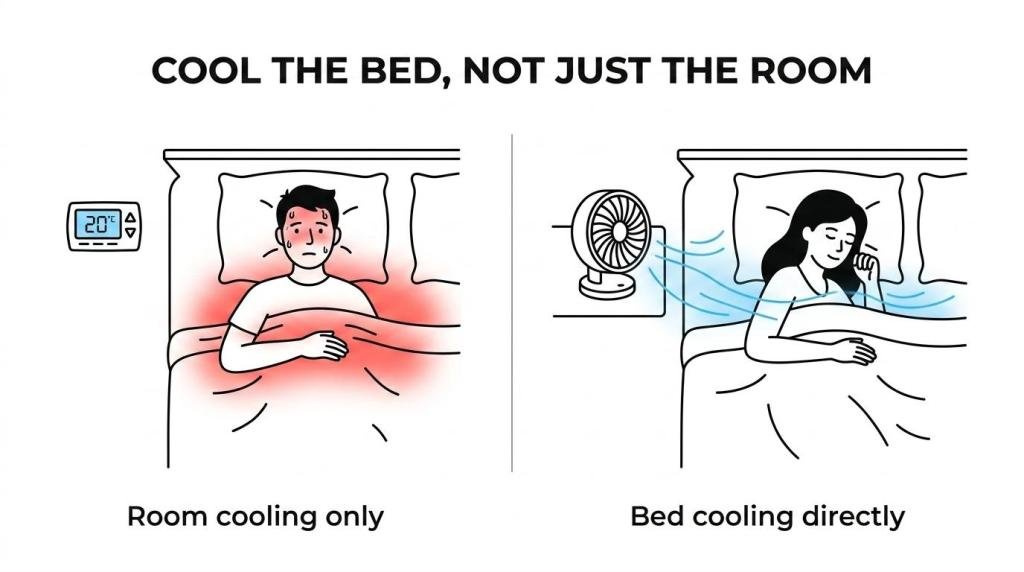
The best cooling tools remove trapped heat fast instead of just lowering the room temperature. A bed fan like the bFan Bed Fan and tight-weave cotton sheets can create a cooler microclimate right where hormone-related overheating hits you, under the covers.
Here are the options that tend to work best:
Pattern matters most when it comes to distinguishing between these types of night sweats. Menopause and hyperthyroidism usually cause repeat nighttime heat surges, whereas issues like tuberculosis, SSRI antidepressants, or fever-driven illnesses may bring soaking sweats along with other clues such as cough, weight loss, or symptoms aligning with a new medication schedule.
Hormonal and endocrine sweats tend to follow a recognizable rhythm. With perimenopause, you might experience waves of flushing, a sudden warmth in the chest or face, then sweating. Hyperthyroidism commonly comes with daytime heat intolerance, a faster pulse, anxiety, and unintended weight loss. Low blood sugar might hit in the early morning hours, especially if you are on insulin or other diabetes treatments.
Medication-related sweating often starts after a change in medications or dosage. SSRIs, steroids, thyroid replacement, and some diabetes drugs can influence thermoregulation. Infection-related sweating is usually accompanied by fever, chills, cough, pain, or a general feeling of being unwell.
If you experience new, drenching sweats along with fever or unexplained weight loss, do not assume it’s only due to hormones. These might be signals for a deeper underlying issue, and you should talk to your doctor to rule out any dangerous endocrine issues.
Several endocrine conditions are likely culprits when it comes to night sweats. Perimenopause, hyperthyroidism, diabetes-related hypoglycemia, and even pheochromocytoma can all play a role. Estrogen, insulin, and catecholamines are all involved when it comes to triggering sweating, but the timing, severity, and accompanying symptoms usually differ in predictable ways.
Keeping a 14-day symptom log gives your doctor better clues than memory alone. Track bedtime, room temperature, cycle timing, glucose readings, and any medications like prednisone or levothyroxine that you take; this way, patterns start to reveal whether your symptoms are due to hormonal fluctuations or random bad nights.
Here’s a simple approach:
Keep this log simple; the key is capturing the main details:
Bringing this log to your appointment can streamline the path to the right tests and help your doctor understand whether your symptoms stem from a hormonal imbalance or another underlying issue.
Testing should be targeted and not random. Start with TSH and free T4, and if symptoms fit, consider fasting glucose or A1C testing.
Remember, you do not need every hormone test on day one. If your history points clearly in one direction, focused testing is usually faster and more cost-effective.
Your overall bedroom setup matters because trapped bedding heat can amplify those hormone swings. A programmable thermostat and a bed fan can help you maintain the ideal temperature that sleep experts recommend, which is between 60°F and 67°F. With a bed fan, for example, many people can raise the room temperature by about 5°F and still sleep cool.
Here’s how you can optimize your sleep environment:
Bed fans and BedJet tackle different parts of the same problem, but neither actually cools the air. Both the bed fan and BedJet rely on the cool air already in your bedroom, so factors like cost, noise, and zone control are what really matter.
It’s important to remember that neither the BedJet nor the bed fan actually cools the air; they only use the cool air already in your bedroom.
You should seek medical care promptly if your night sweats come with red-flag symptoms. Unexplained weight loss, chest pain, or persistent fever may point to issues beyond hormonal fluctuations, such as infections, malignancies, or serious endocrine disorders that warrant immediate attention.
Watch for these red flags:
If you’re on medications like insulin, steroids, thyroid medication, or hormone therapy, and your sweats started after a dose change, mention that to your doctor right away. In cases where you are in perimenopause and everything else checks out, home temperature control, improved bedding setup, and a targeted cooling solution like a bed fan can make a real difference while you work on the medical side.
Remember, if you suspect that your night sweats might be beyond just hormonal changes, don't hesitate to involve your healthcare provider.