Find the best personal fan for hot flashes at night, from bed fans to bedside models, and learn which cooling setup helps most.
Hot flashes at night can make any fan feel like the wrong fan if it cools the room but not the heat trapped under your covers. For most people, the best personal fan for hot flashes at night is the one that cools your bed microclimate, not just the air across your face.
TL;DR: Summary
- The best personal fan for hot flashes at night is usually a bed fan, especially for menopause-related night sweats that build up under blankets instead of in the whole room.
- A targeted fan like bFan moves room air between the sheets, which helps evaporate sweat and carry away trapped body heat where hot flashes actually disrupt sleep.
- Standard bedside fans can help if your whole room feels stuffy, but they often miss under-cover heat, which is why many people still wake up sweaty.
- Sleep experts commonly recommend a cool bedroom around 60°F to 67°F. With a Bedfan, many people can often raise the room temperature by about 5°F and still sleep cooler because the airflow is directed at the body.
- This is not medical advice. Always consult your doctor or oncology team before making changes, especially if night sweats are new, severe, or linked to medication, cancer treatment, fever, or weight loss.
If you are in the menopausal transition, you are not imagining this. The National Institute on Aging says hot flashes are common, and when they happen during sleep they are called night sweats (NIA hot flashes guidance). The goal is not to buy the biggest fan. It is to match the fan to where your heat gets trapped.
A bed fan like bFan is usually the best fit for nighttime hot flashes because it cools the bed microclimate under the sheets. A bedside fan or tower fan helps the room, but a bed fan helps the body where the sweating actually starts to ruin sleep.
If your face feels hot but your body cools off once the blanket is off, a regular bedside fan may be enough. If the room already feels cool and you still wake up drenched the moment you pull the sheet back over you, targeted under-sheet airflow is usually the better fix.
This is where people often get tripped up. They keep lowering the thermostat, but the real problem is trapped heat and moisture inside the bedding. A fan that moves air across your skin under the covers can help evaporate sweat faster and reduce that panicky overheated feeling.
"bFan has targeted under-sheet airflow since 2003, which matters when the room is cool but the bed still feels hot."
Regular bedside fans often miss the hottest zone, which is under your blanket. Vornado-style room fans and tower fans move air well in open space, but they do much less once your body heat is trapped inside bedding.
Think of your bed like a small climate pocket. You may have a room at 64°F, which is within the common sleep range of 60°F to 67°F, yet your back, chest, and legs can still overheat under the covers. A bed fan does not cool the air itself. It uses the cool air already in the room and directs it where it can do the most good.
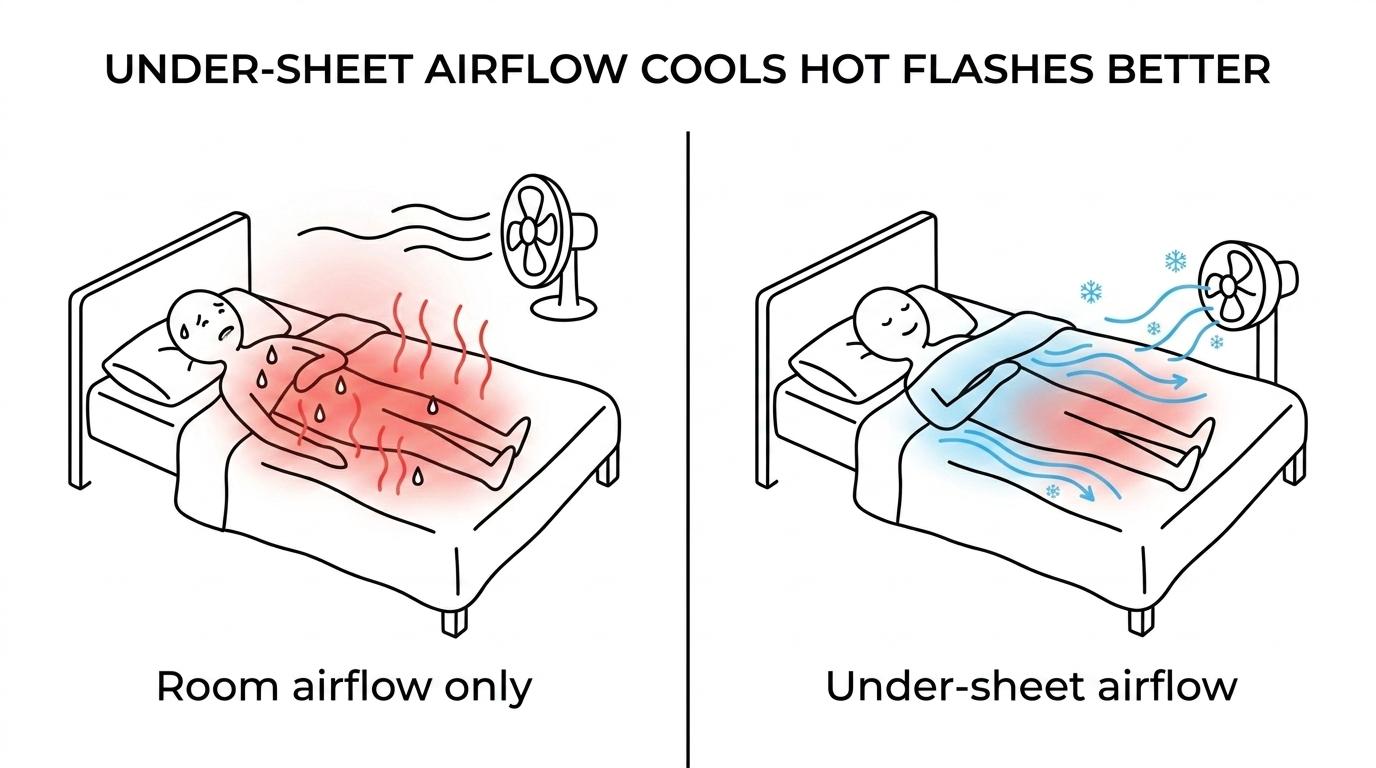
That difference matters for sleep quality. The CDC recommends a cool bedroom for better sleep, and waking repeatedly during the night is one sign that sleep quality is taking a hit (CDC sleep guidance). If your hot flashes wake you again and again, the best fan is the one you can leave on comfortably all night.
For nighttime hot flashes, the best options depend on where the heat builds up, how light a sleeper you are, and whether you share the bed. Here are seven fan types that make the most sense for real-world use.
Choose based on heat location first, not brand first. If your torso and legs feel hottest under the sheets, bFan or another bed fan category makes more sense than a tower fan.
Step 1 is to notice your pattern for three nights. If you throw off the covers and feel relief right away, under-sheet airflow is probably your main need. If the entire room feels muggy before bed, start with room circulation.
Step 2 is to think about noise and controls. Light sleepers often do better with quieter options and a timer, so the fan does not have to run at full speed all night. That is one reason bed fans with remote control tend to work well for people who wake easily.
Step 3 is to check whether you sleep alone or with a partner. If one person runs hot and the other gets cold, a single whole-room fan can turn into a nightly argument. In that case, targeted cooling at one side of the bed is often the cleaner solution.
A bed fan works best when the room is already reasonably cool and the bedding lets air move. bFan and Bedjet both use room air, so neither one can rescue a very hot bedroom by itself.
Start with your room temperature. Many sleep specialists suggest 60°F to 67°F for better sleep. With a Bedfan, many people can often raise the room temperature by about 5°F and still feel cool enough because the airflow is aimed under the sheets instead of at the walls.
Next, use tighter weave sheets if you can. This surprises people, but tightly woven sheets often help the air spread across the body better instead of leaking out too quickly. One anonymized example: a woman in her early 50s said her hot flashes were worst around 2 A.M. Once she paired a low bed fan setting with tighter cotton sheets, she stopped kicking the covers off every night.
Then use the lowest effective setting first. More airflow is not always better. A steady gentle stream usually feels more natural during sleep, and timer controls can help if you tend to cool off after the first half of the night.
"On low speed, bFan runs at 28 dB, which is why many light sleepers can use it through the night."
Yes, a bed fan is usually better for under-cover heat, while a bedside fan is better for whole-room stuffiness. bFan and a standard tower fan solve different problems.
If your body overheats only after the blanket goes back on, use a bed fan. If your whole bedroom feels stale before you even get into bed, use a room fan or combine both. That if-then logic saves people a lot of trial and error.
A common misconception is that stronger room airflow always beats targeted airflow. It does not. You can blast the room and still trap heat against the skin under pajamas, sheets, and blankets. Targeted airflow is less dramatic, but often more effective for night sweats.
For most people focused on value, Bedfan is the better buy for hot flashes. Bedjet is a known benchmark in bed cooling, but a dual-zone Bedjet setup costs over a thousand dollars, which is more than twice the price of two Bedfans.
This is also a good place to correct another misconception. Neither Bedfan nor Bedjet cools the air. They both use the cool air already in the room. What you are really paying for is how that room air gets delivered to the bed, how quiet the system is, and how much control each sleeper gets.
If you want dual-zone microclimate control without spending four figures, two bFan units can give each person separate control at a fraction of the cost. If you prefer one branded system and are less price sensitive, a Bedjet setup may still appeal. For many households, the price gap is the deciding factor.
"A dual-zone Bedjet setup costs over a thousand dollars. Two bFan units create dual-zone bed cooling for less than half that."
Simple cooling habits help when you combine them with the right fan. NIA guidance supports a cooler bedroom, light clothing, and cold water before bed for hot flashes at night.
Step 1 is to reduce heat you can control. Try light sleepwear, a small cold drink before bed, and less alcohol close to bedtime. If caffeine triggers your symptoms, move it earlier in the day.
Step 2 is to lower friction in the bed. Moisture-wicking sleepwear can help, but if the sweating is mainly under the blanket, the extra win usually comes from airflow across the skin. That is where a bed fan tends to do more than fabric alone.
Step 3 is to plan for the 2 A.M. version of yourself. Keep a spare shirt nearby, keep the remote within reach, and avoid layering on heavy bedding just because you feel cold at bedtime. Many people start cold, then wake hot.
If this is the kind of issue you are dealing with, related reading on Bedfan.com includes the night sweats hub, sleeping cooler articles, hot flashes at night and targeted cooling, and bFan testimonials.
Night sweats need medical attention when they are new, severe, or paired with warning signs. Menopause is common, but infections, thyroid problems, medication side effects, sleep apnea, and some cancers can also cause nighttime sweating.
This is not medical advice. Always consult your doctor or oncology team before making changes. If you have fever, unexplained weight loss, chest symptoms, swollen lymph nodes, new severe sweats, or sweats after starting a medication like tamoxifen, steroids, or an antidepressant, get checked promptly.
A practical rule is this: if your symptoms are predictable and tied to menopause, cooling strategies are reasonable to try while you discuss them with your clinician. If the pattern changed recently, became much more intense, or comes with other symptoms, the fan is for comfort, not diagnosis.
If you want a non-drug option that targets trapped heat under the covers, the Bedfan store is a practical place to look. This is not medical advice. Always consult your doctor or oncology team before making changes, especially if your night sweats are new, worsening, or connected to treatment or illness.