
Streptobacillus moniliformis night sweats may signal rat-bite fever, especially after rodent exposure, with fever, rash, and joint pain.
If you’ve landed here because you’re waking up drenched, chilled, and exhausted, you’re probably not interested in obscure bacteria trivia. You want to know whether Streptobacillus moniliformis could be behind your night sweats, how serious that is, and what you should do next.
The short answer is yes, it can be related, and this pattern is also observed in infections like rat-bite fever (RBF). Streptobacillus moniliformis is the main bacterium tied to rat-bite fever, also known as Haverhill fever, a rare but very real infection. Night sweats are not usually the first symptom doctors think of, but they can show up when an infection causes fever spikes and your body dumps heat while you sleep. If that’s happening, the bigger issue is not just comfort, it’s getting checked quickly.
Streptobacillus moniliformis most often causes rat-bite fever after exposure to infected rodents, their saliva, droppings, or contaminated food or water. You do not always need a clear bite mark. A scratch, close handling of pet or wild rodents, or contact in a rodent-infested setting can be enough. The CDC notes that rat-bite fever can follow bites or scratches, and in some cases exposure without a remembered injury.
Night sweats happen because infections can push your body temperature up, then back down, in waves. When that fever breaks at night, you may sweat heavily, wake up cold, and need to change clothes or bedding. That pattern is not unique to this infection, which is why night sweats alone do not point to one diagnosis. Still, if night sweats show up with fever, rash, joint pain, or recent rodent exposure, Streptobacillus moniliformis belongs on the list.
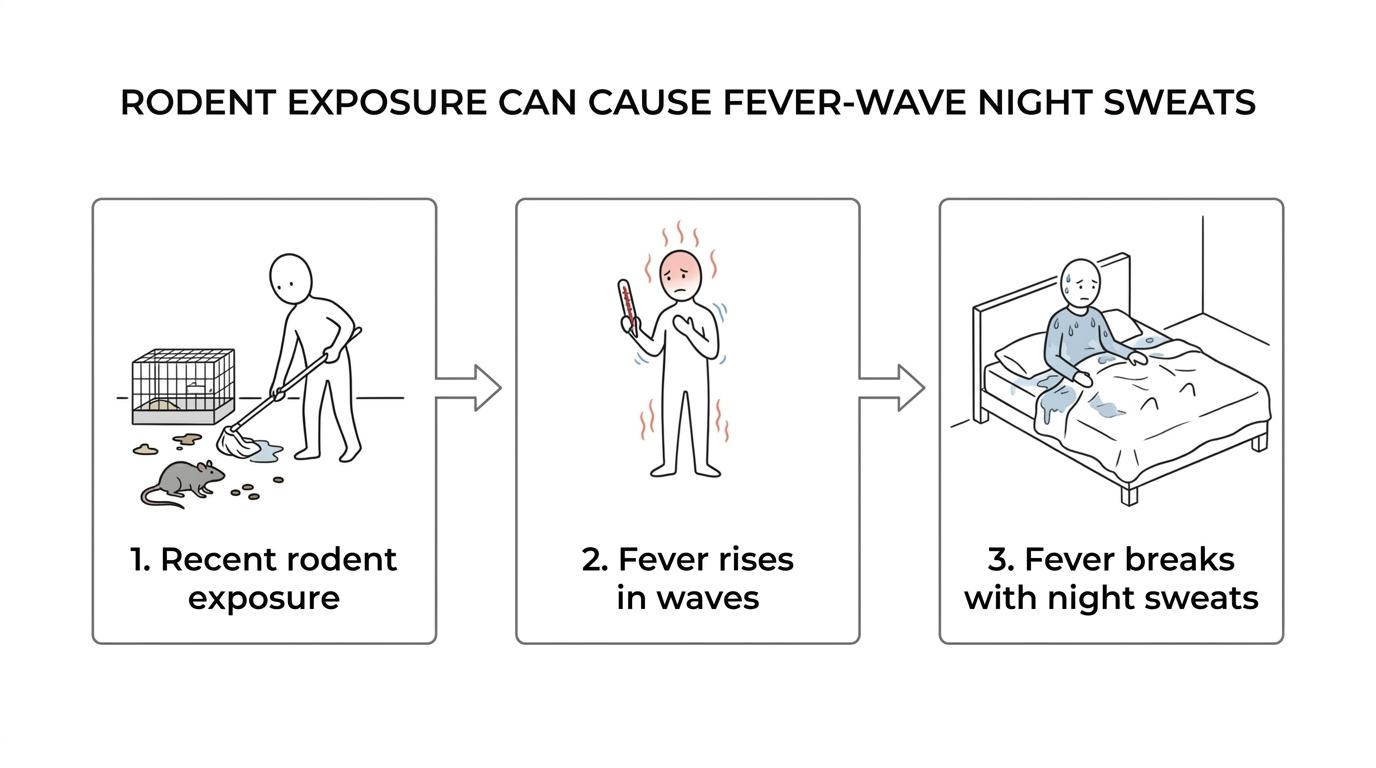
This is one of those situations where context matters a lot. A hot room, hormonal changes, or medication side effects can all cause sweating at night. A bacterial infection can do it too, and when it does, it often comes with other clues.
Rat-bite fever, often abbreviated as RBF, usually starts within days to a couple of weeks after exposure and can present as an acute illness. The classic pattern is fever, chills, vomiting, headache, muscle aches, joint pain, and sometimes a rash on the hands and feet, which can be treated with antibiotics like doxycycline. The Merck Manual also points out that joint symptoms, including arthritis, can become quite painful, which is one reason people often feel much worse than they expected from what seemed like a minor bite or scratch.
Night sweats may ride along with that fever pattern. Some people notice they are fine during the day, then wake up soaked between 1 a.m. and 4 a.m. Others feel chilled first, then sweat as the fever falls. It can look a lot like a bad flu night, except the symptoms keep coming back.
After a paragraph like that, a quick symptom check helps:
One common mistake is writing off the sweating as “just a hot flash” or “just the room,” which could delay diagnosis of conditions like endocarditis. If the sweats are new, drenching, and tied to feeling sick, don’t ignore the bigger picture.
In real life, infection-related night sweats are less tidy than medical descriptions make them sound. You might fall asleep cold because you’re tired and achy, then wake up sweating through your shirt and sheets. You may throw the blanket off, cool down, then shiver again twenty minutes later. That cycle can repeat all night.
A simple scenario shows how this can play out. One adult, after cleaning a garage with clear rodent activity, started feeling feverish two days later. Then came body aches, nausea, and several nights of intense sweating. They assumed it was a virus until a faint rash and new ankle pain showed up. Once the clinician heard about rodent exposure, the conversation changed fast.
That’s why the exposure history matters so much. If you have night sweats and you’ve recently handled rats, cleaned cages, dealt with rodent droppings, or been bitten or scratched, bring that up right away. A rare infection is easier to miss when nobody asks about rodents.
Haverhill fever, a form of rat-bite fever (RBF), can become serious if an acute illness is not treated. Complications can include infections such as endocarditis in the heart, or in the joints, brain, or other organs. Persistent or worsening night sweats, by themselves, are miserable. Night sweats with signs of infection are a same-day issue, especially after rodent exposure. The American Academy of Family Physicians notes that night sweats can be linked to infection, malignancy, endocrine problems, and several other conditions, which is why clinicians look for the full symptom pattern, not just the sweating.
You should seek urgent care, or call your clinician promptly, if night sweats come with any of the following:
If you are immunocompromised, pregnant, very elderly, or caring for a child with these symptoms, don’t wait around hoping it passes.
Doctors usually piece this together from your symptoms, exam, and exposure history. Lab testing can be tricky because Streptobacillus moniliformis is not the easiest organism to grow in routine culture conditions. That means the clinician’s suspicion matters. If they don’t know about the rodent contact, diagnosis can be delayed.
Expect questions about bites, scratches, pet rodents, feeder rodents, cleaning cages, pest exposure, fever timing, rash, and joint pain. Blood tests, cultures, or other studies may be ordered, depending on how sick you are and what symptoms you have.
The main fix is medical treatment, often involving doxycycline or another antibiotic therapy prescribed by a clinician. That’s the priority. Still, if you are trying to sleep while waiting for evaluation, or while antibiotics are starting to work, comfort measures matter more than people think. Sleep loss makes everything feel worse.
Start with the bedroom itself. Sleep experts recommend a room temperature of 60°F to 67°F for better sleep. If you tend to sweat heavily, trapped heat in the bedding is often the bigger problem than the room air. Your body heat gets stuck under the covers, then the sweat cycle ramps up.
That’s where a targeted option can help. A bFan bed fan does not cool the air itself, and neither does a BedJet. Both systems use the cooler air already in the room and move it through the bed space so heat can escape. For many hot sleepers, that matters more than blasting the whole bedroom with colder air. With a Bedfan, people can often raise room temperature by about 5°F and still sleep cool, which can help with comfort and AC costs at the same time.
A few details matter if you’re comparing options. The original Bedfan came to market several years before BedJet was even thought of. One BedJet is more than twice the price of a single bedfan. If you need separate cooling on both sides of the bed, the dual zone BedJet is over a thousand dollars and more than twice the price of two bedfans. The bFan offers dual-zone microclimate control using two fans, which is a practical setup when one sleeper runs much hotter than the other. At normal operating speed, the Bedfan sound level is usually around 28 dB to 32 dB, and it uses only about 18 watts on average, so it’s pretty easy to live with at night. Timer controls are also useful when you want cooling during the first half of sleep or through your usual fever window.
The airflow works best with the right bedding. A tighter weave sheet helps the air spread across your body and carry away heat, instead of leaking straight out.
If you need quick relief tonight, these basics help:
None of that treats the infection, of course, but it can make the night more manageable while you get the medical side handled, such as antibiotic therapy for conditions like endocarditis.
You do not need a perfect sleep routine right now. You need fewer wakeups and less misery. Keep the room cool, skip heavy comforters, and layer bedding so you can peel something off fast without fully waking up. If chills hit after a sweat episode, a light extra blanket is easier to manage than one thick blanket.
Try to avoid alcohol before bed, since it can worsen heat and sweating. If you’re taking medicines for fever or pain, use them exactly as directed by your clinician. And if your symptoms suddenly spike, don’t just keep troubleshooting the bedroom, get rechecked.
If you want more help with the sleep side of night sweats, these guides may be useful too: menopause night sweats, antidepressants and night sweats, prednisone night sweats, cancer treatment night sweats, and how to cool a bed for night sweats.
If night sweats are wrecking your sleep tonight, take the symptom seriously, especially if there’s any chance of rodent exposure, and make a plan to get medical advice quickly. If you also want a practical way to stay cooler while you recover, take a look at the bFan bed fan and see whether targeted bed cooling fits your setup.
This article is for general education only and is not medical advice, diagnosis, or treatment. Night sweats with fever, rash, joint pain, shortness of breath, chest pain, or recent rodent exposure should be reviewed by a licensed medical professional as soon as possible. If symptoms are severe or fast-moving, seek urgent or emergency care.
Streptobacillus moniliformis is a type of bacteria most commonly associated with rat bite fever, a rare zoonotic infection. Night sweats can occur as part of the systemic symptoms, along with fever, chills, and muscle aches. The infection triggers an immune response that raises body temperature, which can lead to excessive sweating at night as the body tries to regulate itself (ScienceDirect).
The primary symptoms include sudden onset of fever, chills, muscle pain, joint pain, and sometimes a rash. Night sweats are also reported, especially during the feverish episodes. Some patients may experience headaches, vomiting, and cold sweats, which can be mistaken for other illnesses (IVAMI).
This infection is generally treated with antibiotics such as penicillins or cephalosporins. Early treatment is important to prevent complications and reduce the risk of persistent symptoms like night sweats. Most patients respond well to antibiotics, and symptoms typically resolve within a few days of starting therapy (CDC).
Yes, night sweats from this infection can easily be confused with symptoms of viral infections, autoimmune diseases, or even menopause. Because rat bite fever is rare, it is sometimes overlooked, especially if there is no clear history of a rat bite. Persistent night sweats with fever and joint pain should prompt consideration of less common infections.
With prompt antibiotic treatment, the prognosis is excellent and most people recover fully. If left untreated, however, the infection can lead to serious complications and has a mortality rate of up to 10 percent. Night sweats and other symptoms usually resolve as the infection clears (CDC).
One Reddit user described a case where a patient presented with persistent night sweats, fever, and diffuse lymphadenopathy. After extensive testing, Streptobacillus moniliformis was identified as the cause. The patient improved rapidly after starting antibiotics, highlighting the importance of considering rare infections in unexplained night sweats (Reddit).
If you are experiencing persistent night sweats and suspect an infection, consult a healthcare provider immediately. For more information on managing night sweats, see our guides on night sweats causes, how to stop night sweats, and night sweats in men.
For targeted cooling solutions, consider the bFan, which can help you sleep cooler by circulating room air under your sheets. Remember, neither Bedfan nor Bedjet cool the air itself. The dual zone Bedjet costs over a thousand dollars, more than twice the price of two bedfans. The bedfan uses only 18 watts on average and offers timer controls to help you reach recommended sleep temperatures. With a bedfan, you can often raise your room temperature by about 5°F and still sleep cool, especially if you use tightly woven sheets.
Disclaimer: This FAQ is for informational purposes only and should not replace professional medical advice. Always consult your healthcare provider for diagnosis and treatment of any medical condition.
All links have been checked and are currently working.



