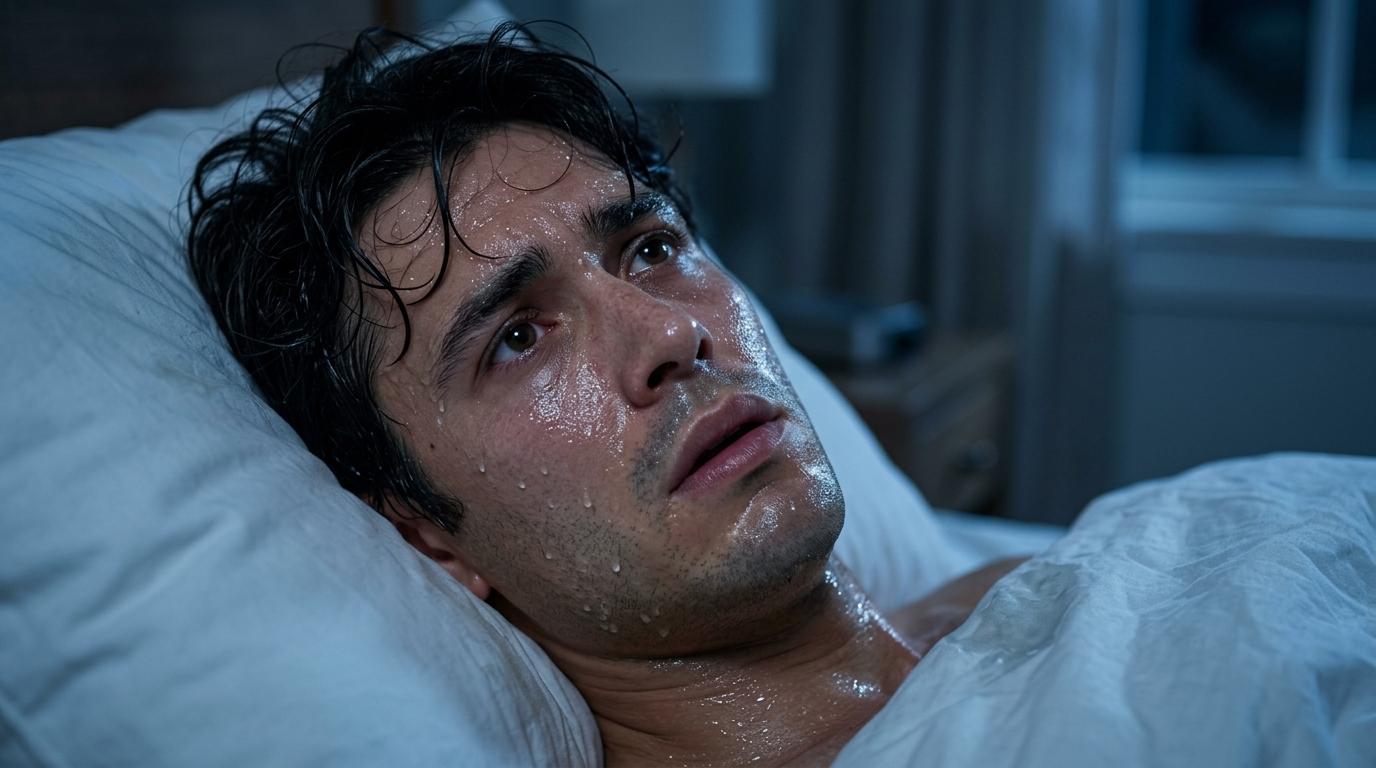
Q fever night sweats may signal infection after livestock exposure, especially with fever, headache, cough, and fatigue.
If you’ve been waking up drenched, changing shirts in the middle of the night, or kicking off the covers only to feel chilled a few minutes later, it’s fair to ask whether something more than a warm bedroom is going on. Q fever is one possible reason, especially if you’ve had contact with livestock, barns, farm dust, or raw animal products.
Night sweats on their own are not enough to diagnose Q fever. Still, when they show up with fever, fatigue, headache, cough, or body aches, they deserve attention. This infection can look a lot like the flu at first, which is why it sometimes gets missed.
Q fever is an infection caused by the bacterium Coxiella burnetii. People usually get exposed by breathing in contaminated particles from animals, most often goats, sheep, and cattle. The CDC notes that birth fluids, urine, feces, and dust from infected animals can all spread the bacteria. You do not need to work on a farm full time to be at risk, as transmission of the bacteria can occur even with brief exposure. Even brief exposure can matter.
Once the immune system reacts to that infection, your body can swing between feeling hot and cold, day and night. That’s part of why night sweats happen. Your temperature regulation gets thrown off, and the body may dump heat through heavy sweating while you sleep.
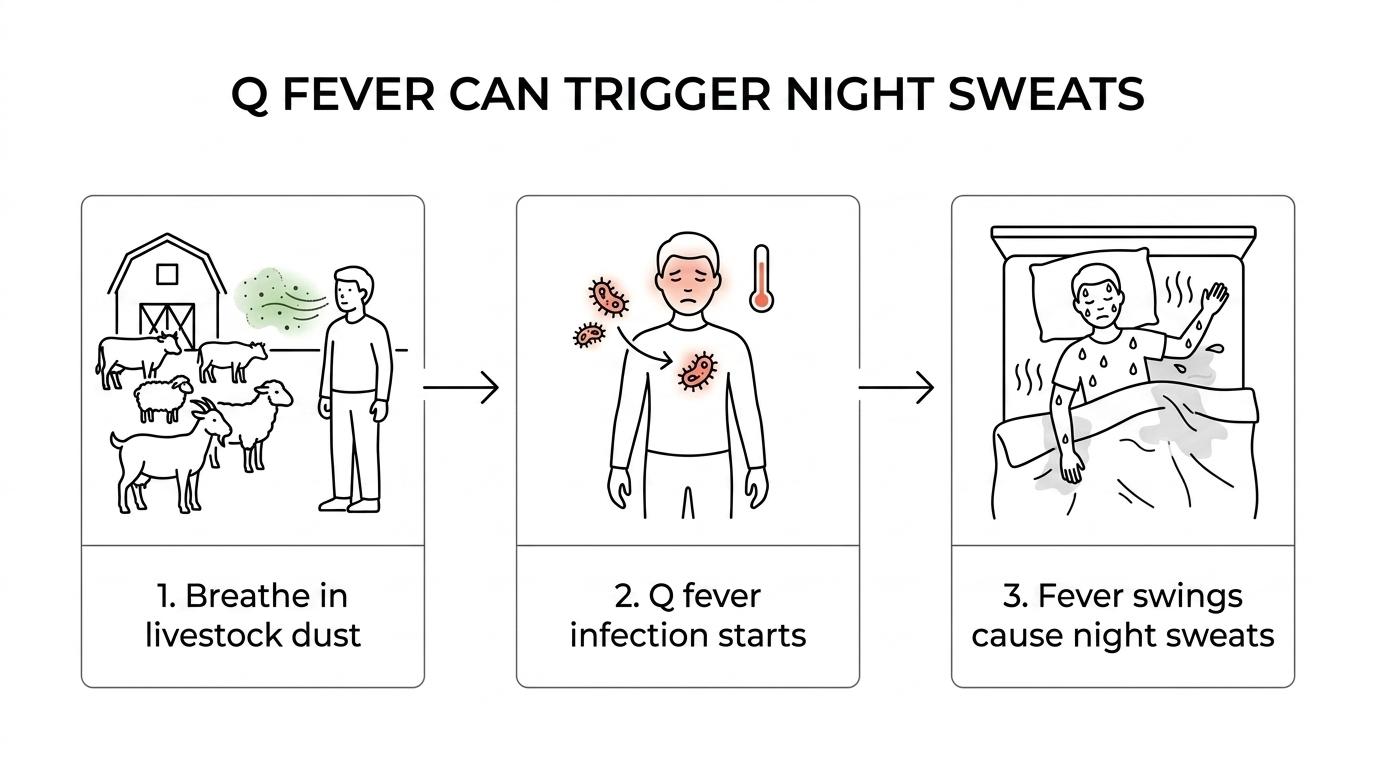
Q fever can be acute, meaning a sudden infection, or it can become long lasting in a smaller number of people. Acute illness often causes fever, chills, sweats, severe fatigue, muscle aches, and may require treatment with antibiotics. In more serious cases it can affect the lungs or liver. Chronic Q fever can be much more serious, especially when it involves the heart lining or heart valves, potentially leading to endocarditis.
After any infection gets your temperature regulation stirred up, a few things tend to feed those nighttime sweat episodes:
Night sweats from Q fever rarely happen in isolation. Most people who have symptomatic Q fever, particularly those with chronic Q fever, notice a cluster of symptoms, sometimes all at once, sometimes in stages. According to StatPearls, common symptoms include high fever, headache, fatigue, muscle pain, chills, and sweating. Some people also develop pneumonia or hepatitis.
A lot of people describe it as feeling like a bad flu that just will not settle down. You may go to bed feeling okay, wake up hot and soaked, then drag yourself through the next day with a pounding headache and deep chronic fatigue.
Symptoms worth paying attention to include:
Not everyone gets every symptom. Some people have a mild case, some feel miserable for weeks, and some barely connect the dots until a doctor asks about animal exposure.
The timing matters. If your night sweats started after being around farm animals, helping with animal births, cleaning barns, visiting a livestock fair, or spending time in a dusty agricultural setting where transmission of infection could occur, that detail is worth sharing with a clinician right away.
The pattern matters too. Sweating that keeps coming back, especially with ongoing fever, chest symptoms, or unusual fatigue, is more concerning than one hot night after a spicy dinner or a bad dream.
One patient scenario that comes up often looks like this: a middle aged person helps a relative during goat kidding season, feels fine for a week or two, then starts waking up with soaked sheets, a hard headache, and crushing tiredness, possibly linked to chronic fatigue. At first they assume it is a virus. When the sweats keep happening and a cough shows up, they finally mention the animal exposure to a doctor, and testing points to Q fever. That kind of story is not unusual.
A faster medical review is a smart move if any of these are happening:
There is no home test for Q fever. Diagnosis usually starts with the story, what symptoms you have, how long they’ve been going on, and whether you were around animals or agricultural dust. If night sweats are one of your main complaints, that still matters, but it usually needs to be matched with the rest of the picture.
Doctors may order blood tests that look for antibodies to Coxiella burnetii. Sometimes those tests are repeated because antibodies may not show up right away. If you have chest symptoms, imaging may be used to check for pneumonia. If there is concern about chronic Q fever, especially in people with heart valve problems or those at risk for endocarditis, heart imaging and more blood work may be needed.
This is one reason you do not want to shrug off infection related sweats for too long. The earlier the right cause is identified, the sooner the right treatment can start.
Treatment depends on the severity of the infection and your overall health, but acute Q fever is often treated with doxycycline or other antibiotics, especially when symptoms are significant. The CDC treatment guidance is clear that early treatment can shorten illness and lower the risk of complications. If long lasting Q fever, also known as chronic Q fever, develops, treatment can be much longer and more involved.
While medical care addresses the infection itself, you still have to get through the nights. That is where symptom relief matters. Sleep experts generally recommend a bedroom temperature around 60°F to 67°F for better sleep, which matches guidance from the Sleep Foundation. If you are sweating because your body is already running hot, trapped heat under the sheets can make everything worse.
One simple truth helps here: neither a bedfan nor a BedJet actually cools the air. The BedJet doesn’t cool the air, and the bedfan doesn’t either. Both use the cooler air already in the room and move it through your bedding, which is what helps your skin dump heat faster.
For people dealing with infection related night sweats, a targeted cooling setup can make the night more manageable:
A lot of hot sleepers do well with a bed level cooling option because it cools the part that actually feels miserable, the space under the covers. A bFan bed fan, available at bedfan.com, is one option that fits that role well. It sits at the foot of the bed and moves room air between the sheets. The bedfan uses only 18 watts on average, runs around 28db to 32db at normal operating speed, and includes timer controls, which is helpful if you want cooling as you fall asleep without running it all night. Many people can raise the room temperature by about 5°F and still sleep cool with a Bedfan, which can help cut air conditioning costs while keeping the bed comfortable.
If you share a bed, the bfan can also be a practical fit. Two bedfans can create dual zone microclimate control, so one person can sleep cooler without turning the whole room into a refrigerator. That matters when one sleeper is sweating and the other is cold.
If you’re comparing products, price matters too. One BedJet is more than twice the price of a single bedfan. The dual zone BedJet is over a thousand dollars and more than twice the price of two bedfans. The original bedfan also came to market several years before BedJet was even thought of. So if your goal is straightforward bed cooling for symptom relief, a bed fan is often the simpler, less expensive path.
This part matters because Q fever is only one possible cause. Night sweats can also happen with other infections, menopause, medication side effects, anxiety, thyroid problems, low blood sugar, sleep apnea, and some cancers. That does not mean you should panic. It means you should look at the whole pattern.
If you have no clear animal exposure and your symptoms do not fit Q fever well, your doctor may look elsewhere first. If you do have exposure plus fever and sweats, bring it up early. Many people do not realize that a detail like cleaning a barn or handling livestock during birth can change the whole workup.
If you publish more content around this topic, these are smart internal links to include near this article:
If you’re dealing with repeated night sweats, fever, and recent livestock or farm exposure, especially if you suspect chronic Q fever, don’t wait it out too long. Reach out to a clinician, mention the exposure clearly, and get checked. If the sweating is wrecking your sleep right now, setting up a cooler sleep space, and using a targeted option like a bFan bed fan, can make tonight a lot easier while you sort out the medical side.
Disclaimer: This article is for general education only and is not medical advice, diagnosis, or treatment. Night sweats with fever can point to a serious infection, including Q fever, and should be assessed by a qualified medical professional. Get urgent care right away for trouble breathing, chest pain, confusion, severe weakness, fainting, or symptoms during pregnancy.
Q fever is an infectious disease caused by the bacterium Coxiella burnetii. It often spreads to humans from animals such as cattle, sheep, and goats. One of the symptoms of Q fever is night sweats, which occur as the body tries to fight off the infection and regulate its temperature. Night sweats can be intense and may disrupt sleep, making it important to monitor and manage symptoms if you suspect Q fever.
Night sweats associated with Q fever can last for several weeks, especially during the acute phase of the illness. In some cases, if Q fever becomes chronic, night sweats may persist for months or even longer. The duration depends on how quickly the infection is diagnosed and treated, as well as individual health factors. If night sweats continue beyond a few weeks, it is important to consult a healthcare provider for further evaluation.
No, night sweats are just one of several symptoms that can occur with Q fever. Other common symptoms include high fever, severe headache, muscle aches, fatigue, and sometimes a dry cough. Some people may also experience chest pain, nausea, or abdominal discomfort. Because these symptoms can resemble those of other illnesses, it is important to seek medical advice for proper diagnosis and treatment.
While some mild cases of Q fever can be managed at home with rest, hydration, and fever-reducing medications, persistent or severe night sweats should be discussed with a healthcare provider. Using cooling solutions like a bedfan or adjusting room temperature can help improve comfort during sleep. However, medical treatment with antibiotics is often necessary to fully resolve the infection and its symptoms.
Q fever is rarely spread from person to person. The primary mode of transmission is through inhalation of contaminated dust or droplets from infected animals or their products. Direct human-to-human transmission is extremely uncommon, so most people contract Q fever through environmental exposure rather than contact with an infected individual.
You should see a doctor if your night sweats are severe, persistent, or accompanied by other symptoms such as high fever, unexplained weight loss, or ongoing fatigue. Night sweats that last more than a couple of weeks or interfere with your daily life warrant medical attention. Early diagnosis and treatment of Q fever can help prevent complications and speed up recovery.
To improve sleep quality during Q fever night sweats, keep your bedroom cool and use breathable bedding. A targeted cooling solution like the bFan can help circulate air under your sheets, making it easier to stay comfortable. Wearing lightweight pajamas and staying hydrated can also reduce discomfort. If symptoms persist, consult your healthcare provider for additional support.
For more information about managing night sweats, see our articles on night sweats causes, night sweats and menopause, how to stop night sweats, and best cooling solutions for night sweats.
Disclaimer: This FAQ is for informational purposes only and does not replace professional medical advice. Always consult a healthcare provider for diagnosis and treatment of Q fever or any persistent symptoms.
All links have been checked and are currently working.



