Learn what causes neuropsychiatric night sweats, how medications and anxiety trigger them, and the best cooling and tracking tips for relief.
Neuropsychiatric night sweats sit where sleep, brain chemistry, and nervous system regulation overlap. They matter because waking up drenched at 2 a.m. does more than ruin a night—it may signal underlying mental health disorders and worsen anxiety, irritability, concentration, and pain sensitivity the next day. The main problem is figuring out whether the sweating is coming from the brain and its medications, or from something else, like infection, menopause, blood sugar swings, or a too-warm room. Once you separate those causes, treatment gets much more precise.
Yes. Neuropsychiatric night sweats usually happen when the brain, autonomic nervous system, or medications like sertraline disrupt the hypothalamus, your temperature-control center. The result is night sweats that wake you up, fragment sleep, and leave you feeling wired, chilled, or exhausted the next day. In some individuals, this can even lead to episodes of excessive sweating that further complicate sleep continuity.
This label covers sweating linked to conditions like anxiety, PTSD, panic attacks, depression, autonomic dysfunction, nightmares, medication side effects, and withdrawal states. In plain English, your body acts as if it needs to dump heat fast, even when the room is not especially hot. These neuropsychiatric night sweats are particularly important to note because they sometimes overlap with other mental health conditions and disorders, thereby complicating diagnosis and treatment.
The mechanism is real. The hypothalamus and sympathetic nervous system, pushed by serotonin, norepinephrine, cortisol, or panic signals, can trigger night sweats without a hot room. A common misconception is that you do not need a fever for your body to act as if it must dump heat fast—even if the result is excessive sweating at night.
Your brain constantly tries to hold core temperature inside a narrow range. When neurotransmitters shift, that comfort range can narrow. SSRIs, SNRIs, stimulant medications, nightmares, and hyperarousal (often seen in anxiety) can all make small temperature changes feel urgent to the body.
If that happens during REM sleep or after a stress-related awakening, you may get a fast pulse, damp skin, a sudden heat surge, then a chill once sweat evaporates. That cycle is why many people say, “I woke up soaked, then freezing.” Remember, night sweats can sometimes escalate to excessive sweating that isn’t linked to infection. Neuropsychiatric sweating can be intense, especially if it comes with panic, vivid dreams, or medication changes.
The best cooling tools reduce trapped bedding heat, not just room temperature. A bFan Bed Fan and a well-set air conditioner work because they move cooler room air across the skin, which helps sweat evaporate and cuts those 2 a.m. wakeups. This is particularly useful when neuropsychiatric night sweats are causing excessive sweating that interrupts your sleep.
If your goal is fewer awakenings, not just a colder bedroom, these are the options most people compare:
A targeted option that often makes sense is the bFan Bed Fan, especially if you want cooling relief without running the thermostat lower all night.
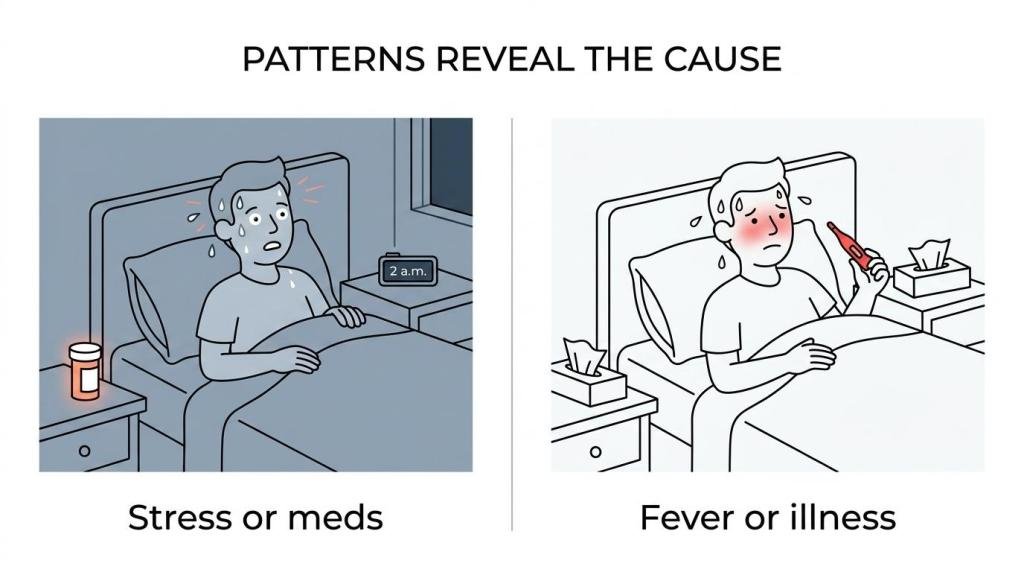
Pattern matters. Neuropsychiatric night sweats often track with nightmares, panic, REM changes, or drugs like venlafaxine, while infections and menopause usually bring other clues, like fever, lymph node swelling, or daytime hot flashes. The term “night sweats” in the context of mental health can be misleading; while they may appear severe, understanding the pattern can help distinguish between neuropsychiatric causes of excessive sweating and other causes.
Side-by-side comparison of neuropsychiatric, infection-related, and menopause-related night sweats with their typical accompanying clues.
The overlap is real, so you cannot diagnose this by sweating alone. What helps is context. If the episodes started after a new SSRI, a dose increase, stimulant use, alcohol withdrawal, or a stressful period, brain-driven causes move higher on the list. If sweats come with fever, cough, weight loss, or recent infection exposure, you need a medical workup.
A quick pattern check usually helps:
Common misconception, menopause and neuropsychiatric sweating can happen at the same time. Many women in perimenopause also take SSRIs or SNRIs, so both systems may be contributing to what may feel like relentless night sweats.
Yes, medications are a major cause. SSRIs like sertraline, SNRIs like venlafaxine, stimulants like Adderall, and withdrawal from benzodiazepines can all raise sweating by shifting serotonin, norepinephrine, dopamine, or autonomic tone. This can lead directly to excessive sweating at night.
Published reports vary by drug and study, but antidepressant-induced sweating is often cited in roughly 4% to 22% of users. Venlafaxine, duloxetine, sertraline, and fluoxetine get mentioned often in practice. Some people notice it within days. Others only notice after a dose increase.
The usual medication pathways look like this:
Pro tip, do not stop a psychiatric medication on your own because of night sweats or excessive sweating. If the sweating started after a change, tell the prescriber the date, dose, and timing. Sometimes a slower titration, a morning dose, or a switch within the same class solves the problem.
Start with safety. If night sweats begin suddenly after a new drug, infection exposure, or a severe anxiety flare, check for red flags first, then look at timing, temperature, and medication changes before assuming it is just stress.
First, ask what changed in the last two to four weeks. New SSRI, dose increase, stimulant, steroid, alcohol reduction, THC reduction, illness exposure, travel, or major sleep loss all matter. Sudden onset has more diagnostic value than people think.
Second, check your body, not just your bedding. If you also have fever, cough, chest pain, shortness of breath, confusion, low blood sugar symptoms, or swollen lymph nodes, call a clinician promptly. If you have agitation, tremor, diarrhea, and severe sweating after serotonergic drugs, serotonin syndrome needs urgent attention.
Third, stabilize the sleep environment that same night. Keep the room in the sleep-expert range of 60°F to 67°F, reduce heavy bedding, and use targeted airflow under the sheets if overheating is waking you up. That does not replace diagnosis, but it reduces sleep disruption while you sort out the cause.
Tracking works. A two-week log that includes escitalopram timing, bedtime, alcohol, room temperature, sheet type, and wake times often gives a clinician more useful clues than a vague report that you “sleep hot.” This log can help determine if your night sweats are accompanied by episodes of excessive sweating that might indicate shifts in mental health, such as heightened anxiety or other related disorders.
You do not need a fancy app. A note on your phone is enough. What matters is consistency.
Write down bedtime, wake time, medication timing, dose changes, alcohol, cannabis, caffeine after noon, intense exercise, nightmares, anxiety spikes, and room temperature. Then rate each sweating episode from mild dampness to soaked sheets. If you can, note whether it hit during sleep onset, around 2 to 4 a.m., or near morning.
Pro tip, log the hour of the sweating episode. If sweats happen soon after falling asleep, stress and bedding heat may be bigger factors. If they show up later in the night, REM sleep, medication metabolism, blood sugar changes, or sleep apnea can be more relevant.
Targeted cooling usually wins on cost. A bFan and a BedJet both use room air, not refrigerated air, but a bed fan cools the bed microclimate with far less energy than lowering whole-room AC all night.
This is the big misconception to clear up: neither a BedFan nor a BedJet cools the air. They only use the cooler air already in the room to cool your bed. The BedJet does not cool the air either. That means your room still matters.
If your room is already within the recommended 60°F to 67°F range, under-sheet airflow often works better than dropping the thermostat another few degrees. Many people using a BedFan can raise room temperature by about 5°F and still sleep cool, which can cut AC use.
Price matters too. One BedJet is more than twice the price of a single BedFan. A dual-zone BedJet is over a thousand dollars and more than twice the price of two BedFans, while two bFans can give you dual-zone microclimate control at a much lower cost. The original BedFan also came to market several years before BedJet was even thought of, so this category did not start as a copy of forced-air bed systems.
The trade-off is feel. Some people like stronger airflow and more features, while others want quiet, simple, and discreet. A bFan runs around 28 dB to 32 dB at normal operating speed and uses about 18 watts on average, which is very low compared with cooling a whole room overnight.
Setup matters more than gadgets alone. The National Sleep Foundation and sleep clinics commonly point to 60°F to 67°F, tight-weave sheets, and steady airflow as the sweet spot for reducing heat buildup and preserving deeper sleep stages. Creating the ideal microclimate can help alleviate not just night sweats but also excessive sweating that disrupts sleep.
Start with the room. If you are above 67°F, sweating is more likely, especially if medication or stress has already narrowed your comfort range. If you are well below 60°F, some people get a rebound problem—they fall asleep cold, pile on blankets, then trap heat later.
Next, fix the bed microclimate. Heat often gets trapped between the fitted sheet, your body, and the top sheet or comforter. A bed fan at the foot of the bed moves that trapped heat out. Pro tip, tight-weave sheets help that airflow skim across the body instead of leaking away too fast.
Then use timing. The first few hours of sleep are when core body temperature naturally drops, so timer controls can be useful. If your sweats usually hit early, run the airflow longer. If they hit later, shift the timer or keep a lower steady setting through the night.
Get checked fast if night sweats come with fever, weight loss, chest pain, new confusion, or swollen lymph nodes. Conditions like tuberculosis, lymphoma, serotonin syndrome, and hypoglycemia can look like “just sweating” at first.
Night sweats deserve urgent evaluation when the pattern is new, severe, and paired with other systemic symptoms. This is especially true if you have immune suppression, cancer history, recent travel, a new medication combination, or sleep apnea risk. Also, if you have excessive sweating along with other symptoms of anxiety, it might indicate a more complex interplay of mental health issues and disorders.
Seek medical care promptly if you have any of these:
If none of those red flags are present, the next best move is a focused review of medications, sleep patterns, anxiety symptoms, and sleep environment. That is where neuropsychiatric night sweats often reveal themselves.
By incorporating these insights and tracking your symptoms carefully, you can provide your healthcare provider with a clearer picture of how these neuropsychiatric night sweats—and even episodes of excessive sweating—are affecting your mental health.