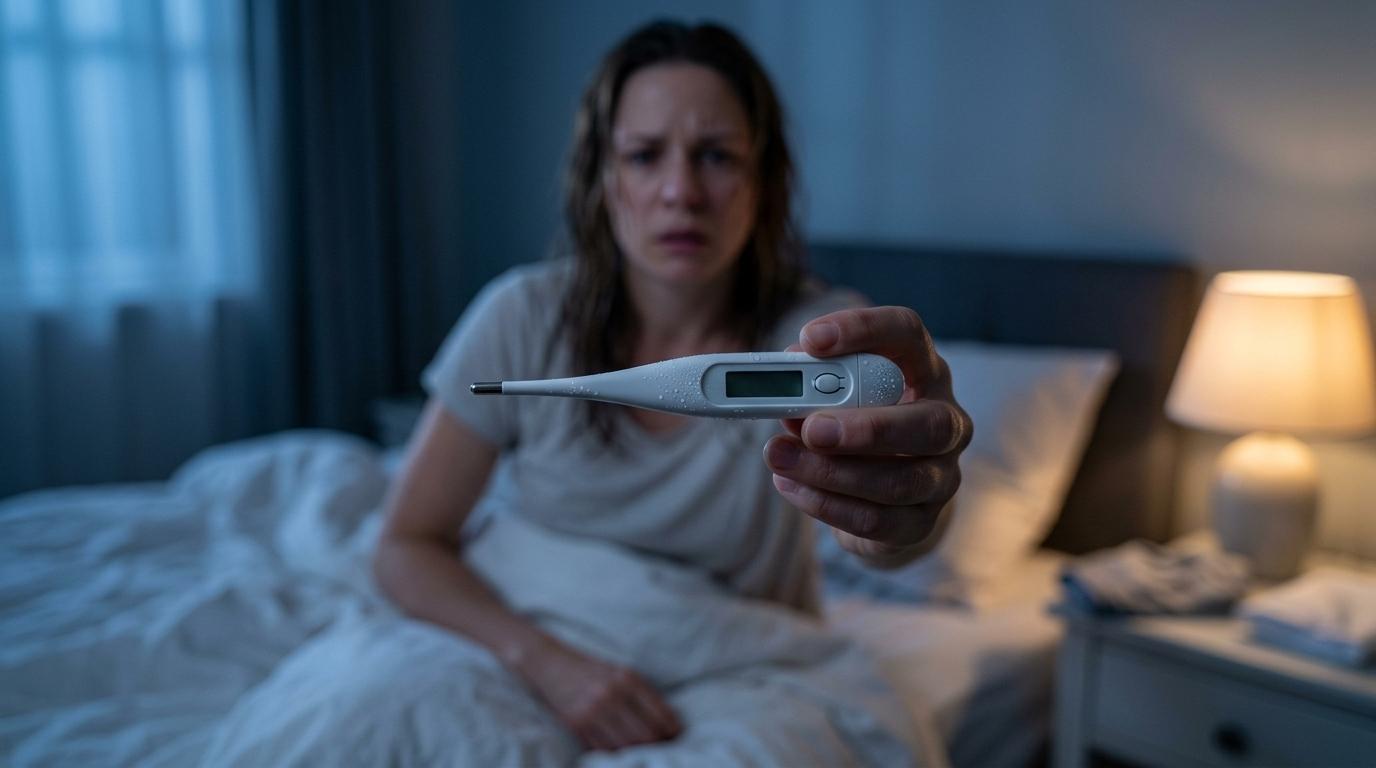
Irinotecan (Camptosar) night sweats may signal side effects, dehydration, or infection. Learn causes, red flags, and safe relief tips.
Irinotecan, sold as Camptosar, is a chemotherapy medication administered by injection and used in regimens for cancers including colorectal cancer. When night sweats show up during treatment, the real problem is not just poor sleep, it is figuring out whether you are dealing with a manageable side effect, dehydration, hormonal shifts, or a warning sign like infection. That matters because cancer treatment can lower your reserves fast, and a sweaty night can be anything from a comfort issue to an urgent call to your oncology team. Some patient experiences also include nausea, vomiting, and other drug reactions, so it is important to distinguish which symptoms need immediate care.
Yes, irinotecan and Camptosar can be linked to night sweats, but the sweat itself often points to a related trigger, including acute cholinergic symptoms, diarrhea-related dehydration, or infection during neutropenia. In rare cases, injection-related drug reactions, such as anaphylaxis, have been reported, although they are uncommon.
There are a few pathways here, and timing helps sort them out. Irinotecan can cause an early cholinergic reaction, sometimes during infusion or shortly after, with sweating, abdominal cramping, tearing, salivation, nausea, vomiting, and early diarrhea. Later in the cycle, night sweats may be tied to delayed diarrhea, fluid loss, steroid premedication, pain, anxiety, or a fever that happens when white blood cells drop.
If you are on a combo regimen like FOLFIRI, the sweating may not be from irinotecan alone. Dexamethasone, nausea, infection risk, menopause, and the stress response all can overlap along with other side effects many patients experience. That is why a symptom log is more useful than guessing.
Both are possible. Irinotecan can cause sweating directly, but in a patient on chemotherapy, fever and infection, especially febrile neutropenia, always have to be ruled out first. In some cases, patients may also experience nausea or vomiting in conjunction with other side effects that can complicate the picture.
A common misconception is that sweating without a measured fever is automatically harmless. It is not. Some patients wake up drenched before a temperature spike becomes obvious, and acetaminophen can mask a fever if you take it first. Pro tip, check your temperature before taking fever reducers, and write down the number, the time, and any chills.
If the sweating happens with shaking chills, new cough, sore throat, burning with urination, mouth sores, worsening diarrhea, or unusual weakness, contact your cancer team. If your temperature is 100.4°F, 38°C, or higher, most oncology practices treat that as an urgent same-day issue.
The best home tools reduce trapped heat, protect hydration, and make symptom tracking easy. A bed cooling setup, a thermometer, and backup sleepwear usually help more than cranking the whole house colder.
When the problem is heat trapped under sheets, the fix is often local airflow, not extreme air conditioning. That is where bed microclimate matters.
Timing and companion symptoms usually separate them. Irinotecan sweating often clusters around infusion effects or diarrhea, neutropenic fever comes with infection risk and a temperature, and menopause hot flashes tend to be brief surges without the same chemo timing. Patient experiences vary, and while some might only feel a brief wave of heat, others could suffer prolonged sweating due to additional side effects like nausea and vomiting.
Here is the practical distinction. If sweating starts during infusion, or within hours, and you also have cramping, tearing, runny nose, or early diarrhea, think acute cholinergic symptoms and tell the infusion team. If sweating shows up several days later with fatigue, diarrhea, or poor fluid intake, dehydration climbs higher on the list. If it happens about a week or more after treatment, and you have fever or chills, infection becomes more concerning because blood counts may be falling.
Menopause hot flashes can happen during cancer treatment too, especially if ovarian function changes or hormonal therapy is involved. Those are usually shorter, wave-like surges of heat. Night sweats from infection or dehydration often feel more drenching and leave you wiped out.
Start with safety first. Check your temperature, assess for chills or diarrhea, then cool the bed and replace damp clothing so you can get back to sleep without missing a medical red flag.
First, take your temperature before you strip blankets, drink ice water, or take acetaminophen. That preserves a clear reading. Next, ask yourself a few fast questions: am I having chills, cramping, diarrhea, cough, pain, or burning with urination? Then change into dry sleepwear, switch out soaked bedding if needed, and use targeted airflow rather than dropping your whole-home thermostat to an extreme.

If you have a bed fan, turn it on a moderate setting and aim the airflow under the top sheet. If your room is already within the sleep expert range of 60°F to 67°F, you may not need to make the room colder at all. If you are also having diarrhea, sip fluids in small amounts and follow the anti-diarrheal plan your oncology team gave you. If you have no plan yet, call them rather than improvising.
A cool sleep setup works best when it targets the bed microclimate, not just the room. Tight-weave sheets, lighter layers, and controlled airflow usually beat heavy blankets and a freezing thermostat.
Start with bedding, because trapped heat builds under covers faster than most people realize. Use a lighter comforter or blanket stack, and keep one spare layer nearby instead of piling everything on at once. Choose a tight-weave sheet set, often percale, so air can move across your skin. That is a useful pro tip when using a bed fan.
Then set the room. Sleep experts usually recommend 60°F to 67°F. If your room is already in that zone and you still wake up hot, local airflow is often the missing piece. Many people using a bed fan can raise room temperature by about 5°F and still sleep comfortably, which can lower air conditioning use.
Finally, plan for your sleep partner. If one person runs hot and the other does not, two bed fans can create dual-zone microclimate control without changing the whole room for both people.
For many hot sleepers, a bed fan is the more efficient first move. Lowering the thermostat cools the whole room, while Bedfan and BedJet use room air to cool the bed itself, and price can differ a lot.
Here is the big misconception to clear up. Neither Bedfan nor BedJet cool the air. They use the cool air already in the room and move it through your bedding. That can still work very well, because the real problem is trapped body heat under blankets.
If your night sweats are frequent, a bed fan often makes more sense than turning the whole house down every night. The bFan uses about 18 watts on average, which is tiny next to central AC, and at normal operating speed, the sound is around 28db to 32db, which is quiet enough for many light sleepers. It is important to note that one BedJet is more than twice the price of a single bed fan. The original bed fan came to market several years before BedJet was even thought of, and the category idea has been around long enough to prove that targeted bed airflow works. For couples, the bFan offers dual-zone microclimate control using two fans, while the dual-zone BedJet is over a thousand dollars and more than twice the price of two bed fans. If your main need is sleep cooling, that simpler setup is often the better value.
The strongest links are diarrhea, dehydration, fever, and acute cholinergic symptoms. Irinotecan can also connect indirectly through pain, anxiety, nausea, vomiting, and other drug reactions associated with this injection-based treatment plan.
Think about the sweep of the whole treatment week, not just one sweaty night. These links matter most:
If your sweating started only after irinotecan was added, that timing is a clue. If it started after several cycles, ask whether blood counts, infection, hormones, or cumulative dehydration fit better.
A short symptom log helps more than memory. Track timing, temperature, diarrhea, and any red-flag symptoms so your cancer team can sort out side effects, dehydration, or infection fast. Recording patient experiences with nausea, vomiting, or any signs of anaphylaxis can provide important clues to the care team.
Keep it simple, because you will not use a complicated tracker at 2 a.m. Write down when the sweat happened, whether you changed clothes or sheets, your temperature, and any symptoms that came with it. Note where you are in the chemo cycle, because “same night as infusion” means something very different from “day eight after treatment.”
If diarrhea is part of the picture, record stool frequency and whether you could keep fluids down. If the sweating improves when the bed is cooled but your temperature stays normal, that suggests a comfort and heat-trapping problem. If the sweating is paired with fever, chills, or worsening weakness, the log supports a faster clinical decision.
Night sweats need urgent evaluation when they come with fever, infection symptoms, or severe dehydration. Irinotecan and neutropenia can turn a rough night into a same-day oncology issue quickly.
Call your oncology team right away, or use the emergency instructions they gave you, if any of these apply:
If the sweat is intense but your temperature is normal and you otherwise feel stable, comfort measures at home may be enough while you monitor closely. If the sweats keep recurring, bring it up before the next infusion. Your team may adjust supportive medications, review diarrhea management, or look for another cause.
By keeping track of your overall experience, including episodes of nausea, vomiting, and any injection-related discomfort or rare instances of anaphylaxis, you can work with your healthcare team to better understand and manage the drug reactions and side effects associated with Camptosar.