
Infective endocarditis night sweats may signal a serious heart infection, especially with fever, chills, fatigue, or shortness of breath.
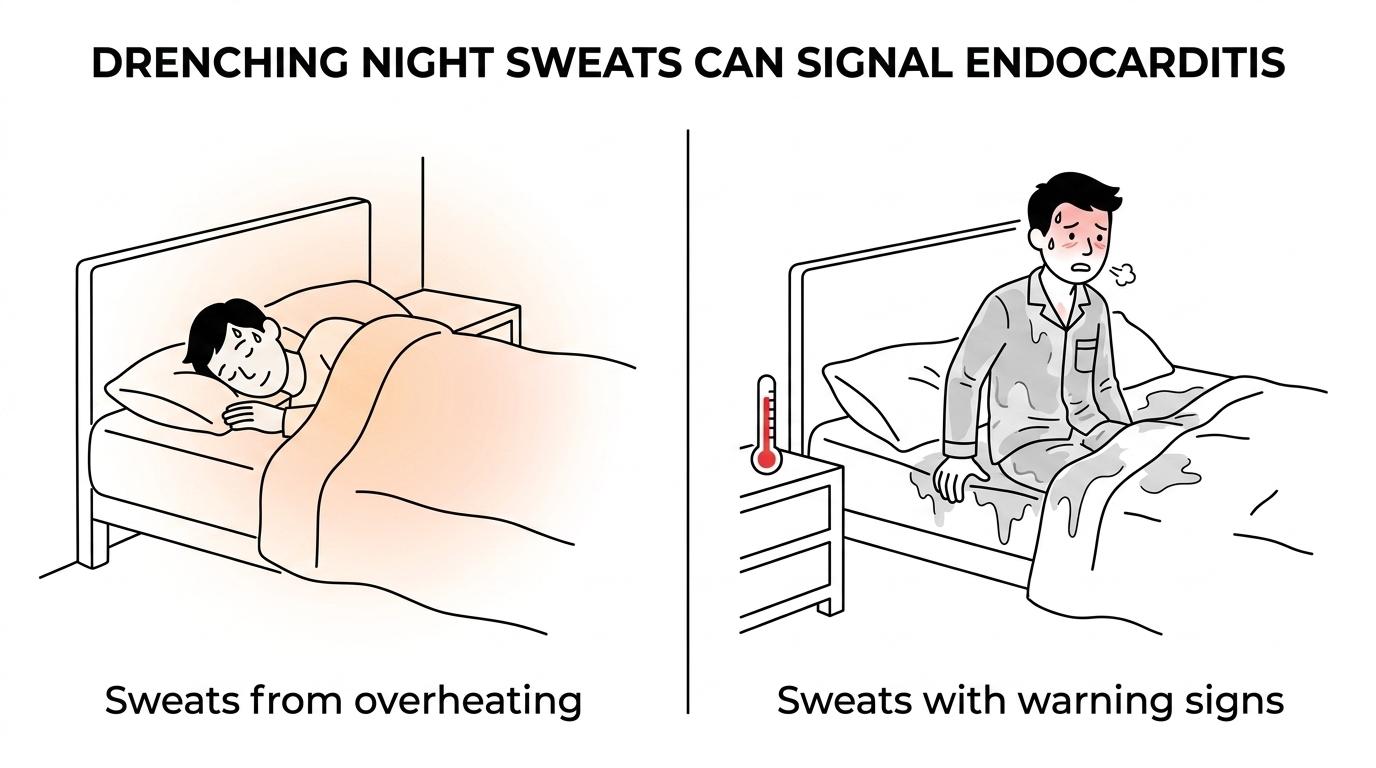
Waking up sweaty once in a while can happen after a warm room, stress, alcohol, or a heavy blanket. Waking up drenched night after night, with fever, chills, fatigue, or shortness of breath, is different, and it deserves attention.
When people search for infective endocarditis night sweats, they’re usually trying to answer one urgent question, could this be a sign of something serious? The short answer is yes, it can be. Infective endocarditis is an infection of the inner lining of the heart, often involving a heart valve, and night sweats can show up as part of that infection.
Infective endocarditis happens when bacteria, which may lead to a bacterial infection, and less often fungi, enter the bloodstream and attach to damaged or abnormal heart tissue, where vegetations can form. Once that process starts, the immune system reacts, body temperature regulation gets thrown off, and people may develop fevers, chills, and drenching sweats at night. MedlinePlus lists fever, chills, fatigue, muscle aches, and night sweats among the symptoms that can occur.
Night sweats in this setting are not just about being too hot under the covers. They’re part of the body’s infection response. Your temperature may climb, then drop, and that swing can leave your sleepwear and sheets damp or soaked.
That matters because infective endocarditis is not a minor infection. If it isn’t treated quickly, it can damage heart valves, affect blood flow, and send infected material to the brain, lungs, kidneys, or other organs.
Night sweats rarely show up alone. Most people with infective endocarditis have a mix of symptoms, and some are easy to brush off at first because they feel like a stubborn flu, a long cold, or “just being run down.”
If your sweating at night is paired with any of the signs below, especially if you have heart valve disease, a prosthetic valve, a history of IV drug use, a recent bloodstream infection, recent surgery, or a recent invasive procedure, it’s smart to get checked sooner rather than later.
Some people also notice swelling in the legs, persistent cough, or a general sense that something is off and not improving.
A healthy person with no heart issues can get infective endocarditis, but it’s far more likely in certain groups. The risk goes up when bacteria have an easier path into the bloodstream, or when the heart has a surface where those organisms can stick.
Doctors usually think harder about endocarditis when someone has night sweats plus a known risk factor. That combination raises the level of concern.
If you already know you have one of these risks, persistent night sweats should not be shrugged off.
There isn’t a single home test that can tell you whether night sweats are coming from infective endocarditis. Diagnosis usually depends on a mix of blood work, imaging, symptoms, and exam findings. Clinicians often order multiple blood cultures before antibiotics are started, because the blood sample can show which organism is causing the infection. An echocardiogram, which is an ultrasound of the heart, is often used to look for infected growths or vegetations on the valves or other signs of valve damage. The condition and workup are outlined in detail in NCBI StatPearls.
You may also have a complete blood count, kidney function tests, inflammatory markers, urine tests, and sometimes a chest X ray or CT scan, depending on symptoms. If the first heart ultrasound is not clear, a more detailed test called a transesophageal echocardiogram may be needed.
The key point is speed. If infective endocarditis is on the list of possibilities, quick medical evaluation matters more than trying to manage the sweating alone at home.
A person in their late 50s, with a known valve problem, started waking up soaked three or four nights a week. They blamed the bedroom temperature, bought lighter pajamas, and tried to wait it out. Then came fatigue, a nagging fever, and getting winded walking up stairs. Blood cultures and an echocardiogram later, the cause turned out to be infective endocarditis.
That kind of story is common enough to remember. Night sweats can look harmless at first, and that’s exactly why they’re easy to miss.
Medical treatment comes first. If your clinician is evaluating or treating infective endocarditis, cooling the bed is about comfort, sleep, and getting through the night, not fixing the infection itself.
Sleep experts usually recommend a bedroom temperature around 60°F to 67°F for better sleep, a range often cited by the Sleep Foundation. Many people using a Bedfan can often raise the room temperature by about 5°F and still sleep cool, because the airflow is directed right where trapped body heat builds up, under the covers.
That’s where a targeted option can help more than just lowering the whole thermostat.
A bFan bed fan from Bedfan pushes the cooler air already in your room between the sheets, which helps carry heat and moisture away from your body. Neither the Bedfan nor the BedJet cools the air. They only use the cool air in the room to cool your bed. If your room is hot, both will have less to work with, so the bedroom still matters.
A few details make the bFan especially practical for someone dealing with sweating at night. The Bedfan sound level is about 28 dB to 32 dB at normal operating speed, so it stays in a quiet range for most sleepers. It uses only about 18 watts on average, which is low enough that you can use it nightly without stressing over power use. It also offers timer controls, which can help you set the bed to cool when you need it most at sleep onset.
If you share a bed, the bFan offers dual zone microclimate control using two fans, which is a simple way to keep one sleeper cool without turning the whole room into a refrigerator. That matters when one person is sweating and the other is already cold.
The original Bedfan came to market several years before BedJet was even thought of, and price still matters here. One BedJet is more than twice the price of a single bedfan. The dual zone BedJet is over a thousand dollars and more than twice the price of two bedfans. That doesn’t make BedJet wrong, it just means there’s a real cost difference for people who mainly want targeted airflow under the covers.
A few setup choices can make any bed cooling fan work better.
If you’re sorting through other causes of sweating at night, it may also help to read related pages like What Causes Night Sweats, Night Sweats and Infection, Medications That Cause Night Sweats, Why Am I Sweating in My Sleep, and How to Sleep Cooler With Night Sweats.
Persistent night sweats are worth mentioning to your doctor. Night sweats plus fever, heart history, or a feeling that you’re getting steadily worse should move much higher on your priority list.
Get prompt medical care, same day if possible, or urgent care or ER care if symptoms are severe, if you have any of these with night sweats:
If infective endocarditis is even a possibility, don’t wait around hoping the sweats will just pass. Talk with a clinician now. If you need help sleeping cooler tonight while the medical side is being addressed, take a look at the bFan at http://www.bedfan.com. It can make the bed more tolerable, quietly and with low power use, but it does not treat infection, fever, or any underlying heart problem. This article is for general education only and is not medical advice, diagnosis, or treatment. If you have night sweats with fever, heart symptoms, worsening fatigue, or any urgent warning sign, seek medical care right away.



