
Learn how coxiella burnetii night sweats may signal Q fever, plus common symptoms, exposure risks, diagnosis, and when to seek care.
Waking up sweaty once in a while can happen after a warm room, heavy blankets, or a stressful day. Coxiella burnetii night sweats are different, because they can be part of an infection that deserves medical attention, not just a cooling fix.
Coxiella burnetii is the bacterium that causes Q fever, which in its more severe form can develop into chronic Q fever. It is usually linked to exposure to infected livestock, especially goats, sheep, and cattle, or to contaminated dust around barns, birthing areas, and animal facilities. According to the CDC, people often get infected by breathing in contaminated particles, not by casual contact with another person. If you are having drenching night sweats along with fever, chills, fatigue, or a new cough after animal exposure, it is smart to get checked.
Night sweats happen when your body temperature shifts during sleep and your sweat response kicks into overdrive. With Coxiella burnetii, that usually ties back to the fever and inflammatory response caused by Q fever. As your temperature rises and falls, you may wake up damp, chilled, or fully soaked.
That pattern is not unique to Q fever. Night sweats can also show up with flu, tuberculosis, medication side effects, hormone changes, sleep apnea, and some cancers. Still, when night sweats come with a recent animal exposure or a job around farms, dairies, slaughterhouses, or veterinary settings, Q fever moves higher on the list.
The World Health Organization notes that Q fever can range from mild to severe, and some people may not realize they have it at first, especially if it progresses to chronic Q fever. Others feel very sick, very quickly.
Acute Q fever often starts like a hard viral illness, except the exposure history can be the clue that changes everything. Fever tends to be front and center. Night sweats may tag along, especially when the fever spikes overnight.
Some people also develop pneumonia, hepatitis, or even endocarditis, which can make the whole picture feel more confusing. You might think it is a stubborn respiratory bug or a random flu that just will not quit.
Not everyone gets the full list. Some people mainly notice that they wake up hot, clammy, and wrung out, then spend the day tired and achy. That mix, night sweats plus fever plus exhaustion, is worth paying attention to.
Most Q fever cases are acute, which means they come on over days or weeks. Night sweats in this stage usually track with active infection and fever. Once the infection is treated, or your body clears it, the sweating often improves.
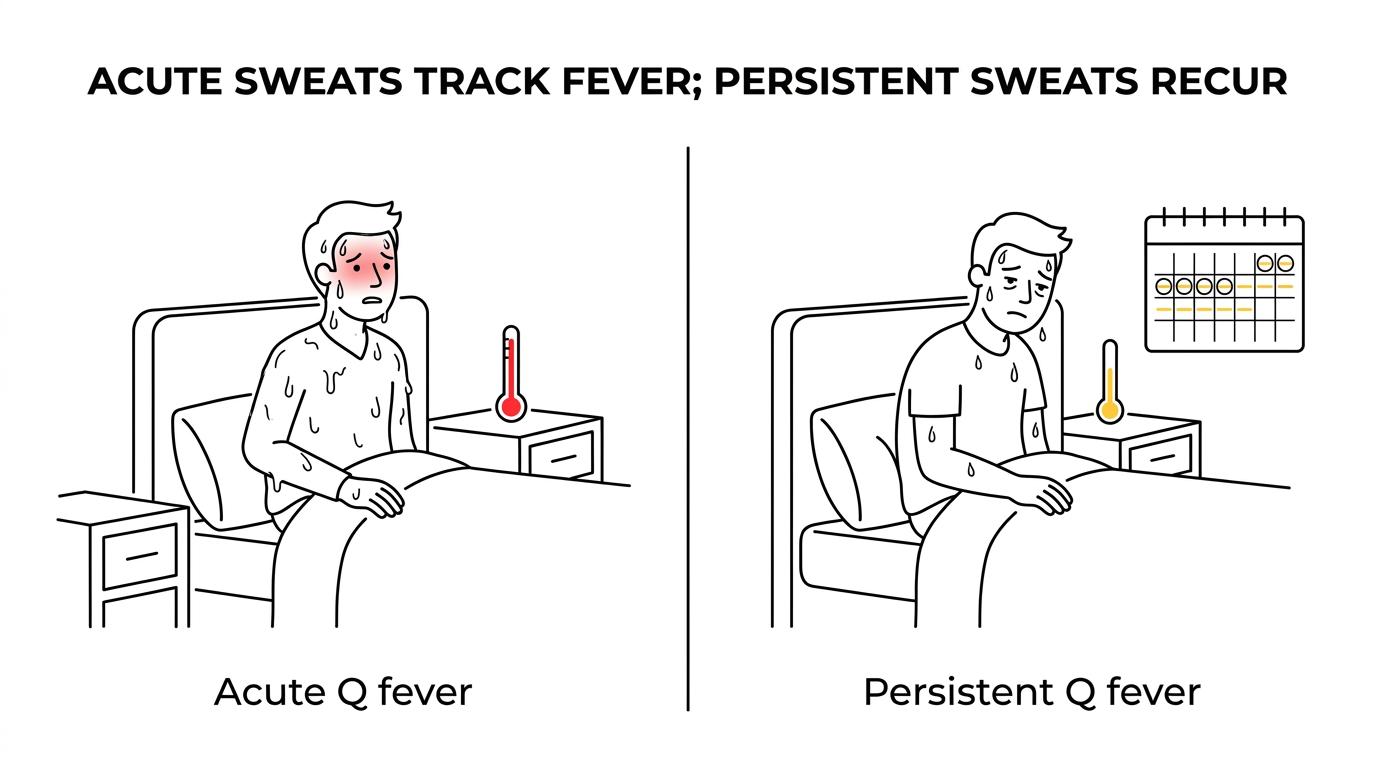
A smaller group goes on to develop what many clinicians call persistent or chronic Q fever. This is more likely in people with heart valve disease, vascular grafts, aneurysms, weakened immune systems, or during pregnancy. In those cases, the bacterium may continue to cause inflammation for a long time, and symptoms can be more subtle, like ongoing fatigue, weight loss, low grade fever, and repeated night sweats. The CDC warns that endocarditis is one of the most serious long term complications.
A very typical real life scenario looks like this. A middle aged patient starts waking up drenched several nights a week after helping with livestock during birthing season. At first it gets blamed on stress, bad sleep, maybe hormones. Then the daytime fatigue, headaches, and fever keep building. Blood tests and an exposure history finally point toward Q fever, and treatment starts. The big lesson is simple, night sweats can be the symptom that nudges someone to get help.
Doctors do not diagnose Q fever from night sweats alone. They usually piece it together from symptoms, your job or exposure history, exam findings, and lab testing. That may include blood work for antibodies, PCR testing in certain situations, and tests to check the lungs, liver, or heart if symptoms point that way.
Timing matters. Early in the illness, some blood tests may still be negative, so a clinician may repeat testing later if suspicion stays high. If there is concern about persistent or chronic Q fever infection, the workup can get more involved and may include heart imaging.
Treatment often includes doxycycline for acute Q fever, especially when symptoms are significant and the diagnosis is suspected early. People with chronic Q fever, a type of persistent infection, may need longer treatment and closer follow up with specialists. If you are having drenching night sweats, fever, chest pain, shortness of breath, fainting, severe weakness, or suspect complications like endocarditis, this is not the time to self diagnose.
Medical care comes first, but better sleep still matters. When you are sweating through the night, broken sleep can leave you feeling worse, and the next day can become a blur.
Sleep experts generally recommend a bedroom temperature between 60°F to 67°F, and many hot sleepers find that range much easier to tolerate when airflow moves under the covers, not just around the room. With a Bedfan, people can often raise room temperature by about 5°F and still sleep cool, which can help if you share a room with someone who does not want the AC blasting all night. A bed fan does not cool the air itself. It uses the cooler air already in the room and pushes it through the bedding to carry away trapped body heat. That same point applies to BedJet too, the BedJet does not cool the air.
One practical option is the bFan bed fan. It is a targeted cooling setup that sits at the foot of the bed and sends airflow between the sheets, where the heat actually builds up. If your night sweats are tied to fever swings, medication side effects, menopause, or infection recovery, that focused airflow can feel a lot better than a ceiling fan pointed at the whole room.
If you are comparing systems, a few details matter. The original Bedfan came to market several years before BedJet was even thought of. A single BedJet is more than twice the price of a single bedfan. The dual zone BedJet is over a thousand dollars and more than twice the price of two bedfans, while the bFan can create dual zone microclimate control using two fans, one for each sleeper. The bedfan also offers timer controls, which is handy if you want the bed cooled as you fall asleep and then want it to shut off later. Normal operating sound is usually between 28db and 32db, so it tends to blend into the background. Power use is low too, about 18 watts on average.
A few setup choices can make a real difference:
Night sweats from Coxiella burnetii can look mild at first, but you should not wait it out if other red flags are showing up. This is especially true if you have known exposure to farm animals, work in animal care, have heart valve problems, or are at risk for chronic Q fever.
If you are trying to sort out why you are waking up overheated, it often helps to compare symptoms and triggers. You may also want to read:
If Coxiella burnetii night sweats sound even a little bit like what you are dealing with, talk with a healthcare professional and mention any animal, farm, dairy, or veterinary exposure right away. If you need relief tonight while you are getting answers, a targeted option like the bFan can help move trapped heat out from under the covers without cranking the whole house colder.
This article is for general education only and is not medical advice, diagnosis, or treatment. Night sweats can signal infections, medication reactions, hormone shifts, sleep disorders, or more serious illness. If symptoms are severe, persistent, or come with fever, chest pain, shortness of breath, weight loss, or recent livestock exposure, seek medical care promptly.
Coxiella burnetii infection, also known as Q fever, can cause a range of symptoms. Common signs include high fever, severe headache, muscle aches, chills, and fatigue. Some people may also experience night sweats, chest pain, and a persistent cough. In chronic cases, the infection can affect the heart, liver, or other organs, so it is important to seek medical attention if you suspect exposure.
Night sweats are a common symptom of Coxiella burnetii infection because the body is trying to fight off the bacteria. The immune response can cause fluctuations in body temperature, leading to excessive sweating during sleep. This symptom can be distressing and may persist even after other symptoms have improved. Managing room temperature and using targeted cooling solutions can help improve comfort at night.
Coxiella burnetii is primarily transmitted to humans through inhalation of contaminated dust from the feces, urine, or milk of infected animals, especially sheep, goats, and cattle. People who work with livestock or in environments where these animals are present are at higher risk. Rarely, the infection can also be spread through unpasteurized dairy products or, in very rare cases, from person to person.
Yes, night sweats caused by Coxiella burnetii can often be managed at home with practical strategies. Keeping the bedroom cool, using breathable bedding, and considering a bed cooling device like the bFan can help. The bFan uses minimal energy and works with your room’s air to provide relief, which can be especially helpful if you need to raise your room temperature but still want to sleep cool. However, always consult your healthcare provider for persistent or severe symptoms.
The duration of symptoms can vary depending on the individual and the severity of the infection. Acute symptoms may last from a few days to several weeks. In some cases, fatigue and night sweats can persist for months after the initial infection. Chronic Q fever, which is less common, can last for years and requires long-term medical management. Early diagnosis and treatment are important for the best outcome.
Coxiella burnetii infection can be serious, especially if it becomes chronic or affects vital organs like the heart. Most people recover fully with appropriate antibiotic treatment, but complications can occur if the infection is not treated promptly. If you experience ongoing symptoms such as night sweats, fatigue, or chest pain, seek medical advice to rule out complications.
If you suspect you have been exposed to Coxiella burnetii or are experiencing symptoms such as fever, night sweats, and fatigue, contact your healthcare provider. Diagnosis usually involves blood tests and a review of your exposure history. Early treatment with antibiotics can help prevent complications and speed recovery.
Prevention focuses on reducing exposure to infected animals and their environments. Wear protective equipment if you work with livestock, avoid unpasteurized dairy products, and practice good hygiene. In some countries, vaccines are available for people at high risk, but they are not widely used. Public health measures and awareness are key to reducing the risk of infection.
For more information on managing night sweats and related symptoms, explore our resources on night sweats causes, night sweats and menopause, night sweats in men, and how to sleep cooler at night.
Disclaimer: This content is for informational purposes only and does not substitute for professional medical advice. Always consult your healthcare provider for diagnosis and treatment of medical conditions.
All links have been checked and are currently working.



