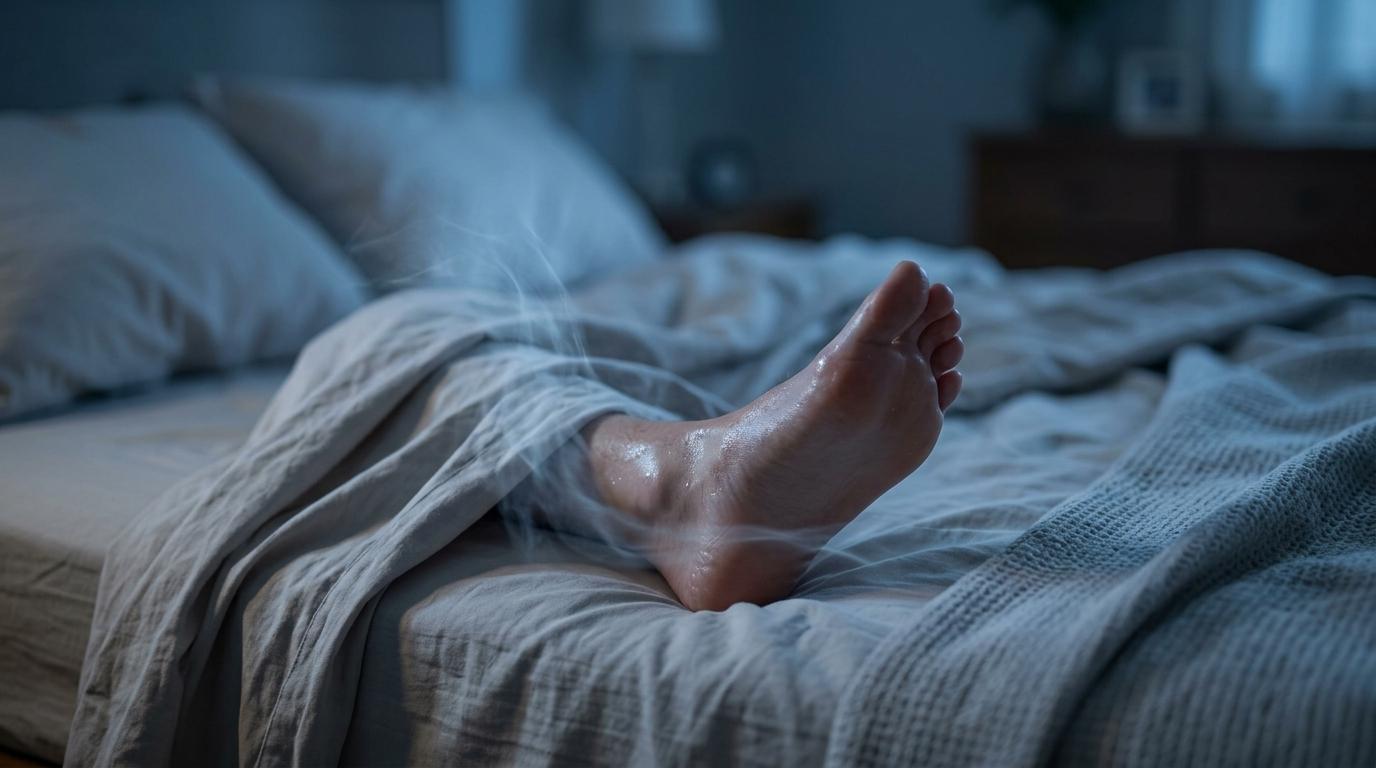
Tesamorelin night sweats may stem from hormones, glucose shifts, or other causes. Learn triggers, sleep fixes, and when to call a doctor.
If you started tesamorelin therapy and now you’re waking up sweaty, you are not imagining things, but you also should not assume the medication is the only reason. Night sweats can show up for a few different reasons while you are on tesamorelin, as with other injection medications like Egrifta WR, and some of those reasons have nothing to do with the drug itself or its common side effects.
Tesamorelin is a prescription medication used to reduce excess abdominal fat in adults with HIV who have lipodystrophy. It is typically administered as a subcutaneous injection and works by stimulating growth hormone releasing hormone activity, thus increasing growth hormone levels, which can change the way your body handles hormones, fluid, and metabolism. That does not mean it commonly causes dramatic side effects like night sweats in everyone, but these side effects can be part of the picture in some people. In fact, some patients may notice mild injection site irritation or other side effects if the dosage is not properly adjusted.
The tricky part is this. Night sweats can also come from blood sugar swings, other medications (some of which might also be injectables), hormone changes, infections, anxiety, or even a room and bedding setup that traps too much heat. So if you are trying to figure out what is going on, it helps to look at the full pattern, not just the prescription bottle or the injection regimen.
Tesamorelin is not usually the first medication people think of when they hear "night sweats", yet some people do notice they feel warmer at night after starting it as part of their therapy. That can happen because tesamorelin affects hormone signaling, especially growth hormone and IGF 1 related pathways, and those shifts can change how your body regulates heat. Some people describe it less as sweating and more as feeling flushed, overheated, restless, or unable to get comfortable under the covers. These side effects may also be seen with other injection medications like egrifta wr when the dosage is adjusted.
If that sounds familiar, the timing matters. Symptoms that begin soon after you start tesamorelin, following an injection or a change in dosage, or on a predictable schedule, perhaps linked to your injection timing, can make the medication more suspicious as a trigger. Still, tesamorelin is only one piece of the puzzle.

In people living with HIV, night sweats always deserve a little extra attention, because they can also be linked to infection, inflammation, lipodystrophy, or other health issues that need medical care. So it is smart to treat new or worsening night sweats as a real symptom, not just an annoyance.
One possible reason is hormone-related temperature sensitivity. When your body’s hormone signaling shifts, often because of the growth hormone changes stimulated by tesamorelin, your heat tolerance can change with it. You may notice that your usual blanket, sleepwear, or bedroom temperature suddenly feels too warm even if nothing in your routine changed.
Another possible factor is fluid retention and swelling. Tesamorelin can cause some swelling, which is a known side effect noted in patients. When your body is holding onto more fluid, you may feel puffy, warmer, and less comfortable in bed, especially overnight when bedding traps heat close to your skin.
Blood sugar can matter too. Tesamorelin may affect glucose control and low blood sugar during sleep can trigger sweating, shakiness, vivid dreams, and a pounding heart. High blood sugar can also leave you feeling off, thirsty, and overheated. If you already have diabetes, prediabetes, or take medications that affect glucose, this piece is worth discussing with your clinician.
Sleep itself can change. If tesamorelin makes you restless, achy, or more acutely aware of your body, perhaps because of the injection side effects, you may wake up more often and notice sweating that otherwise would have gone unnoticed.
After you have looked at the big picture, keep an eye out for patterns like these:
This is where things often get more real world. A lot of people taking tesamorelin are also taking other medications, and plenty of those can cause sweating on their own. Some of these side effects can even mimic those related to an injection, such as local injection site discomfort. Antidepressants, steroids, pain medications, blood pressure drugs, and hormone-related treatments can all be part of the story.
Hormonal changes that are unrelated to tesamorelin can pile on as well. Menopause, perimenopause, PMS, pregnancy, and even testosterone changes can all make nighttime overheating worse. If your body already runs warm at night, tesamorelin may simply make the problem more noticeable.
Then there is the medical side. Infections, thyroid problems, low blood sugar, sleep apnea, acid reflux, anxiety, and some cancers can cause night sweats. In people with HIV, infections and lymphoma are especially important to rule out if the sweating is new, heavy, or paired with other symptoms.
A warm room and heat trapping bedding can turn a mild symptom into a miserable one. It is easy to overlook because once you are sweating, it feels like your body is the whole problem. Often it is your body plus the sleep setup.
Here are some common possibilities to think through with your clinician:
You do not need to guess blindly. A simple symptom log can tell you a lot in a week or two. Write down when you take your tesamorelin injection, when the sweating happens, how severe it is, what your room temperature is, and whether you had alcohol, spicy food, a late meal, or another medication that evening.
Look at timing first. If the sweating started shortly after tesamorelin began, got worse after an injection or a change in dosage, or happens most on the nights after your injection, that pattern is useful. It does not prove tesamorelin is the cause, but it gives your prescriber something concrete to work with.
Also note what the sweating feels like. Is it a whole body drenching sweat, a hot flash type wave, or a mild clammy feeling around the neck and chest? Does it come with palpitations, trembling, fever, cough, weight loss, or swollen lymph nodes? Those details matter.
A quick log works best when you keep it simple:
Do not stop tesamorelin on your own, especially if you notice any side effects at the injection site, unless your clinician gives you proper medical advice. If the medication is helping and the sweating is manageable, the fix may be as simple as adjusting the injection timing or dosage, checking glucose, or cooling the bed more effectively.
Night sweats are miserable, but your sleep setup can make a bigger difference than most people expect. Sleep experts recommend a bedroom temperature between 60°F and 67°F. That range helps your core body temperature drop, which is part of normal sleep. The problem is that even if the room is cool, heat can still get trapped under your sheets.
That trapped heat is exactly why bed cooling fans have become so popular with hot sleepers, people dealing with menopause, and anyone on medications or injections that make them overheat at night. A bed fan does not cool the air itself. It uses the cooler air already in the room and pushes it under the covers so body heat can escape instead of building up around you. We recommend you check out the bFan from www.bedfan.com as a solution that many people have found helpful.
Here are a few details to note about the bed fan:
Sleep experts recommend a bedroom temperature between 60°F and 67°F, and with a bed fan people can often raise the room temperature by about 5°F and still sleep cool.
If you are comparing products, keep the basics straight. Neither Bedfan nor Bedjet cool the air. They only use the cool air already in the room to cool your bed. The Bedjet does not cool the air either, despite the way some people talk about it.
The original bedfan came to market several years before Bedjet was even thought of, and the concept is still appealing because it is simple, direct, and focused on removing trapped body heat where you feel it most.
Price matters too, especially if you need cooling on both sides of the bed. One Bedjet is more than twice the price of a single bedfan. The dual zone Bedjet is over a thousand dollars and more than twice the price of two bedfans. The bedfan offers dual-zone microclimate control using two fans, which gives couples a practical way to set up separate comfort zones without spending that kind of money.
A few details stand out when you are shopping:
Even a good cooling device works better when the rest of the bed is not fighting it. Heavy comforters, fleece blankets, and dense mattress toppers trap a lot of heat. If you are sweating on tesamorelin, lighter layers usually work better.
Natural fiber pajamas can help, though some people do better in moisture-wicking fabrics. The main goal is simple. Less trapped heat, less trapped moisture, fewer wake-ups. If you already run hot, a cool shower before bed, lighter dinners, and less alcohol in the evening can also make a real difference.
And if you share a bed with someone who sleeps colder than you do, personal bed cooling is often easier than trying to win the thermostat battle every night.
Some night sweating is annoying but not dangerous. Some is a sign that something needs prompt attention. If your night sweats are drenching, persistent, or getting worse, it is time to check in.
Call your clinician sooner if night sweats come with fever, chills, unexplained weight loss, swollen lymph nodes, cough, chest symptoms, severe fatigue, or signs of low blood sugar. Those combinations point away from a simple sleep comfort problem and toward a medical issue that needs a closer look. Also, if you are noticing increasing side effects at your injection site or unexpected reactions after a subcutaneous injection, it is important to receive timely medical advice.
If the sweating started after tesamorelin and is affecting your sleep, say that clearly. Your prescriber may want to review your glucose levels, other medications, injection timing, or the dosage you are using. The more specific your notes are, the faster that conversation usually leads to a useful solution.
Remember, this information is provided for general informational purposes only and should not replace personalized medical advice from your clinician.
Tesamorelin night sweats are often caused by hormonal changes that the medication triggers in your body. Tesamorelin stimulates the release of growth hormone, which can affect your metabolism and body temperature regulation. As your body adjusts to these changes, you might experience increased sweating at night, especially during the first few weeks of treatment.
Night sweats from tesamorelin are usually not dangerous, but they can be uncomfortable and disrupt your sleep. Most people find that the sweating lessens as their body gets used to the medication. If you notice other symptoms like fever, chills, or significant weight loss, it’s a good idea to check in with your healthcare provider to rule out other causes.
To manage night sweats, keep your bedroom cool and use lightweight, breathable bedding. Sleep experts recommend keeping your room between 60°F and 67°F for optimal rest. Many people find relief by using a bedfan or bed fan, like the bFan from www.bedfan.com, which helps circulate cool air under your sheets and can make a big difference in comfort. You can also try moisture-wicking pajamas and avoid heavy blankets.
For many people, tesamorelin night sweats become less intense as their body adapts to the medication. This adjustment period can last a few weeks to a couple of months. If the night sweats persist or worsen, talk to your doctor about adjusting your dosage or exploring other solutions.
Yes, frequent night sweats can disrupt your sleep by waking you up or making you uncomfortable. Poor sleep can lead to daytime fatigue and irritability. Using a bedfan or bed fan, such as the bFan, can help you stay cool and dry, which may improve your sleep quality significantly.
Many users on Reddit and health forums suggest practical tips like keeping a glass of cold water by your bed, using a fan or bedfan for airflow, and wearing light, moisture-wicking clothing. Some also recommend setting a timer on your bedfan to help you fall asleep comfortably and maintain a cool environment throughout the night.
You should not stop taking tesamorelin without consulting your healthcare provider. Night sweats are a common side effect and often improve over time. Your doctor can help you weigh the benefits and risks, and may suggest ways to manage the sweating so you can continue your treatment safely.