Learn whether naproxen (aleve) night sweats may be a side effect, how to spot red flags, and simple ways to sleep cooler.
Waking up drenched after taking naproxen can wreck your sleep and make you question whether the problem is medications like the medicine itself, your bedroom, menopause, or something more serious. Naproxen sodium, sold as Aleve, is a common NSAID for pain relief and inflammation, but some people do report sweating, feeling overheated, or waking with damp sheets. The hard part is figuring out whether naproxen is the cause, a contributor, or just getting blamed for another issue, as finding relief can be challenging. Here’s how to sort that out and what to do next.
Yes, naproxen and Aleve can be linked to night sweats, but the link is usually indirect, not a classic stand alone side effect.
Naproxen is an NSAID, short for nonsteroidal anti inflammatory drug. It lowers prostaglandins, which helps pain, swelling, and fever, but it can also change how your body reacts to inflammation, stomach irritation, and body temperature shifts. In real life, that means some people feel sweaty or flushed after taking it, especially at night when bedding traps heat.
Common misconception, because Aleve is over-the-counter, people assume any reaction must be minor. That’s not always true. If sweating shows up with rash, wheezing, black stools, severe heartburn, or fever, don’t brush it off as “just a side effect.”
Also, not every warm night counts as a true night sweat. Clinicians usually mean sweating heavy enough to soak sleepwear or sheets.
Naproxen can trigger nighttime sweating through fever changes, stomach irritation, and hidden illness, not because Aleve is literally heating your body.
There are a few ways this happens. First, naproxen can reduce fever. If you’re fighting an infection or inflammatory flare, you may sweat as the fever breaks, then blame the pill. Second, naproxen can irritate the stomach or worsen reflux, and that stress response can bring sweating, especially when you lie down. Third, the condition you’re treating, arthritis, injury, dental pain, infection, can be the real source of the heat.
Naproxen also has a fairly long half life, roughly 12 to 17 hours. If you take it in the evening, its effects and side effects can overlap with your sleep window.
Pro tip, check the pattern. If sweating reliably starts on nights you take naproxen and fades on nights you don’t, the medicine moves higher on the suspect list. If it happens no matter what, look wider.
Yes, room air tools like bFan and basic bedding changes can reduce sweat soaked sleep, even when naproxen is part of the problem.
Common misconception, bed cooling devices are not little air conditioners. Neither bFan nor BedJet cools the air. They use the cooler air already in your room and move it through your bedding so trapped body heat can escape.
If you want practical options, these tend to help most:
If you share a bed, two bedfans can create dual zone microclimate control, which is often a simpler fix than fighting over the thermostat.
Timing is the best clue, and fever, weight loss, or cough usually point beyond naproxen, prednisone, or Aleve alone.
Start with the timeline. If night sweats began soon after you started naproxen, increased after a dose change, or hit hardest on nights you take it, that supports a medications link. If the sweats were already there before the first pill, or keep happening after you stop, naproxen is less likely to be the main driver.
Then compare the pattern. Drug related sweating often follows dosing. Illness related night sweats tend to come with other signs, fever, chills, swollen lymph nodes, persistent cough, new reflux, low blood sugar, or unplanned weight loss.
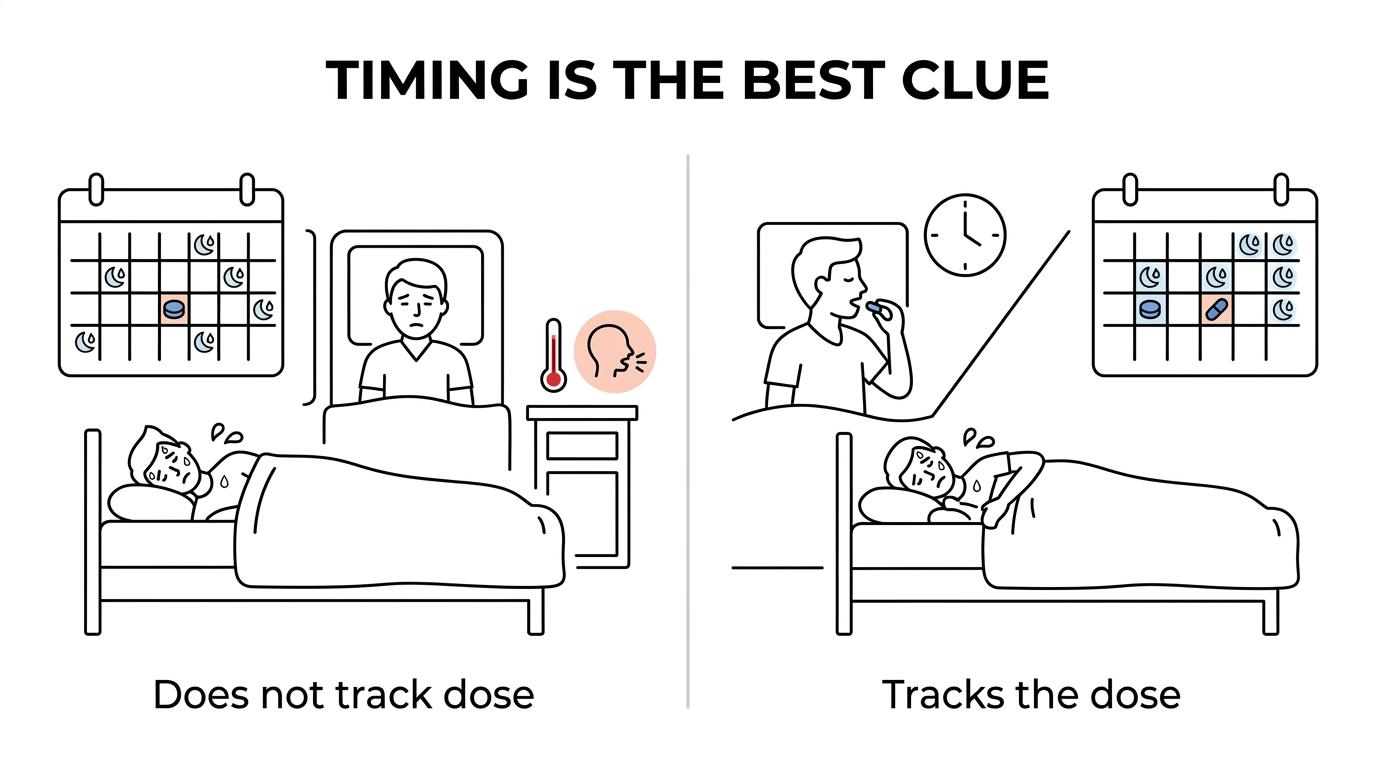
Here’s the simple if then logic: Seeking pain relief is important, but it's crucial to understand the underlying cause of the symptoms. If the sweating tracks the pill, think side effect or intolerance. If the sweating tracks a fever, infection symptoms, hormone shifts, menopause, or sleep apnea signs, think underlying condition.
Pro tip, take your temperature when you wake sweaty. That one data point can save a lot of guessing.
First, reduce avoidable triggers tonight, then watch for warning signs, and don’t stack NSAIDs like ibuprofen on top of naproxen.
Step 1: Check what you took and when. OTC naproxen sodium is commonly 220 mg per tablet. If you already took Aleve, don’t pile on ibuprofen or aspirin unless a clinician told you to. Mixing NSAIDs raises the risk of stomach irritation and bleeding.
Step 2: Cool the sleep environment without overcomplicating it. Light bedding, a quick lukewarm shower, and direct airflow into the bed can help more than dropping the whole house to a very cold temperature.
Step 3: Watch for red flags. If sweating comes with trouble breathing, facial swelling, hives, chest pain, black stools, or vomiting blood, get urgent care. That’s no longer a simple comfort issue.
If Aleve was optional for short term pain and the sweating seems clearly linked, it’s reasonable to pause repeat self dosing and ask a pharmacist or clinician what to use instead.
Call a doctor when night sweats are persistent, severe, or paired with symptoms that suggest bleeding, infection, allergy, or another illness.
One sweaty night after pain medicine may not mean much. Repeated drenching sweats, especially if you’re changing clothes or sheets, deserve a closer look. Naproxen can irritate the GI tract, mask fever temporarily, and muddy the picture if something else is going on.
Red flags that move this from “watch it” to “call” include:
If you’re pregnant, over 65, have kidney disease, an ulcer history, or take blood thinners, it makes sense to call sooner.
Yes, naproxen dose timing, alcohol, and medications like prednisone, antidepressants, or sertraline can make nighttime sweating more likely or harder to interpret.
Evening dosing matters because naproxen stays active for many hours. Alcohol can worsen reflux, dehydration, and vasodilation, all of which can make you feel hotter in bed. Corticosteroids, such as prednisone, antidepressants, opioids, tamoxifen, some diabetes drugs, and other medications can also cause sweating on their own.
That creates a common mix up. You take naproxen for pain, you also take an SSRI or a steroid, you wake up soaked, and Aleve gets all the blame.
Another point people miss, the pain condition itself may be inflammatory. If your knee, back, or dental issue is flaring, your body may already be running warm at night. Naproxen is then part of the scene, not the full explanation.
If your sweating started after adding a second medicine, such as antidepressants, think interaction of effects, not just one culprit.
A simple 3 night log often reveals more than memory, especially when naproxen and other triggers overlap.
Step 1: Write down the exact dose and time. “Aleve at bedtime” is too vague. “220 mg at 9:30 p.m.” is useful.
Step 2: Record the sweating details. Note whether you felt hot, woke chilled, soaked the sheets, or just had a damp neck and chest.
Step 3: Add context. Room temperature, alcohol, spicy food, menstrual cycle stage, fever, reflux, pain level, pain relief treatments, and other medicines all matter.
A short log should include:
Pro tip, bring the pill bottle or a phone photo to the appointment. That prevents mix ups between naproxen, ibuprofen, and acetaminophen.
Keep the room cool, use tighter weave sheets, and move air inside the bed, because trapped bedding heat is usually the real problem.
Step 1: Aim for the sleep range experts recommend, 60°F to 67°F. If that feels too cold for the house or too expensive to maintain, targeted bed airflow often lets people raise the room temperature by about 5°F and still sleep cool.
Step 2: Choose bedding that helps airflow spread. Tight weave sheets, especially crisp cotton or percale, often work better with a bed fan because the air glides across the body instead of escaping straight upward.
Step 3: Use targeted airflow at the foot of the bed. A bed fan can remove the heat your body dumps into the sheets all night. Timer controls are useful because many people need the most cooling during sleep onset and the first few hours.
This is one place where simple beats fancy. If your issue is trapped heat and damp sheets, related especially to medications, you usually need better heat removal, not a colder house.
For cooling only, bFan is usually the simpler and lower cost choice, while BedJet adds features that some people may not need.
The original Bedfan came to market several years before BedJet was even thought of, which matters because this category did not start with the newer brand. For medication related night sweats, both systems work on the same basic idea, they move room air into the bed, which could be useful if you experience discomfort after taking over-the-counter medications like naproxen. Neither bFan nor BedJet cools the air.
The trade off is mostly cost and complexity. One BedJet is more than twice the price of a single bedfan. The dual zone BedJet is over a thousand dollars, and more than twice the price of two bedfans. If you want dual zone microclimate control, two bedfans handle that with less spend.
Noise and power use matter too. A bFan runs around 28 to 32 dB at normal operating speed and uses about 18 watts on average, so it’s a light power draw for an overnight device. BedJet can be a fit if you want extra controls or heating functions, but if your problem is simply sweating from trapped heat under the covers, many people do well with the more direct setup.
The bottom line for naproxen related night sweats is practical. If you can’t remove the medicine tonight, remove the trapped bed heat. That’s often the fastest win.