Arsenic trioxide (Trisenox) night sweats may improve as APL responds, but new or drenching sweating can signal infection or urgent side effects.
Night sweats can feel especially unsettling when you’re being treated for acute promyelocytic leukemia, or APL. If arsenic trioxide, often called Trisenox, is part of your treatment, you may be wondering whether those soaked sheets and sudden heat surges are coming from the disease, the medication, the stress of treatment, or some mix of all three. Some patients even refer to these as arsenic trioxide (Trisenox) night sweats, especially when they occur alongside other side effects.
Arsenic trioxide is a prescription cancer drug used mainly for APL. It works by helping abnormal leukemia cells stop growing and die off. In many people, it’s used with other therapies, often all trans retinoic acid (tretinoin) and chemotherapy, as part of a very effective treatment plan. The U.S. FDA has approved arsenic trioxide for APL treatment, and while it is beneficial, it can also cause side effects such as nausea, vomiting, headache, and even on rare occasions encephalopathy.
Night sweats are not the main reason Trisenox is prescribed. The goal is to treat the leukemia itself. If your night sweats were being driven by active APL, you may notice they ease as treatment starts working. That can be encouraging, but it does not always happen right away. Keep in mind that some side effects may persist beyond the initial phase of treatment.
There is another layer here, too. People in cancer treatment often sweat at night for reasons that have little to do with one single drug. Fever, infection, anxiety, room temperature, bedding, hormone shifts, steroids, pain medicines, and the body’s stress response can all pile on. With arsenic trioxide treatment, the FDA emphasizes the importance of monitoring for side effects, including nausea, vomiting, and headache, because they might be confused with symptoms of the leukemia or even a developing differentiation syndrome. So if you are on Trisenox and sweating at night, the answer is often more complicated than "the medicine is helping" or "the medicine is causing it."
APL can trigger night sweats because cancers of the blood may affect the body’s inflammatory response and temperature regulation. When your immune system is reacting to illness, your body can run hot, then overcorrect, especially at night when your temperature naturally shifts.
Some people notice night sweats before they even know they have leukemia. Others have fatigue, bruising, frequent infections, fever, or shortness of breath along with the sweating. In that setting, the sweat is not really the problem by itself. It is a clue that something bigger is going on, and it may sometimes be accompanied by other side effects like nausea, vomiting, or headache.
Once treatment starts, symptoms can change quickly. Some people sleep cooler within days or weeks as the leukemia responds. Others still deal with sweats because treatment is intense, sleep is fragmented, and the nervous system stays on high alert. With arsenic trioxide now administered alongside tretinoin and chemotherapy, it is important to note that while side effects such as nausea and vomiting may appear initially, many patients find these improve as the cancer is brought under control.
After you have had a chance to look at the whole picture, these are some of the most common reasons night sweats can show up during Trisenox treatment:
Yes, it can, indirectly.
If APL is the reason you have been waking up drenched, successful treatment with arsenic trioxide can lead to fewer night sweats over time. That is because the root problem, the leukemia, is being treated. In that sense, Trisenox can help, but not because it is a sleep or sweating medicine. It is possible, however, that some side effects may linger even as the cancer responds, so awareness is important.
That distinction matters. If you expect the drug itself to behave like a symptom reliever, you may feel confused when sweating continues for a while. Cancer treatment is rarely that tidy. Symptoms often improve in uneven steps, not a straight line. The FDA advises that any unexpected or severe side effects should be reported immediately to ensure the right adjustments are made.
It also means you should not assume every hot night is harmless just because you are already on treatment. A changing sweat pattern can mean improvement, but it can also point to infection, fever, dehydration, or another treatment issue. Your oncology team is the right place to check that.
A damp pillow is one thing. Repeated drenching sweats with fever, shaking, chest symptoms, or severe weakness are something else.
People on arsenic trioxide need close monitoring, and not just because of sweating. Trisenox can have serious side effects, including heart rhythm changes, fluid issues, and problems linked to differentiation syndrome, a reaction that, although rare, the FDA monitors carefully. Additionally, side effects such as nausea, vomiting, and headache can occur, and on rare occasions encephalopathy might develop. Night sweats alone do not mean that this is happening, but they should never be brushed off if they come with other warning signs.
If your symptoms are changing, use common sense and call your cancer team promptly. If you feel acutely unwell, seek urgent care.
Even when your doctors are handling the medical side, your sleep setup still matters a lot. Night sweats are miserable partly because bedding traps heat and moisture against your skin. Once that happens, you wake up sticky, chilled, or both.
Sleep experts usually recommend a bedroom temperature of 60°F to 67°F for better sleep. That range gives your body a better shot at dropping core temperature, which is part of normal sleep biology. If you run hot, staying near that range can help, but central air conditioning alone does not always solve the problem because the heat gets trapped under the covers.
That is where airflow under the sheets can make a real difference. It does not have to be fancy, but it does need to move heat away from your body instead of letting it pool around your torso or legs.
A few simple adjustments can help right away:
If you share a bed, it gets more complicated. One person may be freezing while the other feels like their sleeping in a sauna. That is one reason many people look beyond the thermostat and toward targeted bed cooling.
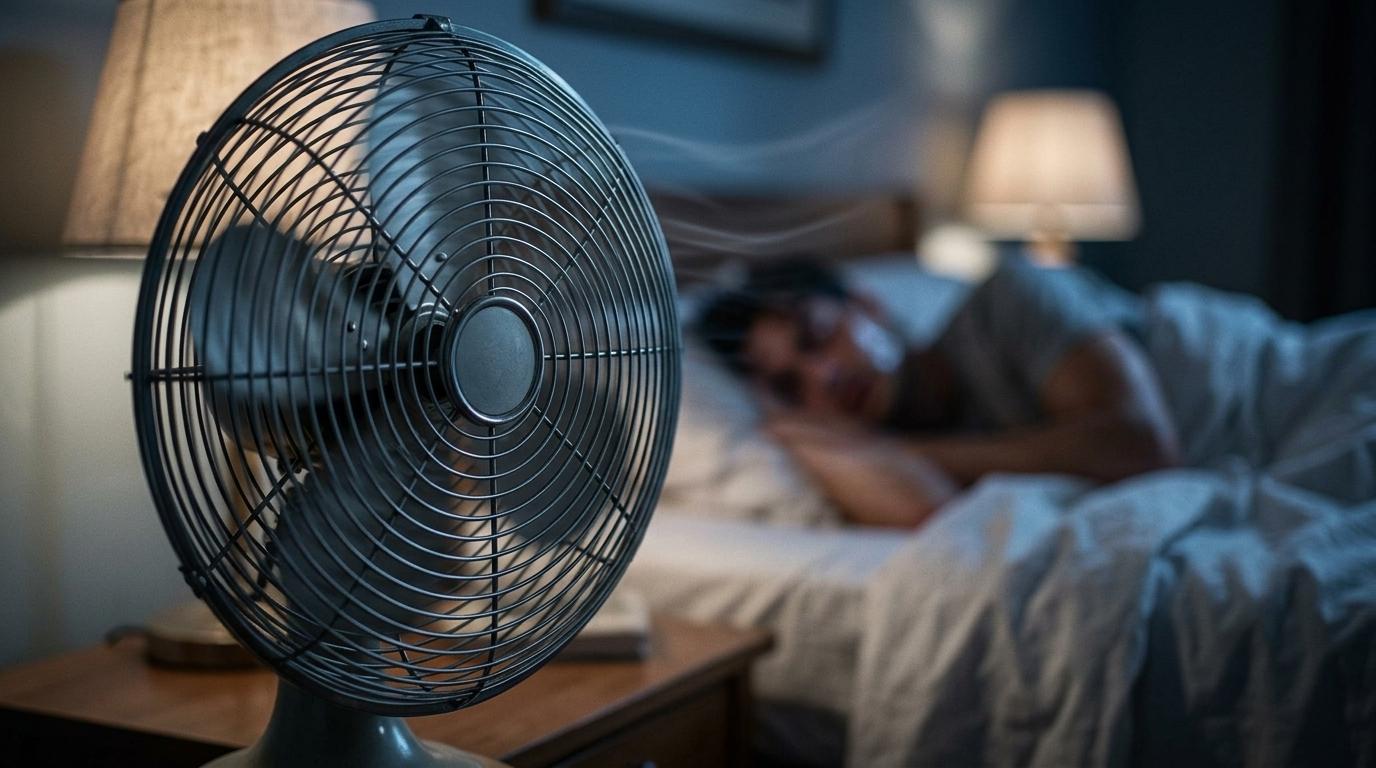
A bed fan is a practical tool when the issue is trapped heat under the covers. It does not treat leukemia, and it does not replace medical care. What it can do is make the bed feel dramatically cooler, which may help you fall asleep faster and wake up less often from overheating.
The bFan bed fan is one option people often consider for night sweats, menopause, medication-related overheating, and hot sleeping in general. It sits discreetly at the foot of the bed and sends room air between the sheets, where the heat problem actually happens. Sleep experts recommend 60°F to 67°F, and with a Bedfan people can often raise room temperature by about 5°F and still sleep cool, because the airflow is targeted where you need it.
This targeted approach also helps if you are trying to avoid blasting the whole house with air conditioning. Neither Bedfan nor Bedjet cool the air. They only use the cooler air already in the room to cool your bed. The Bedjet does not cool the air either, despite the way some shoppers first read the product category.
A few details are worth knowing if you are comparing options:
Price matters, too, especially when treatment costs are already piling up. One Bedjet is more than twice the price of a single Bedfan. The dual-zone Bedjet is over a thousand dollars and more than twice the price of two Bedfans. If you want separate cooling for each side of the bed, the Bedfan offers dual-zone microclimate control using two fans, which is a straightforward way to give each sleeper their own airflow.
If you go this route, keep your setup simple. Use sheets with a tight weave, skip very heavy comforters when possible, and test the airflow before bed so you are not fiddling with it at 2 a.m. Small tweaks can make a surprisingly big difference when you are already worn down from treatment.
It is easy to focus on surviving the night and forget to bring it up at your next appointment. Still, the details matter. Your team will want to know whether the sweating is mild, drenching, new, improving, or tied to fever or other symptoms. They may also ask about other side effects such as nausea, vomiting, headache, or signs of encephalopathy, as these could indicate that the arsenic trioxide is affecting you in more than one way.
You do not need a perfect report. Just give them a clear picture of what is happening.
That information helps your team figure out whether the sweats look like improving cancer symptoms, medication effects, infection, or something else that needs workup.
If you are living with arsenic trioxide treatment right now, it helps to think in two tracks at once. One track is medical, keeping your oncology team updated and taking new symptoms seriously. The other is practical, cooling the sleep space so every hot night does not turn into a full-blown ordeal. When those two tracks work together, nights usually get a lot more manageable.
Arsenic trioxide (Trisenox) can cause a range of side effects, including fatigue, nausea, vomiting, and night sweats. Some people also experience headaches, dizziness, or changes in heart rhythm. It’s important to talk to your healthcare provider about any symptoms you notice, since some side effects may require medical attention.
Yes, night sweats are a reported side effect of arsenic trioxide (Trisenox). This medication can affect your body’s temperature regulation, leading to episodes of sweating during sleep. If you find night sweats disruptive, consider using a bfan from www.bedfan.com, which helps circulate cool air under your sheets and can make a big difference in comfort.
To manage night sweats, keep your bedroom cool and use breathable, tightly woven sheets to help air flow across your body. A bedfan or bfan is a great solution, since it moves cool room air under your covers and helps carry away heat. Sleep experts recommend keeping your room between 60°F and 67°F, and with a bedfan, you can often raise your room temperature by about 5°F and still sleep comfortably.
Both the bedfan and Bedjet help with night sweats by moving cool air under your sheets, but neither actually cools the air itself. The bedfan uses only 18 watts on average, operates quietly at 28db to 32db, and offers timer controls for optimal sleep. The dual-zone bedfan is much more affordable than the dual-zone Bedjet, which costs over a thousand dollars and is more than twice the price of two bedfans. The original bedfan was available years before Bedjet even came to market.
Sleep experts suggest this temperature range because it helps your body naturally lower its core temperature, which is essential for restful sleep. Cooler environments can reduce the frequency and severity of night sweats, especially for those on medications like arsenic trioxide (Trisenox). Using a bedfan can help you achieve this ideal sleep climate without having to lower your thermostat as much.
Yes, focus on creating a cool, comfortable sleep environment and maintain a consistent bedtime routine. Use tightly woven sheets to help airflow, and consider a bedfan to keep air moving under your covers. Staying hydrated and discussing any sleep issues with your healthcare provider can also help you manage side effects and improve your overall sleep quality.